
In an increasingly competitive global talent market, the traditional reactive approach to candidate management is proving to be a significant liability for organizations worldwide. The phenomenon of candidate reneging—where an accepted offer is subsequently declined by the candidate before their start date—has escalated into a critical challenge, costing companies millions in lost productivity, recruitment fees, and operational delays. A recent industry survey highlighted that an average of 15-20% of accepted job offers ultimately result in a renege, a statistic that underscores the profound need for a fundamental shift in how companies manage the pre-start phase of the hiring journey. The prevailing issue often stems from a glaring lack of a structured process, leaving recruitment teams to discover a renege only after it has materialized, by which point the candidate has frequently already solidified their decision to withdraw. This antiquated approach not only squanders valuable resources but also compromises an organization’s ability to forecast talent pipelines accurately and maintain operational continuity.
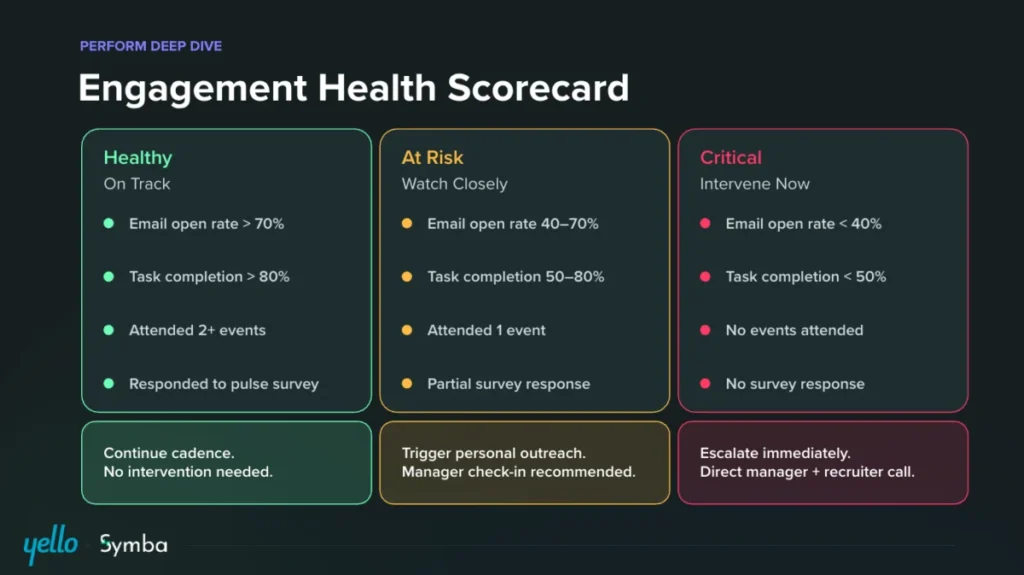
The solution, increasingly adopted by forward-thinking talent acquisition departments, lies in a paradigm shift: treating engagement signals not as post-factum observations but as crucial leading indicators of candidate intent and commitment. This proactive methodology necessitates a continuous monitoring framework, moving beyond the mere offer acceptance to a sustained nurturing process throughout the pre-onboarding period. At the heart of this transformative strategy is the implementation of an Engagement Health Scorecard, a sophisticated system designed to categorize candidates into distinct groups based on their behavioral patterns and interaction levels, thereby enabling targeted, timely interventions.
The Economic and Operational Burden of Candidate Reneging
The impact of candidate reneging extends far beyond the immediate disappointment of a lost hire. Economically, the costs are substantial. Estimates suggest that replacing a reneged candidate can cost an organization anywhere from 1.5 to 3 times the position’s annual salary, factoring in recruiter time, advertising expenses, interview panel hours, background checks, and the opportunity cost of delayed project starts. For highly specialized roles, these figures can escalate dramatically. Operationally, a renege can derail critical projects, burden existing teams with increased workloads, and create cascading delays that affect client commitments and innovation timelines. Furthermore, the constant need to backfill positions strains recruitment teams, diverting their focus from strategic talent acquisition to remedial efforts.
Historically, many talent acquisition programs have operated with a significant blind spot during the "pre-start" period. Once an offer was accepted, the focus often shifted to administrative onboarding tasks, with a presumption of candidate commitment. This gap in active engagement created a vacuum where candidates, particularly those with multiple offers or evolving personal circumstances, could quietly disengage. By the time a candidate "goes quiet" or explicitly withdraws, their decision is often irreversible, underscoring the inadequacy of a reactive posture.
The Evolution Towards Proactive Engagement: A Chronology of Best Practices
The shift towards proactive candidate engagement is not merely a tactical adjustment but an evolutionary response to the dynamics of the modern labor market. Early recruitment models were largely transactional: identify, interview, offer, hire. As competition for skilled talent intensified in the late 20th and early 21st centuries, companies began to realize the need for a more candidate-centric approach during the interview process itself. However, the period between offer acceptance and start date remained largely unaddressed.
The early 2010s saw the rise of "onboarding" as a strategic imperative, focusing on the candidate’s first days and weeks. Yet, the pre-onboarding phase continued to be a vulnerability. It was only in the mid-2010s, with the widespread adoption of advanced analytics in HR and the increasing transparency provided by platforms like Glassdoor, that organizations began to truly appreciate the need for continuous engagement from the moment an offer is extended. The concept of "candidate experience" expanded to encompass the entire journey, including the crucial pre-start phase. The Engagement Health Scorecard represents the current zenith of this evolution, integrating data-driven insights with personalized outreach to mitigate renege risk systematically.
The Engagement Health Scorecard: A Framework for Predictive Talent Management
The Engagement Health Scorecard serves as a critical diagnostic tool, providing real-time visibility into a candidate’s level of interest and commitment during the vulnerable pre-start period. By meticulously tracking a defined set of behavioral metrics, the scorecard categorizes candidates into three distinct tiers, each signaling a different level of engagement and necessitating a specific course of action. This structured approach ensures that resources are allocated efficiently, with interventions tailored to the candidate’s specific risk profile.
1. Healthy Candidates: Sustaining Momentum in the Green Zone
Candidates categorized as "Healthy" represent the ideal scenario, exhibiting strong and consistent engagement signals. These individuals are actively participating in the pre-start process, demonstrating sustained enthusiasm for their upcoming role. Key indicators for this group typically include:
- Email Open Rates: Consistently above 70%, indicating active attention to company communications.
- Task Completion: Prompt and thorough completion of all assigned pre-onboarding tasks, such as background checks, paperwork, and system setup.
- Event Attendance: Participation in multiple pre-start events, such as virtual meet-and-greets, informational webinars, or team social gatherings.
- Survey Responses: Timely and thoughtful completion of any pre-start surveys designed to gauge expectations or gather initial feedback.
For these healthy candidates, the recommended action is to "continue the cadence and stay the course." This is not an invitation to disengage, but rather to maintain a steady, positive flow of communication. As one leading talent acquisition specialist from a Fortune 500 tech firm noted in a recent industry panel, "Even our most enthusiastic hires benefit from consistent, positive reinforcement. It’s about maintaining excitement and reaffirming their decision, not just assuming they’re locked in." This includes regular, personalized updates, sharing relevant company news, and providing clear next steps, all designed to reinforce their positive choice and deepen their connection to the organization. The goal is to nurture this positive momentum, ensuring they arrive on day one feeling valued, informed, and excited.
2. At-Risk Candidates: Targeted Interventions in the Yellow Zone
The "At-Risk" category signals a detectable decline in engagement, serving as an early warning that a candidate’s commitment may be wavering. These individuals require prompt, personalized attention to prevent further disengagement. Indicators for this tier often fall within a specific range:
- Email Open Rates: Between 40-70%, suggesting sporadic attention to communications.
- Limited Event Attendance: Perhaps only attending one out of several offered events, or declining invitations.
- Incomplete Survey Responses: Partial completion of surveys or noticeable delays in submission.
- Reduced Activity: A general decrease in responsiveness or proactive interaction over a period of up to two weeks.
When a candidate enters the "At-Risk" category, immediate personal outreach is crucial, ideally within 48 hours of detecting the declining engagement. This intervention must feel individual and empathetic, rather than a generic, automated message. Effective strategies include:
- Direct Message from the Program Manager: A personalized email or LinkedIn message from the future program manager, expressing excitement about their start and offering to answer any questions. This builds a direct line of communication and emphasizes their value to the team.
- Individualized Event Invitation: Rather than a mass-distributed calendar invite, a personal invitation to the next team event or a one-on-one virtual coffee chat with a future colleague. This makes the candidate feel specifically wanted and included.
- Hiring Manager Check-in: A brief, informal call from the hiring manager to touch base, reiterate their enthusiasm for the candidate joining, and proactively address any potential concerns.
"These personal touches can often turn things around quickly," remarked a seasoned HR director, emphasizing that "it’s about demonstrating that we see them as an individual, not just another number in our hiring pipeline." These interventions aim to re-establish a personal connection, identify potential underlying issues (such as minor uncertainties or logistical concerns), and re-ignite their enthusiasm. A hypothetical scenario might involve a candidate who has stopped opening emails due to a family matter; a quick, empathetic call from the hiring manager can uncover this and allow the company to offer support or flexibility, solidifying the candidate’s trust and commitment.
3. Critical Candidates: Immediate Escalation in the Red Zone
"Critical" candidates represent the highest risk tier, characterized by almost no engagement whatsoever. This signals a strong likelihood of an impending renege and demands immediate, high-stakes intervention. The indicators for this group are stark:
- Email Open Rates: Consistently below 40%, often nearing zero.
- No Events Attended: Complete absence from all pre-start events.
- No Survey Responses: Failure to complete any feedback or administrative surveys.
- Sustained Inactivity: No communication or activity detected over a period of three or more weeks.
For critical candidates, the situation requires urgent and direct escalation. This is a moment for the most senior relevant parties to step in and have a frank, personal conversation. Recommended actions include:
- Direct Call from the Hiring Manager: A personal phone call from the future manager, bypassing email, to directly address the silence and express concern. This demonstrates the company’s commitment and provides an immediate opportunity for dialogue.
- Personal Touchpoint from the Recruiter: The recruiter, who often has the most established relationship with the candidate, should also make a direct call to offer support and listen without judgment.
- Real Conversation About What’s Going On: The objective of these high-level calls is not to pressure, but to understand. Often, the root cause is a competing offer, a significant personal circumstance, or simple uncertainty that has festered due to lack of communication.
"Many times, if you catch it in time, these direct conversations can uncover a fixable problem," explained an industry analyst specializing in talent analytics. "A competing offer might be matched, personal circumstances accommodated, or uncertainties clarified. The key is to open the lines of communication before the candidate feels they have no option but to withdraw." While the success rate for critical candidates is naturally lower than for at-risk individuals, prompt and sincere intervention can still salvage a significant percentage of these hires, saving the organization from the costly process of starting over. Data from companies employing this scorecard approach indicates that approximately 30-40% of critical candidates can still be re-engaged and retained if intervention occurs within 72 hours of entering this category.
Data-Driven Decision Making: The Cornerstone of Retention
The fundamental difference between organizations that consistently retain their top talent and those that frequently scramble to backfill positions lies almost entirely in their approach to data. The former group monitors engagement data continuously, treating it as an ongoing pulse check of candidate commitment. They are not waiting for a renege email to arrive; they are proactively identifying and mitigating risks long before they escalate. This continuous data analysis allows for a dynamic and responsive talent acquisition strategy, replacing guesswork with informed action.
This proactive data surveillance involves tracking a range of metrics beyond just open rates, including click-through rates on company content, time spent on internal portals, engagement with social media posts, and even sentiment analysis from survey responses. Advanced analytics platforms can integrate these disparate data points to generate the Engagement Health Score in real-time, providing recruiters and hiring managers with an actionable dashboard.
Broader Impact and Strategic Advantages
The implementation of an Engagement Health Scorecard and the adoption of proactive candidate management yield a multitude of strategic advantages for organizations:
- Significant Cost Savings: By reducing renege rates, companies save substantial amounts on recruitment fees, advertising, and the internal costs associated with repeated hiring processes. A 5% reduction in reneges for a company hiring 1,000 employees annually can translate to millions in savings.
- Improved Time-to-Hire: Fewer reneges mean fewer positions need to be reopened, significantly shortening the overall time-to-hire for critical roles and ensuring faster project initiation.
- Enhanced Employer Brand: A proactive, personalized engagement strategy during the pre-start phase creates a profoundly positive candidate experience. Even if a candidate ultimately doesn’t join, a positive interaction leaves a lasting impression, potentially leading to future applications or positive word-of-mouth referrals.
- Operational Efficiency: Predictable talent pipelines allow for better resource allocation, smoother team integration, and reduced stress on existing staff who might otherwise bear the brunt of an open position.
- Competitive Edge in Talent Acquisition: In a market where top talent often has multiple offers, the organization that demonstrates the most care, transparency, and proactive engagement stands out, becoming an employer of choice.
Tools and Resources for Implementation
To effectively implement an Engagement Health Scorecard, organizations often leverage specialized tools and resources. An example of such a comprehensive framework is "The KEEP Playbook," which encapsulates the full Engagement Health Scorecard, complete with detailed thresholds for each tier and recommended actions. Beyond the scorecard, such resources typically include:
- A Step-by-Step Intervention Playbook: Providing clear, actionable guidance for recruiters and hiring managers on how to conduct interventions for at-risk and critical candidates, including suggested scripts and best practices for sensitive conversations.
- A Post-Cycle Review Template: Essential for continuous improvement, this template allows organizations to analyze the effectiveness of their engagement strategies after each hiring cycle, identify patterns in reneging, refine scorecard metrics, and optimize intervention tactics. This iterative process ensures that the talent acquisition strategy evolves and strengthens with every program.
In conclusion, the era of reactive candidate management is rapidly becoming obsolete. The modern talent landscape demands a sophisticated, data-driven approach to nurturing candidates from offer acceptance through their first day. The Engagement Health Scorecard represents a critical advancement in this endeavor, empowering organizations to anticipate and address potential reneges before they occur. By treating engagement signals as leading indicators and implementing timely, personalized interventions, companies can dramatically improve their candidate retention rates, optimize recruitment costs, bolster their employer brand, and ultimately secure the talent essential for sustained success in a dynamic global economy. The investment in proactive engagement is not merely a best practice; it is a strategic imperative for any organization committed to building and retaining a high-performing workforce.






