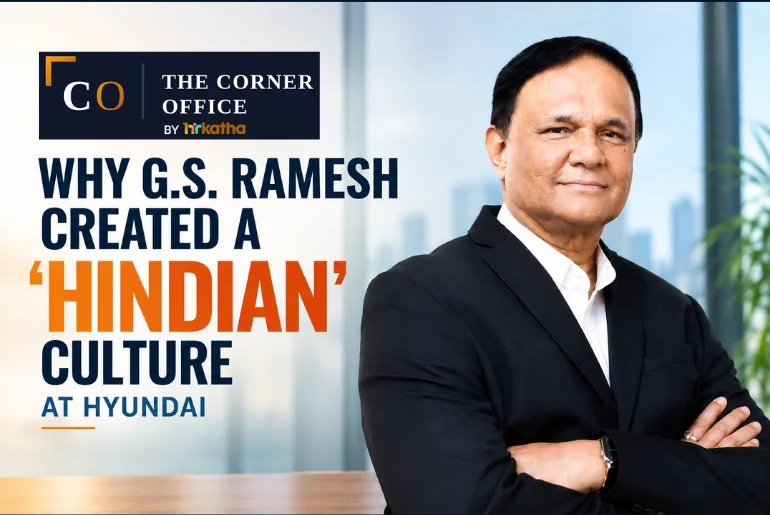
When G.S. Ramesh joined Hyundai Motor India Limited (HMIL) as its inaugural Indian employee, he stepped into a unique crucible of corporate culture, tasked with the formidable challenge of melding disparate operational philosophies into a cohesive, productive force. His pioneering role placed him at the crucial intersection of the meticulous, hierarchical, and performance-driven Korean management ethos and the diverse, relationship-oriented, and often individualistic cultural landscape of the Indian workforce. Far from attempting to impose one culture upon the other, Ramesh embarked on a journey of integration, ultimately coining the term "Hindian"—a portmanteau of Hyundai and Indian—to describe a synergized corporate identity. This innovative approach, revealed in a recent conversation with HRKatha, highlights a profound understanding of cross-cultural dynamics and stands as a testament to the adaptive leadership required for multinational corporations operating in complex, emerging markets.
Ramesh’s insight, "You cannot convert Indians to Koreans. And you cannot become Indian. So better synergise yourself," encapsulates the pragmatic wisdom that guided Hyundai’s early establishment in India. This philosophy was not merely theoretical; it underpinned the operational strategy that would eventually propel Hyundai to become one of the most successful foreign automobile manufacturers in the Indian market. His experience offers a compelling case study in navigating cultural complexities within a globalized business environment and provides a valuable framework for leaders grappling with similar challenges today.
A Career Forged in Transformation: From Tata to Hyundai and Beyond
G.S. Ramesh’s professional trajectory spans nearly five decades, marked by pivotal roles that reflect the evolving economic landscape of India. He began his career with Tata, an iconic Indian conglomerate renowned for its foundational role in the nation’s industrial development and its unique blend of corporate social responsibility with business acumen. This early exposure to a deeply rooted Indian corporate culture provided him with invaluable insights into local operational nuances, employee expectations, and the broader socio-economic context.
The 1990s ushered in a period of unprecedented economic liberalization in India, dismantling protectionist barriers and opening the doors wide to foreign direct investment (FDI). This era saw a significant influx of multinational corporations eager to tap into India’s vast consumer base and burgeoning manufacturing potential. It was against this backdrop that Hyundai Motor Company, a relatively young but ambitious automotive giant from South Korea, decided to establish a significant footprint in India. Their entry in 1996 marked a strategic move to capitalize on the country’s rapidly expanding middle class and nascent automotive market.
Hyundai’s decision to hire G.S. Ramesh as its first Indian employee was a strategic stroke of genius. He became the bridge, the cultural interpreter, and the operational architect responsible for translating corporate vision into ground-level reality. His initial task was not merely administrative but deeply cultural: to understand, articulate, and mediate the differences between the expectations of the Korean expatriate management and the realities of the Indian labor force. This period was critical, as the success or failure of foreign ventures often hinged on their ability to effectively integrate local talent and adapt to local conditions.
Following his impactful tenure at Hyundai, Ramesh embarked on an entrepreneurial journey, founding the Layam Group. This venture further demonstrates his leadership capabilities and his ability to build organizations from the ground up, drawing on the rich tapestry of experiences gained throughout his corporate career. The upcoming episode of The Corner Office by HRKatha, featuring G.S. Ramesh, Founder & Chairman of Layam Group, in conversation with Prajjal Saha, Founder & Editor of HRKatha, promises to delve deeper into these transformative experiences, shedding light on the choices and organizational cultures that shaped him into the entrepreneur he is today.
The Genesis of "Hindian": Bridging Cultural Divides
The concept of "Hindian" emerged from a necessity to reconcile two distinct management philosophies. Korean corporate culture, often characterized by its emphasis on hierarchy, collective responsibility, long working hours, unwavering loyalty, and direct, often assertive communication, stood in stark contrast to prevailing Indian workplace norms. The Indian workforce, while highly skilled and adaptable, typically values a more paternalistic leadership style, greater emphasis on personal relationships, flexibility in work-life balance, and a communication style that can be more indirect and nuanced. Decision-making processes can also differ, with Korean culture often favoring top-down directives and Indian culture sometimes involving more discussion and consensus-building, even if ultimately led by authority.
For a new entrant like Hyundai, failing to address these cultural disparities could have led to significant operational inefficiencies, high employee turnover, and ultimately, market failure. Ramesh’s brilliance lay in recognizing that neither culture was inherently superior; rather, they represented different yet equally valid approaches to work. The "Hindian" philosophy advocated for a symbiotic relationship, where the strengths of both cultures could be harnessed.
In practice, this meant several key adaptations. Hyundai might have retained its core Korean values of discipline, quality, and rigorous performance standards, but these were implemented with an understanding of the Indian context. For instance, while punctuality and adherence to process were non-negotiable, the method of achieving compliance might have involved more explanation and collaborative problem-solving rather than purely authoritative mandates. Employee engagement initiatives would likely have incorporated Indian festivals and family values, fostering a sense of belonging that resonated with the local workforce. Communication, while needing to be clear and decisive, would have also benefited from a sensitivity to indirect cues and the importance of maintaining harmony. The idea was to create an environment where Indian employees felt valued and understood, while still upholding Hyundai’s global operational benchmarks.
Hyundai’s Meteoric Rise in India: A Testament to Cultural Adaptation
The success of Hyundai Motor India Limited since its inception is a powerful validation of the "Hindian" approach. Hyundai officially commenced commercial production in India in 1998 with its flagship Santro model from its plant in Irungattukottai, near Chennai, Tamil Nadu. This strategic location provided access to a skilled labor force, robust infrastructure, and proximity to major ports.
From a nascent player, Hyundai rapidly ascended to become India’s second-largest passenger vehicle manufacturer, a position it has largely maintained for decades. This achievement was not merely due to competitive product offerings or aggressive marketing; it was deeply intertwined with its ability to cultivate a productive and motivated workforce. By the early 2000s, Hyundai had already captured a significant market share, challenging established players and new entrants alike.
Key Milestones and Data:
- 1998: Launch of the Santro, a compact car specifically designed for the Indian market, which became an instant hit.
- Early 2000s: Rapid expansion of production capacity at the Chennai plant. Hyundai became a major exporter of small cars from India, leveraging the quality and cost-effectiveness of its Indian operations.
- Current Status: HMIL operates two manufacturing plants in Chennai with a combined annual production capacity of 820,000 units. It boasts a vast sales and service network across India.
- Market Share: Consistently holds over 15% of the Indian passenger vehicle market, often exceeding 17-18% in various segments.
- Product Portfolio: From entry-level hatchbacks to premium SUVs, Hyundai’s diverse portfolio caters to a wide spectrum of Indian consumers.
This remarkable growth story underscores the critical role that effective cross-cultural management plays in global business. The "Hindian" culture, by fostering an environment of mutual respect and understanding, minimized cultural friction, enhanced employee morale, and ultimately translated into superior operational efficiency and market performance.
Broader Implications: Lessons for Global Leadership
The experience of G.S. Ramesh and the "Hindian" philosophy extends beyond the confines of Hyundai, offering profound lessons for multinational corporations (MNCs) and leaders worldwide.
- Cultural Intelligence as a Core Competency: Ramesh’s journey highlights the paramount importance of cultural intelligence (CQ) for leaders in today’s interconnected world. CQ involves the ability to understand, relate, and work effectively across cultures. It moves beyond mere awareness to active adaptation and integration.
- Localization is Key to Global Success: The "Hindian" model exemplifies successful localization. It’s not just about adapting products or marketing strategies but fundamentally about adapting organizational culture and management practices to resonate with the local workforce while retaining core corporate values.
- The Role of Cultural Architects: Pioneers like G.S. Ramesh act as "cultural architects," individuals who possess the unique skill set to bridge cultural divides, interpret different worldviews, and build inclusive environments. Their insights are invaluable for MNCs venturing into new territories.
- Synergy Over Assimilation: The principle of synergy, rather than forced assimilation, is crucial. Attempting to completely transform a local workforce into the image of the parent company’s culture often leads to resistance, resentment, and inefficiency. A synergistic approach, however, leverages the unique strengths of each culture, leading to a more robust and innovative organization.
- Leadership in Emerging Markets: India, with its vast diversity in language, religion, social customs, and economic disparities, presents a complex operational environment. The success of the "Hindian" model offers a template for how leaders can effectively navigate these complexities, fostering employee loyalty and productivity.
- Legacy for Future Leaders: The discussion hosted by HRKatha, exploring what leaders carry from the cultures they have worked in when building their own, touches upon a critical aspect of leadership development. Ramesh’s journey from Tata to Hyundai and then to founding Layam Group illustrates how diverse experiences can shape a leader’s philosophy on culture, talent management, and organizational development. The lessons learned in fostering "Hindian" culture undoubtedly inform his current entrepreneurial endeavors, emphasizing adaptability, inclusion, and strategic integration of diverse perspectives.
Official Responses and Expert Perspectives (Inferred)
While direct quotes from other Hyundai officials or HR experts on the "Hindian" term are not provided, the consistent narrative from G.S. Ramesh himself, coupled with Hyundai’s sustained success in India, strongly implies an institutional recognition and validation of this approach. HR professionals and industry analysts frequently emphasize the importance of cultural fit and localization for foreign companies in India. They would likely commend Ramesh’s approach as a textbook example of effective cross-cultural management.
- HR Experts’ View: Leading HR strategists would likely highlight the "Hindian" model as an exemplar of "cultural agility" and "inclusive leadership." They would underscore that successful cross-cultural integration requires more than just sensitivity; it demands proactive efforts to create hybrid cultures that draw strength from all contributing elements. This often involves investing in cross-cultural training, establishing clear communication channels, and empowering local leadership to interpret and adapt global policies.
- Industry Analysts’ View: Automotive industry analysts would likely attribute a portion of Hyundai’s consistent success in India not just to its product strategy but also to its robust HR practices and positive employee relations, which are direct outcomes of a well-integrated cultural approach. A stable, motivated workforce is critical for maintaining quality, driving innovation, and ensuring efficient production, all of which have been hallmarks of Hyundai’s operations in India.
The Corner Office by HRKatha: A Platform for Insights
The upcoming episode of The Corner Office by HRKatha serves as an important platform for disseminating these critical leadership insights. HRKatha, a prominent voice in the human resources domain, consistently brings forth conversations with industry veterans and thought leaders. By featuring figures like G.S. Ramesh, it provides invaluable learning opportunities for current and aspiring leaders, particularly those grappling with the complexities of global operations and workforce management. The discussion promises not only a chronological account of Ramesh’s career but also a deeper philosophical exploration into the essence of culture building within organizations.
In conclusion, G.S. Ramesh’s pioneering work in establishing the "Hindian" culture at Hyundai Motor India Limited stands as a significant landmark in the history of cross-cultural corporate integration. His foresight in recognizing the necessity of synergy over assimilation created a robust foundation for Hyundai’s spectacular success in India. This legacy continues to offer invaluable lessons for leaders striving to build cohesive, productive, and culturally intelligent organizations in an increasingly globalized world. The insights gleaned from his journey are not just historical footnotes but living principles for effective leadership in the 21st century.