Improving business performance, while seemingly a broad objective, is a critical and multifaceted endeavor for organizations navigating an increasingly complex global landscape. Between the relentless currents of shifting market conditions, persistent budget pressures, and an overwhelming array of strategic options, businesses often find themselves susceptible to the lure of short-term wins or the pitfall of spreading their efforts too thin. The fundamental challenge lies not just in identifying potential avenues for improvement, but in discerning which investments truly yield impactful and sustainable results. This requires a strategic pivot, moving beyond conventional metrics to embrace a more human-centric model of operational excellence.
The contemporary business environment is characterized by unprecedented volatility, uncertainty, complexity, and ambiguity (VUCA). Factors such as rapid technological advancement, evolving consumer behaviors, geopolitical instability, and a highly competitive talent market converge to create a formidable operating landscape. Traditional management paradigms, often focused on top-down directives and siloed departmental goals, frequently fall short in fostering the agility and resilience required to thrive. The digital transformation has accelerated the pace of change, demanding continuous innovation and a workforce capable of adapting swiftly. Moreover, the recent phenomenon of "quiet quitting" and persistent talent scarcity underscores a profound shift in employee expectations, highlighting the urgent need for companies to invest strategically in their people.
Pillars of Sustainable Business Performance: A Strategic Framework
A truly effective strategy for enhancing business performance must be holistic, addressing both operational efficiencies and the human elements that drive them. This involves a deliberate focus on several interconnected pillars, each contributing to a robust and adaptable organizational structure.
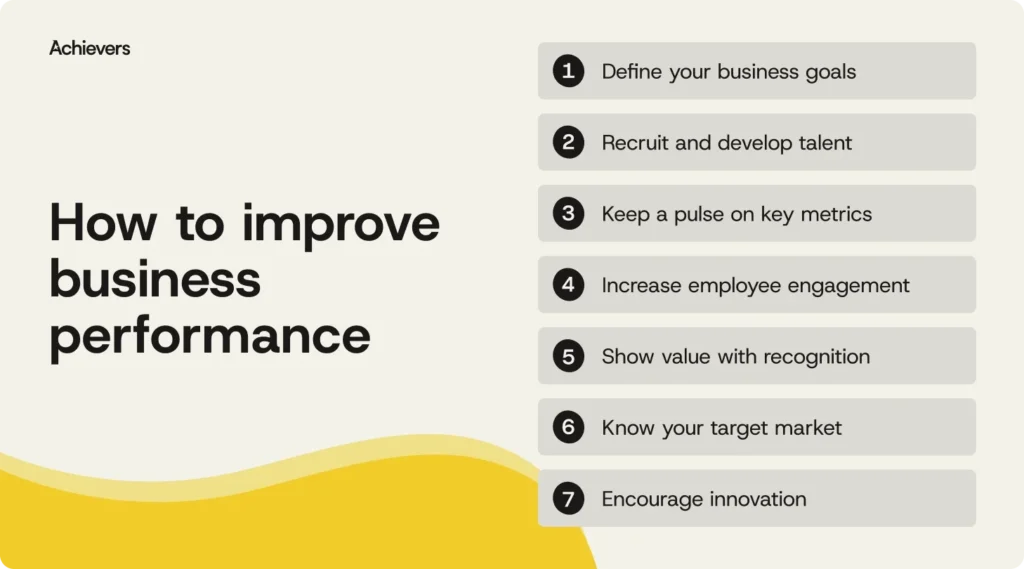
1. Articulating and Aligning Business Goals with Precision
It is axiomatic in business that progress is impossible without a clear destination. Ambiguous or poorly defined goals invariably lead to misdirected efforts, resource waste, and the need for costly, last-minute course corrections. Clear, actionable, and strategically aligned goals are the foundational blueprint that keeps every individual and department moving in a unified direction. The principle of SMART goals—Specific, Measurable, Achievable, Relevant, and Time-bound—remains a cornerstone for effective objective setting. Specificity ensures everyone understands what needs to be accomplished, measurability provides quantifiable targets, achievability keeps goals realistic yet challenging, relevance links them to broader organizational strategy, and time-bound parameters create a sense of urgency and accountability.
Cascading these overarching business goals down through every level of the organization is equally vital. This ensures that departmental and individual objectives are directly linked to the company’s strategic vision, fostering a sense of shared purpose and collective responsibility. Research consistently demonstrates a strong correlation between goal clarity and organizational success. A 2022 study by the Society for Human Resource Management (SHRM) indicated that organizations with highly effective goal-setting practices were 2.5 times more likely to report superior business outcomes, including increased profitability and market share, compared to those with less defined goal processes. This underlines that goal setting is not merely an administrative task but a critical strategic imperative that drives focus and resource allocation.
2. Strategic Talent Acquisition and Continuous Development
In today’s knowledge economy, human capital is arguably the most valuable asset. Performance is not solely dictated by what employees are technically capable of doing, but profoundly influenced by their motivation, engagement, and alignment with the organizational culture and mission. Even individuals possessing impeccable credentials will struggle to contribute effectively if they are not a cultural fit or do not resonate with the company’s core values. The cost of a mis-hire extends far beyond recruitment expenses, encompassing lost productivity, negative team morale, and potential damage to client relationships.
Building a high-performing team necessitates a robust talent strategy that extends beyond initial recruitment. This includes sophisticated hiring processes designed to assess both skills and cultural compatibility, followed by comprehensive onboarding programs that integrate new hires seamlessly into the company ethos. Furthermore, investing in continuous learning and development initiatives is crucial for maintaining a competitive edge. Upskilling and reskilling programs empower employees to adapt to technological shifts and evolving job roles, reducing external recruitment costs and fostering internal mobility. According to a LinkedIn Learning report, 94% of employees would stay at a company longer if it invested in their learning and development. This strategic approach to talent management not only enhances individual capabilities but also cultivates a resilient workforce capable of driving innovation and sustained growth.
3. Data-Driven Performance Monitoring and Analytics
The adage "you can’t improve what you don’t measure" holds particularly true in the realm of business performance. While traditional financial metrics like revenue and profit are indispensable, they often represent lagging indicators—telling you what has already happened. A truly insightful approach requires monitoring a broader spectrum of leading indicators that offer early signals about organizational health and future trajectory. These include employee performance metrics, engagement scores, employee well-being indices, customer satisfaction (CSAT) scores, Net Promoter Scores (NPS), and innovation rates. These metrics often reveal the underlying drivers of financial success long before the numbers hit the quarterly dashboard.
Implementing robust data analytics capabilities is paramount. This involves not just collecting data but analyzing it to identify trends, predict outcomes, and inform strategic decisions. Human Resources (HR) analytics, for instance, can predict potential turnover, identify skill gaps, and measure the ROI of training programs. Regular monitoring of key performance indicators (KPIs) allows for agile adjustments to strategies and resource allocation. Organizations that leverage data effectively gain a significant competitive advantage, enabling them to make proactive rather than reactive decisions. A 2023 report by Deloitte indicated that data-driven companies are 58% more likely to achieve their revenue goals and 1.5 times more likely to be profitable. This continuous feedback loop of measurement, analysis, and adjustment is essential for navigating dynamic market conditions and optimizing resource utilization.
4. Cultivating a Culture of High Employee Engagement
Employee engagement is frequently dismissed as a soft metric, a "fluffy" concept without tangible business impact. However, this perspective overlooks the profound influence a fully engaged workforce exerts on organizational outcomes. Engaged employees are not merely satisfied; they are emotionally committed to their work, their team, and the company’s mission. This commitment translates directly into a multitude of benefits: a greater generation of innovative ideas, significantly enhanced productivity and performance, and notably improved employee retention rates.
Fueling engagement requires a multi-pronged strategy rooted in fostering a sense of purpose, autonomy, and psychological safety. Transparent communication from leadership builds trust and ensures employees understand the strategic context of their work. Involving employees in decision-making processes, where appropriate, grants them a sense of ownership and value. Providing ample opportunities for professional growth and development, coupled with clear career paths, signals investment in their future. Furthermore, recognizing and celebrating achievements, fostering a positive work environment, and ensuring fair compensation and benefits all contribute to a culture where employees feel valued and motivated to contribute their best. Gallup’s extensive research consistently shows that highly engaged business units realize a 21% increase in profitability, a 17% increase in productivity, and a 20% increase in sales, alongside a 24% decrease in turnover in high-turnover organizations. These figures unequivocally position employee engagement as a critical driver of business success.
5. The Transformative Power of Strategic Employee Recognition
In an era where employees seek more than just a paycheck, feeling "seen" and valued is a powerful motivator. Superficial gestures like generic plaques or infrequent pizza parties often miss the mark, failing to create genuine impact. True, effective employee recognition is strategic; it is timely, specific, values-based, and consistently applied. It drives desired behaviors, reinforces company culture, builds deep loyalty, and acts as a crucial buffer against cultural erosion during periods of pressure or change. When employees’ contributions are genuinely acknowledged, they are more likely to go above and beyond, take initiative, and remain committed to the organization.
The efficacy of dedicated recognition platforms, such as those offered by Achievers, stands in stark contrast to ad-hoc, in-house programs. Data from the Achievers Workforce Institute (AWI) consistently demonstrates that companies leveraging a dedicated recognition platform are twice as likely to report measurable positive results compared to those relying on less structured internal systems. These platforms enable peer-to-peer recognition, link recognition to company values, and provide analytics that reveal patterns and areas for improvement in recognition practices. By making recognition a consistent and integrated part of the daily workflow, organizations can foster a continuous feedback loop that reinforces positive behaviors, boosts morale, and cultivates a thriving, appreciative culture. This strategic investment in recognition is not merely a perk; it is a fundamental driver of performance and retention, demonstrating that organizations truly value their human capital.
6. Deep Market Insight and Customer-Centricity
A fundamental principle of successful business is the understanding that attempting to appeal to "everyone" effectively means appealing to "no one." A clear, granular understanding of the target market is indispensable for prioritizing efforts, allocating resources efficiently, and tailoring offerings to the specific needs and desires of the intended audience. Without this clarity, marketing campaigns become diluted, product development risks irrelevance, and sales efforts lack focus.

Sharpening this market focus involves continuous market research, competitive analysis, and direct customer feedback mechanisms. This includes segmenting the market, identifying ideal customer profiles (ICPs), and understanding evolving purchasing behaviors and preferences. By deeply understanding who their customers are, what problems they face, and how their products or services provide solutions, businesses can refine their value proposition, optimize their go-to-market strategies, and innovate with purpose. A robust customer relationship management (CRM) system can consolidate customer data, providing actionable insights for personalized engagement. Companies with a strong customer-centric culture typically outperform their competitors in terms of revenue growth and profitability, as loyal customers become powerful advocates and repeat purchasers. According to Forbes, companies that prioritize customer experience see revenue growth 4-8% higher than the market average.
7. Fostering a Culture of Innovation and Adaptability
While hitting established targets is important for operational stability, sustained long-term success hinges on an organization’s capacity for innovation and adaptability. In a rapidly changing environment, teams must not only meet current goals but also possess the freedom and support to rethink how those goals are achieved. A culture that encourages curiosity, experimentation, and a tolerance for intelligent failure empowers employees to speak up with new ideas, try novel approaches, and embrace change rather than resist it.
Building such a culture requires more than just lip service. It involves creating psychological safety where employees feel comfortable taking calculated risks without fear of severe reprisal. Leadership must actively solicit and value diverse perspectives, provide resources for exploratory projects, and celebrate learning from failures as much as from successes. Implementing agile methodologies, fostering cross-functional collaboration, and dedicating time for creative problem-solving are practical steps. When employees feel trusted and supported in their efforts to innovate, they become proactive agents of change, propelling the business forward instead of merely striving to keep pace. Companies recognized as innovation leaders consistently outperform their peers in market capitalization and long-term growth, demonstrating that adaptability is not a luxury but a strategic imperative for survival and prosperity.
Measurable Returns: The Tangible Outcomes of Enhanced Performance
When an organization successfully elevates its team performance across these strategic pillars, the ripple effects are profound, manifesting in tangible and measurable business results. Focusing on performance does not merely make work more engaging or efficient; it fundamentally strengthens the entire enterprise.
Revenue Growth: A highly engaged and motivated workforce directly correlates with an uplift in the bottom line. Motivated teams are more effective in sales, provide superior customer service, and are more likely to identify and capitalize on innovative opportunities—all of which are direct drivers of revenue. Furthermore, improved employee performance often leads to better decision-making processes, streamlined operations, and higher-quality products or services, which collectively transform performance into a powerful growth engine. Prioritizing these performance drivers ensures the business is not just growing, but growing smarter and more sustainably.
Employee Retention: People are far more likely to remain with an organization when they feel a deep connection to their work, the prevailing culture, and the overarching mission. High-performing teams are inherently more invested, fostering an environment where individuals see clear pathways for personal and professional growth. This perception of opportunity significantly boosts engagement and, consequently, leads to a marked reduction in employee turnover rates. The benefits of improved retention are substantial: fewer hiring headaches, dramatically lower recruitment and training costs, and the cultivation of a more stable, experienced, and knowledgeable workforce capable of propelling the business into the future. Research from the Work Institute consistently highlights the enormous cost of employee turnover, underscoring retention as a critical financial and operational metric.
Increased Productivity: High performance is fundamentally about optimizing effort, working smarter rather than simply harder. When employees possess a clear understanding of their objectives and their strategic importance, they inherently waste less time on extraneous tasks, make quicker and more informed decisions, and accomplish more within their allocated hours. Performance-driven teams excel at prioritization, are adept at problem-solving, and actively seek ways to streamline day-to-day processes. This cumulative effect translates into significant operational impact without necessitating unsustainable levels of effort or leading to widespread employee burnout. The focus shifts from sheer volume to strategic output, maximizing efficiency.
Elevated Customer Satisfaction: There is an undeniable and direct causal link between the internal performance and engagement of employees and the external experience of customers. When teams are engaged, motivated, and feel valued, they approach their work—especially customer interactions—with greater care, enhanced energy, and a profound sense of pride in the outcome. This internal ethos translates into superior service delivery, the cultivation of stronger, more empathetic customer relationships, and the fostering of loyal customers who not only return for future business but also enthusiastically advocate for the brand to their networks. A highly satisfied customer base is a powerful, organic growth driver.
Optimized Operational Costs: Improvements in business performance are not solely about increasing output; they are equally about enhancing efficiency and reducing waste. When employees are strategically aligned, highly motivated, and empowered, they naturally contribute to minimizing wasted time, eliminating duplicated efforts, and significantly reducing avoidable mistakes. This results in leaner operational processes, more intelligent and responsible resource utilization, and ultimately, substantial cost savings. These savings can then be strategically reinvested into growth initiatives, research and development, or further employee development, rather than being absorbed by inefficiencies and operational leakages. The optimization of costs transforms efficiency into a strategic financial advantage.
The Strategic Imperative: Integrating People and Technology for Lasting Impact
The journey to superior business performance ultimately circles back to the core: employees. When individuals are genuinely engaged, deeply motivated, and consistently recognized for their contributions, performance is not merely improved; it becomes inherently more sustainable and resilient. However, achieving this profound impact necessitates a deep understanding of what truly drives an organization’s people and, crucially, equipping managers with the requisite tools and insights to act upon this understanding effectively.
This is precisely where modern workforce solutions, such as the Achievers platform, play a pivotal role. Built upon a foundation of workforce science and extensive behavioral research, Achievers offers a comprehensive recognition platform designed to embed appreciation into the daily fabric of organizational life. This transforms recognition from an occasional event into a consistent habit—one that powerfully reinforces desired behaviors, strengthens the organizational culture from within, and directly fuels measurable business results. Furthermore, with integrated analytics and reporting capabilities, leaders gain clear visibility into what recognition strategies are most effective, where engagement might be faltering, and precisely where to focus their efforts for continuous improvement. Such platforms bridge the gap between human potential and organizational objectives, enabling a truly data-driven, people-first approach to achieving and sustaining peak business performance.
Improve Business Performance FAQs
Q1: What is the most critical factor for improving business performance?
A1: While many factors contribute, the most critical factor is often considered to be employee engagement and satisfaction. Engaged employees are more productive, innovative, and loyal, directly impacting revenue, customer satisfaction, and retention. Investing in people, clear goal setting, and strategic recognition are foundational.
Q2: How can small businesses improve performance without large budgets?
A2: Small businesses can focus on cost-effective strategies such as clear goal setting, fostering a positive culture, implementing peer-to-peer recognition (even without a formal platform initially), leveraging free or low-cost feedback tools, and investing in continuous, accessible learning opportunities for employees. Building strong relationships with customers and employees is key.
Q3: What role does technology play in business performance improvement?
A3: Technology is a powerful enabler. It facilitates data collection and analysis (e.g., HRIS, CRM, performance management systems), automates routine tasks, improves communication, and provides platforms for collaboration, learning, and recognition. Tools like dedicated recognition platforms (e.g., Achievers) can operationalize culture-building efforts and provide measurable insights.
Q4: How do you measure the success of performance improvement initiatives?
A4: Success is measured by tracking key performance indicators (KPIs) relevant to the initiative. This could include financial metrics (revenue, profit margins, cost reduction), HR metrics (employee turnover, engagement scores, productivity rates), and customer metrics (CSAT, NPS, retention rates). Baseline data should be established before initiatives begin for accurate comparison.
Q5: What are common pitfalls to avoid when trying to improve business performance?
A5: Common pitfalls include:
- Lack of clear goals: Initiatives without well-defined objectives often fail.
- Ignoring employee input: Disengaged employees will not support changes.
- Focusing only on short-term gains: Sustainable improvement requires long-term strategic thinking.
- Failure to measure progress: Without data, it’s impossible to know what’s working.
- Resistance to change: A culture that stifles innovation and adaptability will struggle.
- Inconsistent leadership: Leaders must champion initiatives and model desired behaviors.
Key Insights
- Human Capital as Core Asset: Sustainable business performance hinges on strategically investing in and empowering employees, moving beyond traditional operational metrics to a human-centric approach.
- Strategic Goal Alignment: Clear, actionable, and cascaded goals are fundamental for unified direction, efficient resource allocation, and measurable progress across the organization.
- Data-Driven Decision Making: Beyond lagging financial indicators, utilizing leading metrics like employee engagement, customer satisfaction, and innovation rates provides crucial insights for proactive strategic adjustments.
- Engagement and Recognition Drive Results: High employee engagement leads to increased productivity, innovation, and retention. Strategic, consistent recognition, especially through dedicated platforms, is a powerful catalyst for reinforcing positive behaviors and strengthening company culture.
- Holistic Approach for Resilience: Integrating talent development, market insight, innovation, and adaptable leadership with robust performance monitoring creates a resilient, growth-oriented organization capable of navigating complex market dynamics.