
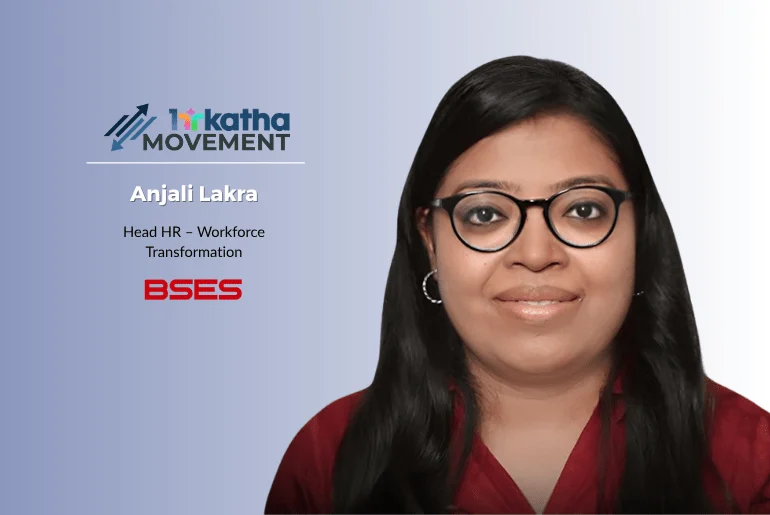
Anjali Lakra has been appointed as the Head HR – Workforce Transformation at Bombay Suburban Electric Supply (BSES) Delhi, bringing a wealth of experience spanning over 18 years in critical human resources domains. This strategic move underscores BSES Delhi’s commitment to modernizing its human capital strategies and adapting to the rapidly evolving landscape of the energy sector. In her new and pivotal role, Lakra will be at the forefront of the organization’s comprehensive HR transformation and digitalization agenda, with a keen focus on enhancing process excellence, leveraging cutting-edge HR technology, and cultivating a future-ready workforce.
Her mandate extends to working in close collaboration with the senior leadership team to seamlessly integrate digital-first thinking into practical, people-centric solutions. The overarching objective of these initiatives is to foster a workforce that is not only more agile and efficient but also highly adaptive to the dynamic challenges and opportunities inherent in the power distribution industry. This appointment is a clear signal of BSES Delhi’s strategic intent to position HR as a core driver of organizational success and resilience.
The Strategic Imperative for HR Transformation in India’s Power Sector
The Indian power sector, particularly the electricity distribution companies (Discoms) like BSES Delhi, is undergoing a profound transformation. Challenges such as aging infrastructure, burgeoning energy demand, the integration of renewable energy sources, and the imperative for smart grid technologies necessitate a fundamental rethinking of operational models and, crucially, human capital management. For large utilities operating in dense urban environments, the complexity of managing a vast and diverse workforce, ensuring uninterrupted service delivery, and navigating a stringent regulatory framework presents unique HR challenges.
Traditionally, HR in the power sector has often been viewed through an administrative lens, primarily focused on compliance, payroll, and basic employee services. However, global and national trends dictate a shift towards a more strategic, data-driven, and technologically integrated HR function. Organizations are increasingly recognizing that their people are their most valuable asset, and investing in their development, engagement, and adaptability is paramount for sustained competitive advantage.
Digitalization, in particular, offers immense potential for HR to move beyond transactional tasks and become a true strategic partner. Implementing advanced HR information systems (HRIS), leveraging artificial intelligence (AI) and machine learning (ML) for talent acquisition and development, deploying sophisticated HR analytics for workforce planning, and enhancing employee experience through digital platforms are no longer luxuries but necessities. This digital transformation enables greater efficiency, transparency, and the ability to derive actionable insights from workforce data, ultimately leading to better decision-making and improved organizational performance.
Furthermore, workforce transformation is critical for utilities. As the sector embraces automation, smart metering, grid modernization, and distributed generation, the demand for traditional skill sets is diminishing, while new competencies in areas like data analytics, cybersecurity, renewable energy management, and customer relationship management for digital interfaces are rapidly emerging. Building an agile workforce means not only upskilling and reskilling existing employees but also fostering a culture of continuous learning and adaptability, preparing the organization for future disruptions and innovations.
Anjali Lakra’s Extensive Career: A Journey of HR Excellence
Anjali Lakra’s career trajectory showcases a deep and comprehensive understanding of human resources, honed over nearly two decades within the challenging and dynamic environment of India’s power distribution sector. Her journey began after completing her Post Graduate Diploma in Business Management (PGDBM) with a specialization in Human Resources from the esteemed Faculty of Management Studies (FMS), University of Delhi – an institution renowned for its rigorous academic standards and industry-relevant curriculum. Complementing her HR expertise, Lakra also holds an LLB degree, a unique academic background that has provided her with an invaluable legal perspective on HR matters, particularly in a highly regulated industry. This dual qualification has undoubtedly been a significant asset throughout her career, allowing her to navigate complex labor laws and ensure robust compliance in all HR functions.
Prior to her current appointment at BSES Delhi, Lakra dedicated 18 years of her professional life to BSES Yamuna Power, where she steadily ascended through various roles, culminating in her position as Assistant Vice President. Her tenure at BSES Yamuna Power was characterized by extensive involvement across a broad spectrum of HR functions, demonstrating her versatility and ability to manage diverse responsibilities simultaneously.
During her long and impactful stint, she was instrumental in shaping and executing strategies related to performance management, a critical function for driving employee productivity and aligning individual goals with organizational objectives. She also spearheaded numerous employee engagement initiatives, recognizing the importance of fostering a positive and motivating work environment to enhance retention and productivity. Her responsibilities also encompassed the full lifecycle of recruitment, from talent acquisition strategies to onboarding processes, ensuring that BSES Yamuna Power attracted and retained the best talent in a competitive market.
Beyond these core functions, Lakra was deeply involved in organizational development (OD), working on initiatives aimed at improving organizational effectiveness, culture, and structural design. Her portfolio also included the management of employee services, ensuring smooth operations and high levels of employee satisfaction in day-to-day HR interactions. Financial acumen was also a key aspect of her role, as she managed HR budgeting, optimizing resource allocation for various HR programs and initiatives. Furthermore, she played a crucial role in the drafting and meticulous implementation of comprehensive rewards and recognition policies, designed to motivate employees and acknowledge their contributions effectively.
A notable facet of her experience at BSES Yamuna Power was her exposure to HR-legal matters. This involved dealing with labor disputes, ensuring adherence to industrial relations laws, managing grievance redressal, and providing expert advice on legal implications related to HR policies and practices. This practical experience in HR-legal issues is particularly valuable in the Indian context, where labor laws are intricate and subject to frequent changes, and it adds a layer of strategic depth to her overall HR leadership capabilities.
Throughout her distinguished career, Lakra has meticulously built a robust expertise spanning multiple critical HR domains. This includes talent management, focusing on attracting, developing, and retaining high-potential individuals; employee engagement, fostering a motivated and committed workforce; HR analytics, leveraging data to drive informed decisions; organizational development, enhancing overall organizational health and effectiveness; learning and development (L&D), investing in continuous skill enhancement; performance management, ensuring accountability and goal achievement; and organizational branding, positioning the company as an employer of choice. Her new mandate at BSES Delhi is strategically designed to bring these diverse capabilities together, but with an intensified and sharper focus on technology-led HR transformation and building a highly agile and adaptable workforce.
The Strategic Mandate at BSES Delhi: Driving Workforce Transformation
Anjali Lakra’s appointment signals a clear strategic direction for BSES Delhi: to embark on an aggressive journey of HR modernization, driven by technology and focused on future readiness. Her role as Head HR – Workforce Transformation is multifaceted, aiming to redefine how human capital is managed and developed within the organization.
One of the primary pillars of her agenda is Process Excellence. In the realm of HR, this entails scrutinizing existing HR processes – from recruitment and onboarding to performance reviews and exit management – to identify inefficiencies, eliminate redundancies, and streamline workflows. The goal is to move towards standardized, automated, and best-in-class HR operations that are efficient, transparent, and compliant. This includes leveraging digital tools to automate routine tasks, thereby freeing up HR professionals to focus on more strategic, value-added activities.
The second critical pillar is HR Technology. This involves the strategic implementation and optimization of advanced HR technology solutions. This could range from upgrading the core HR Information System (HRIS) to a cloud-based, integrated platform that offers self-service capabilities for employees and managers, to deploying specialized tools for talent acquisition (Applicant Tracking Systems), learning management (Learning Management Systems), and performance management. Furthermore, the focus will be on integrating HR analytics platforms that can provide real-time insights into workforce trends, talent gaps, and the effectiveness of HR programs, enabling data-driven decision-making. The adoption of AI and machine learning could also play a role in automating aspects of recruitment, personalized learning paths, and predictive analytics for attrition risk.
The third, and perhaps most transformative, pillar is Workforce Transformation. This is about preparing the entire organization for the future of work. For a utility company like BSES Delhi, this means anticipating the skill sets required for smart grid operations, renewable energy integration, advanced customer service technologies, and data security. It involves developing robust learning and development programs that facilitate upskilling and reskilling, fostering a culture of continuous learning, and nurturing digital literacy across all employee levels. Workforce transformation also encompasses fostering an organizational culture that embraces change, encourages innovation, and supports employee well-being in a dynamic work environment. Building an "agile" workforce means equipping employees with the ability to adapt quickly to new technologies, processes, and market demands, ensuring the organization remains responsive and competitive.
Lakra will also be tasked with translating "digital-first thinking into people-centric solutions." This means that while technology will be a key enabler, the ultimate aim is to enhance the employee experience. Implementing digital tools should not merely automate tasks but should also make HR services more accessible, personalized, and engaging for employees. This involves designing intuitive digital interfaces, providing timely and relevant information, and creating opportunities for employees to manage their careers and development proactively through digital platforms. Her close collaboration with the leadership team will be crucial in ensuring that HR strategies are fully aligned with the broader business objectives and digital transformation initiatives of BSES Delhi.
Supporting Data and Industry Context
The emphasis on HR transformation is not unique to BSES Delhi but reflects a broader trend. A 2023 report by Grand View Research indicated that the global HR software market size was valued at USD 23.33 billion in 2022 and is expected to grow at a compound annual growth rate (CAGR) of 10.9% from 2023 to 2030. India is a significant contributor to this growth, with increasing adoption of cloud-based HR solutions and analytics platforms. Companies are investing heavily in HR technology to improve operational efficiency, enhance employee experience, and gain strategic workforce insights.
In the Indian power sector, skill gaps are a major concern. A study by the Power Sector Skill Council highlighted a significant demand for skilled professionals in emerging areas such as smart grid technology, renewable energy installation and maintenance, and cybersecurity for critical infrastructure. This underscores the urgency for utilities to focus on comprehensive learning and development programs and proactive workforce planning. Employee engagement also remains a challenge in large public and private sector entities, making technology-enabled engagement strategies crucial for retention and productivity.
Inferred Statements and Broader Implications
While specific statements from BSES Delhi leadership regarding Lakra’s appointment were not immediately available, the strategic nature of the role itself speaks volumes. The creation of a "Head HR – Workforce Transformation" position, rather than a traditional HR head role, clearly signals a proactive and forward-looking approach by the BSES Delhi management. It can be inferred that the leadership has recognized the critical need to revitalize its human resources function to meet future challenges and opportunities. This move suggests a strong commitment from BSES Delhi to invest in its human capital as a strategic asset, acknowledging that technological advancements alone are insufficient without a skilled, engaged, and adaptive workforce.
Industry observers view such appointments as a critical step for large infrastructure and utility companies in India. "The power sector is at an inflection point, and human capital is arguably the most critical factor for successful navigation of this transition," noted a Mumbai-based HR consultant specializing in infrastructure. "Leadership appointments like Anjali Lakra’s, with a clear mandate for digital and workforce transformation, are indicative of a mature understanding that HR is no longer just a support function but a strategic business imperative."
The implications of Lakra’s appointment for BSES Delhi are far-reaching. Internally, employees can anticipate a modernization of HR services, potentially leading to improved employee experience through self-service portals, more streamlined processes, and enhanced opportunities for skill development. For the organization, a more agile and efficient workforce will contribute directly to operational excellence, better service delivery, and enhanced adaptability to regulatory changes and technological advancements. This strategic HR leadership could also bolster BSES Delhi’s employer brand, making it more attractive to top talent seeking careers in a technologically advanced and forward-thinking utility.
Beyond BSES Delhi, this appointment could serve as a benchmark for other Discoms and public sector undertakings in India. As the energy sector continues its rapid evolution, the emphasis on strategic HR leadership, technological integration, and workforce readiness will become increasingly vital. Anjali Lakra’s extensive experience and specialized mandate position her to play a significant role not just within BSES Delhi but potentially in influencing best practices across the broader Indian utility landscape, demonstrating how HR can effectively drive organizational transformation in a critical infrastructure sector. This marks a significant career milestone for Lakra, placing her at the helm of a critical transformation journey within one of India’s leading power distribution companies.








