The perennial challenge of managing workplace change continues to be a significant hurdle for human resources departments and business leaders. According to a recent Gartner report, a substantial 54% of Chief Human Resource Officers (CHROs) acknowledge that their current change management strategies are failing to effectively engage their workforce. This considerable disparity between intended outcomes and realized impact often stems from a fundamental issue: the employee experience of change. When executed with proficiency, organizational shifts can serve as potent catalysts, fostering team alignment, generating forward momentum, and cultivating a resilient workforce. However, the success of any transformation hinges on the pillars of connection, clarity, and consistent communication.
The Shifting Landscape of Workplace Change
The modern business environment is characterized by its relentless pace of innovation and adaptation. Organizations are increasingly compelled to undergo transformations driven by technological advancements, evolving market demands, regulatory shifts, and strategic realignments. These changes, while often necessary for survival and growth, can introduce uncertainty, anxiety, and resistance among employees if not managed with foresight and empathy. The consequences of poorly managed change can range from decreased productivity and employee disengagement to increased turnover and damage to organizational culture. Conversely, a well-orchestrated change process can lead to enhanced innovation, improved operational efficiency, and a more adaptable and engaged workforce.
Key Strategies for Effective Workplace Change Management
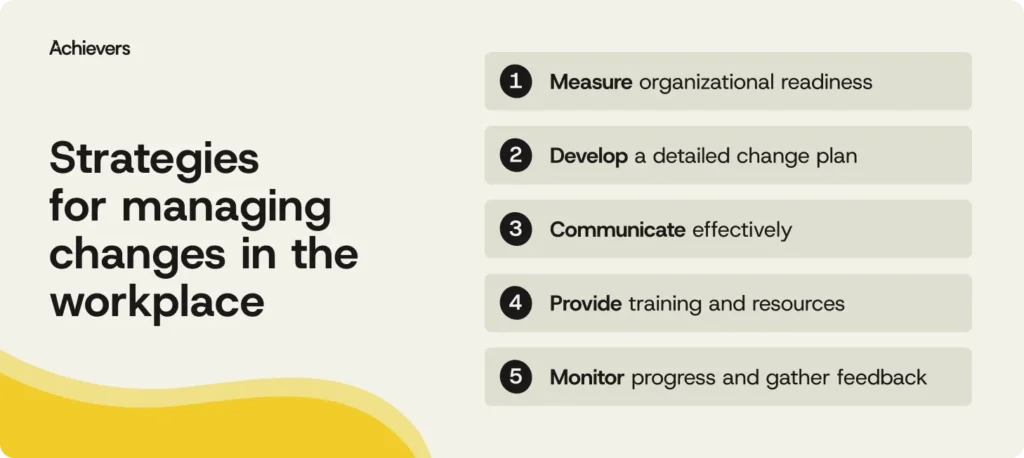
To bridge the gap between intention and impact, organizations must adopt strategic approaches that prioritize employee experience. The following five key strategies offer a robust framework for navigating workplace transformations:
1. Measure Organizational Readiness
Before embarking on any new initiative, a critical first step is to gauge the organization’s preparedness. This involves a thorough assessment of both the human and operational aspects of the business. Understanding employee sentiment, existing skill sets, cultural receptiveness to new ideas, and the capacity of current processes to absorb change are all vital components. Tools such as employee surveys, focus groups, and diagnostic assessments can provide invaluable insights into potential areas of resistance or support. This proactive assessment allows leaders to tailor their change strategies to address specific organizational needs and mitigate potential roadblocks before they materialize.
2. Develop a Detailed Change Plan
A comprehensive and meticulously crafted change plan is not merely a roadmap; it is a testament to the seriousness and thoughtfulness behind the proposed alterations. Such a plan should outline clear objectives, identify key stakeholders, define roles and responsibilities, establish timelines, and delineate communication protocols. It should also anticipate potential challenges and outline contingency measures. A detailed plan provides employees with a sense of direction and reassurance, demonstrating that the changes are not arbitrary but are the result of careful consideration and strategic intent. This level of transparency fosters trust and reduces the likelihood of misinformation or speculation.
3. Communicate Effectively
The cornerstone of successful change management is robust and consistent communication. Employees must clearly understand what is changing, the rationale behind these changes, and, crucially, how these changes will directly or indirectly affect them. Communication should be a two-way street, encouraging dialogue and providing avenues for questions and feedback. Utilizing multiple communication channels – including town hall meetings, departmental briefings, internal newsletters, and digital platforms – ensures that information reaches all employees. The message should be delivered with empathy, acknowledging potential concerns and highlighting the benefits of the change for both individuals and the organization.
4. Provide Training and Resources
Equipping employees with the necessary skills and knowledge to adapt to new processes, technologies, or roles is paramount. Inadequate training can lead to frustration, errors, and a sense of inadequacy, undermining the change initiative. Offering comprehensive training programs, workshops, and readily accessible resources ensures that employees feel capable and empowered to embrace new responsibilities. This investment in employee development not only facilitates successful adoption of the change but also reinforces the organization’s commitment to its people, fostering a sense of value and support.
5. Monitor Progress and Gather Feedback
The implementation of change is not a one-time event but an ongoing process that requires continuous monitoring and adaptation. Regularly tracking progress against established goals and key performance indicators (KPIs) allows organizations to identify what is working well and where adjustments may be needed. Crucially, actively soliciting and acting upon employee feedback is essential. When employees see their input directly influencing improvements and shaping the direction of change, it significantly strengthens their trust in leadership and their commitment to the organization. This feedback loop is vital for course correction and for building a culture of continuous improvement.
Best Practices for Sustaining Momentum Through Change
Beyond the foundational strategies, several best practices can further enhance the effectiveness of workplace change management:
1. Reinforce the "Why" Through Recognition
Employees are more likely to embrace and sustain new behaviors when they understand the underlying purpose and see the value in their efforts. Recognizing and rewarding individuals and teams who actively adopt new ways of working is a powerful motivator. This reinforcement, delivered through formal recognition programs or informal appreciation, not only encourages the repetition of desired behaviors but also serves as a visible demonstration of the organization’s values and commitment to progress. Recognition acts as a tangible bridge between individual contributions and organizational objectives, accelerating cultural transformation.

2. Use Data to Spot Friction Points
In today’s data-driven world, leveraging analytics provides invaluable insights into the change process. By tracking employee engagement metrics, performance data, and feedback patterns, leaders can identify areas where change adoption is encountering resistance or where employees are exhibiting signs of disengagement. This data-driven approach enables proactive intervention, allowing for targeted support or adjustments to the change strategy before issues escalate. Real-time insights empower leaders to make informed decisions that optimize both business outcomes and the employee experience.
3. Keep Employees in the Loop
Change should not be perceived as an imposition but as a collaborative journey. Maintaining open and continuous communication ensures that employees remain engaged and invested throughout the transformation process. Providing regular updates, sharing progress reports, and soliciting ongoing input fosters a sense of ownership and shared responsibility. Employees who feel recognized and empowered are far more likely to navigate the inevitable ups and downs of change with resilience and commitment, contributing to a more stable and productive work environment.
4. Make Change Part of the Flow of Work
The more disruptive and cumbersome a new process or initiative appears, the higher the likelihood of its eventual abandonment. The key to lasting change is to integrate it seamlessly into the existing tools, routines, and rhythms of daily work. When new practices feel like a natural extension of existing workflows rather than an additional burden, they are more readily adopted and sustained. This integration minimizes friction, reduces the perceived effort required, and ensures that change becomes an organic part of the organizational culture.
The Role of Technology in Facilitating Change
In an era where digital transformation is a constant, technology plays an increasingly crucial role in managing organizational change. Platforms that offer integrated solutions for recognition, feedback, and employee engagement can significantly streamline and enhance change management efforts. Such platforms can provide real-time data on employee sentiment, facilitate targeted communication, and enable timely recognition of desired behaviors. By combining strategic planning with the right technological tools, organizations can transform moments of change into opportunities for lasting business success and cultural evolution.
The integration of recognition, feedback, and engagement solutions, such as those offered by Achievers, provides a holistic approach to managing change. This comprehensive suite of tools helps organizations foster a culture where employees feel heard, valued, and supported, thereby turning potentially disruptive changes into positive, culture-shaping experiences. When thoughtful planning is augmented by technology designed to keep people connected and engaged, the process of change becomes a powerful engine for growth and adaptation.
Frequently Asked Questions About Managing Workplace Change
Q1: What is the most significant challenge in managing workplace change?
A1: The most significant challenge often lies in effectively engaging employees and overcoming resistance, as evidenced by the high percentage of CHROs who report their strategies are not meeting employee engagement goals.
Q2: How can organizations ensure employees understand the ‘why’ behind a change?
A2: Consistent and transparent communication is key. Leaders must clearly articulate the strategic rationale, the benefits of the change, and how it aligns with the organization’s mission and values. Reinforcing this through recognition for embracing the change further solidifies understanding.
Q3: What role does feedback play in managing change?
A3: Feedback is crucial for monitoring progress, identifying friction points, and making necessary adjustments. Acting on employee feedback demonstrates that their input is valued and builds trust, which is essential for sustained commitment to the change.
Q4: How can technology support workplace change initiatives?
A4: Technology, particularly integrated platforms for recognition, feedback, and engagement, can facilitate communication, track progress, provide data insights, and enable timely recognition, thereby streamlining and enhancing the change management process.
Q5: What are the long-term benefits of effective change management?
A5: Effective change management leads to a more agile and resilient organization, improved employee engagement and retention, enhanced productivity, and a stronger, more adaptable organizational culture capable of navigating future challenges.