For the past decade, the field of talent acquisition has undergone a profound digital transformation. Innovations such as applicant tracking systems (ATS), sophisticated recruitment marketing platforms, automated scheduling tools, and self-service career sites have revolutionized how organizations attract, engage, and manage potential employees. The efficiency gains have been undeniable, with nearly every stage of the hiring funnel now operating at a significantly accelerated pace compared to just five years ago. Yet, paradoxically, the average time-to-fill for open positions has continued to grow. This perplexing trend points to a critical shift: the bottleneck in the hiring process has moved, now squarely residing in the crucial middle stage where candidates must undergo human evaluation.
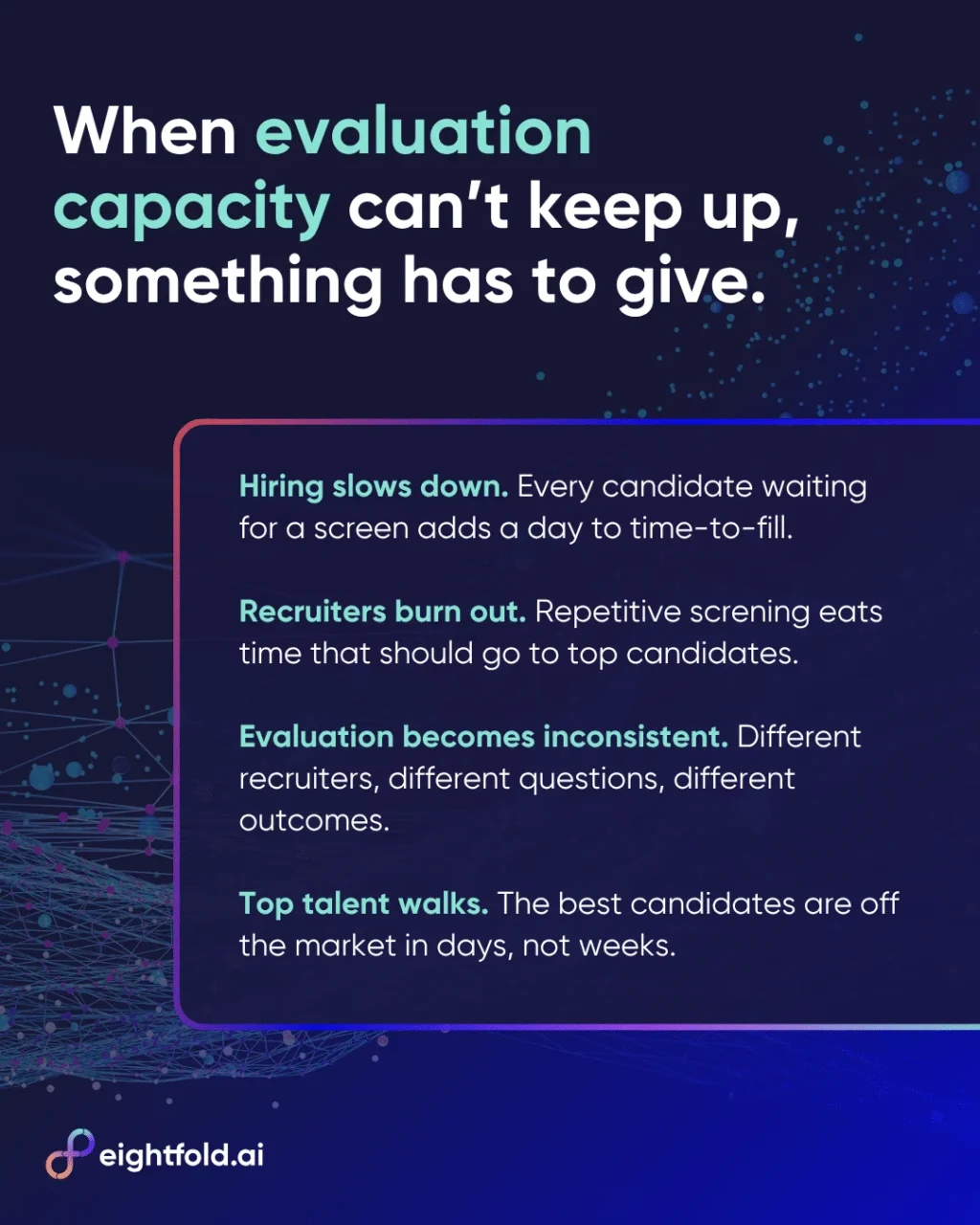
This persistent challenge is precisely what Eightfold AI Interviewer aims to address. The platform introduces an AI-led structured interview layer designed to empower recruiting teams to assess candidates earlier in the process, with greater consistency, and at a scale previously unattainable without increasing headcount. This stands in stark contrast to the candidate screening process, which has seen remarkably little evolution over the past two decades. Traditionally, recruiters would manually initiate phone calls, pose a standardized set of questions, meticulously take notes, and repeat this laborious process dozens of times for each open requisition. While this model may have been adequate when applicant volumes were more manageable, it is demonstrably unsustainable in today’s high-volume hiring landscape.
The Escalating Volume Challenge: A Data-Driven Perspective
The surge in applicant volumes across nearly every industry is a well-documented phenomenon. This increase can be attributed to several converging factors. Firstly, the proliferation of "easy apply" features on job boards and professional networking sites has dramatically lowered the barrier to entry for candidates. Secondly, advancements in sourcing technologies have broadened the reach of recruitment efforts, exposing more potential candidates to job opportunities. Most significantly, the increasing accessibility and sophistication of AI tools are empowering candidates to apply to a greater number of roles in a significantly shorter timeframe. This has created a scenario where recruiter capacity, often constrained by budget and organizational structure, has remained stagnant or even declined.
The core issue for many organizations is not a lack of technological investment, but rather the inability to fully leverage existing technology investments by eliminating manual, time-consuming tasks that continue to impede the hiring velocity. Recruiting teams are increasingly burdened with the expectation to screen a larger pool of candidates, accelerate their hiring timelines, and simultaneously enhance the candidate experience, all without the benefit of additional personnel. This creates an untenable situation, forcing organizations to make difficult compromises.
The False Trade-off: Speed vs. Thoroughness in Candidate Evaluation
In response to this mounting pressure, many talent acquisition leaders have inadvertently fallen into a trap of perceived trade-offs: either prioritize speed and conduct a superficial evaluation, or opt for a thorough assessment that inevitably leads to prolonged hiring cycles. This often translates into screening fewer candidates per requisition or shortening the duration of initial conversations, leading to an over-reliance on resume reviews and keyword matching.
However, this perceived trade-off is fundamentally flawed. Resumes and keyword matches have historically been insufficient inputs for making high-quality hiring decisions. When compounded by higher applicant volumes and thinner screening processes, the risks escalate considerably. This can result in valuable talent being overlooked, a lack of consistency in evaluation standards, and ultimately, hiring mistakes that manifest as increased employee attrition down the line.
For organizations that have already invested in technology solutions as the bedrock of their talent strategy, this presents a critical juncture. Once recruitment operations have been streamlined and optimized, the next frontier for improvement lies in enhancing the quality and consistency of candidate evaluation. The perceived conflict between speed and rigor in hiring is not an inherent law of the recruitment process, but rather a consequence of an outdated operating model where evaluation is entirely dependent on synchronous human conversations.
The Evolution of Evaluation: Towards Scalable, Consistent Insights
Organizations that are successfully navigating this bottleneck are not resorting to simply hiring more recruiters or replacing their existing systems wholesale. Instead, they are strategically extending their recruitment capabilities by fundamentally restructuring where and how candidate evaluation occurs, while continuing to utilize new platforms as their system of record.

This evolutionary approach complements existing recruitment workflows by providing more consistent and objective candidate insights. Crucially, it frees up recruiters to dedicate more of their valuable time to high-value interactions, such as in-depth discussions with promising candidates or strategic engagement with hiring managers, and less time on repetitive, low-yield screening tasks.
Eightfold AI Interviewer: Augmenting, Not Replacing, the Recruiter’s Role
A prevalent misconception surrounding AI-enabled candidate evaluation is that it necessitates a complete overhaul of established recruiting processes. In reality, solutions like the Eightfold AI Interviewer are meticulously designed to integrate seamlessly with existing Applicant Tracking Systems (ATS), serving as an augmentation rather than a replacement. The ATS remains the authoritative source of truth for candidate data, while the AI-enabled screening layer introduces a structured evaluation framework that enables recruiters to gather richer, more objective candidate insights earlier in the hiring journey.
The implementation of such solutions is typically straightforward, allowing organizations to build upon their existing workflows, processes, and technological investments. Teams can initiate the process by focusing on a single role or a specific hiring process, standardizing screening questions, and rapidly establishing a more consistent candidate experience. This can be achieved without causing disruption to the day-to-day activities of recruiters, hiring managers, or the established ATS workflows.
The ultimate outcome is a strengthened, not a fundamentally altered, recruiting process. Recruiters experience a significant reduction in the time spent on repetitive screening conversations. Candidates benefit from a faster progression through the hiring funnel, and hiring teams are equipped with more consistent and reliable information, facilitating more informed and effective hiring decisions.
Supporting Data and Industry Trends
The impact of inefficient candidate evaluation is substantial. Research from organizations like the Brandon Hall Group has consistently highlighted that "time to fill" is a key metric impacting business performance, with longer hiring cycles leading to lost productivity and increased recruitment costs. A study by Aberdeen Group found that companies with a strong hiring process experience 13% higher revenue per employee and a 22% lower employee turnover rate. Conversely, organizations struggling with the bottleneck often see their best candidates accept offers from competitors who can move more decisively.
The trend towards AI in recruitment is not merely a technological fad; it’s a strategic imperative driven by economic realities. According to a report by Gartner, by 2025, 30% of talent acquisition organizations will leverage AI-powered tools to automate resume screening and candidate matching, a significant increase from current adoption rates. This indicates a broad industry recognition of the need for technological intervention to address the inefficiencies in talent acquisition.
The Chronology of Transformation in Talent Acquisition
The journey of talent acquisition modernization can be broadly segmented:
- Early 2000s – The Dawn of ATS: Applicant Tracking Systems emerged as the first significant technological leap, digitizing resume submission and candidate management. This marked a shift from paper-based processes to electronic record-keeping.
- Mid-2010s – The Rise of Recruitment Marketing and Career Sites: As the candidate market became more competitive, organizations began investing in employer branding, content marketing, and user-friendly career portals to attract talent. Self-service career sites empowered candidates to find and apply for roles more independently.
- Late 2010s – Automation and Efficiency Tools: Technologies like automated scheduling, chatbot interactions for initial queries, and AI-powered sourcing tools gained traction, aiming to streamline repetitive tasks and improve recruiter productivity.
- Early 2020s – The Bottleneck Emerges and AI for Evaluation: With the acceleration of digital applications and the ongoing pressure for efficiency, the limitations of manual candidate evaluation became acutely apparent, paving the way for AI solutions specifically designed for structured interviewing and assessment.
Broader Implications for the Future of Work
The implications of overcoming the candidate evaluation bottleneck extend far beyond mere efficiency gains in recruitment. For organizations, it means the ability to access and hire top talent more effectively, leading to improved business outcomes, increased innovation, and a more competitive edge. For candidates, it promises a more transparent, consistent, and potentially more equitable hiring experience, where their skills and potential are assessed more objectively.
The shift towards AI-augmented evaluation also raises important considerations about the evolving role of recruiters. Rather than being replaced, recruiters are likely to transition into more strategic, consultative roles, focusing on relationship building, candidate experience design, and complex decision-making, with AI serving as a powerful co-pilot. This evolution is crucial for building a future-ready talent acquisition function that can adapt to the dynamic demands of the global workforce. The continued development and responsible implementation of AI in this domain will be a defining factor in how organizations attract and retain the talent necessary to thrive in the coming years.