In an increasingly interconnected yet dispersed global economy, the challenge of fostering a cohesive and motivated workforce has become a paramount concern for Human Resources (HR) leaders worldwide. Connecting diverse teams across continents, cultures, and time zones can often feel like HR’s most formidable challenge, yet it simultaneously presents its greatest opportunity for strategic impact. This is precisely where advanced employee reward platforms for enterprise HR departments distinguish themselves, transforming mere appreciation into a measurable driver of business success.

The modern HR landscape demands solutions that transcend traditional recognition methods. The right platform enables organizations to deliver rewards that resonate deeply with employees, linking individual effort directly to collective impact, cultivating enduring loyalty, and unequivocally demonstrating the intrinsic value of recognition in concrete business terms. The impact of such strategic investments is consistently borne out by industry data. For instance, the 2025 State of Recognition Report reveals that over 40% of employees express a heightened sense of appreciation upon redeeming points, while a substantial nearly 70% report that rewards significantly motivate them in their professional endeavors. This compelling data underscores a fundamental truth: effective reward systems do not merely make individuals feel valued; they intrinsically inspire a continuous desire to contribute and add value to the organization. The critical inquiry for HR leaders then becomes: which platforms truly deliver on this promise?
The Evolution of Employee Recognition: From Ad-Hoc Gestures to Strategic Imperatives
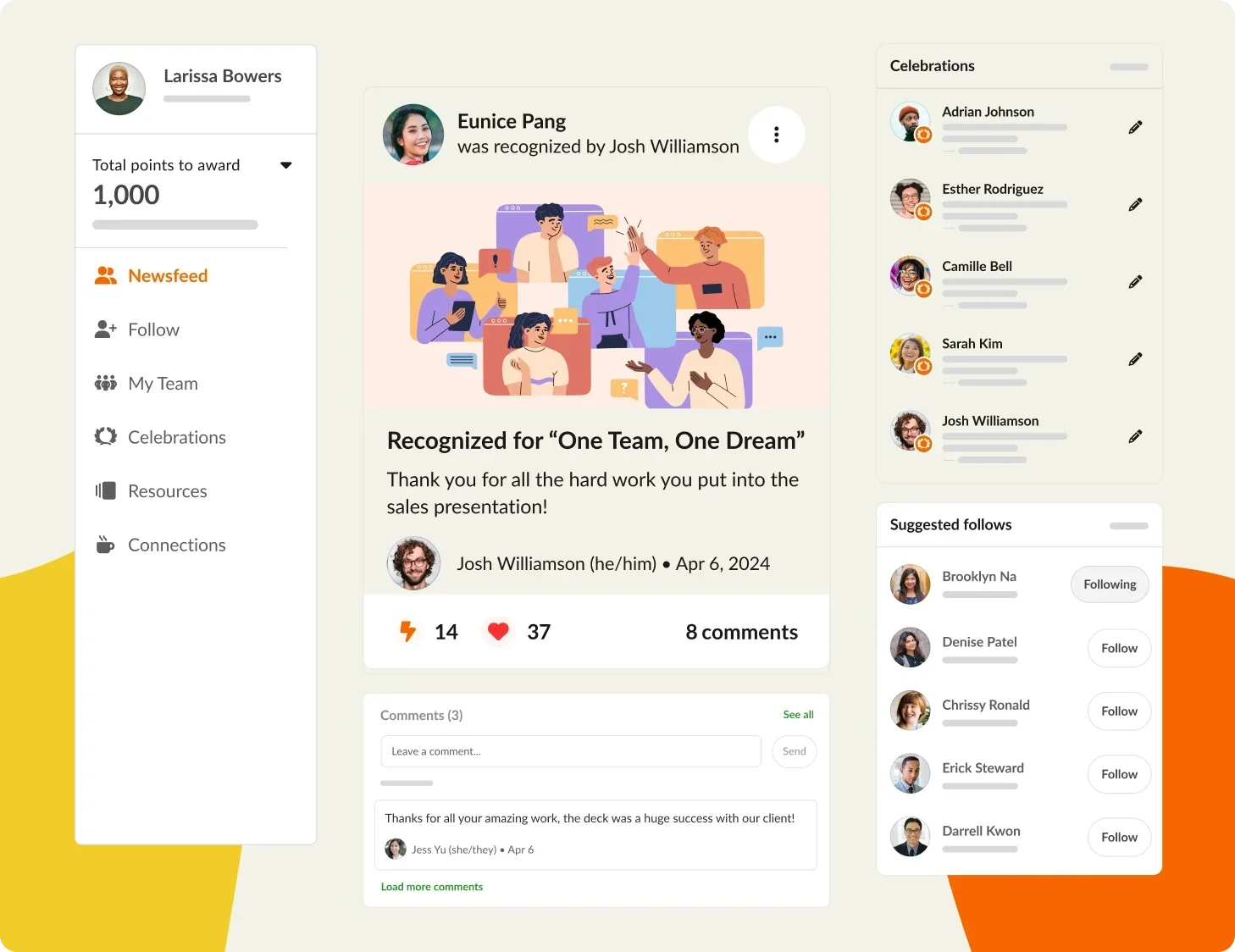
Historically, employee recognition often comprised ad-hoc gestures, such as annual bonuses, service awards, or informal verbal praise. While well-intentioned, these methods frequently lacked consistency, personalization, and measurable impact, failing to fully leverage recognition as a strategic tool for engagement and performance. The advent of digital transformation, coupled with the proliferation of global and hybrid work models, necessitated a fundamental shift. HR departments began to recognize the limitations of traditional approaches in fostering a sense of belonging and motivation across geographically fragmented teams.
The early 2000s saw the emergence of rudimentary online platforms, primarily focused on peer-to-peer recognition or simple gift card distribution. However, these often lacked the sophistication, global reach, and data analytics required by large enterprises. The past decade, particularly catalyzed by the accelerated digital adoption during the COVID-19 pandemic, has witnessed a rapid evolution. Today’s enterprise reward platforms are integrated, data-driven ecosystems designed to embed recognition into the daily fabric of organizational culture, aligning it with core values and strategic objectives. This chronological shift reflects a growing understanding that recognition is not just a "nice-to-have" perk but a "must-have" strategic lever for talent management, retention, and overall business resilience.
Key Criteria for Enterprise HR Leaders in Selecting a Reward Platform
Not all HR enterprise software platforms are created equal when it comes to delivering effective rewards. The most impactful solutions transcend mere transactional exchanges, transforming recognition into a potent catalyst for engagement and tangible business results. For enterprise HR leaders navigating a crowded marketplace, identifying the ideal platform necessitates a rigorous evaluation against several essential criteria:
- Global Scalability and Localization: A truly enterprise-grade platform must seamlessly support a diverse, global workforce. This means offering a vast, locally relevant rewards marketplace spanning numerous countries, with options that resonate culturally and comply with regional regulations. Crucially, it should provide transparent pricing, ideally with zero markups and free shipping, to ensure equitable access and experience for every employee, irrespective of their location.
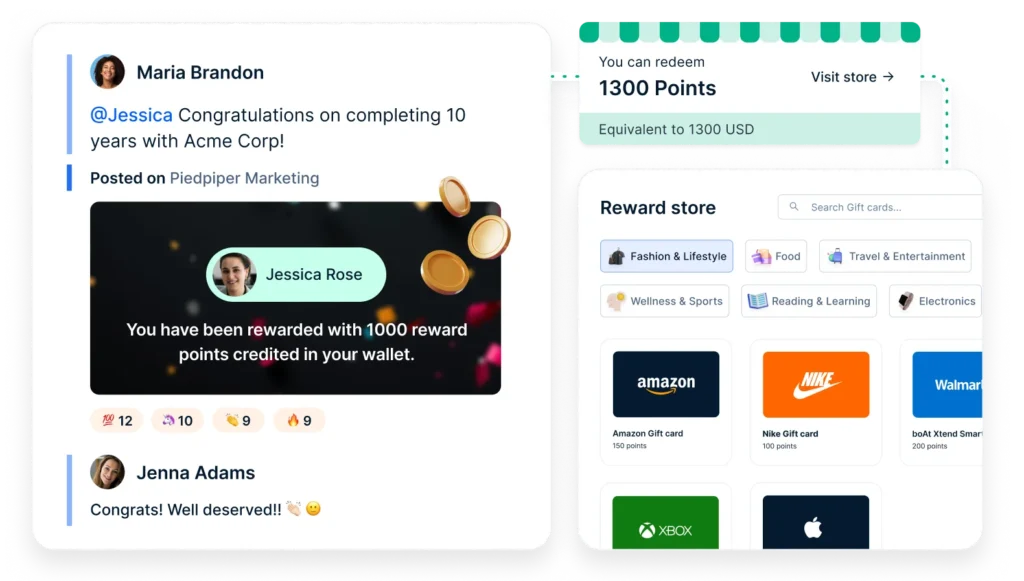
- Comprehensive Reward Options: Beyond generic gift cards, the platform should offer a rich array of redemption choices, including digital gift cards, travel experiences, wellness rewards, branded company swag, charitable donation opportunities, and even "Concierge" services for bespoke, one-of-a-kind experiences. This breadth ensures personalization and maximizes the perceived value of rewards.
- Robust Analytics and Reporting: Data-driven insights are indispensable. The platform must provide real-time analytics, AI-powered dashboards, and customizable reporting capabilities that allow HR leaders to track recognition activity, identify engagement trends, measure program impact (e.g., on retention, productivity), and pinpoint areas for strategic intervention. This moves recognition from an intuitive activity to a measurable investment.
- Seamless Integration and User Experience: Ease of use is paramount for widespread adoption. The platform should offer intuitive interfaces for both employees and administrators, with seamless integrations into existing HRIS, communication tools (e.g., Slack, Microsoft Teams, Outlook), and other enterprise systems. This embeds recognition into daily workflows, making it effortless and habitual.
- Flexibility and Customization: Enterprises have unique cultures and strategic objectives. The platform should allow for extensive customization, including the ability to align recognition with core company values, create custom badges, establish tiered reward structures, and configure automated milestone celebrations.
- Administrative Efficiency and Fulfillment: For large organizations, administrative overhead can quickly negate benefits. The platform should offer robust administrative controls, automated reward fulfillment, and a reliable global logistics network to ensure smooth, timely, and compliant delivery of rewards.
- Support for Diverse Recognition Models: The best platforms support a multifaceted approach, including peer-to-peer recognition, manager-to-employee recognition, automated milestone awards (e.g., birthdays, work anniversaries), and performance-based incentive campaigns. This fosters a holistic culture of appreciation.
The Tangible Impact of Modern Enterprise HR Reward Platforms
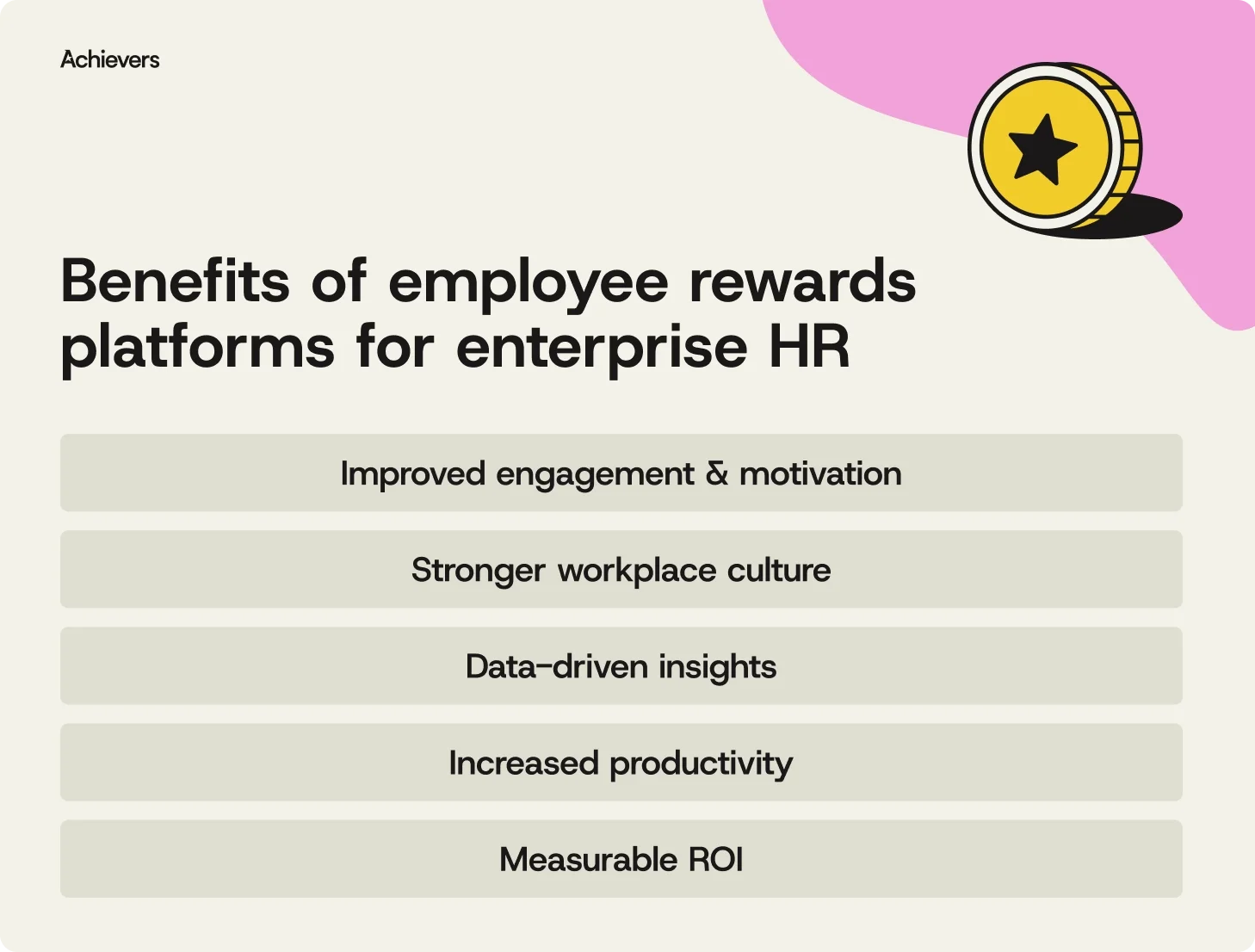
Modern enterprise HR software transcends mere operational efficiency; it elevates recognition into a strategic driver of organizational health and performance. When intrinsically woven into an overarching employee engagement strategy, reward platforms become the essential bridge connecting cultural values with enhanced productivity and performance. The benefits are multifaceted and profound:
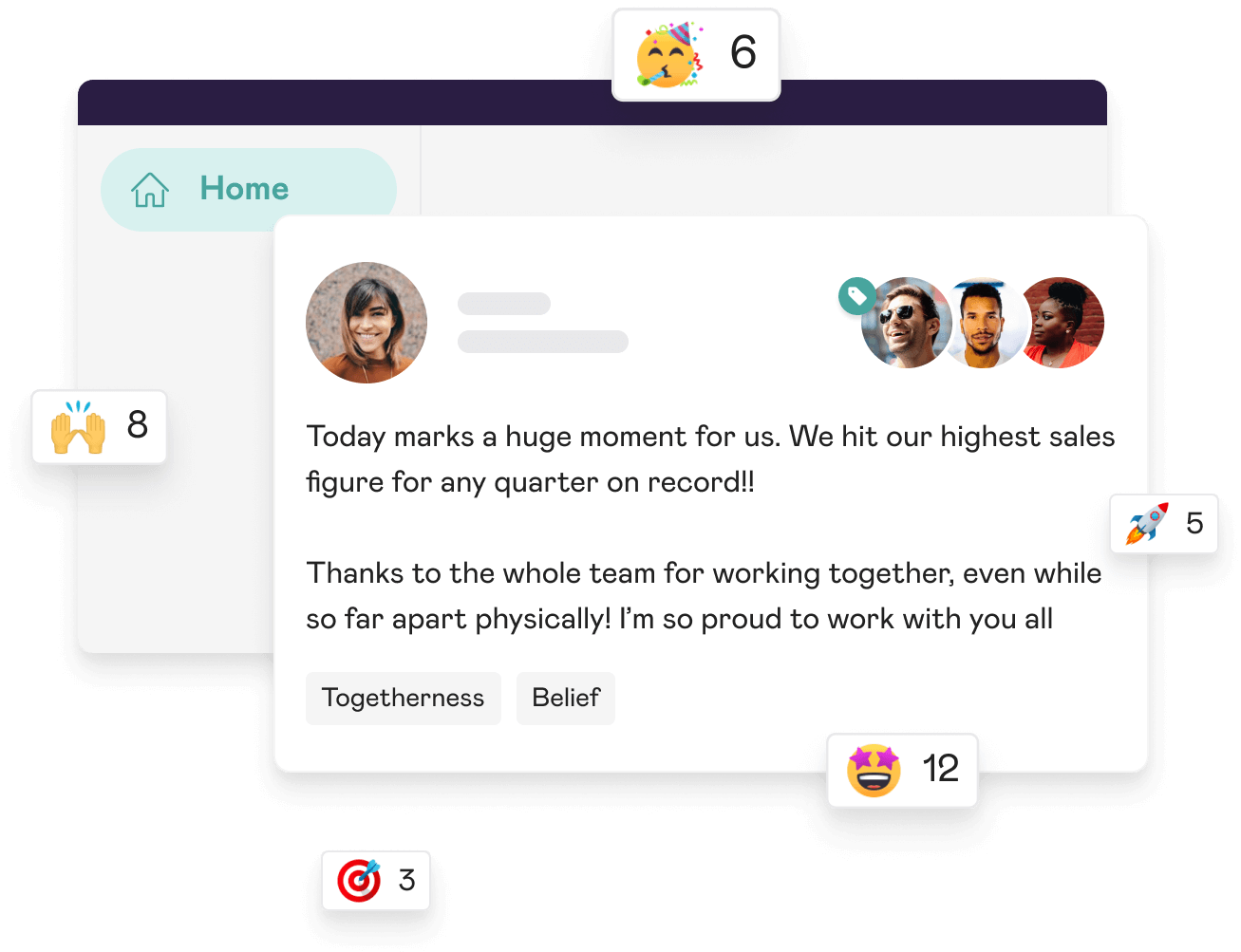
- Improved Engagement and Motivation: Regular, meaningful recognition is a powerful stimulant for intrinsic motivation and sustained commitment across geographically dispersed teams. It reinforces that individual contributions are seen and valued, fostering a deeper connection to the organization’s mission and encouraging employees to invest more fully in their roles. Studies consistently show that highly engaged teams are more productive and profitable.
- Stronger Workplace Culture: Organizational culture is not merely codified in policies; it is dynamically shaped by daily interactions and acknowledgments. Consistent and visible recognition acts as a powerful reinforcing mechanism for core company values, building a pervasive sense of belonging and ensuring cultural resilience, particularly during periods of significant change or growth. It creates a positive feedback loop that strengthens the social fabric of the organization.
- Data-Driven Insights and Strategic HR: The analytical capabilities embedded in leading platforms provide HR leaders with an unprecedented view into the pulse of their workforce. Real-time analytics and AI-powered dashboards enable the identification of emergent engagement trends, early detection of potential dips in morale, and the ability to course-correct recognition strategies with precision. This transforms HR from a reactive function into a proactive, data-informed strategic partner.
- Increased Productivity and Performance: A direct correlation exists between feeling valued and elevated performance. Recognition fosters a positive work environment that nurtures focus, stimulates creativity, and enhances cross-functional collaboration. When employees perceive their efforts are genuinely appreciated and rewarded, they are more likely to go the extra mile, leading directly to improved individual and team output, ultimately translating into superior business outcomes.
- Measurable Return on Investment (ROI): Crucially, the most effective enterprise HR reward platforms directly link appreciation initiatives to quantifiable business metrics such as employee retention, overall engagement scores, and productivity gains. This robust data enables HR departments to demonstrate that a thriving culture is not merely a cost center but a significant investment that yields substantial financial returns, proving that culture is not just a support function for the business—it is the business. By reducing turnover costs, attracting top talent, and boosting efficiency, these platforms offer a compelling financial case.
Spotlight on Leading Enterprise Employee Reward Solutions
From sophisticated global marketplaces to integrated recognition tools, today’s reward platforms are fundamentally redefining how enterprise HR connects people with performance. The following 15 leading solutions exemplify how organizations are successfully celebrating, motivating, and rewarding their teams at scale:
-
Achievers: (G2 rating: 4.7/5)
- Strengths: An enterprise-grade platform renowned for translating appreciation into measurable business impact. Achievers stands out for its extensive global rewards marketplace, offering over 3 million locally relevant options across 190 countries with a transparent "zero markups and free shipping" policy. This ensures a consistent and equitable experience globally. Its sophisticated analytics and robust fulfillment network enable deep insights into program effectiveness and seamless delivery of diverse rewards, from gift cards and travel to charitable donations and unique Concierge experiences.
- Best for: Both enterprise and mid-market organizations that require a data-driven recognition and rewards solution capable of building and scaling comprehensive recognition strategies across global teams, while meticulously maintaining personalization, inclusivity, and quantifiable outcomes.
- Weakness: Its advanced, enterprise-grade capabilities may exceed the requirements or budget of smaller businesses, potentially leading to over-provisioning for organizations not operating at scale.
-
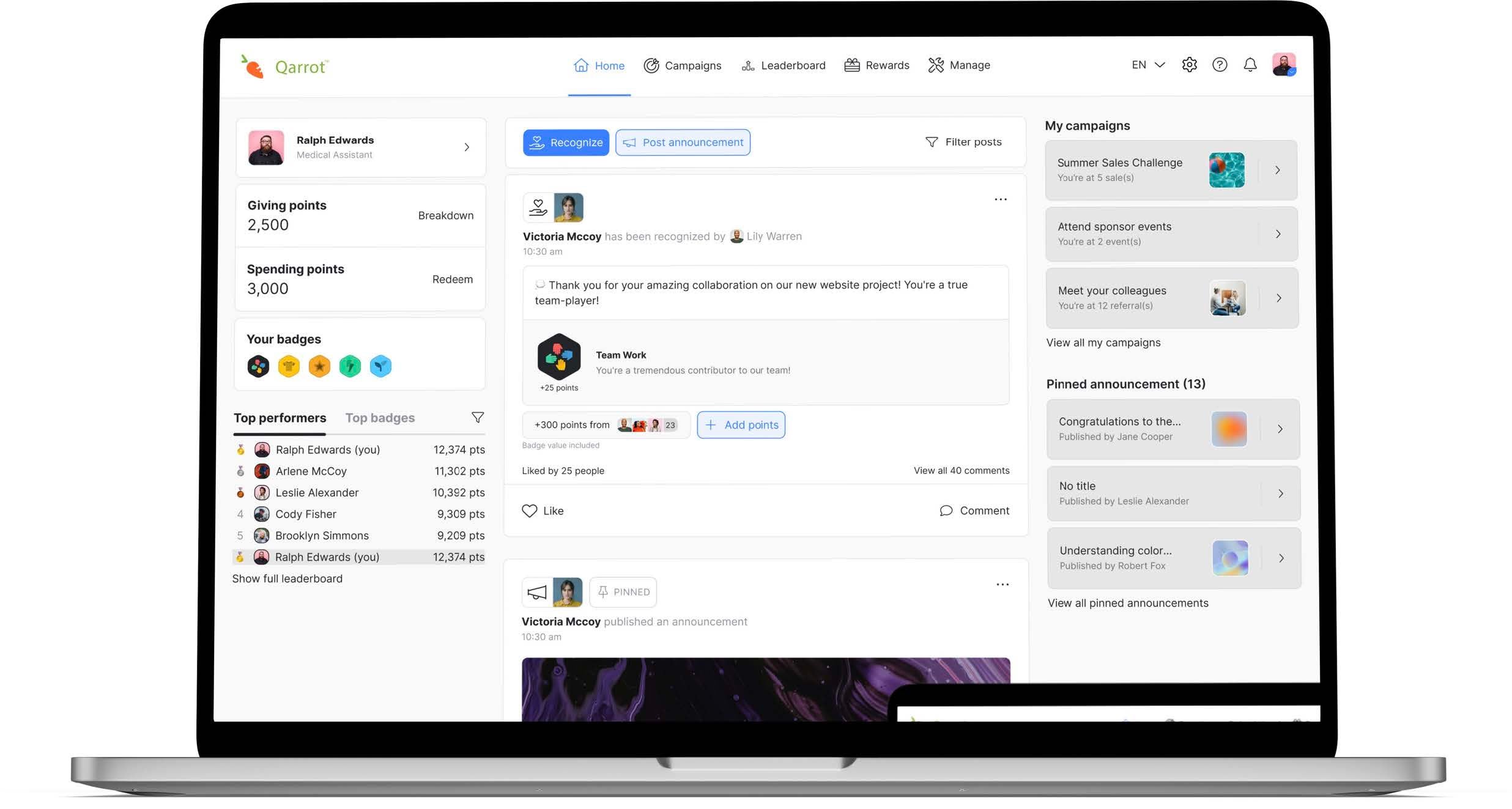
Qarrot: (G2 rating: 4.6/5)
- Strengths: A cloud-based platform designed for straightforward appreciation and performance alignment. Qarrot facilitates peer-to-peer and manager-to-employee recognition, milestone awards, and outcome-based incentive campaigns, contributing to enhanced engagement and morale. Its focus is on making recognition accessible and actionable.
- Best for: Small to mid-sized companies seeking a user-friendly recognition platform that effectively blends social appreciation with targeted performance incentives.
- Weakness: While offering simplicity, Qarrot may lack the advanced reporting, expansive global rewards network, or deep enterprise-level integrations that large, complex organizations typically require for comprehensive strategic HR.
-
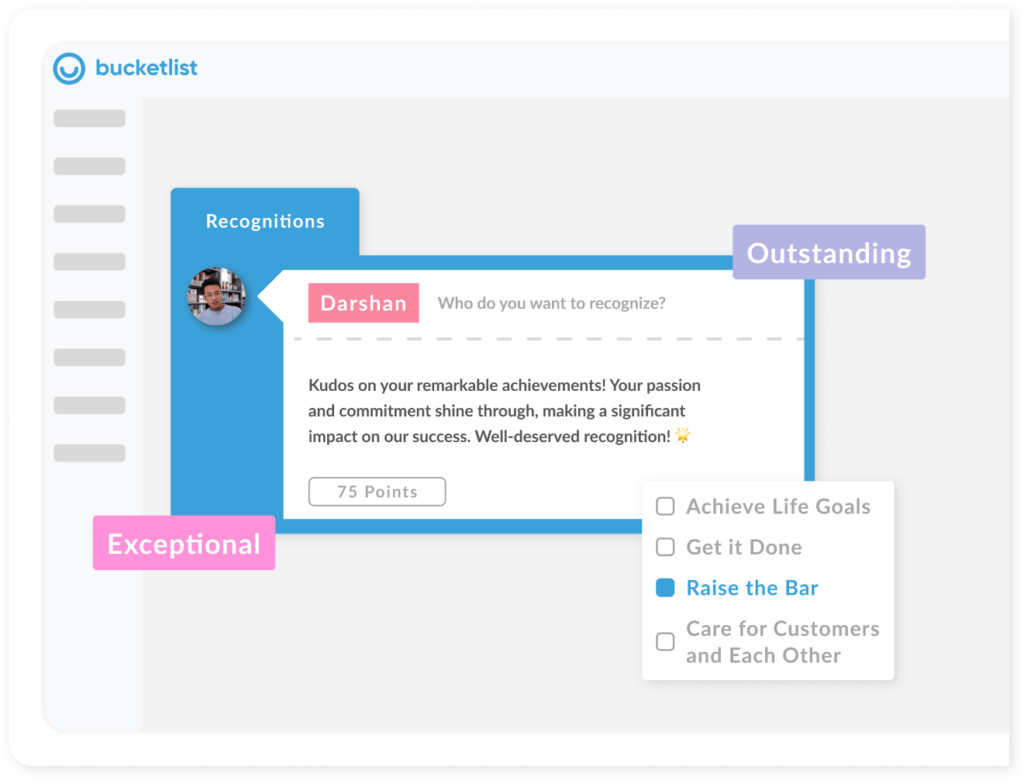
Bucketlist: (G2 rating: 4.8/5)
- Strengths: Simplifies and socializes appreciation through a combination of peer-to-peer recognition, automated milestone celebrations, and a global rewards catalog. Its integration with popular collaboration tools like Slack and Microsoft Teams embeds recognition directly into daily workflows, fostering a culture of continuous appreciation.
- Best for: Mid-sized organizations or companies prioritizing a user-friendly, culture-focused recognition solution that seamlessly integrates into existing communication channels.
- Weakness: For larger enterprises demanding sophisticated reporting, deep analytics, or extensive global scalability, Bucketlist’s customization and analytical depth might be somewhat limited compared to more specialized enterprise platforms.
-
Mo: (G2 rating: 4.6/5)
- Strengths: A UK-based platform that makes appreciation an integral part of everyday work life. Mo helps teams celebrate achievements, acknowledge milestones, and strengthen connections through social peer recognition and automated awards. Its integrations with Microsoft Teams, Slack, and Outlook ensure recognition happens within familiar environments.
- Best for: Organizations focused on cultivating a culture of continuous recognition and belonging through frequent, highly social engagement moments, particularly within a European context.
- Weakness: Mo’s strength lies in social recognition and culture building, but its rewards catalog options are less extensive, and it offers fewer enterprise-scale analytics compared to larger, globally comprehensive platforms.
-
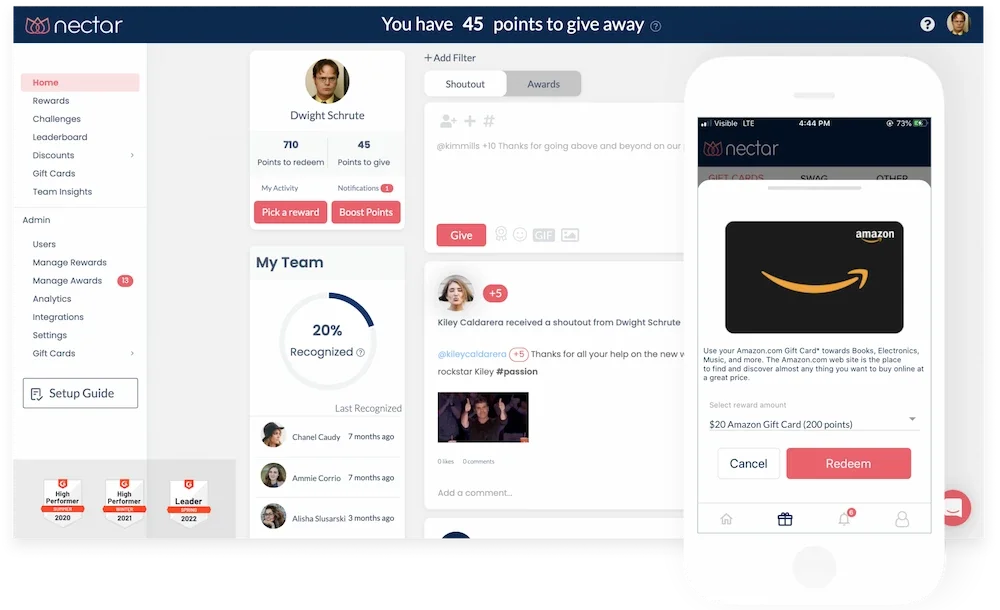
Nectar: (G2 rating: 4.7/5)
- Strengths: Transforms everyday "thank yous" into visible acknowledgments. Nectar supports peer-to-peer shout-outs, enables the alignment of recognition with core company values, and provides a diverse rewards catalog designed to resonate across various cultures and team dynamics.
- Best for: Small to mid-sized organizations or teams seeking a straightforward, highly usable platform to consistently boost engagement and integrate values-based recognition.
- Weakness: While effective for smaller teams, Nectar’s scalability, breadth of integrations, and global rewards reach may be more constrained when applied to large enterprise contexts requiring extensive customization and geographic coverage.
-
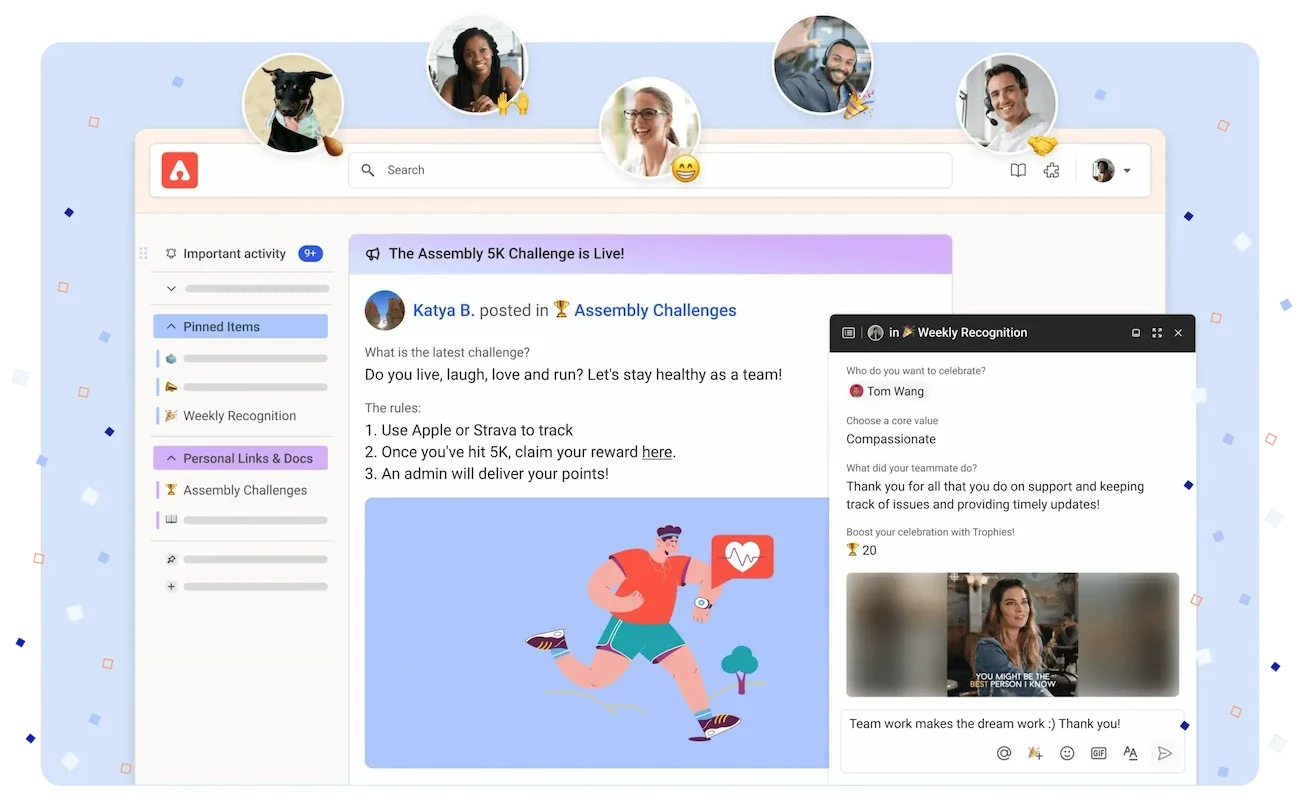
Assembly: (G2 rating: 4.9/5)
- Strengths: Designed to foster connection among hybrid and remote teams. Assembly offers robust peer and manager recognition, automates celebrations, and features a flexible global rewards catalog. Its modern interface and AI-supported functionalities enhance the user experience and administrative efficiency.
- Best for: Mid-sized to enterprise organizations requiring a modern, AI-supported recognition platform with adaptable automation and sophisticated analytics for a distributed workforce.
- Weakness: While strong in automation and AI, some users might find its customization capabilities and reporting depth less comprehensive than those offered by dedicated, highly specialized enterprise platforms.
-
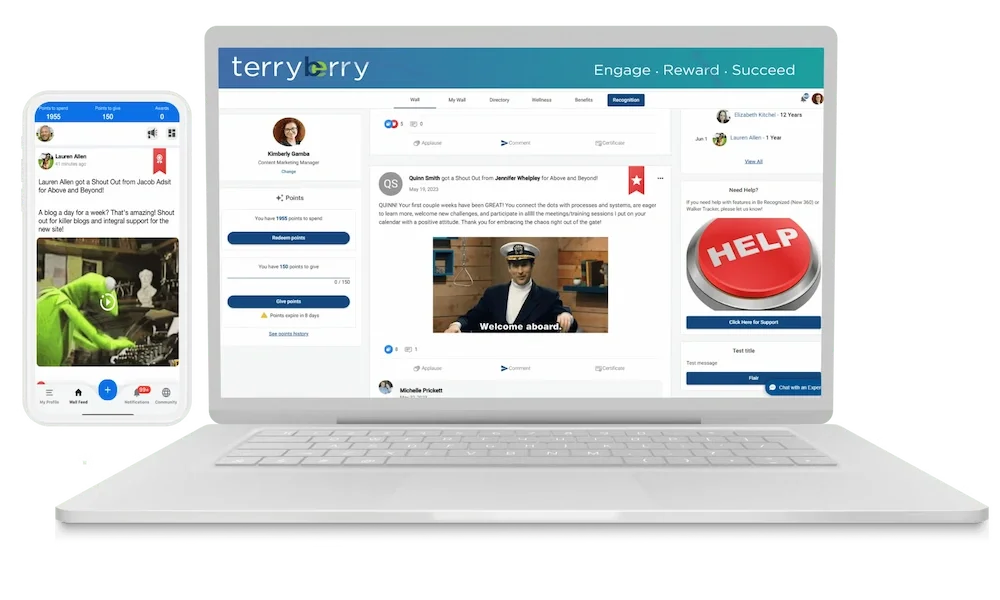
Terryberry: (G2 rating: 4.6/5)
- Strengths: A comprehensive employee engagement platform integrating recognition, rewards, well-being, and feedback into a single system. Terryberry’s notable Amazon Business integration provides employees access to a vast array of products at retail pricing, optimizing reward budgets for organizations.
- Best for: Organizations seeking a long-standing provider with a holistic approach, integrating engagement, incentive, and well-being programs under one umbrella, particularly those looking to leverage existing retail partnerships.
- Weakness: While highly functional, Terryberry’s interface and overall approach may appear less modern or agile compared to newer, more technologically cutting-edge recognition platforms.
-
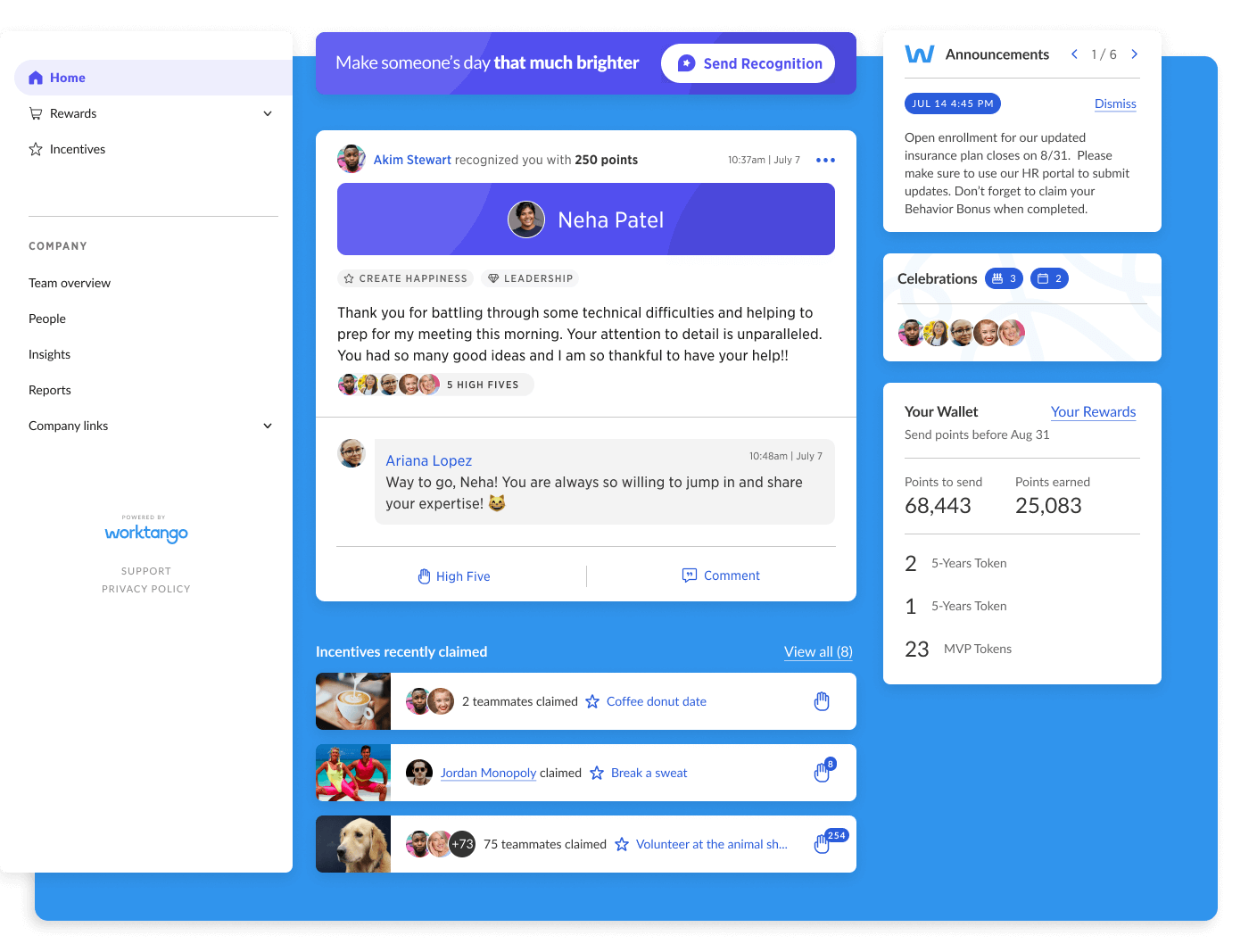
WorkTango: (G2 rating: 4.7/5)
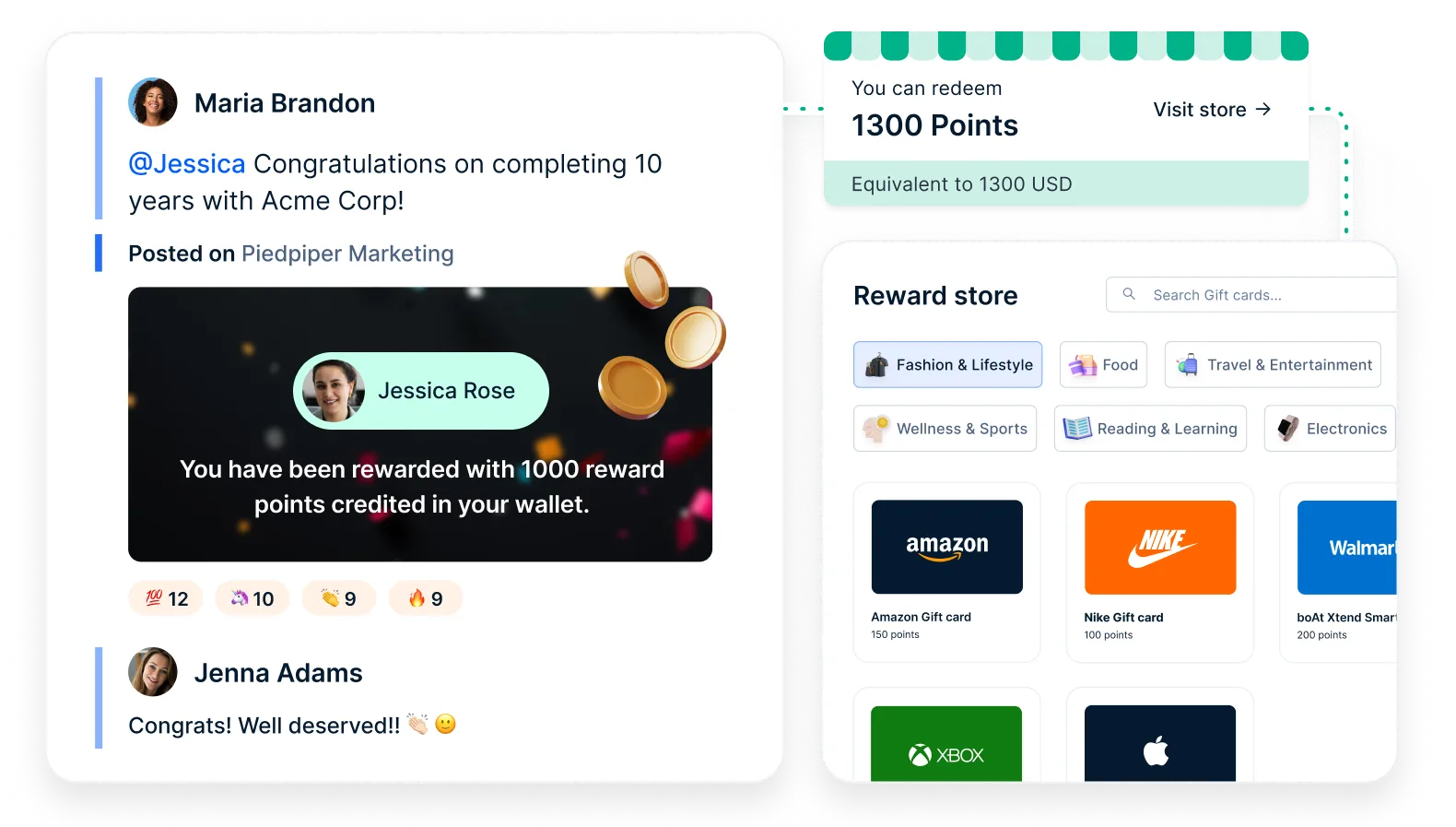
- Strengths: Provides an integrated suite of recognition and rewards tools specifically engineered to bolster engagement across dispersed teams. The platform features a global rewards marketplace, robust peer-to-peer recognition, automated milestone capabilities, and powerful analytics to monitor participation and program efficacy.
- Best for: Organizations desiring a unified platform that combines global rewards, recognition, and broader employee engagement capabilities into a cohesive solution.
- Weakness: WorkTango’s recognition tools are broad in scope, but they might offer less granular customization and fewer advanced reporting features when compared to more specialized, enterprise-focused solutions.
-
Empuls (by Xoxoday): (G2 rating: 4.6/5)
- Strengths: An all-encompassing employee engagement and rewards platform that helps organizations connect, recognize, and motivate their personnel. It seamlessly integrates recognition, feedback mechanisms, employee perks, and internal communication tools within a single interface, supporting both small and large organizations with a global rewards marketplace.
- Best for: Organizations requiring a versatile rewards solution that caters to global teams and proficiently integrates recognition with comprehensive surveys, communication functionalities, and an array of employee perks.
- Weakness: While boasting a broad selection of global rewards, Empuls may not offer the high-touch, concierge-style or ultra-premium reward fulfillment options that some enterprise platforms provide for exclusive, top-tier recognition experiences.
-
Kudos: (G2 rating: 4.8/5)
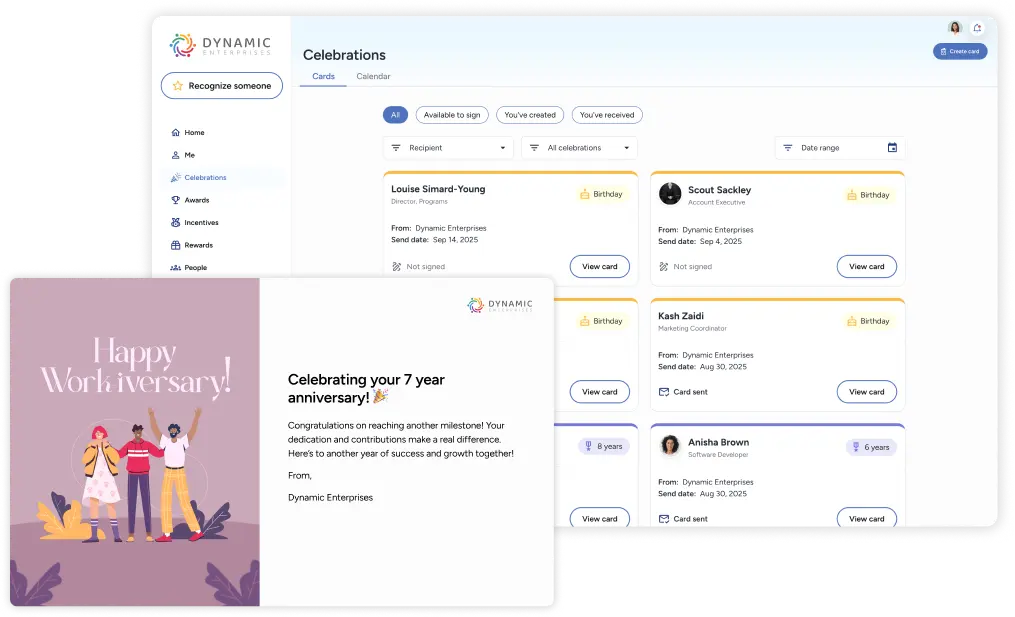
- Strengths: A recognition and rewards platform that prioritizes building connection, belonging, and a sense of purpose within the workplace. It facilitates peer-to-peer recognition, celebrates significant milestones, and offers a robust global rewards program featuring a diverse range of options, from merchandise and gift cards to unique experiences and travel incentives.
- Best for: Organizations primarily seeking a recognition-led platform that adeptly balances social engagement with readily accessible, culturally relevant, and locally sourced rewards options across a global footprint.
- Weakness: Kudos’ rewards marketplace, while extensive, might offer fewer ultra-luxury or bespoke concierge-style fulfillment options compared to the most comprehensive enterprise-level platforms.
-
Motivosity: (G2 rating: 4.7/5)
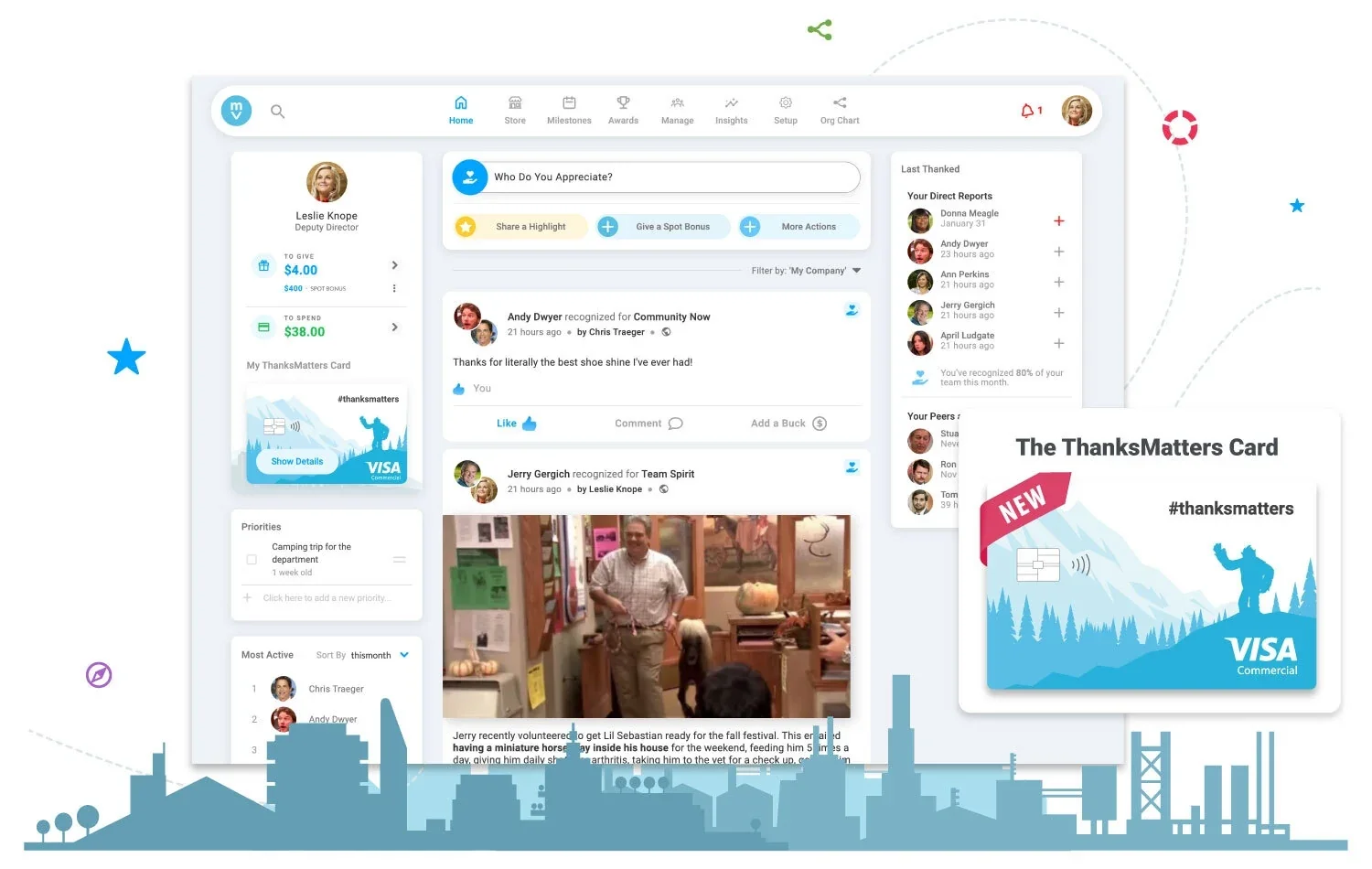
- Strengths: Concentrates on fostering connection and appreciation through a dynamic combination of peer recognition, performance incentives, and a global rewards framework. It provides highly flexible reward options, including a wide selection of gift cards, branded merchandise, travel experiences, and a convenient Visa® rewards card, all supported by automated fulfillment and detailed reporting.
- Best for: Organizations in search of a highly adaptable recognition and rewards solution characterized by a broad global catalog and tightly integrated employee engagement tools.
- Weakness: While Motivosity offers a diverse array of global reward choices, it tends to provide fewer high-touch or personalized concierge-style fulfillment experiences compared to certain deeply specialized, enterprise-focused platforms.
-
Guusto: (G2 rating: 4.9/5)
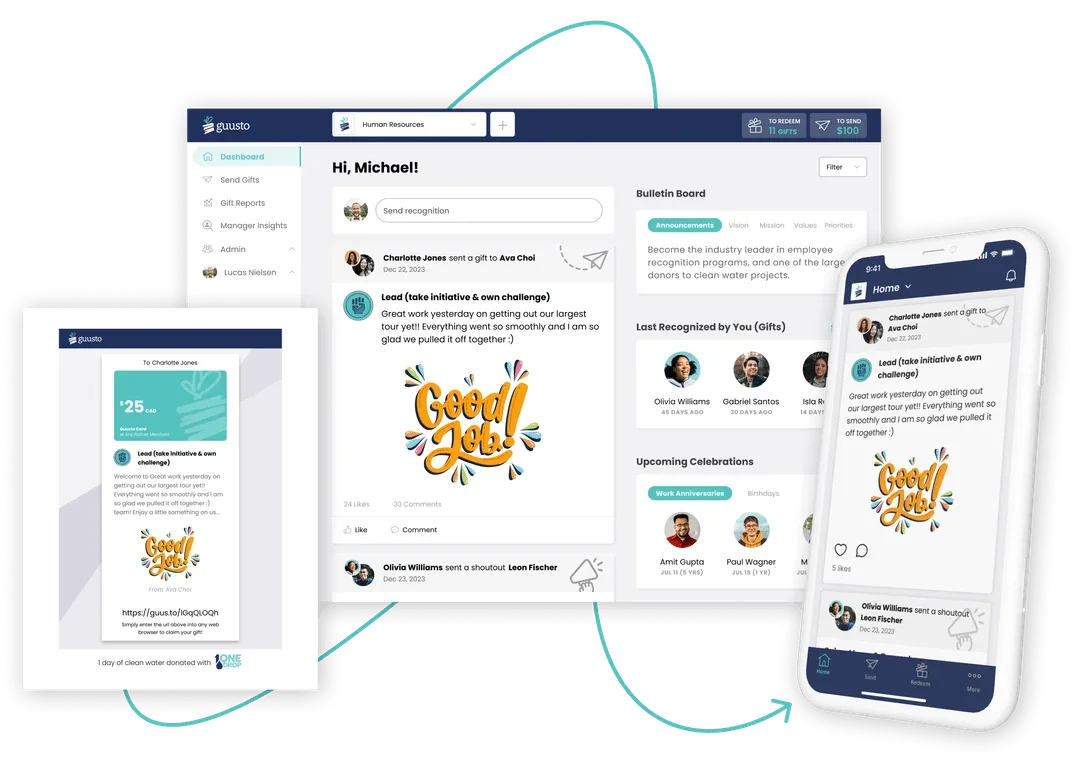
- Strengths: Delivers a streamlined recognition and rewards solution optimized for both office-based and frontline employees. The platform emphasizes accessibility, allowing recognition to be delivered either digitally or through printable vouchers. Its rewards catalog notably features direct-value gift cards, branded merchandise, charitable donation opportunities, and prepaid Mastercards.
- Best for: Organizations prioritizing a user-friendly and highly accessible rewards platform that can effectively reach and engage employees across various work environments, including those without consistent digital access.
- Weakness: While providing excellent flexibility and accessibility, Guusto’s rewards catalog and overall feature set are generally more limited compared to full-fledged enterprise-grade platforms that offer advanced analytics, expansive global fulfillment networks, and AI-driven insights.
-
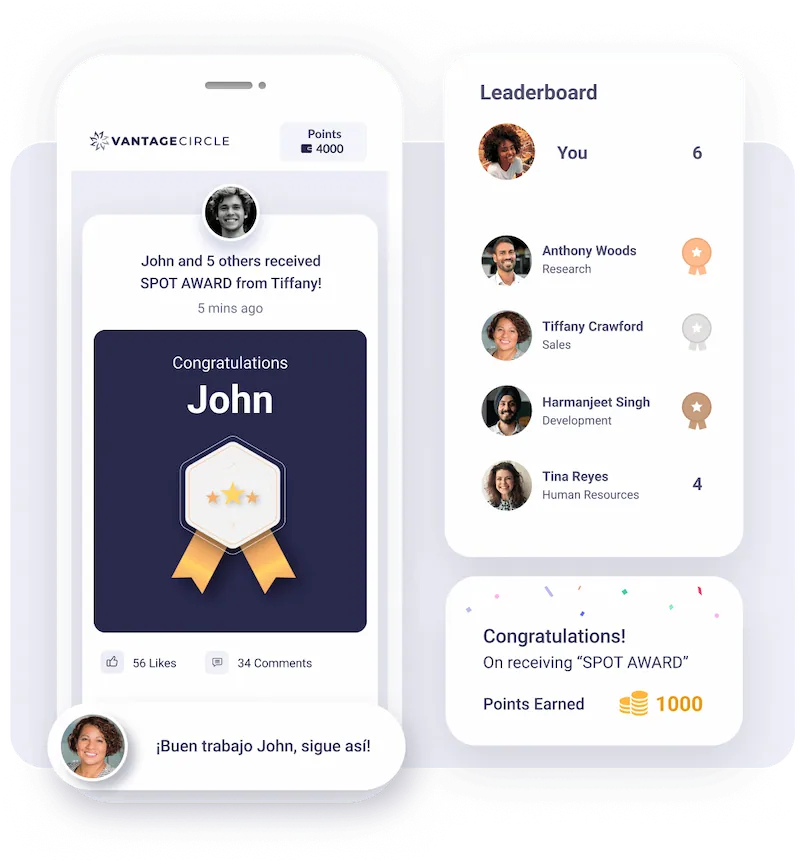
Vantage Circle: (G2 rating: 4.7/5)
- Strengths: Integrates recognition, wellness programs, employee perks, and feedback mechanisms into a singular, cohesive platform. Its "Vantage Rewards" tool supports comprehensive peer-to-peer and manager recognition, automated milestone celebrations, and a versatile point-based rewards system. Coupled with tools for wellness tracking, surveys, and corporate discounts, it adopts a broad approach to holistic employee engagement.
- Best for: Organizations seeking a unified platform that seamlessly connects recognition initiatives with broader employee wellness programs, comprehensive feedback mechanisms, and exclusive corporate discounts.
- Weakness: While Vantage Circle offers a broad spectrum of engagement tools, its rewards catalog depth and advanced analytics capabilities might be less extensive than those found in highly specialized enterprise platforms that provide deeper insights and more expansive global fulfillment networks.
-
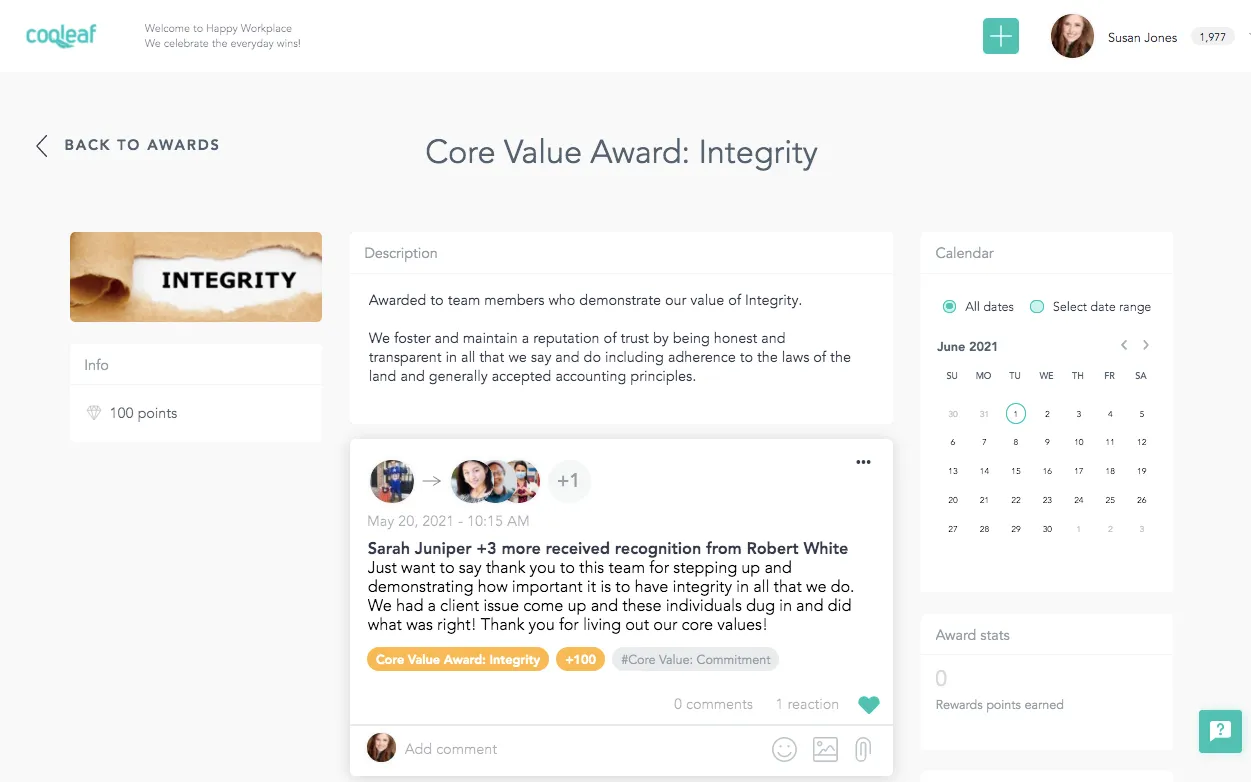
Cooleaf: (G2 rating: 4.9/5)
- Strengths: Offers a recognition and rewards platform meticulously designed to embed appreciation into the daily rhythm of work life. Employees can effortlessly recognize peers, commemorate significant milestones, and redeem accumulated points for a vast array of global rewards, encompassing everything from gift cards and unique experiences to branded swag and charitable contributions.
- Best for: Organizations prioritizing an intuitive, culture-focused platform that provides robust global reward options and a suite of integrated engagement tools.
- Weakness: While Cooleaf provides commendable flexibility and a solid global catalog, its advanced analytics, fulfillment scale, and deep customization options are generally more limited when compared to the capabilities of leading enterprise-grade recognition platforms.
-
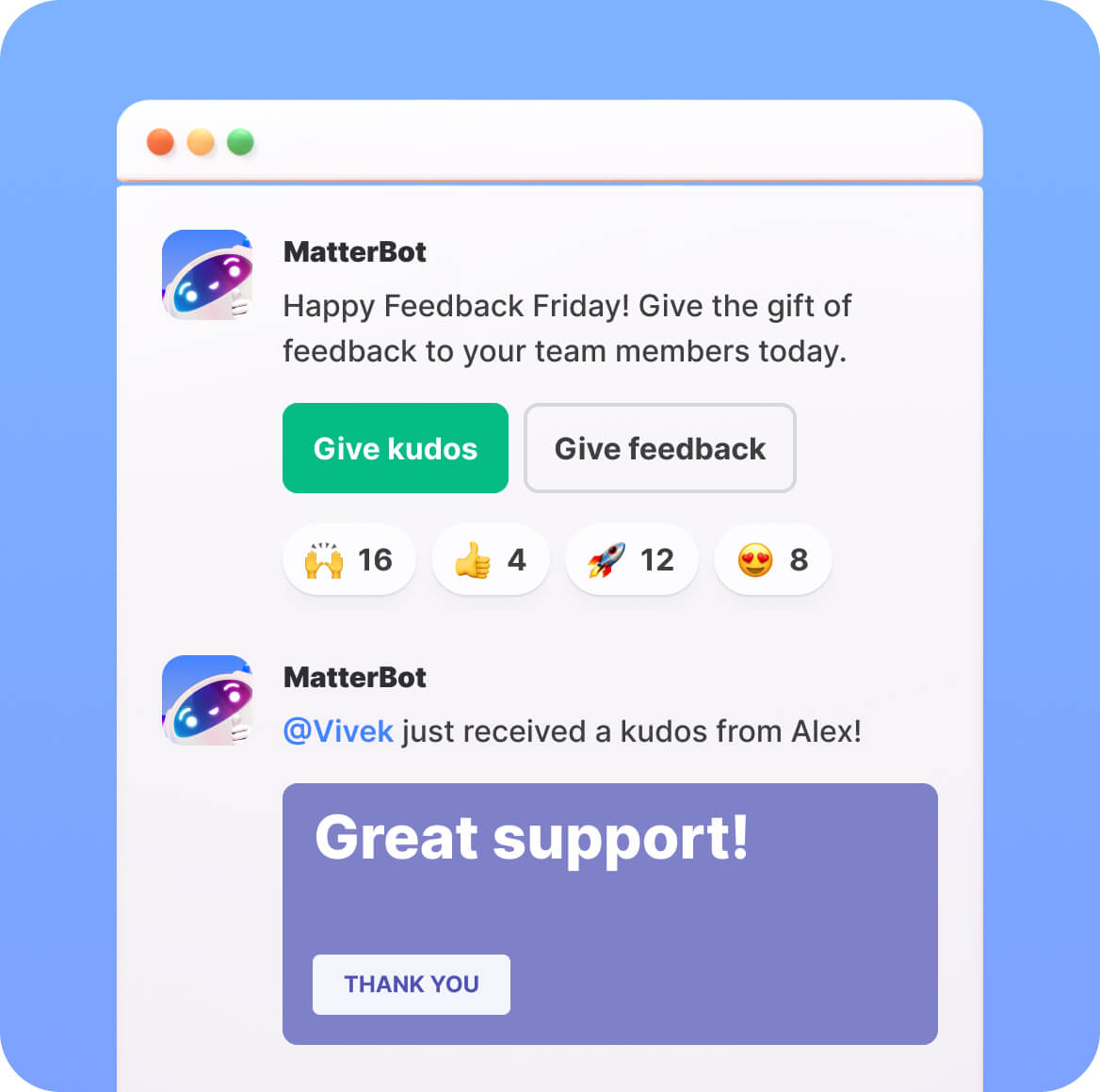
Matter: (G2 rating: 4.6/5)
- Strengths: Delivers a recognition and rewards solution that is deeply integrated directly into popular collaboration tools such as Slack and Microsoft Teams. Employees can send "kudos," earn digital coins, and redeem them for digital gift cards, prepaid cards, charitable donations, or customized company rewards. The platform also supports global recognition for geographically dispersed teams, making appreciation ubiquitous.
- Best for: Organizations heavily reliant on Slack or Teams that require an integrated, seamless recognition and rewards option directly within their existing communication workflows.
- Weakness: While offering significant convenience and global reach, Matter typically provides fewer advanced analytics, extensive customization options, and strategic reward management tools compared to more comprehensive, enterprise-focused platforms.
Investment and Return: Understanding Reward Platform Economics
The financial architecture of enterprise employee rewards solutions typically involves a combination of platform licensing fees and dedicated rewards funding. Most vendors employ a per-employee pricing model, though some may opt for tiered pricing structures contingent on the organization’s size, specific feature requirements, and the complexity of global deployment needs.
When evaluating the total cost of ownership, HR leaders must look beyond the initial software subscription fees. The comprehensive investment frequently encompasses the actual reward budgets, the costs associated with integrations into existing HR ecosystems, implementation support services, the sophistication of reporting capabilities, and the logistical intricacies of global reward fulfillment. For large organizations, the most effective employee rewards solutions strike a delicate balance between predictable operational costs and the inherent flexibility to dynamically scale recognition programs across diverse teams, varied geographic regions, and multiple business units.
Tip: A strategic approach to cost evaluation necessitates a focus on total value rather than merely the upfront price. A platform that demonstrably increases employee participation, significantly improves retention rates, and measurably strengthens overall engagement can yield a substantially greater return on investment than a seemingly lower-cost solution burdened by limited adoption or inadequate reporting capabilities. The true cost is often in the opportunity missed by an ineffective system.
The Future of Work and Recognition: Emerging Trends
The landscape of employee recognition is continually evolving, driven by technological advancements and shifting workforce expectations. Future trends will likely include:
- Hyper-Personalization: Leveraging AI and machine learning to offer even more tailored reward suggestions based on individual preferences, cultural nuances, and past redemption patterns.
- Deeper Integration with Performance Management: Seamlessly linking recognition data with performance reviews, goal tracking, and learning & development platforms to create a holistic view of employee growth and contribution.
- Gamification and Experiential Rewards: Increased use of gamified elements to boost engagement, alongside a greater emphasis on unique, memorable experiences (e.g., skill-building workshops, adventure travel) as rewards, moving beyond material goods.
- Focus on Well-being and Mental Health: Incorporating rewards and recognition specifically tied to employee well-being initiatives, reflecting a growing corporate responsibility towards holistic employee health.
- Predictive Analytics: Utilizing AI to forecast potential engagement dips or turnover risks based on recognition patterns, allowing HR to intervene proactively.
Turning Every Reward into Lasting Business Impact
Ultimately, the essence of effective rewards transcends mere company swag or clever slogans; it resides in the lasting impact generated. The most impactful reward platforms empower enterprise HR departments to do more than simply acknowledge individuals. They serve as strategic instruments to inspire superior performance, cultivate profound organizational connections, and drive demonstrable business results.
At organizations like Achievers, this philosophy forms the core of their mission. From established global brands to rapidly scaling mid-market teams, these platforms are designed to cultivate environments where recognition intrinsically fuels positive outcomes, ensuring that every single reward carries significant meaning and contributes to a thriving, high-performing culture. In an era where talent is a primary competitive differentiator, strategic recognition through advanced platforms is no longer optional; it is a fundamental pillar of sustainable organizational success.