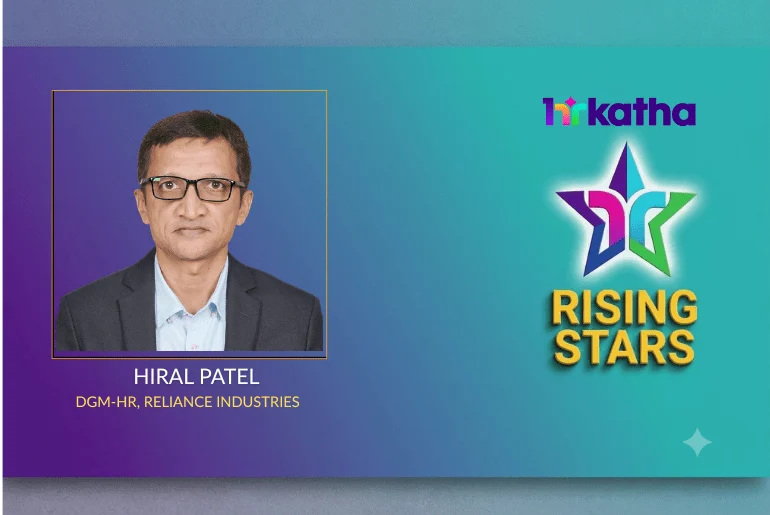
Hiral Patel, a distinguished HR professional whose innovative philosophy extends the boundaries of traditional human resources beyond transactional interactions, has been named a finalist for the prestigious HRKatha Rising Star Leadership Award 2025. This recognition underscores a growing industry appreciation for leaders who are redefining HR’s strategic role, moving it from a purely administrative function to a deeply integrated business partner focused on human connection and data-informed decision-making. Patel’s unique approach, characterized by a profound belief in understanding employees holistically—including their personal circumstances, family dynamics, and aspirations—sets him apart in a field increasingly grappling with the complexities of talent management in a rapidly evolving global landscape.
The HRKatha Rising Star Leadership Award is an annual accolade designed to identify and celebrate the next generation of HR leaders who are not only excelling in their current roles but are also actively shaping the future trajectory of the profession. These awards serve as a vital platform to highlight innovative practices, strategic foresight, and leadership potential that drive significant impact within organizations and contribute to the broader HR community. Past recipients and finalists have consistently demonstrated a blend of strategic acumen, empathy, and a forward-thinking mindset, qualities that resonate strongly with Patel’s professional ethos. The 2025 awards, in particular, are expected to spotlight leaders who navigate the dual demands of technological integration and human-centricity, reflecting key trends in the contemporary workforce.
Patel’s journey exemplifies a commitment to building trust that transcends the conventional office environment. His philosophy posits that genuine understanding of an employee often requires acknowledging the life that exists outside the workplace—the family circumstances, the personal pressures, and the individual aspirations that, while rarely documented in an HR system, inevitably influence an employee’s performance and engagement. This conviction has, in some instances, led him to engage directly with employees’ families, a practice he frames not as a rigid HR policy but as an organic extension of his relationship-led approach. This deep dive into an individual’s context is crucial, Patel believes, because trust, the cornerstone of any productive relationship, is inherently difficult to cultivate when HR’s knowledge of employees is limited to performance reviews, workplace issues, and administrative transactions. This perspective aligns with a growing body of research suggesting that psychological safety and a sense of belonging are significantly enhanced when organizations demonstrate genuine care for employees as whole individuals, not just as contributors to a bottom line.
A Career Defined by Adaptability and Purposeful Evolution
Patel’s career trajectory reflects a deliberate evolution, starting in learning and development (L&D) before transitioning into core HR business partnering at Reliance Industries. This shift was more than a change in specialization; it marked a significant move into the manufacturing sector, a vastly different stakeholder environment with distinct operational challenges and a unique organizational culture. His entry into manufacturing necessitated a steep learning curve, requiring him to absorb unfamiliar processes and systems while engaging with business leaders and employees whose expectations were shaped by a deeply entrenched operational environment. This period underscored a critical lesson for Patel: the limitations of universally transferable solutions. While experience and foundational principles can travel across different contexts, specific solutions rarely do.
His response to this challenge was not to impose pre-conceived notions or replicate past successes blindly. Instead, Patel dedicated substantial time to understanding the intricate dynamics of the manufacturing business, actively listening to stakeholders, and immersing himself in the operational context. This diligent approach allowed him to discern which elements of his prior experience remained valuable and applicable. This period of adaptation honed his ability to recognize that true effectiveness lies not in possessing a vast repertoire of HR capabilities, but in the wisdom to understand when and how to apply them, or when to innovate entirely new approaches.
Throughout these transitions, one element remained constant: his core purpose. Whether operating within L&D or as an HR business partner, Patel consistently viewed his fundamental task as enabling people to perform at their best while simultaneously assisting the business in navigating the human implications of its strategic decisions. This unwavering purpose served as his anchor, providing stability and direction amidst significant changes in role responsibilities, industry focus, and stakeholder expectations. This adaptability and steadfast commitment to purpose are increasingly recognized as hallmarks of effective leadership in today’s volatile, uncertain, complex, and ambiguous (VUCA) world.
Building Trust Beyond the Traditional Workplace Boundaries
Patel’s philosophy on leadership extends beyond formal titles or tenure. He associates true leadership with qualities such as active listening, genuine curiosity, and the deliberate cultivation of relationships over time. A key aspect of his approach involves proactively understanding potential problems before they escalate into formal HR issues, embodying a preventive rather than reactive stance. The aforementioned family interactions are perhaps the most personal manifestation of this philosophy. By appropriately gaining insight into an employee’s life beyond work, Patel has been able to develop a more nuanced understanding of the individual behind the role.
This approach, while deeply personal, demands meticulous judgment and an unwavering respect for personal boundaries. Its inherent value lies not in intruding upon employees’ private lives, but in avoiding the critical error of assuming that the professional who arrives at work can be entirely separated from the individual who exists outside of it. This holistic perspective is particularly invaluable when difficult conversations become necessary. Trust that has been carefully built during routine, ordinary interactions often determines the level of candor and openness employees are willing to exhibit when faced with less ordinary or challenging circumstances. In an era where employee well-being is paramount, this depth of understanding contributes significantly to fostering a supportive and resilient workforce, ultimately reducing attrition and boosting morale.
The Strategic Imperative: Becoming a Business Partner, Not Just an HR Partner
Patel has frequently encountered business leaders who express skepticism about HR’s strategic contributions. His response to such skepticism is not to defensively champion the HR function, but rather to intensify his efforts to understand the business more profoundly. He articulates his aspiration as being a true "business partner" rather than merely an "HR partner." This distinction is critical and reflects a broader industry shift.
In practice, this means leveraging data and business insights to proactively identify people-related challenges that directly impact organizational performance. He then meticulously connects talent development, retention strategies, and other HR interventions to tangible outcomes that business leaders intrinsically care about. A senior business leader, Patel observes, may have little interest in the intricate sophistication of an HR intervention itself. Their more immediate and pressing concern is whether the intervention effectively solves a pressing problem: whether critical capabilities are readily available, whether high-performing individuals are choosing to stay, whether a team is equipped to perform optimally, or whether the organization is adequately prepared for future strategic shifts. This strategic alignment transforms HR from a support function into a vital contributor to organizational success, speaking the language of business value rather than just HR metrics.
Navigating Divergent Interests and Fostering a Culture of Responsible Experimentation
A significant challenge for HR leaders lies in situations where employee aspirations and leadership objectives are not easily reconciled. In such instances, Patel begins by grounding discussions in the organization’s stated values, seeking to establish a common ethical framework. He then facilitates extensive dialogue to understand the underlying drivers and perspectives behind each position. His objective is not to create a false pretense that every disagreement can culminate in both sides achieving their desired outcome, but rather to ensure that the eventual decision, however challenging, is intelligible, transparent, and defensible to all parties involved. This approach fosters a sense of fairness and psychological safety, even when outcomes are not universally favorable.
Patel applies a similar philosophy to the concept of failure within an organizational context. He firmly believes that organizations that genuinely encourage experimentation and innovation must clearly differentiate between "responsible failure" and outright negligence. If every unsuccessful attempt to innovate or improve carries a punitive consequence, employees will quickly learn that avoiding risk and adhering to the status quo is a safer path than venturing into new, potentially transformative territories. This insight is crucial for fostering a culture of continuous learning and innovation, where calculated risks are encouraged and viewed as opportunities for growth rather than grounds for retribution.
The Convergence of Human Touch and Data Intelligence in HR
Looking to the future, Patel anticipates a significant increase in HR’s reliance on data and analytics. However, he adamantly does not view this evolution as a move toward a less humanistic function. Instead, he sees data as an indispensable tool that empowers HR to transcend mere intuition, identify emerging patterns earlier, and rigorously test assumptions against empirical evidence. The advent of generative AI further amplifies this potential, enabling people functions to interrogate vast amounts of information, automate routine tasks, and support complex decisions with unprecedented efficiency. Critically, Patel emphasizes that data privacy and regulatory compliance must be foundational elements embedded within the architectural design of these systems from their inception, rather than being retrofitted as an afterthought.
More fundamentally, the increasing sophistication of data does not, in Patel’s view, diminish the indispensable need for human judgment. An advanced analytical system may adeptly reveal the existence of a particular workforce pattern or trend. However, it cannot fully elucidate the intricate individual circumstances underpinning every data point, nor can it definitively determine how a specific decision will ultimately impact the delicate fabric of trust within an organization. This nuanced perspective underscores the enduring importance of empathy, emotional intelligence, and ethical considerations—qualities that remain distinctly human and central to effective HR leadership.
The Human Element: Quick Takes Integrated
Patel’s professional persona is a blend of strategic insight and genuine human connection. He describes himself as a "proactive people manager" who is simultaneously "suave, genuine, and empathetic." This self-awareness underpins his approach to critical HR functions. When it comes to conflict resolution, his preferred style is "mediation," reflecting his commitment to dialogue and understanding divergent perspectives. For driving engagement, he believes in the power of "both recognition and rewards," understanding that a holistic approach to employee motivation is most effective. His preference for "scheduled and structured feedback" highlights his belief in deliberate and thoughtful communication as a cornerstone of development. Regarding retention, he unequivocally identifies "career growth" as the most potent tool, recognizing that opportunities for advancement and skill development are paramount for high-performing individuals. Interestingly, when asked about an alternative career path, Patel reveals a passion for "singing and music," a detail that subtly reinforces the creative and empathetic dimensions of his personality, perhaps hinting at the harmony he seeks to foster in the workplace.
Why Hiral Patel is a Rising Star: A Holistic Vision for HR
Hiral Patel’s nomination for the HRKatha Rising Star Leadership Award 2025 is a testament to his unique and impactful approach to human resources. His philosophy embodies an interesting and powerful tension: on one side, a robust commitment to business proximity and data-driven insights; on the other, an unusually relationship-led view of employees that compels HR to understand individuals far beyond their job descriptions or performance scores. Crucially, Patel does not perceive these two facets as competing or mutually exclusive. Instead, he sees them as complementary forces that, when integrated, create a more effective, humane, and strategically aligned HR function.
His career transition from learning and development into manufacturing HR exemplified this integrative instinct. In both contexts, he resisted the temptation of ready-made answers, prioritizing deep understanding of the context before taking action. Whether it involved learning the intricacies of a new business sector or delving into the underlying human dimensions of an employee issue, his approach consistently emphasized context-first engagement. This ability to synthesize strategic business acumen with profound human empathy makes Hiral Patel a formidable leader and a deserving finalist, embodying the future of HR leadership that is both data-smart and deeply human. His work provides a compelling blueprint for how the next generation of HR professionals can drive organizational success by prioritizing both analytical rigor and genuine human connection.