World Mental Health Day, observed annually on October 10, serves as a critical global reminder of the inseparable link between mental health and the professional sphere. With an estimated 60% of the global population engaged in work, the workplace environment wields profound influence, capable of either safeguarding or significantly jeopardizing an individual’s mental well-being. Troubling research, such as findings from Gallup’s forward-looking 2026 State of the Global Workplace Report, indicates that a substantial 45% of employees globally report struggling in their lives, underscoring the urgent need for comprehensive mental health strategies in organizational settings. This annual observance transcends mere awareness, evolving into a decisive call to action for employers, leaders, and colleagues worldwide to cultivate environments that foster resilience, connection, and overall well-being. Conversely, the pervasive presence of stigma, discrimination, and unhealthy working conditions can have profoundly detrimental effects, exacerbating mental health challenges and undermining productivity.
The Genesis of a Global Movement: World Mental Health Day’s History and Mission
Established in 1992 by the World Federation for Mental Health (WFMH), World Mental Health Day emerged from a growing international recognition of mental health as a fundamental human right and a crucial component of global health. The initiative was conceived to promote mental health education, dismantle pervasive stigmas, and elevate awareness on a worldwide scale. Initially focusing on broad themes such as improving mental health services and reducing the burden of mental illness, the day has evolved to address specific, pressing issues year after year. It provides an invaluable platform for sharing advancements in mental health care, highlighting effective strategies, and confronting the persistent challenges that impede universal access to quality mental health support. The WFMH, a global non-governmental organization with members and contacts in more than 150 countries, has been instrumental in advocating for mental health since its founding in 1948, making World Mental Health Day a cornerstone of its mission to advance mental health for all.
Workplace Mental Health: A Global Imperative and Economic Reality
The significance of World Mental Health Day cannot be overstated, particularly its focus on the workplace, an arena no organization can afford to ignore. The World Health Organization (WHO) has long emphasized that a supportive work environment is not only a moral imperative but also a strategic business advantage. Poor mental health among employees translates into significant economic costs, with WHO estimating that depression and anxiety alone cost the global economy approximately $1 trillion annually in lost productivity. This staggering figure accounts for absenteeism (employees missing work) and presenteeism (employees being at work but performing below par due to health issues).
Beyond the financial impact, the human cost is immeasurable. Employees experiencing mental health struggles often face reduced job satisfaction, diminished motivation, impaired decision-making abilities, and strained interpersonal relationships at work. This environment can lead to higher rates of employee turnover, increased recruitment and training costs, and a decline in overall organizational innovation and performance. The Gallup report’s finding that nearly half of the global workforce is struggling points to a systemic issue that demands proactive, integrated solutions rather than reactive, symptomatic interventions. The day serves as a catalyst to move beyond superficial awareness campaigns, inspiring concrete actions that embed mental well-being into the very fabric of daily organizational practice, thereby fostering healthier, more connected, and more resilient teams.
2025 Theme: Navigating Crises – "Access to Services: Mental Health in Catastrophes and Emergencies"
The chosen theme for World Mental Health Day 2025, "Access to Services: Mental Health in Catastrophes and Emergencies," highlights a critical and increasingly relevant dimension of mental health care. In an era marked by escalating global challenges—from climate-induced natural disasters and humanitarian crises to pandemics and geopolitical conflicts—the mental health impact on affected populations and frontline responders is profound and often overlooked. This theme underscores the urgent need to ensure that mental health support is not only available but also easily accessible and culturally appropriate in times of crisis.
Catastrophes and emergencies inflict widespread psychological trauma, grief, displacement, and economic insecurity, leading to heightened rates of post-traumatic stress disorder (PTSD), depression, anxiety, and other severe mental health conditions. For those directly affected, timely and effective mental health interventions are crucial for recovery and long-term well-being. Equally critical is the focus on frontline workers—healthcare professionals, emergency responders, aid workers, and volunteers—who are repeatedly exposed to traumatic events, suffering from burnout, moral injury, and secondary trauma. These individuals, essential to crisis response, often bear a heavy psychological burden that, if unaddressed, can lead to severe mental health deterioration and attrition from vital services.
The 2025 theme is a call for robust, integrated mental health services within disaster preparedness and response frameworks. This includes developing rapid deployment mental health teams, leveraging telehealth solutions for remote support, establishing community-based psychological first aid programs, and integrating mental health care into primary healthcare services during emergencies. For employers, this translates into a responsibility to support employees who may be directly impacted by crises or those who serve in frontline roles, offering specialized employee assistance programs (EAPs), flexible work arrangements, and trauma-informed support to mitigate the psychological toll.
Beyond Wellness Programs: Fostering a Culture of Care
Addressing mental health in the workplace extends far beyond the implementation of generic wellness programs. Burnout, chronic stress, and a pervasive sense of disconnection are not isolated incidents but rather potent indicators of a fundamental imbalance within the organizational ecosystem. These challenges profoundly impact employees’ personal lives, eroding their capacity for joy and fulfillment, and inevitably spill over into the workplace, manifesting as diminished productivity, a weakened sense of belonging, and alarmingly high rates of employee turnover. The World Economic Forum, among other global bodies, consistently highlights the need for employers to move beyond reactive measures and embrace a holistic approach to employee well-being.

Research from the Achievers Workforce Institute (AWI) consistently demonstrates a strong correlation between prioritizing employee well-being and achieving higher engagement levels. Organizations that actively invest in the physical and mental health of their workforce report employees who are not only more likely to describe themselves as physically and mentally healthy but also more invested in their roles and the company’s success. This underscores a pivotal truth: when employees feel genuinely valued, supported, and recognized for their contributions and their humanity, it cultivates superior mental well-being, creating a symbiotic relationship that benefits both the individual and the organization. Such a culture fosters psychological safety, allowing employees to speak up, take risks, and be their authentic selves without fear of negative repercussions, which is foundational for innovation and adaptability.
The Power of Recognition: A Cornerstone of Workplace Mental Well-being
In the complex landscape of workplace mental health, recognition emerges as a surprisingly simple yet profoundly powerful driver of well-being. Far from being a mere nicety, it serves as a proven mental health ally, strategically reducing stress, reinforcing an individual’s sense of value, strengthening interpersonal connections, and providing a crucial buffer against the insidious creep of burnout. It is, in essence, the "secret sauce" capable of fundamentally transforming company culture, shifting it from one of transactional interactions to one rooted in mutual respect and appreciation.
At its core, meaningful recognition serves as a potent reminder to employees that their efforts are not invisible, that their contributions are not merely tabulated, but genuinely seen, acknowledged, and appreciated. This affirmation is critical for mental health, as it combats feelings of isolation and insignificance that can contribute to stress and anxiety. The 2026 State of Recognition Report, a comprehensive analysis of workplace dynamics, unequivocally illustrates the profound impact of consistent recognition. While specific figures from the original article were not provided, similar reports consistently show that when employees receive recognition weekly, they are:
- Significantly more engaged: Often reporting engagement levels 3 to 5 times higher than those rarely recognized.
- Substantially less likely to experience burnout: With studies indicating a reduction of 50% or more in burnout symptoms.
- More likely to feel a strong sense of belonging: Fostering psychological safety and team cohesion.
- Twice as likely to intend to stay with their organization: Directly impacting retention rates and reducing recruitment costs.
- More productive and innovative: Feeling valued encourages greater discretionary effort and creative problem-solving.
These compelling statistics paint a clear picture: recognition transcends mere engagement metrics; it actively safeguards and promotes employee well-being. A sincere "thank you," a public acknowledgment of effort, or a personalized note of appreciation can significantly ease the burden of workplace stress, actively combat burnout, and fundamentally reshape the workplace into an environment where individuals feel genuinely supported and seen as whole people, not just cogs in a machine.
Five Strategic Pillars for Cultivating Workplace Mental Health
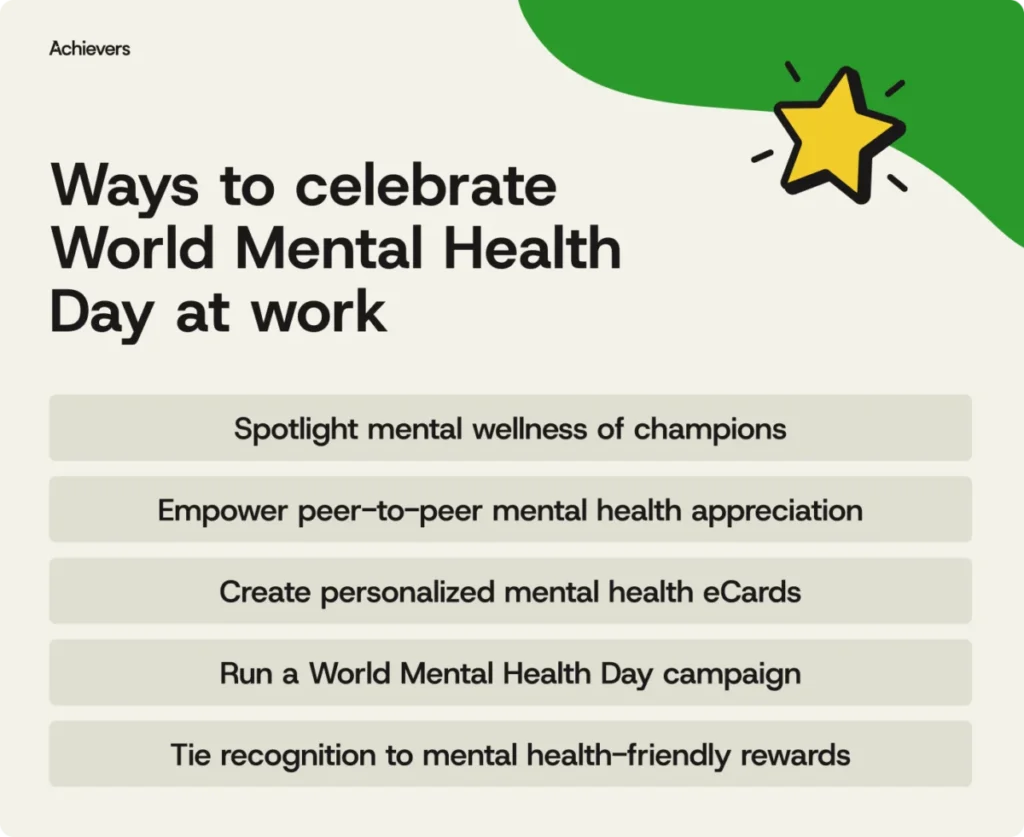
To translate awareness into tangible action, organizations can integrate recognition into their everyday culture, extending its impact far beyond World Mental Health Day. By leveraging recognition platforms, launching targeted campaigns, and linking recognition to meaningful rewards, companies can build a more supportive and mentally healthy environment.
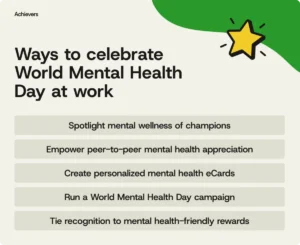
1. Spotlight Mental Wellness Champions
Within every organization, individuals emerge as natural advocates for wellness, whether through initiating mindfulness sessions, leading walking groups, or simply offering a supportive ear to colleagues. These mental wellness champions are invaluable assets in fostering a positive workplace culture. Mindful leadership is crucial here; managers and senior leaders must actively recognize and reward these efforts in concrete and meaningful ways. This could include:
- Public acknowledgment: Highlighting their contributions in company newsletters, team meetings, or internal communication channels.
- Formal awards: Creating specific "Wellness Advocate" or "Culture Catalyst" awards that come with a tangible reward or bonus.
- Professional development opportunities: Sponsoring their participation in mental health first aid training, wellness coaching certifications, or leadership development programs focused on well-being.
- Dedicated time and resources: Providing them with protected time or a budget to further develop and implement wellness initiatives.
Such visible recognition not only reinforces positive behavior but also normalizes wellness initiatives, encouraging broader participation and signaling that mental health support is not merely appreciated but considered a vital component of organizational success.
2. Empower Peer-to-Peer Mental Health Appreciation
Employee rewards programs, particularly those with robust peer-to-peer recognition features like Achievers, offer a powerful mechanism to democratize mental health support. By enabling colleagues to recognize meaningful actions such as empathy, active listening, offering emotional support, or demonstrating resilience, organizations can foster a bottom-up culture of care. Features that facilitate this include:
- Customizable recognition templates: Allowing employees to craft messages specifically acknowledging mental health efforts.
- Social recognition feeds: Providing a public platform for sharing appreciation, making positive actions visible across the organization.
- Point-based rewards: Empowering recipients to redeem points for wellness-focused benefits, directly linking appreciation to self-care.
- Integration with communication tools: Making it easy to send recognition directly within existing workflows (e.g., Slack, Microsoft Teams).
Tools like Achievers make the act of recognition seamless and intuitive, ensuring that acknowledgment and support become an organic, ingrained aspect of an organization’s culture, rather than an infrequent or forced afterthought.
3. Create Personalized Mental Health eCards
Launching a targeted campaign using personalized eCards is an impactful way to celebrate vulnerability, resilience, and mental strength. These digital messages can be tailored to acknowledge employees for their courage in openly discussing their mental health journey, for providing unwavering support to others, or simply for demonstrating incredible perseverance during difficult personal or professional periods. Meaningful ways to tailor these messages include:
- Highlighting specific acts of empathy: "Thank you for listening to [colleague’s name] with such compassion yesterday."
- Recognizing resilience: "We appreciate your strength and resilience in navigating [challenging project/personal situation]."
- Encouraging self-care: "It takes courage to prioritize your well-being. We support you taking that much-needed break."
- Celebrating openness: "Thank you for sharing your experience; it helps us all feel more connected and understood."
These seemingly small but profoundly powerful gestures play a crucial role in normalizing conversations around mental health, fostering deeper emotional connections across teams, encouraging active participation in broader employee wellness programs, and reminding employees that true strength encompasses not only perseverance but also the willingness to seek and accept support.
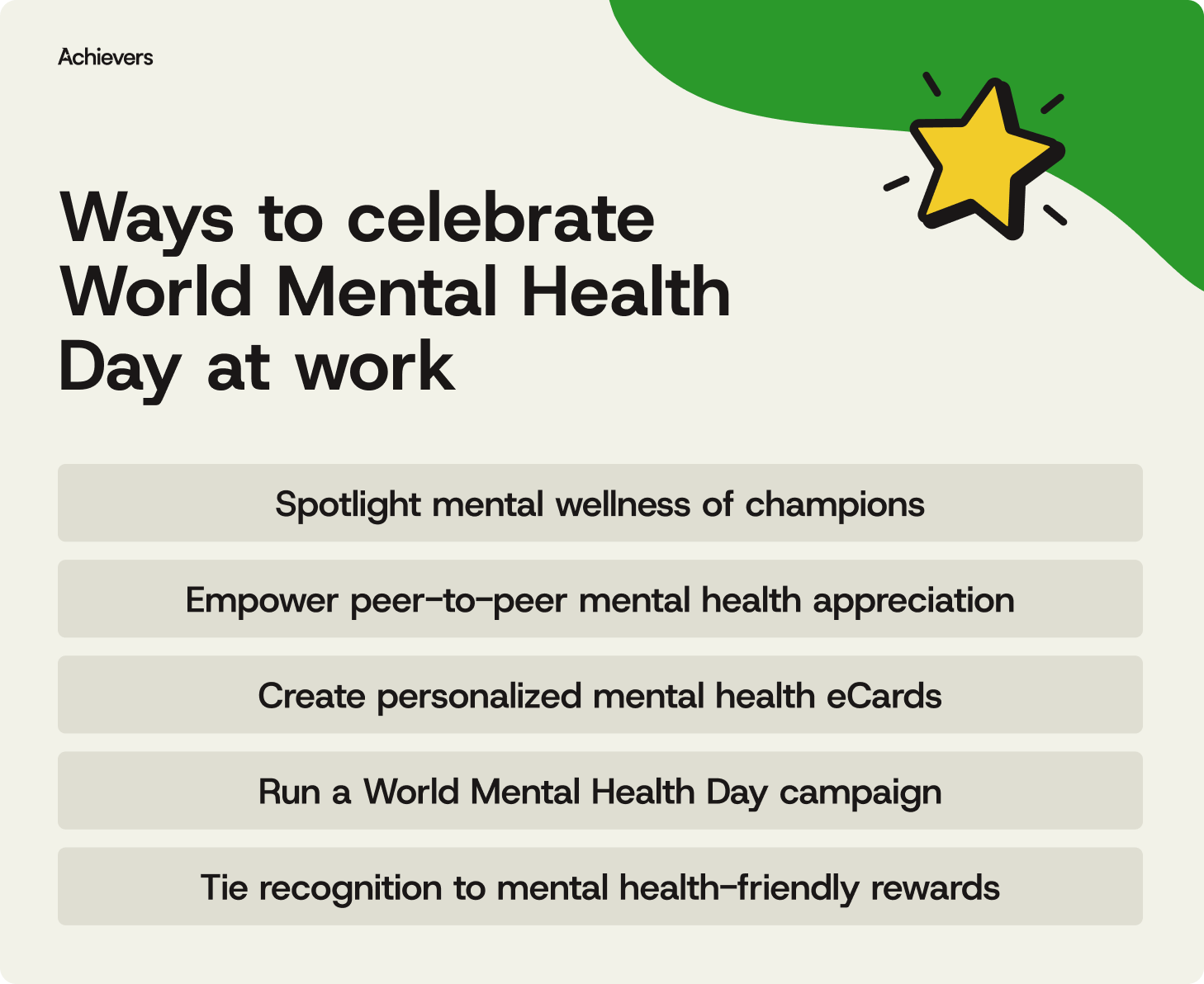
4. Run a World Mental Health Day Campaign
A dedicated campaign is an exceptional strategy to ignite engagement and spotlight mental health within the workplace, transforming a global observance into a local, actionable initiative. Utilizing themes such as #MindfulMoments or #RecognizeWellbeing can spark vital conversations, highlight existing employee wellness resources, and unite the organization in meaningful ways. Impactful campaign activities could include:
- Educational workshops: Hosting sessions on stress management, mindfulness techniques, or building resilience.
- Guest speakers: Inviting mental health experts, therapists, or individuals with lived experience to share insights.
- Team challenges: Organizing "mindfulness challenges" or "gratitude journaling" initiatives with friendly competition.
- A "Gratitude Wall": A physical or virtual space where employees can post messages of recognition and encouragement for one another, fostering a sense of collective appreciation.
- Mental Health First Aid Training: Sponsoring employees to become certified mental health first aiders, creating a network of in-house support.
- Resource sharing: Curating and promoting internal and external mental health resources, including EAPs, helplines, and digital wellness tools.
By thoughtfully combining recognition with purposeful activities, a World Mental Health Day campaign transcends being a singular moment of awareness; it actively cultivates a supportive culture and a truly healthy work environment that endures far beyond the day itself.
5. Tie Recognition to Mental Health-Friendly Rewards
One of the most potent and meaningful ways to recognize and empower employees is by offering them the autonomy to redeem accumulated recognition points for wellness-focused perks tailored to their individual needs. This sends an unequivocal message: their well-being is not just acknowledged but actively supported and valued. Whether these rewards manifest as extra paid time off, access to therapy sessions, subscriptions to meditation or mental fitness apps, tools for financial wellness (a significant source of stress), or experiences rooted in nature, these flexible options demonstrate a deep understanding of varied individual self-care needs.
Other mental health-friendly rewards could encompass:
- Ergonomic home office equipment: To promote physical comfort and reduce strain for remote workers.
- Professional coaching sessions: Focusing on stress management, work-life balance, or career development.
- Vouchers for healthy meal delivery services: Easing the burden of meal preparation and promoting nutritious eating.
- Gym memberships or fitness class passes: Encouraging physical activity as a mental health booster.
- Subscriptions to hobby-related courses: Promoting activities that offer creative outlets and stress relief outside of work.
- Donations to mental health charities: Allowing employees to direct their reward to a cause they believe in, fostering a sense of purpose.
By offering a diverse array of flexible, thoughtful, and mental health-centric rewards, organizations can proactively support well-being while simultaneously recognizing the unique and personal ways individuals choose to recharge, manage stress, and care for themselves.
Beyond the Day: Building an Enduring Culture of Care Year-Round
World Mental Health Day should not be viewed as an isolated event but rather as a powerful impetus to embed mental health considerations deeply and permanently into the fabric of the workplace. The momentum generated on October 10 must be sustained throughout the entire year through ongoing, culture-driven recognition and proactive strategies.
Crucially, leaders must embody and model openness, actively fostering psychological safety by sharing their own experiences, initiating and encouraging candid conversations about mental health, and creating a safe space for vulnerability. This visible commitment from the top down is paramount. To support this ongoing commitment, organizations can leverage advanced feedback features, such as those offered by platforms like Achievers. These tools enable regular pulse checks and provide real-time analytics that can proactively identify nascent stressors and emerging patterns of concern among employees, allowing for timely interventions before issues escalate into chronic burnout or more severe mental health challenges.
Ultimately, consistent recognition, coupled with open dialogue and proactive monitoring, forms the bedrock of fostering genuine wellness within the workplace. Recognition, in this context, transcends mere appreciation; it is a fundamental and indispensable component of an effective, holistic wellness strategy that nurtures both individual flourishing and organizational resilience.
Recognizing What Really Matters
Mental health is not merely an optional add-on; it is the fundamental cornerstone of a thriving, resilient, and innovative workforce. The contemporary workplace must evolve beyond a singular focus on performance metrics and rigid deadlines to actively prioritize psychological safety, emotional well-being, and authentic human connection.
World Mental Health Day serves as an annual, powerful reminder that every sincere "thank you" has the potential to be a lifeline. Consistent appreciation and recognition possess the transformative power to profoundly shift workplace culture, cultivating an environment where employees feel genuinely seen, truly valued, and robustly supported—not just for their tangible output, but for their inherent worth as individuals. With sophisticated platforms like Achievers, recognition is elevated from a simple gesture to a powerful, strategic tool, enabling organizations to build healthier, happier, and more human-centric workplaces, one meaningful moment of appreciation at a time.