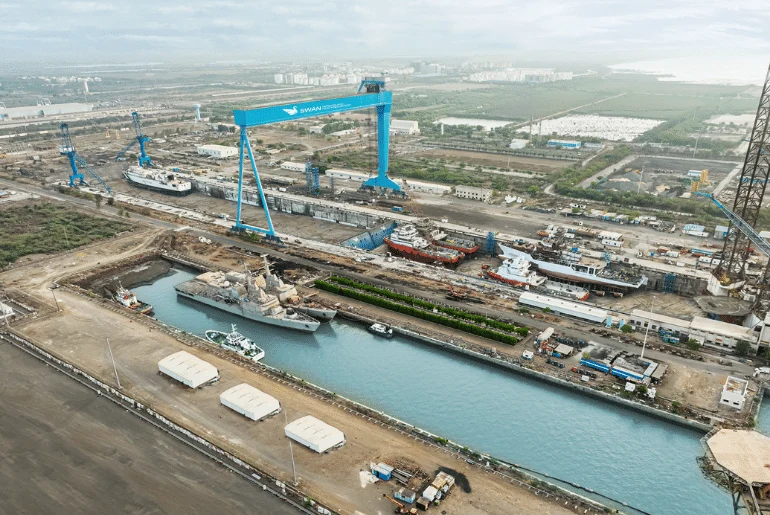
Swan Defence and Heavy Industries (SDHI) is aggressively scaling up its operations, announcing a substantial expansion that has seen its workforce more than double over the past 18 months, with plans to onboard an additional 550-plus employees by March 2027. This ambitious growth trajectory is primarily fueled by the burgeoning demand in India’s shipbuilding and heavy fabrication sectors, positioning SDHI as a pivotal player in the nation’s strategic push for maritime self-reliance and global competitiveness. The company’s expansion is underpinned by its pioneering "SWAVALAMBAN" training program, a robust classroom-to-shopfloor initiative designed to cultivate a highly skilled workforce tailored for the specialized needs of the modern maritime industry.
The planned hiring spree is comprehensive, encompassing a wide array of roles across both white-collar and blue-collar segments. This includes critical positions in newbuild projects, extensive repair and refit operations, and fundamental infrastructure development. Key white-collar roles will span project management, sophisticated design engineering, efficient supply chain logistics, and crucial civil works. Concurrently, the demand for specialized blue-collar talent is significant, focusing on expert heavy fabrication, precision welding, intricate fitting, and complex pipework. This holistic approach to recruitment underscores SDHI’s commitment to building a diverse and highly capable team equipped to handle the multifaceted demands of advanced shipbuilding and heavy engineering. The integration of such varied expertise is essential for the seamless execution of projects, from initial conceptualization and design to the intricate manufacturing and assembly stages.
SWAVALAMBAN: A Blueprint for Skill Development Excellence
Central to SDHI’s sustainable growth strategy is the SWAVALAMBAN program, launched last year as a transformative initiative to address the persistent skill gap in the maritime sector. This program has already yielded impressive results, successfully training over 100 graduate, postgraduate, and diploma engineers, alongside industrial technicians. The core strength of SWAVALAMBAN lies in its meticulously structured training model, which integrates several critical phases: robust sourcing of talent, comprehensive pre-onboarding, rigorous technical induction, personalized mentorship, and rapid, effective shopfloor deployment. This structured approach has been lauded by SDHI for significantly reducing the transition time from theoretical classroom learning to practical, on-the-job application by at least 30 per cent, thereby accelerating technical readiness without compromising stringent safety or quality standards.
The program’s development reflects a profound understanding of industry needs and a commitment to collaborative excellence. SWAVALAMBAN was meticulously crafted through extensive consultations with key governmental and academic institutions. These include the Ministry of Ports, Shipping and Waterways; the Ministry of Skill Development and Entrepreneurship; Gujarat’s Directorate of Employment & Training; the Gujarat Maritime Board; the Indian Maritime University; and a network of 11 Industrial Training Institutes (ITIs). This multi-stakeholder collaboration ensures that the curriculum is not only academically rigorous but also perfectly aligned with the evolving demands and technological advancements of the maritime industry. A specialized shipbuilding-specific curriculum, developed in conjunction with the Indian Maritime University, forms the backbone of the program, blending theoretical classroom instruction with invaluable practical exposure. SDHI currently extends its specialized maritime courses across these 11 participating ITIs, effectively decentralizing skill development and making it accessible to a broader pool of aspiring professionals.
Rear Admiral Vipin Kumar Saxena (retd), CEO of Swan Defence and Heavy Industries, emphasized the profound impact of this initiative, stating, "The success of SWAVALAMBAN proves that structured, industry-aligned training can dramatically accelerate technical readiness without compromising safety or quality. Through strong ecosystem partnerships, we are actively cultivating skilled professionals who will form the backbone of our growing shipbuilding and heavy engineering operations." His statement underscores the strategic importance of the program in fostering a resilient and capable workforce crucial for India’s ambitious maritime future.
India’s Strategic Maritime Vision and SDHI’s Role
The aggressive hiring and skilling push by SDHI is not an isolated event but rather a direct response to India’s overarching national strategy to bolster its shipbuilding capacity and expand its maritime workforce. The nation is currently undergoing a significant transformation, aiming to emerge as a global hub for shipbuilding, repair, and maritime services. This vision is deeply intertwined with several key government initiatives, including ‘Make in India’ and ‘Aatmanirbhar Bharat’ (Self-Reliant India), particularly in the defence sector. India’s defence procurement policies are increasingly prioritizing indigenous manufacturing, creating a substantial demand for domestic shipbuilding capabilities for naval vessels, coast guard ships, and other specialized maritime assets.
According to recent market analyses, the Indian shipbuilding market is projected to grow at a Compound Annual Growth Rate (CAGR) of approximately 7-8% over the next decade, driven by increasing defence budgets, the modernization of the commercial fleet, and a rising focus on coastal shipping and inland waterways. This growth trajectory is supported by government schemes such as the Sagarmala Programme, which aims to promote port-led development and enhance India’s logistics infrastructure, and the Shipbuilding Financial Assistance Policy, designed to make Indian shipyards more competitive globally. The demand for trained professionals and specialized technical talent across this burgeoning sector is therefore at an all-time high, making SDHI’s initiatives both timely and critical.
Economic Multiplier Effect and Regional Impact
Beyond its direct workforce expansion, SDHI estimates that its project expansions will generate a substantial economic multiplier effect, creating at least 5,000 indirect jobs over the next two to three years through its extensive network of vendors and supply-chain partners. This ripple effect will significantly boost local economies, particularly in Gujarat, where SDHI operates. The growth of the shipbuilding sector inherently supports a vast ecosystem of ancillary industries, including steel manufacturing, marine equipment suppliers, electrical and electronics component providers, logistics companies, and various service providers.
The generation of these indirect jobs is crucial for fostering regional economic development and empowering small and medium-sized enterprises (SMEs) that form the backbone of the supply chain. Gujarat, with its extensive coastline and strategic location, has been earmarked as a key maritime hub under the Sagarmala Programme. The state government, through bodies like the Gujarat Maritime Board, has been actively promoting investment in port infrastructure and shipbuilding facilities. SDHI’s expansion aligns perfectly with these regional development goals, contributing to job creation, technology transfer, and overall industrial growth in the state. The influx of skilled professionals and the establishment of robust training programs also enhance the human capital base of the region, making it more attractive for further investment and industrialization.
Chronology of a Strategic Ascent
SDHI’s rapid growth over the past 18 months marks a significant chapter in its operational history, indicating a swift response to market opportunities and national imperatives. The launch of the SWAVALAMBAN program "last year" signifies a forward-looking strategy, anticipating the long-term need for a skilled workforce even as the company embarked on its expansion. This proactive approach to human capital development sets SDHI apart. The target of hiring over 550 employees by March 2027 provides a clear timeline for its sustained growth, aligning with India’s broader vision to significantly enhance its maritime capabilities within the current decade. This period is critical for India as it seeks to replace aging naval fleets and expand its commercial shipping tonnage, offering ample opportunities for domestic shipyards like SDHI.
Statements from Related Parties and Broader Implications
While specific new statements from partner ministries were not provided in the original article, the involvement of the Ministry of Ports, Shipping and Waterways and the Ministry of Skill Development and Entrepreneurship in the SWAVALAMBAN program speaks volumes. It implicitly conveys a strong governmental endorsement for industry-led skill development initiatives. Officials from these ministries would likely emphasize the critical role of public-private partnerships in bridging the skill gap and fostering a globally competitive workforce. A representative from the Ministry of Skill Development and Entrepreneurship might highlight how programs like SWAVALAMBAN serve as a model for other industries grappling with similar talent shortages, showcasing the success of demand-driven vocational training.
Similarly, the Gujarat Maritime Board would likely underscore the strategic importance of SDHI’s expansion for the state’s maritime economy. They might point to Gujarat’s ambition to become a leading maritime manufacturing and services hub, with SDHI being a key contributor to this vision. Industry analysts specializing in defence and maritime sectors would likely view SDHI’s aggressive expansion and commitment to skill development as a strategic move that enhances its competitive edge. They might predict a strengthening of India’s domestic shipbuilding capacity, reducing reliance on foreign imports and bolstering national security. This indigenization effort, driven by companies like SDHI, is crucial for India to project power and secure its economic interests across the Indo-Pacific region.
The implications extend beyond economic and strategic benefits. The success of SWAVALAMBAN also signifies a paradigm shift in vocational education in India. By involving academic institutions like the Indian Maritime University and numerous ITIs, the program creates a virtuous cycle where industry demands directly influence educational curricula, ensuring graduates are job-ready from day one. This model can serve as a benchmark for other manufacturing and infrastructure sectors in India that are striving to enhance productivity and quality through a skilled workforce.
In conclusion, Swan Defence and Heavy Industries’ substantial expansion and its innovative SWAVALAMBAN program represent a significant stride towards strengthening India’s maritime capabilities and fostering a skilled workforce. This strategic growth, meticulously planned and executed through collaborative partnerships, positions SDHI as a frontrunner in India’s journey towards becoming a self-reliant and globally competitive maritime power. The ripple effect of its job creation and skill development initiatives will resonate across regional economies and the broader national landscape, contributing to India’s economic prosperity and strategic autonomy in the decades to come.