
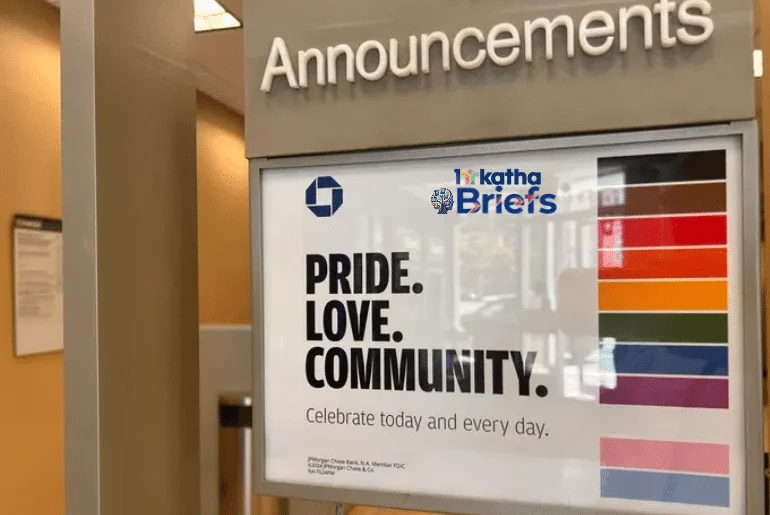
A former senior associate at JPMorgan Chase has initiated legal proceedings against the financial titan, alleging a pattern of discrimination and retaliation stemming from his sexual orientation and his active participation in the company’s LGBTQ+ employee resource group, ultimately culminating in what he describes as a pressured resignation. The lawsuit, filed by Brian Larson in Manhattan federal court, casts a spotlight on the intricate dynamics between corporate diversity initiatives and individual workplace experiences within one of the world’s largest banking institutions.
The Genesis of the Dispute: Allegations of Discrimination and Retaliation
Brian Larson, who served as a senior associate within JPMorgan’s highly competitive Chase Associate Programme, details a series of events that he claims illustrate a hostile work environment. Central to his complaint are allegations concerning his direct supervisor, Peter Bergman, who, according to Larson, repeatedly voiced criticism regarding the time Larson dedicated to PRIDE Tri-State, the bank’s officially sanctioned LGBTQ+ employee group.
Employee Resource Groups (ERGs) like PRIDE Tri-State are foundational elements of diversity, equity, and inclusion (DEI) strategies in many large corporations. They are typically designed to foster a sense of community, provide support, and offer professional development opportunities for employees from underrepresented groups, while also advising leadership on inclusive policies. JPMorgan Chase, like many of its peers in the financial services sector, publicly champions its commitment to DEI and boasts a robust network of ERGs, often highlighting their positive impact in corporate responsibility reports and recruitment materials. Larson’s involvement with PRIDE Tri-State was, by all accounts, significant, requiring a substantial time commitment in addition to his primary responsibilities. He states that he was working approximately 60 to 70 hours per week in his core role on the Growth Segments team while simultaneously managing his duties for the Pride group.
The complaint specifically cites an unplanned Zoom meeting in June 2022 where Bergman allegedly confronted Larson. During this meeting, Bergman reportedly questioned whether Larson’s involvement with the employee group was detrimentally impacting his core responsibilities. Most notably, Larson alleges that Bergman instructed him to keep his "gay job" separate from his "day job"—a comment that forms a critical piece of evidence in the discrimination claim, suggesting a direct link between his sexual orientation, his DEI work, and his supervisor’s disapproval.
Adding to the alleged pattern of discrimination, Larson claims that despite JPMorgan’s own diversity, equity, and inclusion leadership requesting managers to acknowledge and recognize his contributions to the employee group in performance assessments, Bergman explicitly declined to do so. This alleged refusal, according to the lawsuit, created a tangible professional disadvantage, denying Larson formal recognition for work that aligned with the bank’s stated corporate values and DEI objectives. Such an omission, if proven, could signal a disconnect between top-down corporate directives on diversity and their implementation at the managerial level, potentially undermining the very purpose of ERGs and DEI initiatives.
Escalation and Deterioration of Employment
Following his initial concerns regarding his supervisor’s conduct, Larson alleges a marked shift in his treatment at the bank, indicative of retaliatory actions. He claims he was systematically removed from key projects, diminishing his professional growth opportunities and visibility within the programme. Concurrently, his performance ratings, which had previously been consistently "exceeds expectations," were downgraded to merely "on track." This change, coming after he raised concerns, is presented as evidence of a punitive response to his complaints.
The lawsuit further details that Bergman allegedly warned Larson about the precariousness of his continued participation in the associate programme, explicitly stating that his involvement in diversity initiatives would not serve to protect his position. This alleged statement, according to the complaint, reinforced the notion that Larson’s advocacy for LGBTQ+ inclusion was not only unwelcome but could actively jeopardize his career trajectory at JPMorgan Chase.
In an attempt to address these escalating issues, Larson subsequently escalated his concerns to JPMorgan’s Human Resources (HR) team. An internal review was conducted, a standard procedure for such complaints within large corporations. However, according to Larson’s complaint, this internal investigation concluded without finding evidence to support his discrimination allegations. This outcome is not uncommon in employment disputes, where internal investigations, while thorough, may operate under different evidentiary standards or scopes than a formal legal process.
The dispute took a somewhat unusual turn when it escalated over a relatively minor sum of approximately $40 in Uber expenses, which Larson stated were linked to Pride Month events and had been pre-approved by his manager. Initially, this expense became a point of contention. While the complaint notes that the matter was eventually resolved after the manager corroborated Larson’s explanation, the fact that such a minor expense became a point of conflict, following the existing tensions, is presented as further evidence of the strained and allegedly hostile environment Larson experienced.
The Ultimatum and Forced Resignation
A mere four days after the resolution of the Uber expense dispute, Larson alleges he faced a critical ultimatum from HR. He claims he was informed that he would either have to resign or face termination. The lawsuit details that he was explicitly warned about the potential negative impact a termination could have on his future employment record. Furthermore, Larson alleges that an HR representative guided him through the resignation process, even monitoring his computer screen during the procedure—an action he describes as adding undue pressure to an already distressing situation.
Prior to this alleged ultimatum, Larson had reportedly sought to secure other permanent positions within JPMorgan Chase, a common pathway for associates completing rotational programmes. However, he claims he was unable to secure a permanent role following the completion of his programme. The lawsuit posits that the alleged discriminatory and retaliatory treatment he experienced significantly affected his career prospects within the bank and caused him substantial emotional distress. Such claims are common in employment lawsuits, seeking to quantify the personal and professional damage sustained by the plaintiff.
The Legal Filing and Demands
Larson’s lawsuit formally accuses JPMorgan Chase of discrimination and retaliation, violations of anti-discrimination laws designed to protect employees from unfair treatment based on protected characteristics like sexual orientation. The filing seeks a range of damages, including compensation for lost earnings and other financial losses directly attributable to his departure from the bank. Additionally, he is seeking compensatory damages for emotional distress and punitive damages, which are typically awarded to punish the defendant for particularly egregious conduct and to deter similar behavior in the future. The case is now proceeding through the federal court system in Manhattan, where both parties will present their arguments and evidence.
JPMorgan Chase’s Official Response and Counterarguments
In response to the serious allegations leveled against it, JPMorgan Chase has unequivocally denied all claims. The bank has publicly stated that its own internal investigation, conducted upon receipt of Larson’s initial complaints, found no evidence whatsoever to substantiate his claims of discrimination or retaliation. This internal finding forms a cornerstone of JPMorgan’s defense, indicating that from their perspective, due process was followed, and no wrongdoing was identified within their corporate framework.
Furthermore, JPMorgan Chase has countered Larson’s narrative by asserting that multiple managers had, in fact, raised legitimate concerns regarding Larson’s performance during his tenure. The bank maintains that it provided him with appropriate coaching and support to address these alleged performance issues. This counter-narrative suggests that Larson’s departure was not a result of discrimination but rather a consequence of performance-related challenges. The bank has also stated that Larson was afforded additional time to find a permanent position after completing the Chase Associate Programme before he ultimately chose to resign, implying that his departure was voluntary and not coerced. These conflicting accounts will form the core of the legal battle, requiring the court to weigh the evidence and credibility of both sides.
Broader Context: Corporate Diversity, Equity, and Inclusion (DEI) Initiatives in the Financial Sector
The lawsuit against JPMorgan Chase emerges against a backdrop of increasing corporate emphasis on Diversity, Equity, and Inclusion (DEI) across all industries, particularly within the financial services sector. Major banks, including JPMorgan Chase, have invested significantly in DEI programmes, viewing them not just as ethical imperatives but also as strategic business advantages, enhancing innovation, talent attraction, and market reputation. Employee Resource Groups (ERGs) like PRIDE Tri-State are critical components of these strategies, intended to foster inclusivity and provide a voice for diverse employee populations.
However, the efficacy and sincerity of corporate DEI initiatives are often subject to scrutiny. Studies by organizations such as the Human Rights Campaign Foundation (HRC) consistently highlight that despite corporate pledges, LGBTQ+ employees still face significant challenges, including discrimination, harassment, and a lack of equitable opportunities in the workplace. The HRC’s Corporate Equality Index, for example, rates companies on LGBTQ+ workplace equality, often showing high scores for major banks, yet individual experiences can sometimes diverge from these top-level policy achievements. The alleged "gay job" comment underscores a potential disconnect between an organization’s stated values and the day-to-day realities and biases that can persist at various levels of management.
The financial sector, in particular, has faced pressure to diversify its workforce and leadership, moving beyond historically homogenous structures. Post-2020, following global social justice movements, many institutions intensified their commitments, setting targets for diversity in hiring and promotions. Cases like Larson’s serve as critical reminders that policies alone are insufficient; cultural change and accountability at all levels of management are paramount for DEI initiatives to be truly effective and prevent the kind of alleged discrimination and retaliation described in the lawsuit.
Legal Landscape and Precedents
Larson’s lawsuit falls under the purview of federal anti-discrimination laws, notably Title VII of the Civil Rights Act of 1964, which prohibits employment discrimination based on sex. A landmark 2020 Supreme Court ruling in Bostock v. Clayton County clarified that Title VII’s prohibition on sex discrimination extends to discrimination based on sexual orientation and gender identity. This ruling significantly bolstered the legal protections for LGBTQ+ individuals in the workplace across the United States. Additionally, New York State and New York City have their own robust anti-discrimination laws, such as the New York City Human Rights Law, which often provide even broader protections than federal statutes.
Proving discrimination and retaliation in court can be a complex endeavor. Plaintiffs typically need to demonstrate a prima facie case, showing they are a member of a protected class, were qualified for their position, suffered an adverse employment action, and that the circumstances surrounding the action suggest discrimination. The burden then shifts to the employer to articulate a legitimate, non-discriminatory reason for their actions, which the plaintiff then attempts to prove is merely a pretext for discrimination. Retaliation claims often hinge on demonstrating a causal link between the protected activity (e.g., complaining about discrimination) and the adverse employment action (e.g., demotion, termination). The alleged timeline of events in Larson’s complaint, specifically the changes in his performance ratings and the ultimatum after he raised concerns, will be central to his retaliation claim.
Implications for JPMorgan Chase and the Industry
This ongoing lawsuit carries significant implications for JPMorgan Chase, both in terms of financial liability and, perhaps more importantly, reputational risk. As one of the world’s most recognizable financial institutions, allegations of discrimination and retaliation can tarnish its brand image, potentially affecting its ability to attract and retain top talent, particularly from diverse backgrounds. In an era where corporate social responsibility and inclusive workplaces are increasingly prioritized by employees and investors alike, such legal challenges invite intense scrutiny of a company’s internal culture, HR practices, and the genuine effectiveness of its DEI programmes.
Beyond JPMorgan Chase, the case serves as a broader warning to the entire financial industry and other large corporations. It underscores the critical necessity for consistency between publicly declared corporate values and the lived experiences of employees. It highlights the challenges of ensuring that DEI policies are not merely performative but are deeply embedded in managerial practices and corporate culture, with clear accountability mechanisms. The outcome of this case, whether through a verdict or a settlement, could set a precedent or at least provide significant lessons on the legal and ethical responsibilities of employers in fostering truly equitable and inclusive workplaces.
As the legal proceedings unfold in Manhattan federal court, the dispute between Brian Larson and JPMorgan Chase remains unresolved. Both parties stand firm in their conflicting accounts, with the court tasked with sifting through the evidence to determine the truth. The case stands as a potent reminder of the ongoing struggle for workplace equity and the continuous need for vigilance and accountability in ensuring that diversity and inclusion are not just aspirational goals but fundamental realities for all employees.







