
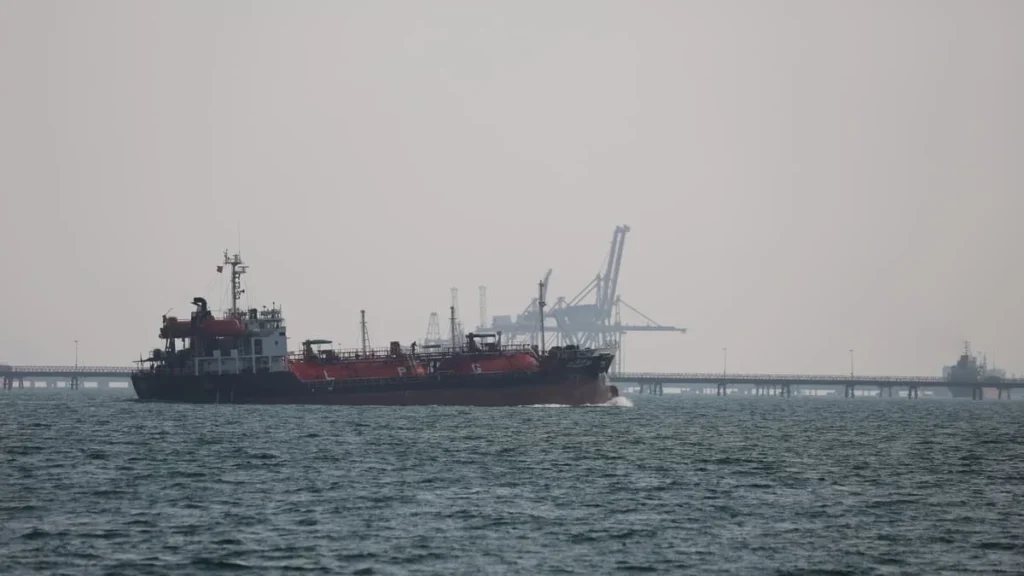
A minimum of 20,000 seafarers are currently trapped by war in the Persian Gulf, caught in a perilous geopolitical maelstrom that has largely escaped global attention despite its profound humanitarian and economic implications. Adam McCulloch investigates their plight and the increasingly desperate efforts to support them, revealing a silent crisis unfolding on the high seas.
The global landscape shifted dramatically during the Covid-19 pandemic, elevating key workers, including seafarers, to a status commensurate with their vital role in maintaining supply chains. Yet, amidst the escalating complexities and devastating human cost of the US-Israeli war with Iran, the precarious situation of these essential maritime professionals appears to have receded from public consciousness. Their predicament, unfolding on vessels confined within a volatile region, underscores a critical oversight in international crisis response and highlights the inherent vulnerabilities of global trade.
The Geopolitical Crucible: Strait of Hormuz
At the heart of this crisis lies the Strait of Hormuz, a narrow waterway of immense strategic importance. Approximately 20% of the world’s oil and liquefied natural gas (LNG), along with up to 30% of internationally traded fertilisers, transit through this choke point annually. Its unimpeded flow is critical for global energy security and food supply chains. However, the Strait has become a flashpoint in the ongoing conflict, with Iran’s Islamic Revolutionary Guard Corps (IRGC) implementing stringent restrictions, effectively closing the waterway to most international shipping and permitting passage only for vessels from "friendly" nations. This selective closure has transformed a vital international maritime artery into a hazardous zone, trapping thousands of vessels and their crews.
The Persian Gulf region has a long history of geopolitical tension, from the Iran-Iraq War and the "Tanker War" of the 1980s to more recent incidents involving vessel seizures and attacks. The current conflict, characterized by heightened regional proxy engagements and direct confrontations, has exacerbated an already unstable environment. The IRGC’s actions, often seen as a projection of Iranian military and political power, have consistently challenged international maritime norms and freedom of navigation, making the Strait a recurring flashpoint for global security concerns. The current state of hostilities has pushed these tensions to a critical new level, directly impacting the lives and livelihoods of seafarers.
The Silent Victims: Seafarers’ Ordeal
Since the Strait of Hormuz devolved into an active war zone, the International Transport Workers’ Federation (ITF) has been inundated with over 1,000 inquiries from seafarers on approximately 300 different vessels. A significant proportion, around 20%, have been urgent pleas for repatriation, underscoring the immediate desire of crews to escape the danger. Beyond the threat of direct conflict, other pressing concerns include unpaid wages, dwindling access to essential provisions such as fuel, food, and fresh water, and a pervasive sense of isolation and uncertainty.
Ashley Oro, a maritime operations training leader in risk and compliance, draws a stark parallel to previous crises. "People focus on the oil, the cargo and the victims ashore of senseless violence and war," he explains. "It is then hard to remember there are some people caught up in it on a metal box with nowhere to go and nothing to do about it right now." Oro implores the international community to recall the collective rallying cry for "key workers" during Covid-19, noting that "right now those same people are once again caught in a situation not of their making — all for the reason that they are at work." This sentiment highlights a perceived abandonment of those who underpin global commerce.
The grim reality of the situation was vividly illustrated by Nils Haupt, head of communications at Hapag-Lloyd, one of the world’s leading shipping companies. He recounted on Radio 4 an incident where one of their six vessels in the Gulf, though not directly targeted, was struck by bomb fragments. The crew bravely fought a fire for two hours, an experience Haupt described as "traumatising." While other ships might not face direct attacks, they grapple with severe morale issues. "Crew members just want to get home, they just want to leave the area, and we very much hope that we can realise that. The situation is not really getting better," Haupt stated, emphasizing the fluctuating and unpredictable nature of the conflict, making any long-term planning impossible. The constant threat of sea mines, for instance, renders passage through the Strait an unacceptable risk for companies prioritizing crew safety. Haupt conceded that repatriation could be days, weeks, or even months away, leaving thousands in agonizing limbo.
A Crisis of Human Rights and Supply Chains
The plight of these seafarers is not merely a logistical challenge; it is a profound human rights crisis with significant ramifications for global supply chains. These individuals, often from developing nations, are caught in a conflict not of their making, yet bear a disproportionate share of its consequences. Their prolonged confinement aboard vessels, often with inadequate supplies and under constant threat, transforms their workplaces into "floating prisons," as articulated by Ashley Oro. This situation raises serious questions about the ethical responsibilities of flag states, shipowners, and international bodies to protect the fundamental rights of these essential workers.
The economic implications extend far beyond the immediate humanitarian concerns. The disruption to shipping through the Strait of Hormuz directly impacts global energy prices, as approximately one-fifth of the world’s oil supply is affected. Delays in the transport of liquefied natural gas (LNG) can create energy shortages and price volatility, particularly for nations reliant on these imports. Furthermore, the disruption to fertilizer shipments threatens global food security, as delays in delivery can impact agricultural yields and contribute to rising food prices. The ripple effect across interdependent global economies underscores the critical need for a swift resolution and the protection of maritime routes.
International Efforts and Structural Failures
In response to this escalating crisis, a range of international organizations has mobilized to provide support and establish repatriation routes. London-based Nautilus International, a union representing 20,000 maritime professionals, has been at the forefront of these efforts. Working collaboratively with other bodies, Nautilus has endeavored to forge safe passage for seafarers through Oman towards Muscat and through Saudi Arabia.
Martin Gray, Nautilus director of organizing, highlights the union’s proactive engagement: "We’ve been able to support members by having some fairly robust discussions with companies to remind them of the rights of the seafarer. Flights and accommodation being too expensive is not a valid reason to delay or defer repatriation." Gray stresses the paramount importance of informed consent when asking crews to remain in high-risk areas. "Shipowners should be proactive in seeking that defined, informed consent about people’s willingness to remain. Or whether they would prefer the repatriation which they’re entitled to," he asserts.

Nautilus has also fielded numerous contractual inquiries, with members questioning why standard protections are not being applied in this extraordinary situation. Concerns frequently revolve around the availability of food, water, and fuel, as well as a perceived lack of transparent communication regarding security risks. Beyond the heavily regulated commercial shipping sector, Gray points to the equally vulnerable population of yacht crew in the Persian Gulf, many of whom are not union members. "There are very expensive yachts in the region being crewed by very scared seafarers who are not getting the level of information that they would expect," he reveals, highlighting a segment of the maritime workforce often overlooked in times of crisis.
The European Transport Workers’ Federation has issued a scathing critique of the regional response, describing it as "disjointed and insufficient." They lament "The absence of coordinated European safety corridors, reliable emergency repatriation mechanisms, and clear, enforceable protection standards represents a structural failure." This deficiency, they argue, stems from years of deliberate political choices that prioritized cost-cutting and intra-EU competition over resilience and quality jobs, leading to fragmented governance and a dependence on third countries for freight services. This structural unpreparedness leaves European players vulnerable and exposes maritime workers to unnecessary risks.
The Maritime Labour Convention 2006: A Shield Under Fire
The Maritime Labour Convention (MLC) 2006, often referred to as the "seafarers’ bill of rights," provides a comprehensive framework of benchmark standards for seafarers’ working and living conditions. It covers areas such as employment agreements, wages, hours of rest, repatriation, health and safety protection, medical care, and social security. The MLC aims to ensure decent working and living conditions for all seafarers, regardless of their nationality or the flag of the ship they serve.
However, Ashley Oro points out a critical flaw: the MLC’s guarantees, while robust on paper, may not withstand the harsh realities of active war zones. Writing on LinkedIn, Oro observes: "When conflict escalates, war risk insurance is withdrawn and commercial decisions freeze movement. The seafarer discovers that rights on paper are not the same as a way home." He argues that an operator, even if entirely compliant with MLC and flag state requirements, will inevitably encounter gaps in a system that simply does not account for large-scale global instability events. This highlights the need for a more adaptable and resilient international framework capable of protecting seafarers during conflicts.
Navigating the Repatriation Maze
The practical challenges of repatriating trapped seafarers are immense. Organizations like Protection and Indemnity (P&I) clubs, mutual insurance associations for shipowners, are advising on liability, fatigue, and documentation issues. Ship managers are preparing for extended contracts and exploring limited options for relief crews. Yet, the process remains fraught with peril and uncertainty. Establishing safe corridors through volatile territories, securing transit visas, and arranging flights in a rapidly changing security environment are monumental tasks.
The difficulty is compounded by the shift towards short-term Seafarer Employment Agreements, rather than long-term company contracts. As Oro explains, "It will be hard to find people willing to sign on to go and relieve someone else from an active war zone, in potentially mined waters." This creates a severe bottleneck for crew changes, meaning that even if trapped seafarers can be repatriated, finding replacements willing to enter the danger zone is an entirely separate and often insurmountable hurdle. The inherent risks associated with working in an active conflict zone deter potential replacements, leaving vessels stranded and exacerbating the crisis for those already onboard.
Mental Health at Sea: The Invisible Wounds
Beyond the immediate physical dangers, the mental health toll on trapped seafarers is profound. Oro, drawing from his own experience of long stints at sea with the Royal Fleet Auxiliary, stresses the psychological impact of uncertainty, fear, dread, and exhaustion, with no clear end in sight. "We are treating these crews as a captive population, not as a mobile workforce," he states. "When a ship sits at anchor under those conditions it becomes a floating prison."
Charities like the Mission to Seafarers and The Seafarers Charity are playing a crucial role in providing essential mental health support and emergency supplies. The Seafarers Charity’s provision of resources through the Happy@Sea app is particularly commendable, offering a lifeline to isolated crews. While the ultimate responsibility for vessel supplies and crew safety lies with the shipowner and company management, these charities fill critical gaps in humanitarian aid. The constant fluctuation of news—offering fleeting hope one moment, only to dash it the next—makes maintaining morale an increasingly difficult task. What seafarers truly need, Oro argues, is certainty, which can only be brought about by structured plans, reminiscent of the global protocols implemented during the Covid-19 pandemic.
Looking Ahead: Uncertain Seas
The current crisis highlights a glaring deficiency in international preparedness for large-scale geopolitical instability impacting global maritime trade. During Covid-19, the world witnessed the fragility of supply chains and, in response, built a temporary global system for crew mobility. Seafarers, through the tireless advocacy of UN agencies like the International Maritime Organization (IMO) and the International Labour Organization (ILO), were eventually classified as key workers, leading to formal crew change protocols, international travel corridors, visa and transit exemptions, and structured repatriation processes. This precedent demonstrates that a coordinated global response is possible when political will aligns with economic necessity.
However, the current situation in the Persian Gulf reveals a regression. The lessons learned during the pandemic, particularly regarding the crucial role of crew mobility in countering the risks of fatigued and stressed crews, appear to have been forgotten. With weeks, or potentially months, of complex negotiations involving unpredictable powers and personalities, and the ever-present risk of the conflict flaring up, there is no immediate relief on the horizon for these trapped seafarers.
As Ashley Oro poignantly concludes, "We built a system for one crisis. And so the people who keep global trade moving find themselves in the same position — necessary, vulnerable and, increasingly, forgotten." The international community faces an urgent moral imperative to not only address the immediate humanitarian crisis but also to establish robust, resilient mechanisms to protect seafarers caught in future conflicts, ensuring that those who facilitate global prosperity are never again abandoned to the vagaries of war.








