As artificial intelligence (AI) rapidly integrates into the fabric of daily business operations, its profound impact on management practices is becoming increasingly evident. This transformation necessitates a re-evaluation of traditional leadership roles and the emergence of a new archetype: the "Supermanager." Research indicates that the effective integration of AI is not merely a technological upgrade but a fundamental shift requiring proactive leadership, adaptability, and a culture of innovation driven from the ground up.
The Evolution of Management: From Traditional Oversight to AI-Enabled Empowerment
For decades, the core tenet of management, as articulated by seminal thinkers like Peter Drucker, has been the division between those who manage and those who execute tasks. Managers have historically been tasked with setting direction, ensuring team alignment, establishing priorities, and equipping individuals with the necessary skills and resources for success. This often involved coaching, reassigning, or, when necessary, parting ways with underperforming employees.
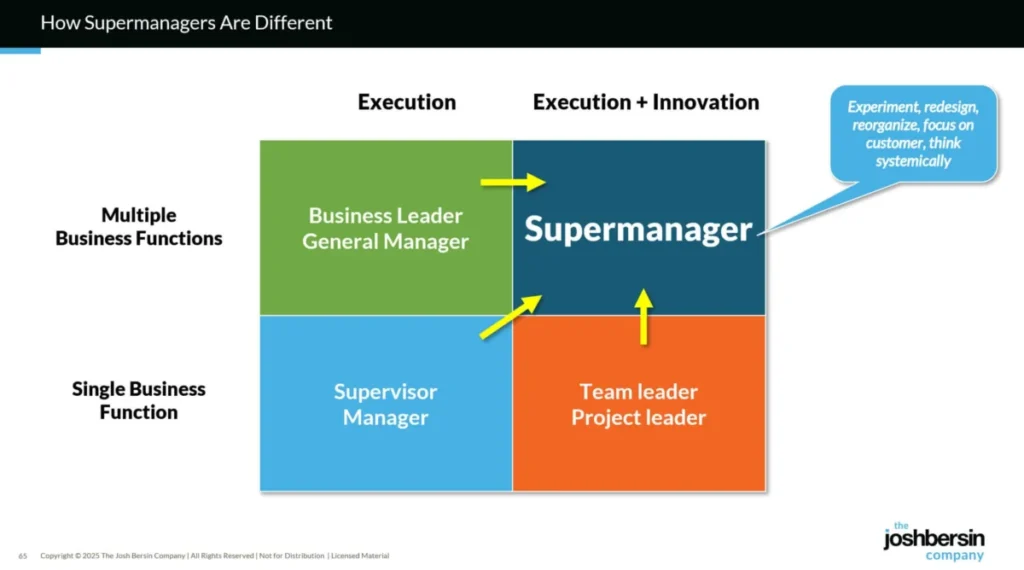
The complexities of this role have been acknowledged across various management philosophies. From the results-driven approach of Jack Welch to the servant leadership of Howard Schultz, and the customer-centric focus of Jeff Bezos to Elon Musk’s first-principles thinking, leadership models have continuously evolved to address the challenges of motivating and guiding teams. However, the current AI-driven era introduces a novel dimension, demanding a heightened capacity for experimentation, continuous change, and the reinvention of team functions. This burgeoning requirement signals the dawn of the Supermanager.

The Unprecedented Nature of AI in the Workplace
The current wave of AI integration is distinct from previous technological advancements. Unlike earlier productivity tools, AI systems possess the capability to learn, personalize, and adapt to individual users and teams. This empowers organizations with unprecedented capabilities, including the development of sophisticated "Digital Twins" and the extraction of deep insights from vast enterprise datasets. Consequently, AI transformation is less about implementing a new tool and more about fostering an environment of enablement, continuous learning, and organizational reinvention. Crucially, this necessitates that line managers, who might typically await directives from corporate headquarters, take a proactive role in spearheading this change.
AI Transformation: A Dual Approach of Bottom-Up Innovation and Top-Down Guidance
Empirical evidence suggests that many significant AI-driven innovations originate not from centralized IT departments but from front-line teams who creatively adapt and leverage AI tools. A notable example emerged from a distribution center in Thailand, where employees independently developed a photo-based inventory management application. This "hacked-together" solution dramatically reduced monthly inventory processing time by an astounding 75%. Upon sharing their innovation with corporate leadership, the app was successfully replicated across the entire company.
Similarly, an analyst at the International Air Transport Association (IATA) utilized AI platforms to construct a comprehensive staffing, skills, and workforce planning model for the global airline industry. This self-developed AI solution significantly streamlined the often months-long process of airline staff planning and is now being shared with airline executives worldwide.
In the financial sector, an individual investment advisor at a major bank developed a sophisticated portfolio advisor using the company’s secure AI agent platform. The IT department subsequently leveraged this initiative to build a global portfolio management system catering to high-net-worth clients.

These anecdotes, representative of a growing trend, highlight numerous opportunities for AI-driven transformation across various functions, including marketing content generation, job analysis and recruitment, employee performance data crunching, and performance appraisal writing. The common thread in these success stories is the emergence of front-line employees as innovators. Supermanagers play a pivotal role in this dynamic by enabling, encouraging, and empowering their teams to bring these novel ideas to the forefront – what can be termed "the three E’s of AI transformation."
The Supermanager: Architects of Execution and Innovation
Supermanagers, individuals often recognized for their exceptional leadership qualities, possess a unique ability to seamlessly blend a focus on tangible results with a drive for continuous reinvention. While not necessarily rebels or disruptors, they cultivate an environment where these two objectives coexist and reinforce each other.
While many organizations establish AI steering committees and dedicated technology teams to develop standardized platforms and manage large-scale initiatives, these centralized groups often lack the granular visibility to identify every potential opportunity. Standard Chartered, for instance, is developing a global onboarding platform to streamline complex talent acquisition across over 80 countries, a testament to large-scale AI implementation. However, the sheer volume and diversity of potential AI applications mean that such centralized efforts cannot capture all possibilities.
Supermanagers, therefore, excel by fostering a culture where teams are encouraged to generate new ideas, critically prioritize them, and champion their innovations. Instead of passively awaiting corporate-developed solutions, they actively support and nurture employee-led innovation. This decentralized approach to innovation is a hallmark of the Supermanager.

The Critical Role of Supermanagers in AI Adoption and Productivity Gains
A significant challenge in the current business landscape is the widening gap between technological advancement and actual business productivity. As illustrated by the increasing power of tools like Microsoft Copilot, the rate of technological improvement often outpaces an organization’s capacity to fully leverage these advancements. This disparity, depicted by a growing divergence between the trajectory of technology (represented by a green arrow) and business productivity (represented by a red arrow), poses a substantial obstacle to realizing the full potential of AI.
Supermanagers act as the crucial catalyst and driving force needed to bridge this gap, effectively bending the productivity curve upward. Traditional managers, constrained by established protocols, might wait for IT to deliver solutions or simply instruct their teams to "become more productive." This passive approach is insufficient in the face of AI’s transformative potential.
In contrast, Supermanagers proactively engage with AI, understanding its capabilities and encouraging experimentation within their teams. They actively solicit assistance from IT departments and foster a mindset of creative problem-solving, pushing their teams beyond conventional thinking. These localized, front-line innovations generate momentum, build practical experience, and create demand for IT support. The cumulative effect is an organization rich in diverse innovations, each contributing to an upward shift in overall business productivity. As new AI features emerge, these Supermanaged teams of "Superworkers" continue to drive innovation forward.
This dynamic is facilitated by the increasing accessibility and ease of use of AI systems. Tools like Galileo, an open platform with extensive features for developers, enable individuals to create prompts and manage data within AI agents with a level of simplicity comparable to using a spreadsheet. This user-friendliness empowers effective Supermanagers to lead their teams through this era of AI-driven change.

Strategic Imperatives for Organizations in the AI Era
Organizations must critically examine their existing leadership models. Key questions arise: How effectively do these models balance the emphasis on execution and results with the imperative for innovation and creation? How much autonomy do managers have to restructure roles and establish new positions? Are leaders adequately trained in job design and organizational change management principles?
Furthermore, the familiarity of leaders with AI itself is paramount. There is no room for complacency; the rapid evolution of this revolutionary technology is reshaping every business function. Strong leaders must commit to rapid upskilling. This responsibility extends to HR leaders, who must set a proactive example in embracing and understanding AI.
A thorough review of management models and reward systems is essential. As highlighted in recent industry discussions and podcasts, the strategic development and empowerment of Supermanagers may represent one of the most significant investments organizations can make to successfully navigate the AI revolution.
The research, "The Rise of the Supermanager," offers comprehensive insights into this evolving leadership paradigm. Additionally, platforms like Galileo for Managers provide AI-powered assistance for leaders at all organizational levels, underscoring the practical tools available to support this critical transition. The continued evolution of AI in the workplace demands a parallel evolution in leadership, with the Supermanager emerging as the key to unlocking unprecedented levels of productivity and innovation.