
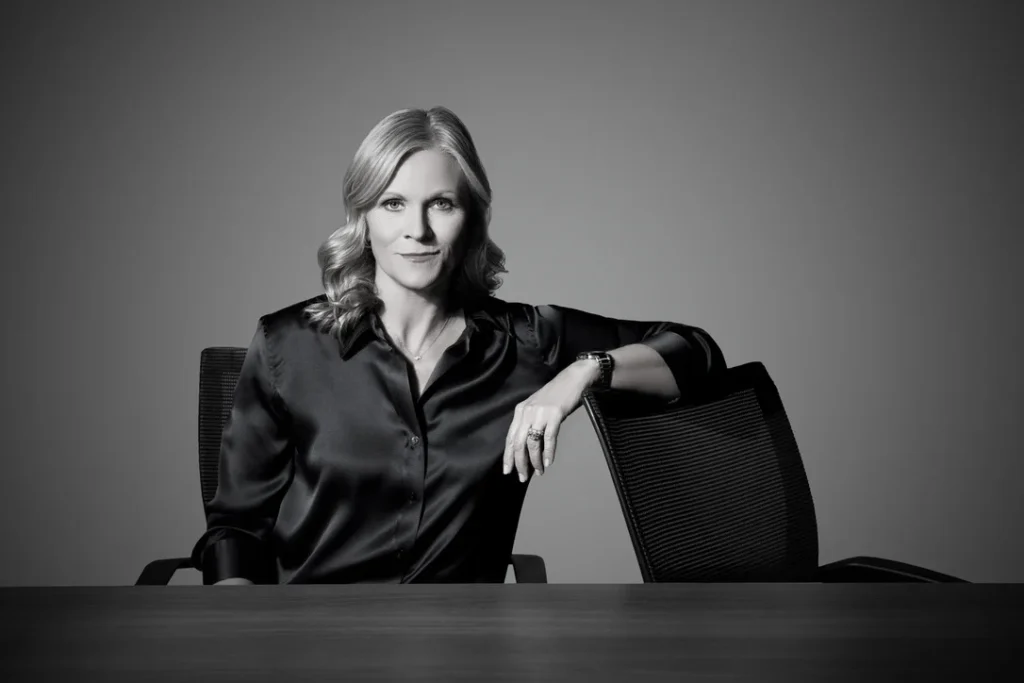
When a problem reaches Maria Black, it has already stumped her colleagues at ADP, a global leader in human capital management solutions. As the seventh CEO in the company’s 77-year history, Black presides over an organization with 67,000 employees dedicated to serving over 1.1 million clients. Anything that escalates to her level, she notes, represents the most intractable challenges, as more readily solvable issues are typically addressed long before they reach the CEO’s desk. In those late hours when complex issues keep her awake, "spinning on what’s the right answer," she consistently returns to two fundamental questions: "What’s the right thing for our clients? What’s the right thing for our associates?"
This simple, yet profound, decision-making filter guides Black through what she identifies as the number one question confronting every chief executive today: "What does a workforce that includes both AI and humans look like?" Her strategic approach, she explains, is deeply rooted in the company’s foundational principles. "Culture is the most important thing in any company," Black stated in an exclusive interview with HR Executive, "and it’s definitely the most important thing during periods of heightened innovation and transformation."
A Foundational Framework for a Dynamic Era
Black emphasizes that ADP remains anchored in what she terms its "founders’ fire," the mission established in 1949. The company’s genesis was rooted in solving a tangible business problem – processing payroll for an employee on leave. This early endeavor was characterized by a "precision focus on clients and associates," a principle that has endured through decades of economic shifts and technological advancements. This foundational logic, Black asserts, shapes her current decision-making process. "Just because you can do something doesn’t always mean that you should," she advises. "And sometimes the easiest path isn’t the right path because it doesn’t align with your mission and values and culture."
This philosophy resonates powerfully in the current climate, where HR leaders are grappling with the anticipated, yet often elusive, benefits of artificial intelligence and automation. Gartner’s recent HR trends research underscores this, noting that AI-driven HR transformation is a top priority for many leaders. However, the research also reveals a significant disconnect: many HR leaders report that their current technologies fall short of meeting business needs, and approximately half are unable to measure the return on investment of their tech investments. Black cautions against succumbing to the immediate allure of technological trends. "It’s so easy to get caught up in the moment, and it’s so easy to get caught up in whatever the hype cycle is," she observed. Instead, she posits that companies poised to thrive amidst this transformation are those that possess "complete clarity on who they are, the value they bring, and the culture to sustain this transformation."
ADP’s commitment to its cultural core has garnered external recognition. Comparably, a platform that gathers employee feedback, named Black the No. 1 CEO in its rankings. This accolade, Black believes, is particularly meaningful because "the true vote" lies in how associates perceive their leadership and the company’s culture.
The Evolving, Indispensable Role of HR
Black’s perspective on the integration of AI into the workforce contrasts sharply with the prevailing narrative of anxiety often found in media headlines. She contends that as AI becomes more embedded in workplaces, the discipline of human capital management will not diminish but rather gain paramount importance. "What [HR does] doesn’t change. The complexity of managing a workforce doesn’t actually change," Black explained. "It’s more important than ever for HR leaders to know the role that they play, which is the most important role."
Governments, academics, clients, and fellow CEOs are increasingly seeking ADP’s guidance on reskilling and upskilling initiatives as the employment landscape evolves. Black sees a similar opportunity for HR practitioners across the board, positioning them as the domain experts who understand the nuances of keeping workforces engaged amidst sustained disruption. Her counsel to her own team is to adopt a focused approach, akin to putting on "noise-cancelling headphones," and to maintain a strong conviction in the value that HR delivers.
A Legacy of Innovation and Experience
Black’s journey at ADP began in 1996, marking nearly three decades of experience within the company. Her tenure has coincided with a period of unprecedented technological evolution. "When I started [at ADP], we barely had MapQuest," she recalled. "My first email address was three years into my job at ADP." This deep-seated experience, combined with ADP’s 77-year history, provides Black with a unique vantage point to discern genuine innovation from fleeting hype, allowing her to avoid "leading a narrative that may or may not play out."
The complexities of return-to-office mandates, for instance, serve as a recent case study in the divergence between confident predictions and real-world outcomes. "That has been a fascinating use case to study," Black remarked. "Experience is what allows you the aperture to know that what might seem obvious may not actually play out exactly as expected."
Echoes of the Past, Leaps into the Future
For HR professionals, Black perceives a distinct historical parallel in the current technological wave. She likens the transition to AI to the shift from DOS to Windows, a period when users accustomed to keyboard-driven commands had to adapt to a new visual interface. She remembers how technology vendors, including ADP, often retained the old keystroke shortcuts within their new Windows-based products because those were still the most efficient ways to perform critical tasks. "We have to build the bridge from here to there. And that takes time," she stated.
Despite these historical parallels, Black notes that the current transformation feels fundamentally different. "It’s coming faster. I do think this is leapfrog transformation, leapfrog innovation." To stay abreast of how technology is integrating into the workforce, ADP is conducting internal experiments. "We have our tools deployed across 100% of our workers. We’ve had it across 100% of our developers," Black reported, detailing the application of AI in engineering, customer service, and product development. This internal adoption push began several years ago, driven by a company-wide objective. Black proudly added, "I’m proud to say I’ve actually built an agent."
Data as the Bedrock of AI Advancement
After a decade of HR tech discussions centered on big data that often struggled to yield practical applications, Black believes the underlying infrastructure has finally matured. "This is our moment," she declared. "AI is only as good as the data it sits upon." This principle is exemplified by a recent collaboration between ADP Research and the Stanford Digital Economy Lab. Together, they launched the AI Economic Indicators platform, which leverages anonymized ADP payroll data to track the monthly impact of AI on jobs, wages, and hiring. This initiative builds upon Stanford’s "Canaries in the Coal Mine" research, and its early findings align with Black’s observation that AI appears to be disrupting jobs at the task level rather than causing widespread elimination of entire roles.
Black extends this logic to what she terms "role convergence," a future where AI possesses specialized domain knowledge across various human capital management functions, such as payroll, benefits, and tax. This advancement will enable employees to operate across boundaries that previously required distinct specialists.
Seamless Integration into the Workflow
Clients are turning to ADP for clarity amidst the often-confusing AI discourse, seeking to discern "what’s real and what’s not." ADP’s response, Black explained, is deliberately understated. "We’re not trying to holistically change our business model. We’re anchored in a values-based business model with our clients."
Her product philosophy adheres to design principles she succinctly describes as easy, smart, and human. This approach acknowledges that many individuals will not actively seek out AI as a standalone destination. "It has to show up where they’re showing up." This is the driving force behind ADP’s embedded payroll strategy and its broader ecosystem investments. "To me, it’s about taking this thing and ingesting it into the workflow, changing the workflow, making it more efficient, saving time," she articulated.
Despite extensive task benchmarking and boardroom modeling, Black consistently returns to the human element – a variable that defies quantification on any spreadsheet. "The wild card is how does it actually work in the real world? How do humans respond? How do teams respond?" Black emphasizes that keeping this fundamental question at the forefront is why the work led by HR leaders remains vital. It continues to demand "judgment, complexity, context, and navigating the gray." This human-centric approach, guided by enduring values, is what will ultimately define the successful integration of AI into the future of work.







