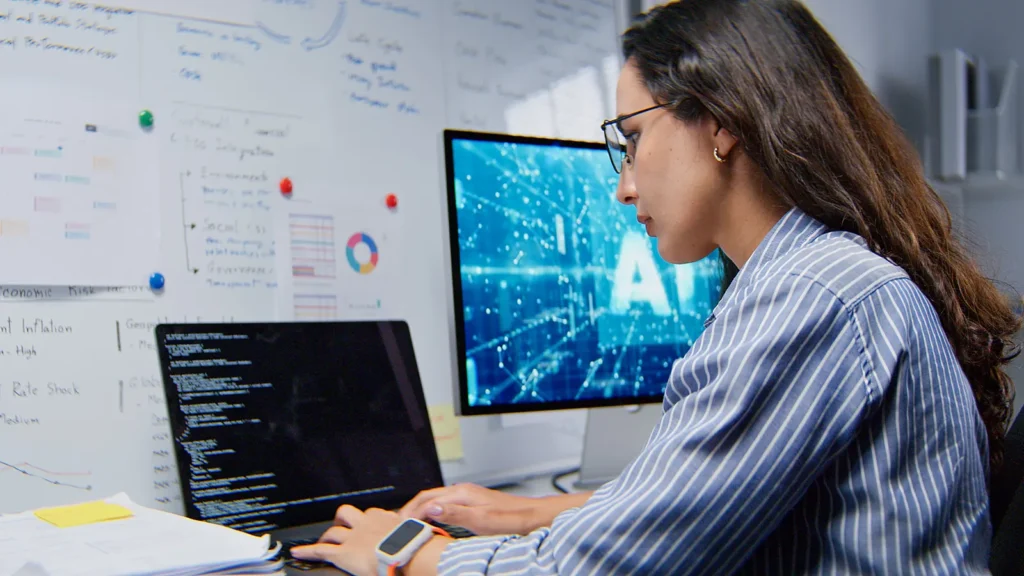
An in-depth analysis conducted by Andela, a global talent network, has unveiled significant dislocations within the engineering job market, primarily characterized by a pervasive mismatch between advertised skills and actual requirements, alongside an explosion in the number and nomenclature of job titles. The study, which scrutinized nearly 50,000 engineering job postings, paints a vivid picture of an industry grappling with the rapid integration of artificial intelligence and its profound implications for workforce development and talent acquisition. This detailed examination provides concrete evidence for what many industry observers have anecdotally noted: AI is not merely eliminating jobs but fundamentally reshaping the very fabric of technical roles, demanding new competencies and redefining established career paths.
The Unfolding AI Transformation in Tech
The discourse surrounding artificial intelligence’s impact on employment has long been fraught with speculation, oscillating between dystopian predictions of mass job displacement and utopian visions of enhanced human productivity. However, as AI technologies mature and become more deeply embedded across industries, the nebulous "chatter" is giving way to observable, quantifiable shifts. As Hymel, an expert cited in the original brief, articulated, the conversation around AI’s influence has often been "hand-wavy and anecdotal." The critical question that Andela’s research sought to answer was precise: "If these jobs are changing, what jobs are changing? And what are the underlying skill changes that are causing this heartburn in the market?" The findings unequivocally demonstrate that the engineering sector, the very engine of technological advancement, is at the forefront of this transformation, experiencing a dynamic redefinition of roles and responsibilities.
The acceleration of AI capabilities, particularly with the advent of generative AI models in late 2022, has intensified this shift. Companies are increasingly integrating AI tools into their development pipelines, from code generation and debugging to automated testing and deployment. This integration is not just about adopting new tools; it’s about fundamentally altering workflows and the skill sets required to navigate them. Historically, technological revolutions, from the industrial age to the digital age, have consistently reshaped labor markets, creating new categories of work while rendering others obsolete. The current AI paradigm represents another such inflection point, but one characterized by an unprecedented pace of change, demanding immediate and strategic responses from both employers and employees. Industry analysts, including those from the World Economic Forum, have consistently pointed to the accelerated pace of skill transformation across various sectors, with technology and data literacy emerging as paramount.
The Phenomenon of "Skill Bleeds"
One of the most striking findings from Andela’s analysis is the emergence of what Hymel terms "skill bleeds." This phenomenon describes the increasing overlap and cross-pollination of skill requirements across traditionally distinct engineering disciplines. Job descriptions for roles such as product managers, front-end engineers, back-end engineers, and developers are no longer siloed but exhibit a growing convergence of expected proficiencies. This blurring of lines suggests a move towards more holistic, multidisciplinary engineering roles, driven by the need for greater efficiency, seamless integration across different system components, and a deeper understanding of the entire product lifecycle. This trend mirrors the broader industry push towards full-stack development and agile methodologies, where individual contributors are expected to possess a wider range of competencies.
For instance, the analysis revealed a growing expectation for machine learning engineers to possess skills traditionally associated with software architects or back-end engineers. This is not merely an added bonus but often a prerequisite, reflecting the reality that ML models are not standalone entities; they must be robustly integrated into existing software infrastructure, scaled efficiently, and maintained securely. A deep understanding of system design, data pipelines, API development, and distributed computing is becoming indispensable for those specializing in AI/ML, moving beyond pure model development to full-stack ML system ownership. This necessitates knowledge of cloud platforms, containerization (e.g., Docker, Kubernetes), and robust data governance principles. Similarly, DevOps experts are increasingly required to demonstrate proficiency in cloud engineering, reflecting the inseparable nature of modern infrastructure management and cloud-native development. As organizations increasingly migrate to cloud platforms and leverage microservices architectures, a DevOps professional must not only automate deployments and manage pipelines but also possess a nuanced understanding of cloud security, cost optimization, and resource provisioning within environments like AWS, Azure, or Google Cloud Platform. This often includes expertise in infrastructure-as-code (IaC) tools like Terraform or CloudFormation.

Perhaps one of the most significant evolutions is occurring in front-end engineering. Traditionally focused on user interface (UI) and user experience (UX) implementation, front-end roles are now expanding to encompass broader responsibilities. Hymel noted that companies are pushing for front-end engineers to cultivate "better soft skills and be able to define and develop features." This signifies a desire for front-end developers to "dip a toe into the product management role," requiring them to understand user needs, contribute to feature conceptualization, and even influence product roadmaps. This shift reflects a demand for front-end professionals who are not just code implementers but strategic partners capable of translating business objectives into compelling user experiences, demonstrating empathy for the user, and collaborating closely with product teams. This necessitates strong communication, problem-solving, and a product-oriented mindset, moving beyond purely technical execution and into strategic design and stakeholder management.
A New Lexicon: Defining Emerging Engineering Roles
The "skill bleeds" are not just altering existing roles; they are actively giving birth to entirely new professional categories. Andela’s analysis led to the identification and conceptualization of several emerging roles, each addressing a specific gap or new requirement in the evolving technological landscape. These novel positions highlight the industry’s attempt to formalize the complex, multidisciplinary demands that AI and modern software development practices are imposing.
One such role is the DevSecOps Security Engineer. This position represents the culmination of the DevSecOps philosophy, which advocates for integrating security practices throughout the entire software development lifecycle (SDLC), rather than treating it as a post-development add-on. A DevSecOps security engineer is not just a security specialist; they are embedded within development and operations teams, automating security controls, conducting threat modeling, implementing secure coding practices, and managing vulnerabilities within continuous integration/continuous deployment (CI/CD) pipelines. They bridge the gap between security and speed, ensuring that software is both secure and delivered efficiently. This role is becoming critical as cyber threats grow in sophistication and regulatory compliance becomes more stringent, requiring proactive rather than reactive security measures. They often work with security tools integrated into CI/CD, such as SAST (Static Application Security Testing) and DAST (Dynamic Application Security Testing).
Another innovative position is the Docs-as-Code Engineer. In an era where software complexity is escalating, and distributed teams are the norm, clear, accurate, and up-to-date documentation is paramount. The "docs-as-code" paradigm treats documentation like source code, using version control systems, automated builds, and peer reviews to ensure its quality and consistency. A docs-as-code engineer is responsible for developing and maintaining these documentation pipelines, utilizing tools like Sphinx, MkDocs, or Docusaurus, and integrating them with development workflows. They ensure that technical documentation is not an afterthought but an integral, living part of the software ecosystem, contributing directly to product usability, maintainability, and knowledge transfer within teams. Their expertise extends to content management systems, markup languages (e.g., Markdown, reStructuredText), and automation scripting.
The Lakehouse Analytics Engineer is a testament to the convergence of data warehousing, data lakes, and business intelligence, further amplified by AI’s capabilities in data processing and analysis. This role involves designing, building, and optimizing data pipelines within a "lakehouse" architecture – a hybrid approach that combines the flexibility of data lakes with the structure and management features of data warehouses. These engineers are proficient in big data technologies (e.g., Spark, Hadoop), cloud data platforms (e.g., Databricks, Snowflake), SQL, and often possess strong scripting skills (e.g., Python). They are crucial for transforming raw data into actionable insights, enabling machine learning models, and supporting advanced analytics, thereby directly impacting business decision-making and strategic initiatives. Their work ensures data quality, accessibility, and governance across disparate data sources.
The Critical Role of the FinOps Reliability Engineer
Among the newly identified roles, the FinOps Reliability Engineer stands out as a particularly novel and economically critical position, reflecting the direct financial implications of operating AI-driven systems and vast cloud infrastructures. This role is a direct response to the escalating costs associated with cloud computing and the specific consumption patterns of AI systems, particularly large language models (LLMs) that rely on "token consumption." A FinOps reliability engineer is an expert who can seamlessly track and optimize cloud infrastructure costs alongside the intricate budgeting and cost forecasting required for AI systems. This position bridges the gap between financial accountability and technical operations.

Their responsibilities extend beyond traditional IT financial management. They are tasked with analyzing cloud spend, identifying areas of inefficiency, implementing cost-saving measures (e.g., rightsizing resources, optimizing storage tiers, managing reserved instances), and ensuring financial accountability within the engineering department. Crucially, for AI systems, they monitor token consumption (the units of processing for AI models), predict future usage based on development and operational patterns, and model the financial impact of scaling AI applications. This role requires a unique blend of financial acumen, cloud engineering expertise, and an understanding of AI operational dynamics, making them indispensable for organizations seeking to maximize ROI on their AI investments and maintain fiscal discipline in the cloud era. Without such specialized expertise, companies risk spiraling cloud bills and inefficient resource allocation, undermining the very benefits AI is meant to deliver. They interact with finance teams, product managers, and engineering leads to provide insights into cost drivers and opportunities for optimization, ensuring that technical decisions align with financial goals.
Challenges and Opportunities for Talent Management
The rapidly evolving landscape presents both significant challenges and unparalleled opportunities for both job seekers and employers. For job seekers, the "headache" of constantly evolving job titles and skill requirements is palpable. The traditional career trajectory, where one could acquire a set of skills useful for the duration of a career, is largely obsolete. As Hymel highlighted, "AI is making some skills obsolete," necessitating a paradigm shift towards continuous learning and adaptation. Engineers must now embrace lifelong learning, constantly updating their technical proficiencies and developing new soft skills to remain competitive and relevant. This demand for perpetual reskilling places a considerable burden on individuals to proactively manage their career development, often requiring self-directed learning and continuous engagement with new technologies.
For companies, the pace of technological change is creating a novel form of "talent debt." Employers are accumulating a gap between the skills their current workforce possesses and the skills required to leverage cutting-edge technologies like AI. This debt, if unaddressed, can manifest as reduced innovation, decreased productivity, and an inability to execute strategic initiatives. The traditional approach of hiring individuals with fixed skill sets is no longer sustainable. Organizations are struggling to articulate these new requirements in job postings, leading to the "hard time expressing or writing job posts for" new areas of work, as Hymel observed. This often results in a mismatch where qualified candidates with emerging skill sets cannot find roles, and companies cannot fill critical vacancies, creating a paradox of simultaneous unemployment and labor shortages.
However, this challenge also presents a significant opportunity. Companies that proactively address talent debt through strategic workforce planning, robust upskilling and reskilling programs, and adaptive talent acquisition strategies will gain a significant competitive advantage. Instead of resorting to "knee-jerk reactions like mass layoffs," which can be detrimental to morale and institutional knowledge, companies can invest in their existing workforce, nurturing new capabilities internally. This approach not only retains valuable employees but also fosters a culture of innovation and adaptability, cultivating loyalty and institutional expertise.
Industry Responses and Strategic Adaptations
In response to these profound shifts, various stakeholders are beginning to adapt. Industry analysts, like those at the World Economic Forum and McKinsey, have consistently highlighted the urgency of reskilling and upskilling initiatives globally. Reports frequently indicate that a substantial percentage of the global workforce will require new skills in the coming years due to automation and AI. For instance, the World Economic Forum’s Future of Jobs Report 2023 estimated that 44% of workers’ core skills would be disrupted in the next five years, emphasizing the need for proactive talent development. This corroborates Andela’s findings, underscoring a broader, systemic challenge that extends beyond the engineering sector.
Companies are implementing diverse strategies. Many are investing heavily in internal learning and development programs, creating academies or partnering with online learning platforms (e.g., Coursera, Udemy for Business, Pluralsight) to provide employees with access to relevant courses in AI, machine learning, cloud computing, and advanced data analytics. Some are restructuring their engineering teams to foster cross-functional collaboration and enable skill transfer, adopting matrix organizational structures or communities of practice. Talent platforms like Andela are playing a crucial role by connecting companies with a global pool of vetted talent that possesses these specialized and emerging skills, effectively bridging the immediate talent gap and offering flexible staffing solutions.
Furthermore, educational institutions are also feeling the pressure to revise curricula, incorporating more applied AI and data science courses, and emphasizing interdisciplinary studies to prepare the next generation of engineers for these evolving roles. Universities are launching new master’s programs in AI engineering, data ethics, and cloud architecture. Government initiatives, in some regions, are also exploring funding for workforce retraining programs and incentives for companies to invest in employee upskilling to mitigate the socio-economic impact of these technological shifts and ensure national competitiveness.
The Broader Economic and Societal Implications
The redefinition of engineering roles driven by AI has far-reaching economic and societal implications. Economically, a workforce equipped with AI-relevant skills can drive unprecedented productivity gains, fostering innovation and potentially leading to the creation of entirely new industries and markets. Companies that successfully navigate this transition are poised for significant growth, while those that fail to adapt risk falling behind, impacting national economic growth and global competitiveness. However, if the skill gap widens unchecked, it could exacerbate income inequality, creating a bifurcated labor market where those with cutting-edge skills thrive, and others struggle to find meaningful employment, leading to social unrest and increased demands on public welfare systems.
Societally, the imperative for continuous learning will become a defining characteristic of professional life. This necessitates a fundamental shift in educational philosophies, moving away from a terminal degree model towards a lifelong learning ecosystem. There will be an increased demand for accessible, high-quality, and affordable reskilling opportunities, potentially leveraging micro-credentials and competency-based education. Moreover, the psychological impact on individuals facing career uncertainty and the need for constant reinvention cannot be underestimated, requiring robust support systems, career counseling, and mental health resources to help individuals navigate these transitions successfully. The ethical considerations of AI in the workplace, including algorithmic bias and job displacement, also become increasingly pertinent societal discussions.
Navigating the Future of Work in Engineering
The findings from Andela’s analysis serve as a powerful wake-up call, emphasizing that the future of engineering is not merely about more advanced technology but about fundamentally transformed human roles. The proliferation of titles and the phenomenon of "skill bleeds" are not signs of chaos but rather indicators of an industry in dynamic flux, adapting to unprecedented technological acceleration. The challenge for employers is to move beyond conventional hiring practices and embrace proactive talent development strategies that prioritize internal mobility and continuous learning. For individuals, the mandate is clear: cultivate adaptability, embrace continuous learning, and strategically acquire new, interdisciplinary skills that combine technical prowess with critical thinking and soft skills.
The emphasis on roles like the FinOps Reliability Engineer underscores that even as AI automates tasks, it simultaneously creates new, high-value positions that require uniquely human capabilities – critical thinking, problem-solving, strategic planning, and interdisciplinary integration. The future workforce will increasingly thrive on human-AI collaboration, where engineers leverage AI tools to augment their capabilities, focus on higher-order tasks, and innovate at an accelerated pace. Navigating this new landscape successfully will require foresight, investment, and a collective commitment from individuals, organizations, and educational systems to build a resilient and adaptable engineering workforce for the AI era, ensuring that technological progress translates into inclusive economic growth and opportunity.