
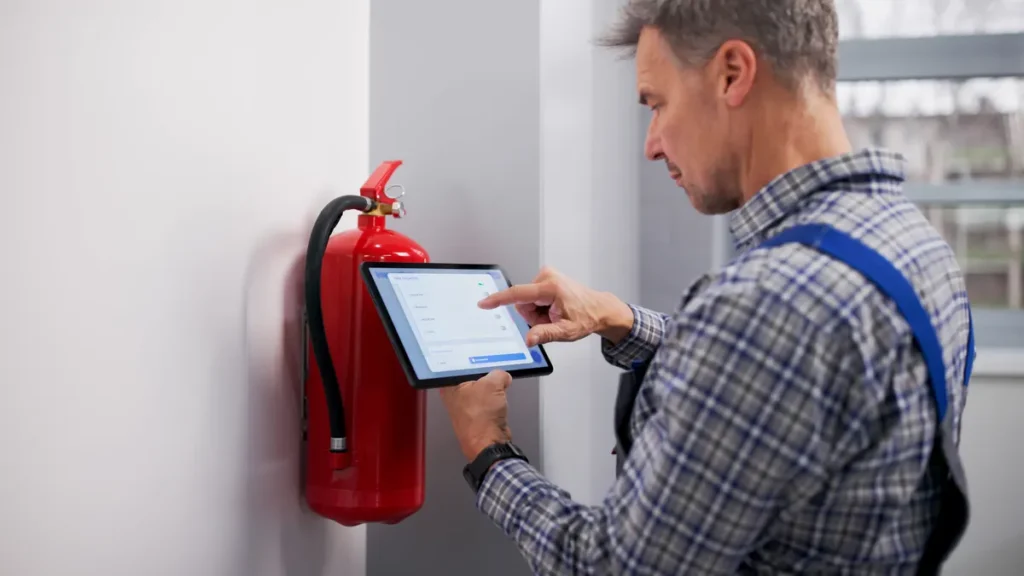
A groundbreaking survey conducted by the National Fire Protection Association (NFPA) has revealed a complex duality in the impact of artificial intelligence (AI) on the critical fire and safety workforce: while AI intensifies pressure on an already overextended sector, it concurrently emerges as a vital tool making professionals’ jobs more manageable. This pivotal finding, published on August 21, 2026, underscores a transformative period for skilled trades vital to infrastructure and public safety, grappling with both unprecedented demand and technological evolution.
The NFPA’s comprehensive study, which surveyed a significant cross-section of skilled trades workers involved in fire and life safety, paints a nuanced picture of an industry at a crossroads. For years, the fire and safety sector, encompassing everything from fire alarm technicians and sprinkler system installers to inspectors and facilities managers specializing in hazard mitigation, has faced a persistent shortage of qualified personnel. This deficit has been exacerbated by a confluence of factors, including an aging workforce nearing retirement, insufficient vocational training pipelines, and the escalating complexity of modern facilities. The advent of AI, while offering powerful new capabilities, adds another layer of complexity to this already strained environment, demanding new skill sets and adaptations from a workforce that is already stretched thin.
The Escalating Crisis of Skilled Labor Shortages
The findings from the NFPA survey resonate deeply with broader trends observed across the U.S. economy regarding skilled labor. A March report by Randstad North America, which meticulously analyzed over 150 million job postings for key roles between 2022 and 2026, highlighted how the rapid scaling of data centers and digital infrastructure is severely exacerbating challenges in hiring skilled labor across numerous industries. This surge in digital expansion, critical for powering the AI revolution itself, creates an enormous demand for specialized professionals such as HVAC technicians, electricians, and, crucially, fire and safety experts who ensure the safe operation of these energy-intensive facilities.
The Randstad report notably pointed out that it has become more time-consuming to recruit and hire an HVAC professional or an electrician than a software developer – a stark indicator of the imbalance in the labor market. This phenomenon is largely attributed to a significant generational shift: seasoned workers, possessing decades of invaluable practical experience and institutional knowledge, are retiring in increasing numbers. As they leave the workforce, they take with them the intricate skills and tacit knowledge that have historically been instrumental in preventing downtime, mitigating risks, and averting costly errors.
This "retirement cliff" for the engineering and technical workforce has profound implications. Conservative estimates suggest that a 30% skills gap is projected to emerge over the next few years. This gap represents a chasm between the demand for skilled trades and the available talent pool, a situation further complicated by the fact that vocational training programs have struggled to keep pace with the evolving demands of the industry. As Sanjay Rishi, CEO of Work Dynamics of the Americas and head of global industries at JLL, noted, "AI is fundamentally altering what work looks like," requiring not just more workers, but workers with different, often more technologically advanced, competencies.
Chronology of Technological Integration in Fire Safety
The integration of advanced technology into fire and safety protocols is not a new phenomenon, but its acceleration has been remarkable. For decades, fire safety relied heavily on manual inspections, analog systems, and human observation. The late 20th and early 21st centuries saw the widespread adoption of digital fire alarm control panels, networked security systems, and sophisticated building management systems (BMS). These innovations streamlined operations, improved monitoring capabilities, and introduced a level of data collection previously unattainable.
- 1980s-1990s: Emergence of addressable fire alarm systems, allowing for precise location of fire events. Computer-aided design (CAD) starts to assist in planning.
- 2000s: Integration of fire safety systems with broader building management systems. Remote monitoring capabilities begin to take hold, allowing off-site oversight.
- 2010s: Increased use of sensor technology, wireless communication, and data analytics to predict potential failures and enhance preventative maintenance. Digital documentation and mobile platforms become common for inspections.
- 2020s (leading up to 2026): Rapid acceleration of AI and machine learning integration. Predictive analytics moves beyond simple data analysis to complex pattern recognition. Automation tools begin to handle routine tasks, and virtual/augmented reality aids training and complex repairs. The Randstad report in March 2026 highlights the ongoing labor market pressures, setting the stage for the NFPA’s subsequent findings in August 2026 on AI’s dual impact.
This historical progression illustrates a natural, albeit increasingly rapid, evolution towards more intelligent and interconnected safety systems. The current challenge lies in ensuring the human workforce can effectively adapt to and leverage these advancements.
AI: A Double-Edged Sword for Fire and Safety Professionals
Despite the undeniable pressures, the NFPA survey revealed a significant silver lining: skilled trade workers are increasingly recognizing and embracing the value of AI and digital tools. An overwhelming 87% of respondents agreed that technology has made their jobs easier over the past five years. This statistic highlights a fundamental shift in perception, moving beyond initial skepticism or resistance towards an acceptance of technology as an indispensable aid.
When asked about the specific technologies that had the greatest impact, AI and automation tools topped the list, cited by 39% of respondents. Close behind, 36% attributed the most value to digital tools and software platforms, such as advanced CAD systems, digital twin technology for buildings, and mobile applications for field service. This indicates that AI is not merely a distant concept but is already actively reshaping daily tasks within the fire and safety domain.

For instance, AI-powered predictive maintenance algorithms can analyze data from fire detection systems, sprinkler pressure gauges, and HVAC components to anticipate potential failures before they occur. This allows maintenance teams to transition from reactive repairs to proactive interventions, significantly reducing the risk of system downtime or catastrophic failure. AI can also streamline administrative work, such as generating compliance reports, managing vast databases of safety regulations, and automating routine documentation, thereby freeing up valuable time for skilled personnel to focus on more complex diagnostic tasks and hands-on repairs. Furthermore, AI-driven virtual assistants or expert systems can provide instant access to technical knowledge, blueprints, and troubleshooting guides in the field, empowering technicians with critical information at their fingertips.
Voices from the Field: Industry Reactions and Perspectives
The NFPA’s findings have generated considerable discussion among industry leaders and educational institutions.
"The paradox identified by our survey is precisely what we’ve been observing on the ground," stated an NFPA spokesperson, who preferred to remain anonymous to allow the data to speak for itself. "On one hand, the sheer volume of data centers and smart buildings requiring advanced fire suppression and safety systems is pushing our existing workforce to its limits. On the other hand, AI offers unprecedented capabilities for predictive maintenance, rapid diagnostics, and compliance automation. Our challenge now is to leverage these tools effectively to augment human capabilities, rather than merely adding to the workload or causing displacement."
Maria Rodriguez, Director of Facilities Management for a major tech corporation with numerous data centers, elaborated on the operational realities. "Our demand for fire and safety technicians has skyrocketed. These aren’t just legacy systems; they’re incredibly complex, integrated networks requiring specialized IT skills alongside traditional trade knowledge. AI helps us prioritize maintenance, identify potential hotspots before they become fires, and even automate basic diagnostic checks. This allows our technicians, who are already scarce, to focus on the high-value, complex tasks that truly require human judgment and skill."
From an educational standpoint, Dr. Evelyn Chen, Dean of Vocational Technologies at a leading community college, emphasized the urgent need for curriculum reform. "We are actively redesigning our programs to embed AI literacy and digital tool proficiency. It’s no longer enough to teach someone how to install a sprinkler system; they need to understand how that system integrates with a smart building’s AI, how to interpret data from predictive analytics platforms, and how to troubleshoot using augmented reality. The 30% skills gap isn’t just about numbers; it’s about a mismatch in skill sets. We need government and industry partnerships to scale these new training initiatives rapidly."

Bridging the Gap: Education and Training Imperatives
The emerging skills gap, coupled with the transformative potential of AI, necessitates a concerted effort in education and workforce development. Traditional vocational training models, often criticized for their slow adaptation to technological shifts, must evolve rapidly. This involves:
- Curriculum Modernization: Integrating modules on AI fundamentals, data analytics, IoT (Internet of Things) for smart buildings, cybersecurity for connected systems, and the use of digital twin technologies into existing trade programs.
- Upskilling and Reskilling Initiatives: Developing accessible, modular training programs for existing professionals to acquire new digital and AI-related competencies. This could involve micro-credentials, online courses, and hands-on workshops.
- Industry-Academia Partnerships: Fostering closer collaboration between vocational schools, community colleges, and industry stakeholders (like NFPA, equipment manufacturers, and large employers) to ensure training programs align directly with industry needs and provide real-world experience with cutting-edge technologies.
- Apprenticeship Modernization: Updating apprenticeship frameworks to incorporate digital tools and AI applications, ensuring that new entrants into the trades are equipped with future-proof skills from the outset.
- Promoting STEM and Skilled Trades: Renewed efforts to attract younger generations to skilled trades, highlighting the increasingly high-tech and intellectually stimulating nature of these careers, countering outdated perceptions.
The Future Landscape: Opportunities and Challenges
The integration of AI into the fire and safety sector presents both significant opportunities and formidable challenges.
Opportunities:
- Enhanced Safety and Predictive Prevention: AI can analyze vast datasets to identify subtle patterns indicative of impending failures, allowing for proactive intervention and significantly reducing the likelihood of incidents.
- Optimized Resource Allocation: By automating routine inspections and administrative tasks, AI frees up human experts to focus on complex problem-solving, strategic planning, and critical interventions.
- Improved Compliance and Documentation: AI-powered systems can ensure adherence to evolving regulations, automate report generation, and maintain meticulous digital records, reducing human error and administrative burden.
- Faster Emergency Response: AI can analyze real-time data from multiple sources (sensors, cameras, weather patterns) to provide emergency responders with critical intelligence, optimizing response routes and strategies.
- New Specialized Roles: The shift creates demand for "AI-savvy" technicians, data analysts specializing in safety systems, and AI integration specialists within the fire and safety domain.
Challenges:
- Initial Investment Costs: Implementing advanced AI and digital infrastructure requires significant upfront capital investment, which might be prohibitive for smaller organizations.
- Training and Adoption Barriers: Overcoming resistance to change and ensuring adequate training for the existing workforce will be crucial. The "digital divide" within the workforce could exacerbate existing inequalities.
- Cybersecurity Risks: Highly interconnected, AI-driven safety systems present new vulnerabilities to cyberattacks, necessitating robust cybersecurity protocols and expertise.
- Ethical Considerations: Questions around data privacy, algorithmic bias, and accountability in AI-driven decision-making will need careful consideration and regulatory oversight.
- Regulatory Adaptation: Existing fire and building codes may need to be updated to accommodate AI-driven systems and ensure their safety and reliability.
Policy and Regulatory Considerations
As AI becomes more embedded in critical safety infrastructure, policymakers and regulatory bodies like the NFPA will play a crucial role in shaping its responsible deployment. This involves:
- Developing New Standards: Establishing clear performance standards and certification processes for AI-powered fire and safety systems.
- Workforce Development Policies: Implementing government incentives and funding for vocational training, apprenticeships, and reskilling programs focused on AI and digital competencies for skilled trades.
- Data Governance and Privacy: Crafting regulations to ensure the secure and ethical handling of data collected by AI-driven safety systems.
- Cross-Sector Collaboration: Encouraging dialogue and collaboration between technology developers, industry professionals, regulatory bodies, and educational institutions to foster a coherent and progressive approach.
In conclusion, the NFPA’s 2026 survey provides a timely and essential insight into the transformative power of AI within the fire and safety sector. While it undoubtedly adds pressure to an already strained workforce, it simultaneously offers potent solutions for efficiency, prediction, and ultimately, enhanced safety. The path forward necessitates a proactive, collaborative approach, focusing on modernizing training, fostering technological adoption, and establishing robust regulatory frameworks to harness AI’s full potential while mitigating its inherent challenges. The future of fire and safety will undeniably be a synergistic blend of human expertise augmented by intelligent machines.






