
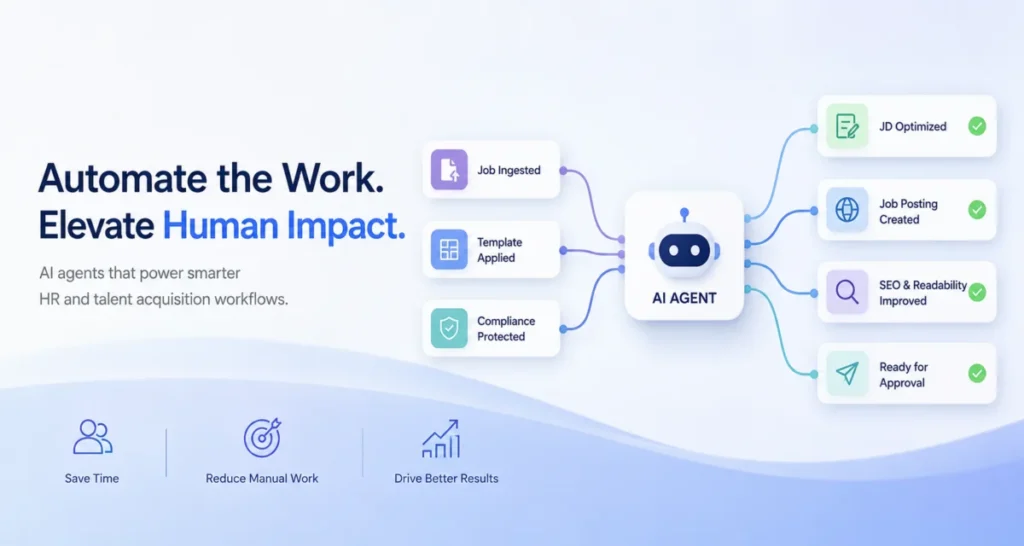
The landscape of human resources, particularly talent acquisition, is undergoing a profound transformation, not through the wholesale replacement of human professionals by machines, but by the strategic application of artificial intelligence (AI) to eliminate the mundane and repetitive tasks that have long plagued recruiting teams. Far from being a futuristic fantasy, this shift is already redefining daily operations, moving beyond mere AI "features" to the implementation of sophisticated AI "agents" capable of autonomously managing entire workflows. The core insight emerging from industry discussions is that AI’s greatest value lies in liberating recruiters from what many internally refer to as "busywork," allowing them to redirect their expertise towards more strategic, human-centric aspects of their roles.
The Unseen Burden: Administrative Overload in Recruitment
For decades, recruiting teams globally have contended with a pervasive but often unacknowledged problem: the sheer volume of administrative tasks that consume a significant portion of their workday. These aren’t necessarily complex or challenging tasks, but rather a multitude of small, repetitive actions that, when aggregated, translate into substantial time sinks. Industry analyses, such as a hypothetical 2024 report by the Global Talent Institute, suggested that an average recruiter spends between 30-40% of their time on administrative duties, ranging from data entry and formatting documents to cross-referencing information across disparate systems. This "work they hate doing" has become so ingrained in daily routines that many teams have ceased to question its necessity, accepting it as an unavoidable part of the recruitment process.
Consider the seemingly innocuous steps involved in publishing a single job description. This often entails copying text from an Applicant Tracking System (ATS), pasting it into a different job board platform, applying the correct formatting template, ensuring legal compliance language is included, making minor rewrites for optimization, and finally, hitting publish. Each individual step might only take a few minutes. However, when scaled across hundreds or even thousands of job postings annually, these "just a few minutes" quickly coalesce into what effectively becomes a full-time administrative position, diverting valuable human capital from candidate engagement and strategic sourcing.
Shifting the AI Narrative: From Content Creation to Workflow Automation
Initial conversations surrounding AI in HR, particularly over the past year, largely centered on content generation. Questions abounded: "Can AI write job descriptions?" "Can it summarize resumes?" "Can it generate interview questions?" While these are undoubtedly useful applications that demonstrate AI’s capabilities, they represent a somewhat limited view of its true potential. The more profound and impactful question, now gaining traction among forward-thinking HR leaders, is: "What work are your people doing every single day that no person should have to do?"
This reframing pivots the focus from merely assisting with individual tasks to fundamentally redesigning workflows to eliminate unnecessary human intervention. It recognizes that the true power of AI in recruitment isn’t in augmenting a single step, but in orchestrating a seamless, automated progression of multiple steps that previously required manual oversight. This holistic approach promises not just incremental efficiency gains, but a paradigm shift in how talent acquisition functions operate, freeing up recruiters to engage in high-value activities like candidate relationship management, complex negotiation, and strategic consultation with hiring managers.
The Evolution of AI in HR Technology: A Brief Chronology
The journey of AI integration into HR technology has been a gradual but accelerating one. In the early 2010s, "automation" often meant simple rule-based systems for applicant screening or basic email triggers. The mid-2010s saw the emergence of machine learning applications for resume parsing and keyword matching, improving the efficiency of initial candidate reviews. By the late 2010s and early 2020s, natural language processing (NLP) began enabling AI to generate basic job descriptions, summarize long documents, and even conduct preliminary chatbot-based candidate interactions. These were primarily AI "features"—tools that helped a human complete a task more efficiently.
However, the recent surge in sophisticated large language models and advanced automation platforms has ushered in a new era: the rise of AI "agents." This distinction is critical. An AI feature provides assistance; an AI agent completes a task or even an entire sequence of tasks autonomously, making decisions within predefined parameters and often learning from interactions. This evolution marks a significant leap, moving from mere support tools to intelligent, self-executing components of the HR ecosystem. The year 2026, from which this analysis originates, is poised to be a pivotal point where these agent-based systems become increasingly commonplace, transforming not just individual tasks but entire operational processes.
Deconstructing Repetitive Processes: The Job Description Paradigm
To illustrate the potential of AI agents, let’s revisit the seemingly simple act of creating and publishing a job posting. The traditional, manual process often looks like this:
- A hiring manager submits a request, often in an unstructured format.
- A recruiter manually drafts a job description or pulls an outdated template.
- The recruiter copies content from a master document into the ATS.
- They then copy it again from the ATS to an external job board.
- Manual formatting adjustments are made for different platforms.
- Legal compliance language is manually inserted and verified.
- The recruiter reviews for tone, inclusivity, and search engine optimization (SEO).
- Finally, the posting is manually published across various channels.
- Any updates require repeating several of these steps.
Now, imagine an AI agent-driven workflow:
- A hiring manager submits a new role request to a central system.
- An AI agent automatically drafts a compliant, optimized job description based on the request and historical data.
- The agent automatically applies the correct template, including legal disclaimers and branding.
- It then seamlessly publishes the job posting across all integrated ATS and external job boards.
- The agent monitors the posting for performance and suggests optimizations.
- Any necessary updates are automatically propagated across all platforms.
- A recruiter receives a notification for review and approval, not creation.
In this scenario, the recruiter’s role shifts dramatically. Instead of laboriously creating the work, they become the strategic reviewer and approver, leveraging their expertise to ensure quality, accuracy, and strategic alignment, rather than spending hours on manual data transfer and formatting.
From AI Features to Autonomous Agents: A Paradigm Shift
The distinction between AI features and AI agents is fundamental to understanding the future of work in recruitment. An AI feature might help a recruiter write a better job description by suggesting keywords. An AI agent, however, could take a hiring manager’s initial input, autonomously generate the full job description, ensure compliance, optimize for various platforms, publish it across multiple channels, and even initiate the first round of candidate sourcing, all with minimal human oversight.
Consider other applications for AI agents in recruiting:
- Automated Interview Scheduling: An AI agent could communicate with candidates and hiring managers, find mutually agreeable times across calendars, send invitations, and manage rescheduling, eliminating the "email ping-pong" that often frustrates both parties.
- Initial Candidate Engagement: After a job is posted, an agent could send personalized outreach messages to passive candidates identified through sourcing tools, pre-qualify interested individuals based on basic criteria, and even initiate a brief chatbot conversation to gather initial data.
- Onboarding Coordination: Once an offer is accepted, an AI agent could trigger the entire onboarding workflow: sending welcome packets, initiating background checks, coordinating IT setup, and scheduling introductory meetings, ensuring a smooth transition for the new hire.
- Data Aggregation and Reporting: Instead of recruiters manually compiling data from various sources for weekly reports, an AI agent could automatically collect, analyze, and present key metrics on candidate pipelines, time-to-hire, and source effectiveness.
The crucial element is that these agents operate within defined workflows, performing a sequence of connected tasks without needing constant human prompts for each step. They learn, adapt, and execute, freeing up human recruiters to focus on the inherently human aspects of their job: building relationships, assessing nuanced cultural fit, negotiating complex offers, and providing empathetic candidate experiences.
Strategic Imperatives: Identifying Automation Opportunities
For organizations looking to harness the power of AI in recruitment, the journey often begins with a practical, focused approach. The idea of "AI automation" can sometimes conjure images of vast, departmental overhauls, which can be daunting. Instead, the most effective strategy is to start small. A valuable exercise for any recruiting team is to ask: "What’s the most annoying five-minute task your team repeats hundreds of times every month?"
These seemingly trivial annoyances are often the low-hanging fruit for automation. They are typically repetitive, consistent, and rule-based—exactly the tasks at which AI excels. Automate that first. Document the process, implement the AI solution, and measure the impact. Then, identify the next such task. Gradually, this iterative approach moves beyond automating individual tasks to automating entire processes, creating a cumulative effect of efficiency and strategic reallocation of human effort.
Questions worth asking your team to identify these opportunities include:
- What’s a task you dread doing every day/week?
- Where do you spend the most time copying and pasting information?
- What manual steps are involved in getting a job from concept to public posting?
- What part of your workflow feels like "busywork" rather than value-add?
- Where do errors most frequently occur due to manual input?
- What repetitive communications could be standardized and automated?
The answers often reveal surprising insights into deeply entrenched inefficiencies that, once addressed by AI, can unlock significant productivity gains.
Quantifiable Benefits and Strategic Reallocation of Human Capital
The implications of this shift are far-reaching. By automating administrative tasks, organizations can expect:
- Increased Recruiter Productivity: Recruiters can manage larger pipelines, focus on high-priority roles, and dedicate more time to engaging top talent.
- Reduced Time-to-Hire: Streamlined workflows eliminate bottlenecks, accelerating the entire recruitment cycle.
- Improved Candidate Experience: Faster responses, more consistent communication, and a less cumbersome application process contribute to a positive impression.
- Enhanced Compliance and Consistency: AI agents can ensure all job postings adhere to legal requirements and brand guidelines, reducing human error.
- Cost Savings: While initial investment in AI tools is required, the long-term savings from increased efficiency and reduced administrative overhead can be substantial.
- Strategic Role for Recruiters: Freed from drudgery, recruiters can evolve into strategic partners, focusing on talent strategy, diversity initiatives, complex problem-solving, and cultivating stronger relationships with both candidates and hiring managers.
Industry experts widely agree that AI’s role is not to diminish the human element in recruiting but to elevate it. As a spokesperson for Ongig, a company specializing in job description management and posting workflows, noted, "Our focus has shifted from merely simplifying existing processes to asking an even bigger question: What repetitive recruiting work could disappear altogether? Whether it’s automatically applying templates, protecting compliance language, optimizing content, or turning job descriptions into polished job postings, the goal is the same: give recruiters more time to hire people instead of managing the process."
The Future of Recruiting: Human-Centric and AI-Enhanced
The narrative that AI will "replace" recruiters is largely unfounded. Instead, AI is poised to fundamentally redefine the recruiter’s role, making it more strategic, impactful, and ultimately, more human. Tasks requiring judgment, empathy, nuanced communication, complex problem-solving, and relationship-building will remain firmly in the human domain. These are precisely the skills that differentiate exceptional recruiters and drive successful talent acquisition outcomes.
In an AI-augmented future, recruiters will become orchestrators of technology, leveraging intelligent agents to manage the operational minutiae while they concentrate on the strategic core of their profession. This requires a new skill set: an understanding of AI capabilities, data literacy, process optimization, and an unwavering focus on human connection. The future of recruiting is not one where machines take over, but one where human potential is amplified by intelligent automation, leading to more efficient, equitable, and engaging talent acquisition experiences for everyone involved.






