The strategic imperative of effectively integrating Artificial intelligence (AI) into talent acquisition processes has become a central concern for employers and recruiters worldwide. As automated recruitment solutions continue their rapid expansion, understanding how to harmoniously blend AI’s efficiency with human discernment is no longer optional but a critical determinant of hiring success. Industry data for 2026 reveals a significant shift, with 35% to 45% of companies having already embedded AI within their core hiring frameworks, underscoring the widespread adoption and transformative potential of these technologies. This article delves into the current state of AI in recruitment, explores its practical applications, and outlines best practices for optimizing hiring quality through a balanced, human-in-the-loop approach.
The Accelerating Trajectory of AI in Talent Acquisition
AI’s presence in recruitment is not merely a fleeting trend; it is a foundational shift driven by tangible results and sustained market confidence. The technology has demonstrated its efficacy, particularly within larger enterprises managing thousands of candidate profiles and applications monthly. The ability of AI recruitment solutions to facilitate hiring at scale is a primary driver of its adoption. Market experts project the enterprise sector of AI recruitment to grow at a Compound Annual Growth Rate (CAGR) of 6.8% between 2020 and 2032, indicating robust and sustained expansion. This growth is fueled by the undeniable advantages AI offers in expediting candidate data management, significantly reducing the time, cost, and effort associated with processing vast pools of information—a critical strategic step in modern hiring.
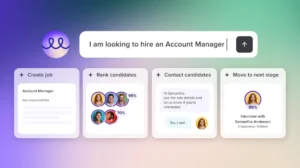
Noelle London, CEO and founder of employee data platform Illoominus, succinctly captures this evolution, stating, "AI is no longer operating quietly in the background as an administrative tool. It is increasingly functioning as a gatekeeper to employment." This perspective highlights AI’s elevated role, moving from a supportive function to a central, decision-influencing component of the hiring pipeline. Recent breakthroughs, particularly in agentic AI, have further pushed these boundaries, introducing fully autonomous, non-human entities into talent acquisition teams capable of executing complex tasks. Global HR technology studies for 2026 report that a remarkable 87% of enterprise organizations have integrated agentic AI tools into their TA pipelines, marking a significant leap in automation capabilities.
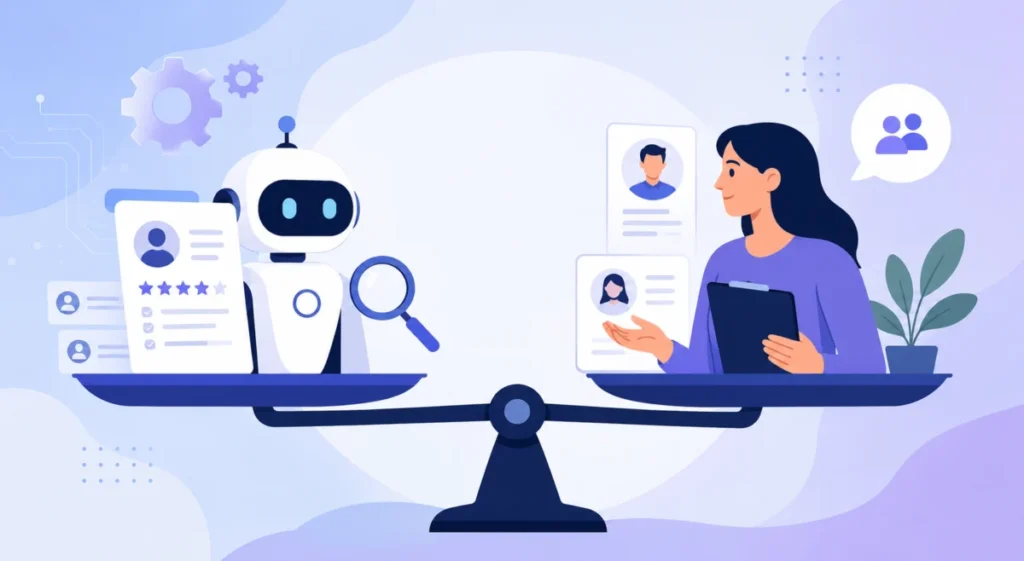
Despite these advancements, a crucial tenet remains: the necessity of moderating automated recruitment with a human-in-the-loop (HITL) approach. This philosophy mandates active human participation in making the most critical talent acquisition decisions, ensuring that technology serves as an enhancer, not a solitary decision-maker.
Strategic Applications of AI in Recruitment: A Hybrid Model
The integration of AI spans multiple facets of the recruitment lifecycle, each offering distinct advantages when paired with human oversight.
Streamlining Candidate Sourcing and Identification
Candidate sourcing remains a persistent challenge for recruiters, with 46% reporting difficulties in identifying top talent. This struggle is compounded by constantly shifting industry norms and evolving job market expectations. AI offers a powerful solution by automating and refining the sourcing process, replacing error-prone manual data inputs and engagements with sophisticated, data-driven analytics.
AI candidate sourcing solutions excel at instantly qualifying and shortlisting talent based on objective search criteria, efficiently matching candidates to job requirements. These systems continuously access refreshed job seeker data, allowing employers to proactively identify and engage suitable talent at every stage of their career, including the approximately 70% of the workforce categorized as passive job seekers. Beyond immediate needs, forward-thinking organizations are leveraging AI sourcing for predictive workforce planning, anticipating and addressing future skill gaps to maintain a competitive edge.
The Human Oversight: While AI provides an invaluable first-round of talent scouting, it should not fully replace human decision-making. Talent acquisition teams must exercise their expertise by delving into the nuances of candidate profiles. This involves evaluating soft skills, assessing testimonials, and determining cultural fit—factors that AI, despite its sophistication, struggles to fully contextualize without human interpretation. The human element ensures a holistic understanding of a candidate beyond quantifiable metrics.
Optimizing Interview Scheduling and Candidate Experience
Interview scheduling is often cited as a significant pain point for both recruiters and candidates, with poor practices severely impacting the candidate experience. Data indicates that 42% of candidates have withdrawn from a hiring process solely due to issues related to interview scheduling. The lengthy and often convoluted multi-round interview process exacerbates this problem.
Automated scheduling powered by AI significantly enhances candidate engagement by offering a transparent, accurate, and highly efficient approach. These solutions provide self-scheduling links, automated reminders, and prompt status updates, granting job seekers flexibility and keeping them informed throughout the process. In 2026, AI technology has elevated interviewee expectations, enabling first responses to applications within 48 hours (compared to a seven-day expectation) and providing self-scheduling links for interviews within a single day (compared to a 2-6 day expectation).
The Human Touch: Despite AI’s prowess in systematically organizing complex interview schedules, a critical human element remains. Studies show that 25% of hires express less trust in employers who utilize AI for evaluating their information, a sentiment that can extend to automated scheduling if not managed carefully. Human teams can mitigate these trust issues through careful interview scheduling etiquette. This includes vetting automated messages for tone, ensuring personalized greetings, and avoiding impersonal phrases like "Do not reply to this automated email." The goal is to ensure efficiency doesn’t come at the expense of genuine human connection and perceived value.
Enhancing Resume Screening Accuracy and Efficiency
For enterprises dealing with thousands of applications for a single vacancy, manual resume screening—the process of identifying relevant skills, certifications, and experience—is a Herculean and often impractical task.
Automated resume screening solutions scan CVs for data points that align with an employer’s role criteria, analyzing a CV’s format and content quality in mere seconds. These systems are capable of scoring profiles to prioritize candidate engagement and flagging issues such as keyword stuffing, a common tactic in exaggerated resumes. This automation dramatically reduces the burden on recruiters, allowing them to focus on a more qualified pool of candidates.
The Human Empathy: While AI excels at summarizing the "what" of a candidate’s profile, it often lacks the contextual analytics for the "whys." Empathy remains an indispensable component of the talent selection process. Recruiters should manually review resumes for "points of note," such as career gaps or unconventional career paths, to better understand prospective hires. These nuances, often reflective of resilience, personal growth, or unique experiences, are vital for truly tapping into the full potential of the workforce and cannot be fully captured by algorithms alone.
Refining Job Description Vetting and Career Site Management
Crafting and publishing thousands of job descriptions (JDs) across various job boards and career sites presents significant challenges. Each JD carries the risk of readability issues and subconscious biases, which can alienate potential candidates and damage employer branding. An unoptimized JD can bore or repel top talent, compromising hiring ROI.
AI JD-vetting solutions analyze and rectify biases, improve readability, and ensure proper formatting (e.g., confirming the inclusion of key JD sections like benefits and salary). These AI-driven platforms also provide enterprise TA teams with organized JD libraries, enabling consistent, high-quality job postings at scale with a single click.
The Human Storytelling: AI is highly effective at refining the grammar, vocabulary, and syntax of JDs, thereby enhancing readability and eliminating biases related to gender, education, or ableism. However, AI cannot reliably capture or convey the unique essence of a workplace culture, which is a dynamic element influenced by leadership decisions, industry shifts, and economic conditions. This is where human teams are indispensable. Recruiters must enrich AI-polished JDs with authentic storytelling that speaks to the heart of the company’s employee value proposition (EVP). This includes detailing inclusion strategies aligned with company goals, such as championing intersectionality among underrepresented groups, which resonates deeply with diverse talent.
The Evolution of Recruitment Roles: Not a Replacement, But a Redefinition
The question "Is AI taking over recruitment jobs?" often arises. The short answer, as widely confirmed by industry experts, is no—and likely never will. Instead, AI is transforming the rules of the recruitment game. It serves as a powerful, transformative tool that minimizes human error and significantly reduces the administrative burden of managing complex candidate data. As long as companies are hiring people, the vital need for a human touch throughout the talent acquisition pipeline will persist.
However, these changes are redefining TA priorities. AI-related job postings in the US surged by 95% in the first half of 2026, indicating a significant shift in demand for skills surrounding AI. This trend has prompted recruiters and employers to adjust their hiring agendas, focusing on attracting a smaller pool of high-value, in-demand professionals with expertise in AI development, implementation, and ethical oversight. Recruiters are evolving from administrative gatekeepers to strategic consultants, leveraging AI to enhance their analytical capabilities and focusing on relationship-building, cultural assessment, and complex negotiation.
Navigating the Ethical Landscape of AI in Recruitment
The ethical deployment of AI in recruitment is paramount, necessitating stringent safeguards and adherence to compliance frameworks. The rise of Explainable AI (XAI) is a significant development in this regard. XAI provides transparency by elucidating how an AI system or algorithm arrives at a particular decision—for instance, why one candidate is prioritized over another within an automated Applicant Tracking System (ATS). This transparency supports ethical and logical decision-making, moving away from "black box" algorithms that offer opaque solutions.
To ensure the legal and ethical use of AI in recruitment, hiring teams must implement several key practices:
- Bias Mitigation: Actively audit AI algorithms for inherent biases, particularly those related to gender, race, age, or disability, and implement corrective measures. Regular checks and retraining of models are crucial.
- Data Privacy and Security: Ensure strict adherence to data protection regulations (e.g., GDPR, CCPA) when collecting, processing, and storing candidate data. Implement robust cybersecurity measures to prevent breaches.
- Transparency with Candidates: Clearly communicate to candidates when AI is being used in the hiring process, explaining its role and scope. This builds trust and manages expectations.
- Human Oversight and Accountability: Maintain human oversight at critical decision points. Establish clear lines of accountability for AI-driven decisions, ensuring a human can intervene, review, and override automated outcomes if necessary.
- Compliance with Legal Standards: Regularly review and update AI usage policies to comply with evolving local, national, and international employment laws and anti-discrimination statutes.
Leading AI Tools Shaping the Future of Recruitment
Identifying the optimal AI tools to address specific recruitment challenges can be complex in an increasingly saturated software market. However, several platforms stand out for their innovative application of AI:
- Ashby (Candidate Sourcing): Ashby’s automated HR solution offers an intuitive candidate sourcing feature, adept at shortlisting suitable hires. The platform supports advanced search queries, enabling users to quickly discover candidates with specific skillets across extensive databases. Ashby further facilitates the fostering of talent communities through dedicated forms and leverages multichannel outreach sequences to diversify and elevate candidate engagement.
- X0PA AI (Candidate Screening): This solution employs an intelligent candidate matching algorithm designed to reduce manual candidate reviews by up to 80%. X0PA AI’s BRIQ scoring model utilizes the latest developments in Natural Language Processing (NLP) and Large Language Models (LLMs). This advanced technology thoroughly assesses application context and compares talent against a vast database of over 250 million global profiles, precisely matching them to specific job description requirements.
- TheHireHub.AI (Interview Scheduling): TheHireHub.AI leverages AI technology to seamlessly coordinate candidate and interviewer availabilities. Its comprehensive suite of smart features includes automated interview reminders, self-scheduling links, and intelligent timezone detection, drastically improving the efficiency and candidate experience of the scheduling process.
- Ongig (JD Vetting): Ongig is a recognized JD-vetting platform specifically designed to eliminate inherent biases and restructure content to attract top-tier candidates. The company’s Text Analyzer solution integrates smoothly with existing ATS/HRIS, minimizing disruptions during onboarding. With Text Analyzer, hiring teams can improve readability, ensure consistent branding, and eliminate biases in gender, education, and other areas, leading to more inclusive and effective job descriptions. This empowers teams to craft engaging JD content that convinces and converts top talent without guesswork.
The Synergistic Future of Recruitment
Ongig, through its Text Analyzer tool, actively champions the ongoing AI conversation, providing enterprise leaders and recruiters with an innovative solution to optimize job descriptions with AI’s accuracy and scalability. The platform’s algorithms, informed by the latest job seeker trends, are designed to create compelling JD content that engages and converts top-tier hires. This exemplifies the winning synergy between human expertise and AI innovation in hybrid recruitment models.
The future of talent acquisition in 2026 and beyond is undeniably hybrid. It is a landscape where AI handles the heavy lifting of data processing, automation, and initial qualification, while human recruiters provide the irreplaceable elements of empathy, cultural insight, strategic negotiation, and genuine connection. By thoughtfully integrating AI and maintaining a robust human-in-the-loop approach, organizations can achieve superior hiring outcomes, building stronger, more diverse, and more effective workforces for the challenges ahead.