This week, Cornerstone OnDemand, a dominant force in corporate learning technology with an estimated revenue of approximately $1 billion, announced its significant strategic reinvention and expansion into the rapidly evolving landscape of Artificial Intelligence. This move positions the company, roughly four times the size of competitor Docebo, at the forefront of a paradigm shift that promises to redefine how organizations approach talent development and employee enablement. The announcement comes as the broader industry grapples with the profound implications of AI, a topic that will be further explored in the upcoming "HR 2030" initiative.
Cornerstone’s Established Dominance and Market Position
For over 27 years, Cornerstone has been a pioneer in the corporate learning sector. Founded as an e-learning platform provider, the company has consistently led the "talent-driven learning platform" market. Its extensive client base boasts over 7,000 enterprise customers, including many of the world’s largest and most recognized brands, collectively serving approximately 140 million users. The company’s revenue streams are primarily derived from its robust Learning Management System (LMS) and Learning Experience Platform (LXP) software, complemented by a substantial contribution from its comprehensive talent management suite.
The total addressable market for human capital management and learning technologies is estimated to be around $30 billion. Within this competitive arena, Cornerstone has established a dominant position, often outperforming or acquiring key players in the LMS space over the past two decades. Its closest competitors include major enterprise software providers like Workday, Oracle, and SAP, which offer integrated human capital management solutions. Despite facing competition from these behemoths, Cornerstone has consistently been recognized for its superior functionality.
In 2021, Cornerstone transitioned to private ownership in a $5.5 billion acquisition, a valuation representing approximately five times its then-current revenue. Since then, the company has strategically expanded its capabilities through key acquisitions, including EdCast (LXP), Skyhive (skills and labor market data), and Tailspin (Virtual Reality). While Cornerstone remains a highly profitable entity, its market valuation has seen limited growth, a phenomenon attributed to the broader market’s historical challenges in the traditional e-learning sector.

Acknowledging these market dynamics, Cornerstone has been actively pursuing growth by expanding its sales channels, offering more integrated solutions, and enhancing its feature set. However, the company’s brand perception has, in some respects, been viewed as traditional, leading some clients to re-evaluate their options during contract renewals. This is a common challenge for established technology providers as newer, more innovative solutions emerge, particularly in the current era of rapid technological advancement. The company’s leadership, including Himanshu Palsule, Michael Pawlyszyn, and Vincent Belliveau, comprises experienced and execution-focused professionals who have navigated complex market shifts throughout their careers.
The AI Disruption: A Catalyst for Reinvention
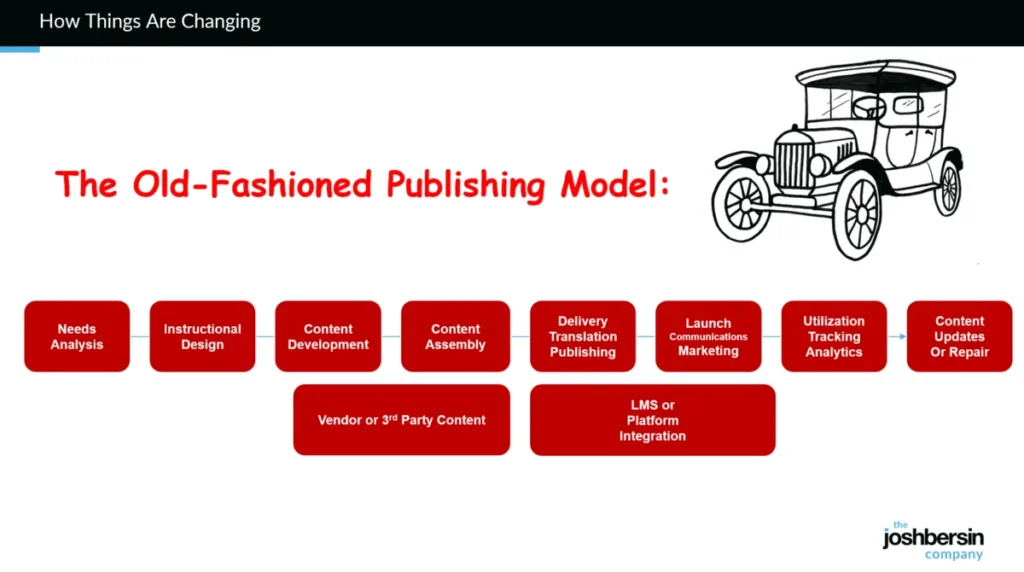
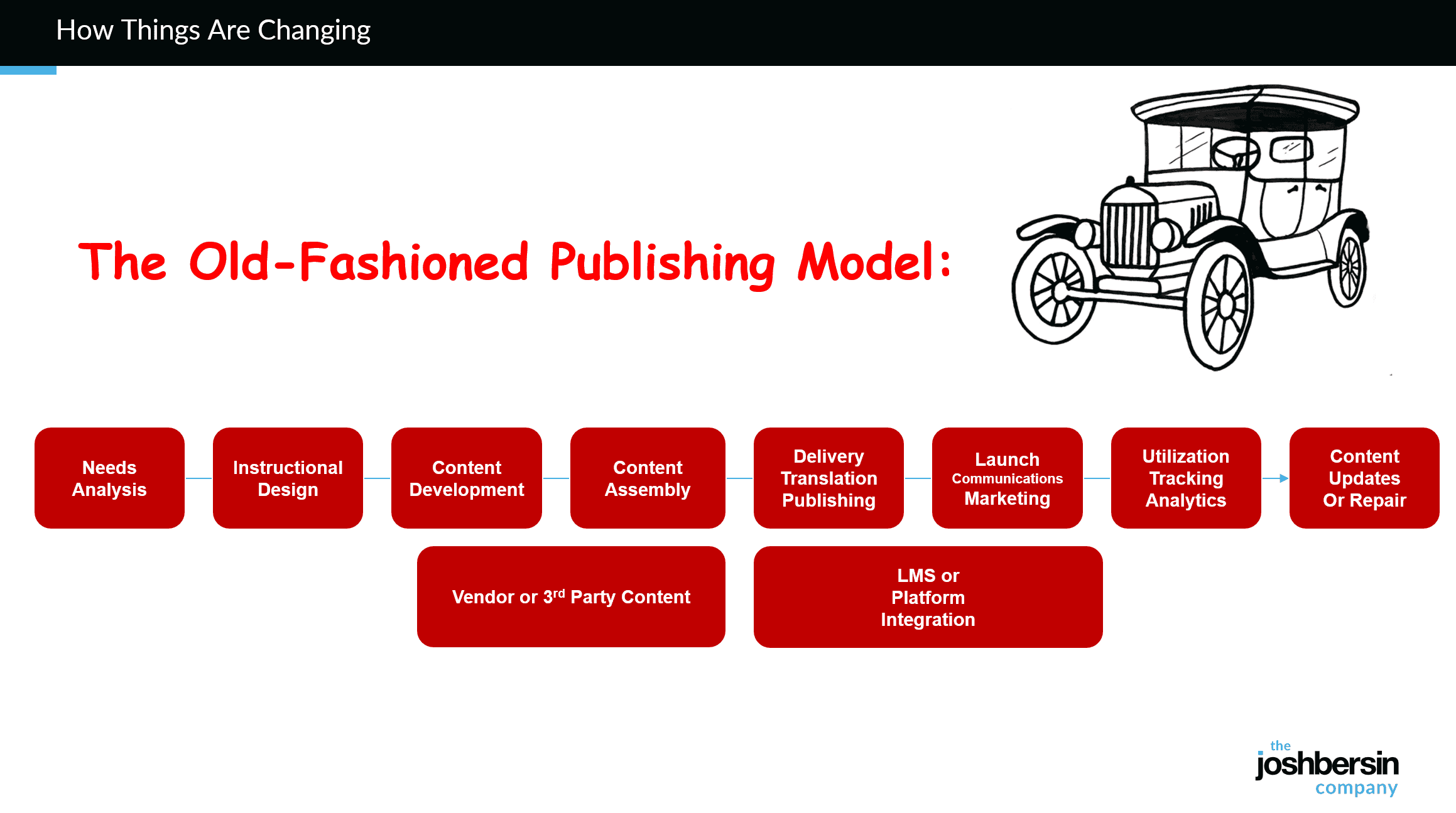
The advent of advanced AI, exemplified by the public release of ChatGPT in the fall of 2022, has fundamentally disrupted the traditional e-learning and "published training content" market. This sector, valued at over $400 billion, is undergoing a rapid and transformative reinvention. For three decades, the development of corporate training content has been a laborious and costly process. It involved the painstaking creation of courses, videos, assessments, and simulations by instructional designers, graphic artists, and subject matter experts. Numerous "publishers" and internal Learning & Development (L&D) departments have invested heavily in creating extensive libraries of content across diverse domains such as IT, sales, and leadership.
The process of building a single training course has historically been akin to writing a book: requiring design, content sourcing, audience targeting, and months of development. Post-production often involved extensive translation, testing, and integration into Learning Management Systems (LMS) using standards like SCORM (Sharable Content Object Reference Model), which primarily tracks learner progress and completion. This traditional model, while engaging a vast workforce of learning professionals, is now facing obsolescence due to its inherent slowness, inflexibility for edits, and prohibitive costs. Some high-quality courses can cost upwards of $50,000 to develop, leading to constant pressure on L&D teams to justify their return on investment for lengthy development cycles.
While this industry has fostered immense expertise, the pace of innovation has been constrained by these traditional methodologies. The rise of platforms like YouTube has demonstrated the accessibility and effectiveness of informal learning, yet these resources often lack the tracking, security, and corporate-specific context required for formal L&D initiatives. The estimated $50+ billion content market is now poised for a radical overhaul driven by AI.
AI’s Transformative Impact on Learning and Development
The argument that AI-generated content might be rudimentary, similar to early AI-authored text, overlooks the rapid advancements in AI capabilities. Modern AI can now produce remarkably effective learning materials, with development and editing times reduced from months to days or even hours. Even if an initial AI-generated course is not 100% perfect, the efficiency gains allow for significant human refinement.
Beyond content generation, AI introduces a fundamentally new learning paradigm: interactive questioning. Instead of passively navigating through chapters, learners can engage with AI-powered courses as dynamic experts, asking questions and receiving tailored responses. This capability transforms the "course" into a living, responsive learning resource. Crucially, AI enables the creation of highly personalized learning experiences, offering each employee a custom version of the information they need, a feat unattainable with traditional SCORM-compliant materials.
Furthermore, AI-powered learning environments foster interconnectedness. An AI-generated course is not an isolated entity but is linked to the entire knowledge base of the system. For instance, an employee learning about refinery safety and needing specific information on sulfur dioxide hazards would not have to search for a dedicated "sulfur dioxide safety" course. Instead, they could directly query the system and receive an immediate, relevant answer. This shift underscores the evolution of corporate learning from passive knowledge acquisition to proactive "enablement." While employees may dedicate time to formal learning, the majority of their day is spent working, requiring immediate access to information, advice, and expertise. AI-native learning experiences are thus vastly different from simply using AI to "build SCORM courses."
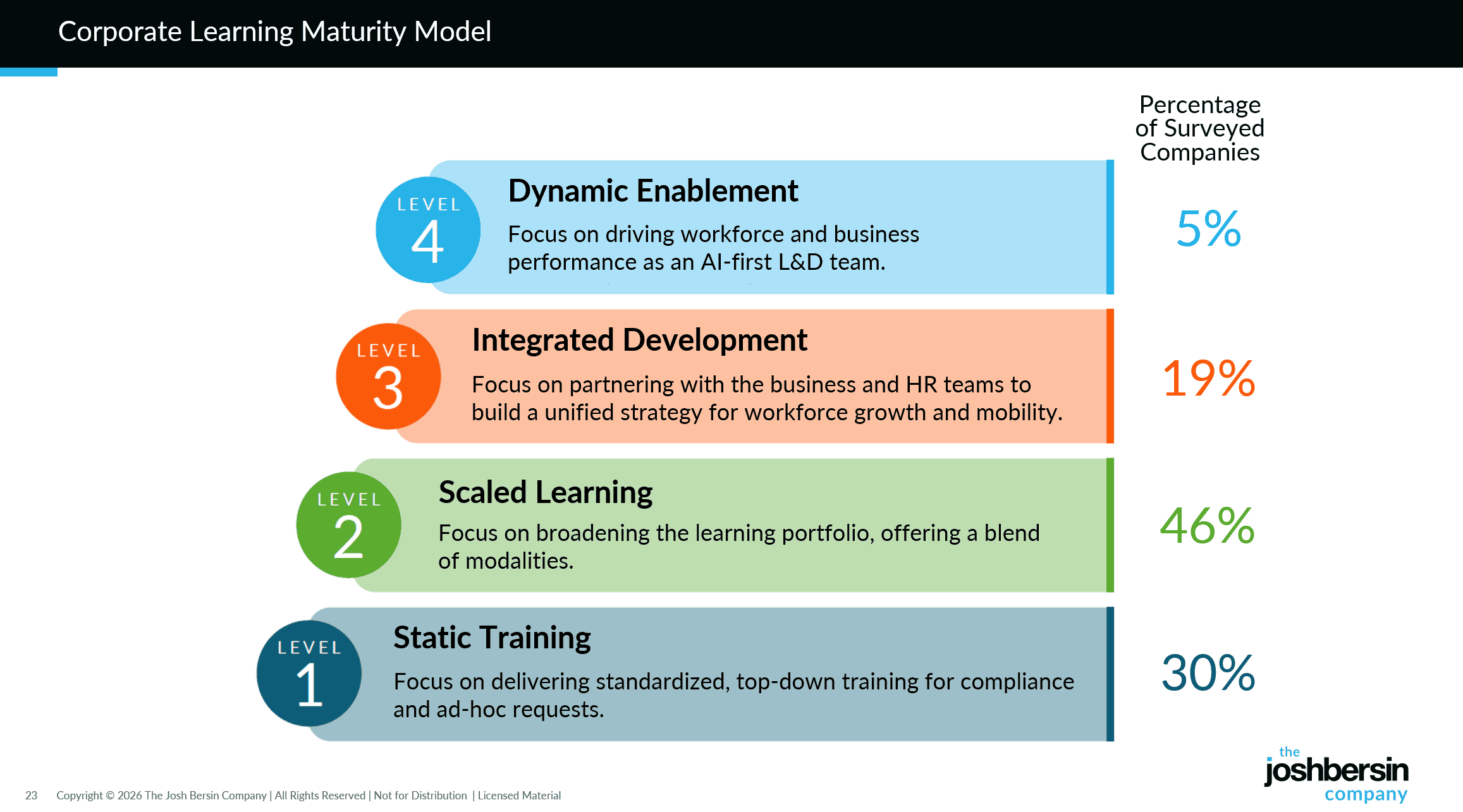
This transformation represents a "Revolution in L&D" and, more broadly, a "Revolution in Business." L&D departments are likely to become more streamlined, with a greater focus on enablement and a potential reallocation of staff to directly support business operations. The reinvented L&D function may even transcend its traditional placement within HR, becoming a direct business enabler, with the exception of compliance-related training. Research indicates that companies operating at advanced levels of learning maturity, as depicted in a learning maturity model, demonstrate significantly higher levels of innovation and agility in skills development, earning widespread business acclaim for their rapid response to emerging challenges.
Implications for Cornerstone and the Market Landscape
The competitive landscape is already reflecting this AI-driven shift. New entrants such as Sana, Docebo, Absorb, Uplimit, Arist, and others are actively delivering AI-native learning solutions. Major AI players, including OpenAI, are integrating content from established providers like Coursera, while companies like Anthropic are collaborating with enterprises to accelerate AI adoption in learning.
The future workplace will likely feature personalized AI agents for every employee, capable of understanding individual roles, processing communications, and indexing all digital outputs. These agents will build a comprehensive "People Graph," mapping an individual’s skills, experiences, strengths, and weaknesses. When augmented with peer feedback and performance data, these AI agents can proactively offer guidance, onboarding plans, or coaching. Cornerstone’s recent announcement of its "People Graph" is a foundational step in this direction.
This evolution poses a significant challenge to incumbent learning technology providers. Spending on traditional training solutions is projected to decline, with a corresponding surge in investment in AI-powered tools. While established vendors like Sana and Docebo are making strides, Cornerstone’s established market presence provides it with a substantial opportunity to capture a significant share of this evolving market.
Cornerstone Workforce AI: A Strategic Reimagining
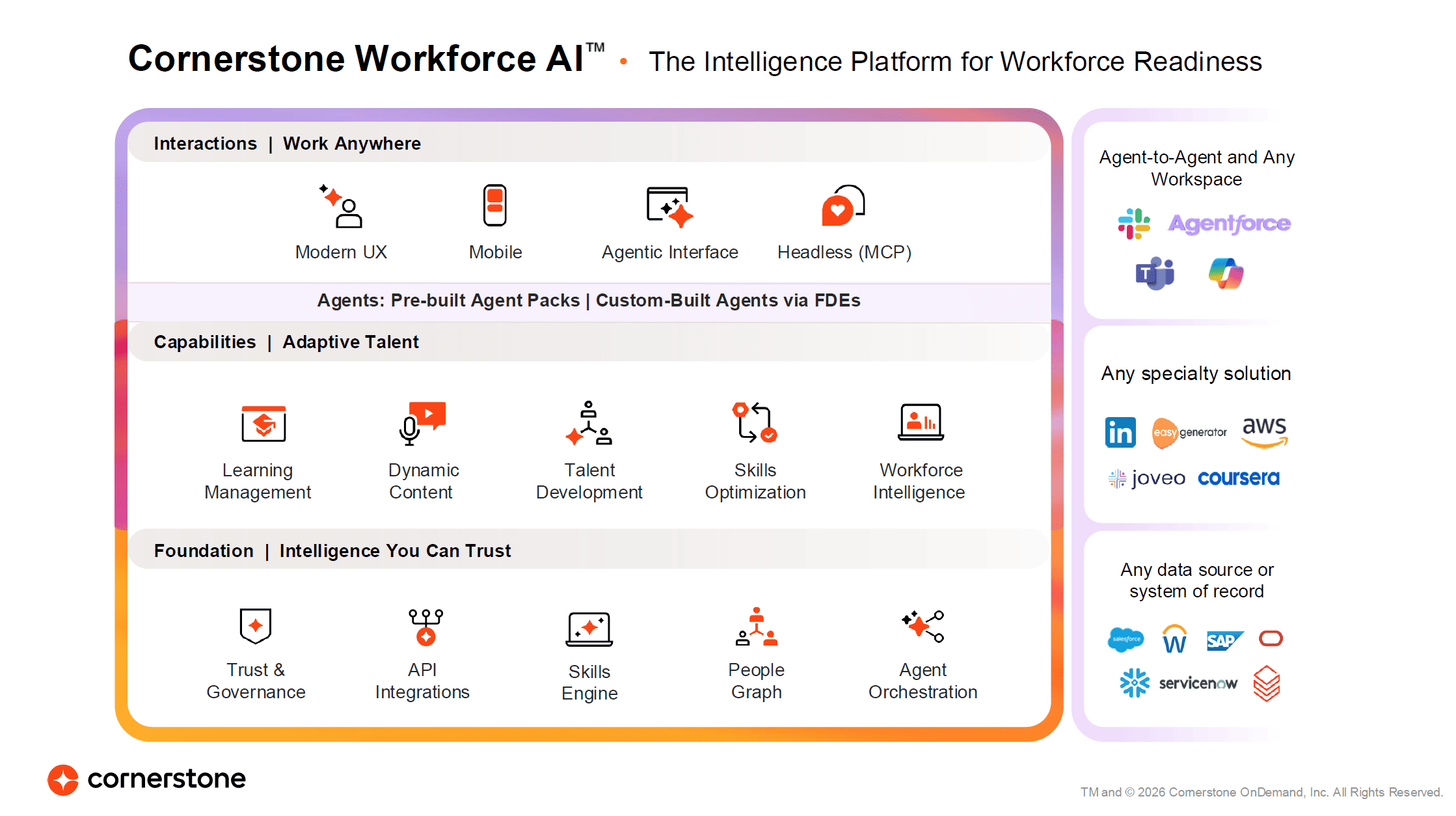
Cornerstone’s recent announcement marks a bold and ambitious reinvention of its core offerings through the launch of "Cornerstone Workforce AI." This initiative, spearheaded by the company’s dedicated AI team, represents a significant departure from its legacy platform. While still in its nascent stages, the new platform integrates advanced capabilities in skills and capability inference, an open "People Graph" designed to ingest data from diverse enterprise systems (including HRMS, LMS, project management tools, and employee engagement surveys), and a suite of data services. These services include access to labor market intelligence from Skyhive and a series of pre-built "Readiness Agents" designed to address immediate business challenges.
The underlying architecture of Cornerstone Workforce AI leverages aspects of its existing Cornerstone Galaxy platform, particularly in the middle layer of functionality. However, the new AI-native capabilities can be adopted either as a standalone solution or through an upgrade path for existing customers, activating these advanced features within their current licensing.
Early feedback from select customers, including a wealth management firm and a large media company, has been positive. These organizations are reportedly utilizing Workforce AI to address critical skills gaps, enhance employee mobility, facilitate organizational redesign, and mitigate risks by integrating company-specific data into the AI framework. For example, a company might use the platform to identify critical skills shortages for a new product launch or to map internal talent for succession planning.
While Cornerstone Workforce AI may not yet be a fully "AI-Native" platform in the same vein as some newer competitors like Sana, it is rapidly approaching that benchmark. The company has already introduced an AI content development tool and agents designed to streamline LMS administration and analysis, with AI-native content features appearing in both its existing and upcoming environments. The currently available packaged Agents, while not yet fully customizable by users, demonstrate the power of Workforce AI by leveraging its comprehensive data and intelligence.
The Road Ahead for Cornerstone and the L&D Industry
Cornerstone’s strategic pivot to AI represents a significant commitment to adapting to the seismic shifts occurring in the corporate learning and talent management landscape. The management team’s focus on transitioning existing customers while embracing new AI-native paradigms underscores the delicate balance required for such a large-scale reinvention.
The trajectory of L&D spending is clearly moving away from traditional tools toward AI-driven solutions. Cornerstone, with its established client base and now a robust AI platform, is well-positioned to capitalize on this trend. The company faces both the challenge of competing with agile new entrants and the opportunity to shape the future of AI-powered talent development.
For L&D professionals, the imperative is clear: embrace AI-native solutions or risk obsolescence. The traditional role of a training leader is being redefined, with a growing emphasis on enabling business outcomes through intelligent technology. The ability to articulate the value and impact of AI-driven learning will be paramount.
Cornerstone’s new platform offers a powerful foundation for organizations seeking to empower their employees with personalized, on-demand support for success. The journey ahead involves demonstrating the platform’s capabilities and value proposition in a market that is characterized by rapid change and constant innovation. The success of Cornerstone Workforce AI will depend on its ability to clearly communicate its vision and deliver tangible results for its clients in this dynamic AI-driven era.
The implications for the broader HR and L&D sectors are profound. As outlined in initiatives like "HR 2030," the future of work will be increasingly shaped by intelligent agents and personalized enablement. Companies that successfully adopt these AI-powered solutions will likely gain a significant competitive advantage through a more agile, skilled, and empowered workforce. The industry is witnessing not just a technological evolution, but a fundamental reimagining of how human potential is unlocked and leveraged within organizations.