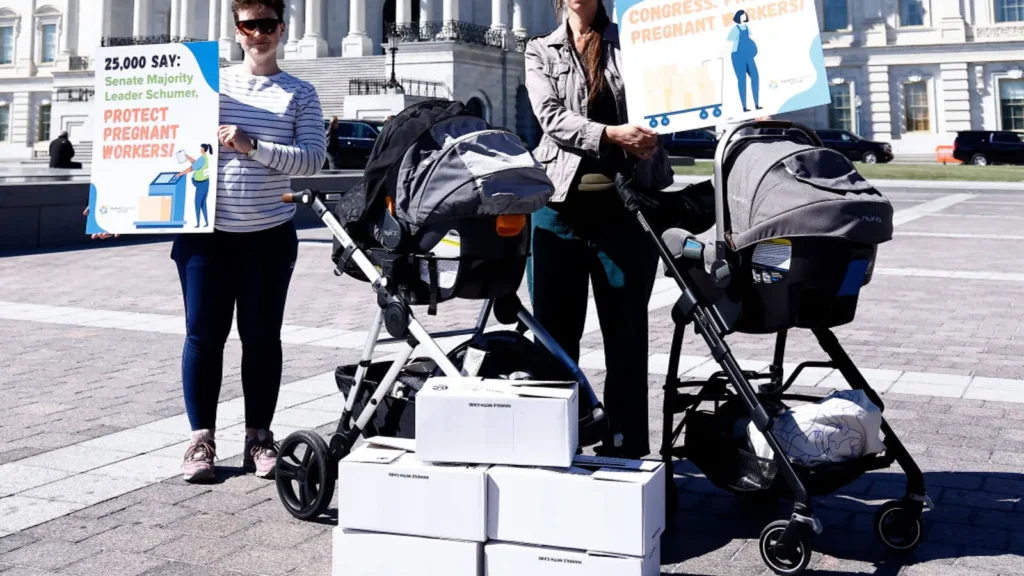
A coalition of 15 Democratic senators has issued a stark warning regarding the potential for employers to unlawfully deny accommodation requests for workers undergoing fertility treatments, citing concerns stemming from interpretations of the Pregnant Workers Fairness Act (PWFA) final rule. The senators’ open letter, published on May 7, 2026, directly addresses statements made by Equal Employment Opportunity Commission (EEOC) Chair Andrea Lucas, whose public dissent from certain aspects of the rule has ignited fears that crucial protections for workers, including those undergoing in vitro fertilization (IVF), could be jeopardized. This controversy unfolds against a backdrop of evolving political discourse on reproductive health and a former presidential administration’s declared commitment to expanding IVF access.
The Pregnant Workers Fairness Act: A Landmark for Workplace Equity
The Pregnant Workers Fairness Act (PWFA), signed into law on December 29, 2022, and effective June 27, 2023, represents a significant legislative achievement aimed at bolstering protections for pregnant and postpartum workers. Before the PWFA, existing federal laws like the Pregnancy Discrimination Act of 1978 (PDA) and the Family and Medical Leave Act (FMLA) offered incomplete safeguards. While the PDA prohibited discrimination based on pregnancy, it required pregnant workers to prove they were treated worse than non-pregnant workers "similar in their ability or inability to work," a high bar that often left workers without necessary accommodations unless employers already accommodated other workers with similar limitations. The FMLA, meanwhile, provided unpaid leave but did not mandate accommodations for those who wished to continue working.
The PWFA was specifically designed to fill these gaps, ensuring that pregnant workers, new mothers, and those with related medical conditions could receive "reasonable accommodations" unless doing so would cause an "undue hardship" for the employer. This includes conditions related to pregnancy, childbirth, or "related medical conditions," a phrase central to the current debate. Examples of reasonable accommodations under the PWFA can range from more frequent breaks, the ability to sit or stand, limits on lifting, schedule changes for appointments, or even temporary reassignment to light duty. Its passage was the culmination of years of advocacy by labor unions, civil rights groups, and women’s rights organizations, highlighting the persistent challenges faced by pregnant individuals in the American workforce. Data from the EEOC consistently showed thousands of pregnancy discrimination charges filed annually, underscoring the need for clearer, stronger protections.
EEOC’s Final Rule and the Seeds of Disagreement
Following the PWFA’s enactment, the EEOC, the federal agency responsible for enforcing anti-discrimination laws, embarked on the rulemaking process to provide detailed guidance for employers and employees on how the law would be implemented. After a period of public comment on its proposed rule, the EEOC solidified its final rule in April 2024. This final rule aimed to clarify the scope of "reasonable accommodations" and precisely define "pregnancy, childbirth, or related medical conditions."
It is this interpretation that has drawn sharp criticism from EEOC Chair Andrea Lucas. In a previously released statement, the agency noted Lucas has been "vocal in her opposition" to certain parts of the final rule. Specifically, Lucas has publicly asserted that she does "not agree with the Commission’s interpretation of the phrase ‘pregnancy, childbirth, or related medical conditions’ and the contrivances the Commission used to arrive at its construction of the statute." Her primary concern, as outlined in a statement published on the EEOC’s website, is that the rule "fundamentally erred in conflating pregnancy and childbirth accommodation with accommodation of the female sex, that is, female biology and reproduction." This distinction is crucial to Lucas’s argument, suggesting a narrower reading of the statute than the majority of the Commission. While HR Dive reached out to Lucas for comment, a response was not received by the time of publication, leaving her full elaboration of these "contrivances" to her public statements and dissent.
The IVF Connection: A Political and Personal Battleground
The Democrats’ letter specifically links Lucas’s narrow interpretation of the PWFA to its potential impact on individuals undergoing fertility treatments, particularly IVF. This connection brings to the fore a broader political narrative, notably the stance of former President Donald Trump on IVF.
In August 2024, after the PWFA final rule was established, and during a period when he was campaigning for a return to the presidency, Trump publicly championed IVF. Speaking to a town hall crowd, he expressed support for expanding access to IVF, suggesting avenues such as securing public funding or mandating insurance coverage. His commitment escalated in February 2025, when he issued an executive order aimed at "expanding access to in-vitro fertilization." The following month, at a Women’s History Month event, Trump even famously dubbed himself the "fertilization president," further solidifying his public embrace of fertility care. He subsequently touted his administration’s efforts to work with pharmaceutical manufacturers to lower IVF drug prices and incentivize agencies to encourage employers to offer IVF benefits.
However, the Democratic senators, including Senate Minority Leader Chuck Schumer, contend that the practical implementation of Trump’s executive order has been "weak." Their open letter characterizes the lowered drug prices as applying only to a "narrow subset of drugs" and the fertility benefits as "little more than a voluntary invitation to employers to offer benefits if they want to." In their view, Commissioner Lucas’s interpretation of the PWFA, if adopted or upheld, would further undermine these stated goals, creating a significant disconnect between the former president’s public assurances and the realities faced by workers seeking fertility treatment accommodations.
The Intricacies of IVF and the Urgent Need for Accommodation
The senators’ letter underscores the "intensive medical processes" inherent in IVF treatment, detailing why workplace accommodations are not merely convenient but often essential for the treatment’s success and the patient’s well-being. IVF is a complex and often physically and emotionally demanding process that typically involves several stages:

- Ovarian Stimulation: This phase involves daily self-administered injections of powerful hormonal medications for 10-14 days to stimulate the ovaries to produce multiple eggs. These medications can cause significant side effects, including bloating, mood swings, headaches, and fatigue.
- Frequent Monitoring: Throughout the stimulation phase, individuals require frequent visits to fertility clinics for blood tests and ultrasounds to monitor egg development. These appointments often occur daily or every other day and are typically scheduled during working hours, demanding significant flexibility.
- Egg Retrieval: A surgical procedure performed under sedation, requiring a full day off work for the procedure itself and often several days for recovery from anesthesia and post-procedural discomfort.
- Embryo Transfer: If fertilization is successful, one or more embryos are transferred to the uterus. This procedure, while less invasive than egg retrieval, still requires a clinic visit and often involves post-transfer rest periods, with many clinics recommending reduced activity or bed rest for a day or two afterward.
The letter explicitly states, "The current regulation explicitly protects the right of workers undergoing IVF to request reasonable accommodations like short breaks to take medication, a schedule that accommodates daily monitoring appointments and medical procedures, or even access to a chair." Denying such accommodations could force workers to choose between their jobs and their fertility treatment, or to work under conditions that could compromise their health or the treatment’s efficacy, thus directly "breaking President Trump’s promise," according to the senators.
A Broader Context: Protecting Pregnant and Expecting Workers
The PWFA’s significance extends beyond IVF, providing crucial protections for a wide array of pregnancy-related conditions. Legal experts and advocates have consistently affirmed the law’s importance, emphasizing how it fills critical gaps left by the FMLA, which primarily offers unpaid leave for serious health conditions but doesn’t mandate workplace adjustments for those who want to continue working during pregnancy or postpartum. For instance, a pregnant worker needing to avoid heavy lifting due to a doctor’s recommendation, or a new mother requiring more frequent breaks to pump breast milk, now has a clear legal right to request these accommodations.
Before the PWFA, many pregnant workers were forced onto unpaid leave or even fired when they requested minor adjustments, simply because their conditions didn’t qualify as a "disability" under the Americans with Disabilities Act (ADA) or because their employers didn’t offer similar accommodations to other non-pregnant workers. The PWFA addresses this directly by treating pregnancy and related conditions as deserving of accommodations in their own right, removing the prior requirement to compare them to non-pregnant colleagues. This has profound implications for maternal health outcomes, economic security for families, and overall workplace equity.
Implications for Employers and the Workforce
The dispute over the PWFA’s scope creates a challenging environment for employers and HR departments. Clear, unambiguous guidance from the EEOC is paramount for consistent compliance across diverse workplaces. A narrow interpretation of "related medical conditions" by the EEOC, or any successful legal challenge to the breadth of its final rule, could introduce confusion and increase the risk of legal challenges for employers.
For HR professionals, understanding the nuances of the PWFA, including its interaction with other federal and state laws, is already a complex task. If the definition of "related medical conditions" becomes a contested issue, particularly concerning fertility treatments, HR teams will face heightened scrutiny in evaluating accommodation requests. The risk of unlawful denials, and subsequent litigation, would increase significantly. Conversely, a broad and clear interpretation, as currently laid out in the final rule, provides a more straightforward path for compliance and fosters a more inclusive workplace.

For the American workforce, particularly women of childbearing age, the implications are profound. With the average cost of a single IVF cycle ranging from $15,000 to $30,000, and many individuals requiring multiple cycles, the financial and emotional investment is immense. The ability to maintain employment and receive necessary accommodations during this arduous process is not just a matter of convenience; it’s a matter of economic stability and the ability to pursue family-building goals without sacrificing one’s career. According to the CDC, over 80,000 infants are born each year in the U.S. using assisted reproductive technology, underscoring the widespread impact of these treatments. Any erosion of protections could disproportionately affect women and families, especially those from marginalized communities who already face significant barriers to accessing fertility care and maintaining stable employment.
Looking Ahead: Potential Challenges and the Future of the PWFA
The open letter signed by Senate Minority Leader Chuck Schumer and 14 other Democratic senators signals a strong legislative pushback against any attempts to narrow the scope of the PWFA. This political pressure could manifest in various ways, from further public statements and oversight hearings to potential legislative action if the current rule faces legal challenges.
It is possible that the EEOC’s final rule, particularly its inclusion of abortion and potentially fertility treatments under "related medical conditions," could face legal challenges from conservative groups or states arguing that the agency overstepped its statutory authority. Such legal battles could lead to judicial review, potentially altering the rule’s enforceability or interpretation. The outcome of such challenges would have far-reaching consequences for millions of workers.
The PWFA, initially lauded for its bipartisan passage, now finds itself at the center of a complex legal and political debate over the definition of "pregnancy, childbirth, or related medical conditions." The Democratic senators’ intervention highlights the critical importance of maintaining comprehensive protections for all workers navigating the challenges of family planning and reproductive health, ensuring that the spirit of the law truly serves its intended purpose of fostering fairness and equity in the American workplace. The resolution of this interpretive conflict will shape the landscape of workplace accommodations for pregnant and expecting workers for years to come.