
In an increasingly dynamic global economy, the imperative for organizations to foster diverse, equitable, and inclusive (DEI) workplaces has transcended ethical considerations, becoming a strategic cornerstone for business resilience and innovation. The modern job market, characterized by rapid change and intense competition for talent, demands that companies not only attract a wide array of candidates but also cultivate environments where every individual feels valued and empowered. This paradigm shift has propelled the development and adoption of specialized diversity tools designed to streamline and enhance DEI initiatives, particularly in the critical domain of recruitment.
The Evolving Landscape of Inclusive Hiring
The contemporary understanding of diversity extends far beyond superficial demographics, encompassing a rich tapestry of experiences, perspectives, and backgrounds. Research consistently demonstrates the tangible benefits of a diverse workforce: McKinsey & Company, for instance, has repeatedly shown that companies in the top quartile for racial and ethnic diversity are 35% more likely to have financial returns above their respective national industry medians. Similarly, diverse teams are proven to be more innovative, make better decisions, and exhibit higher levels of employee engagement and retention.
However, achieving genuine diversity and inclusion is often hampered by deeply ingrained systemic issues and unconscious biases that can subtly infiltrate every stage of the hiring process, from the initial job description to candidate interviews. These biases, often unintentional, can inadvertently deter qualified candidates from underrepresented groups, leading to homogenized workforces that miss out on critical talent and diverse insights. Recognizing this challenge, technology developers have stepped in, offering a suite of tools engineered to identify and mitigate bias, promote equitable practices, and provide actionable insights into DEI performance.
Technology as an Ally: The Rise of Diversity Tools
The advent of sophisticated algorithms and artificial intelligence (AI) has revolutionized how companies approach DEI. Early efforts focused primarily on identifying gender-coded language in job advertisements. However, the field has rapidly expanded to address a broader spectrum of biases, including those related to race, age, disability, sexual orientation, socio-economic status, and neurodiversity. These tools empower human resources professionals, recruiters, and hiring managers to craft more inclusive communications, conduct fairer assessments, and track their progress towards DEI goals with greater precision.
Below is an examination of leading diversity tools, categorized by their primary function, which are instrumental in building more inclusive teams and fostering equitable workplace cultures.
I. AI-Powered Bias Detection in Job Descriptions
These tools specifically target the language used in job advertisements, aiming to eliminate words or phrases that might inadvertently discourage certain demographic groups from applying.
1. Text Analyzer by Ongig
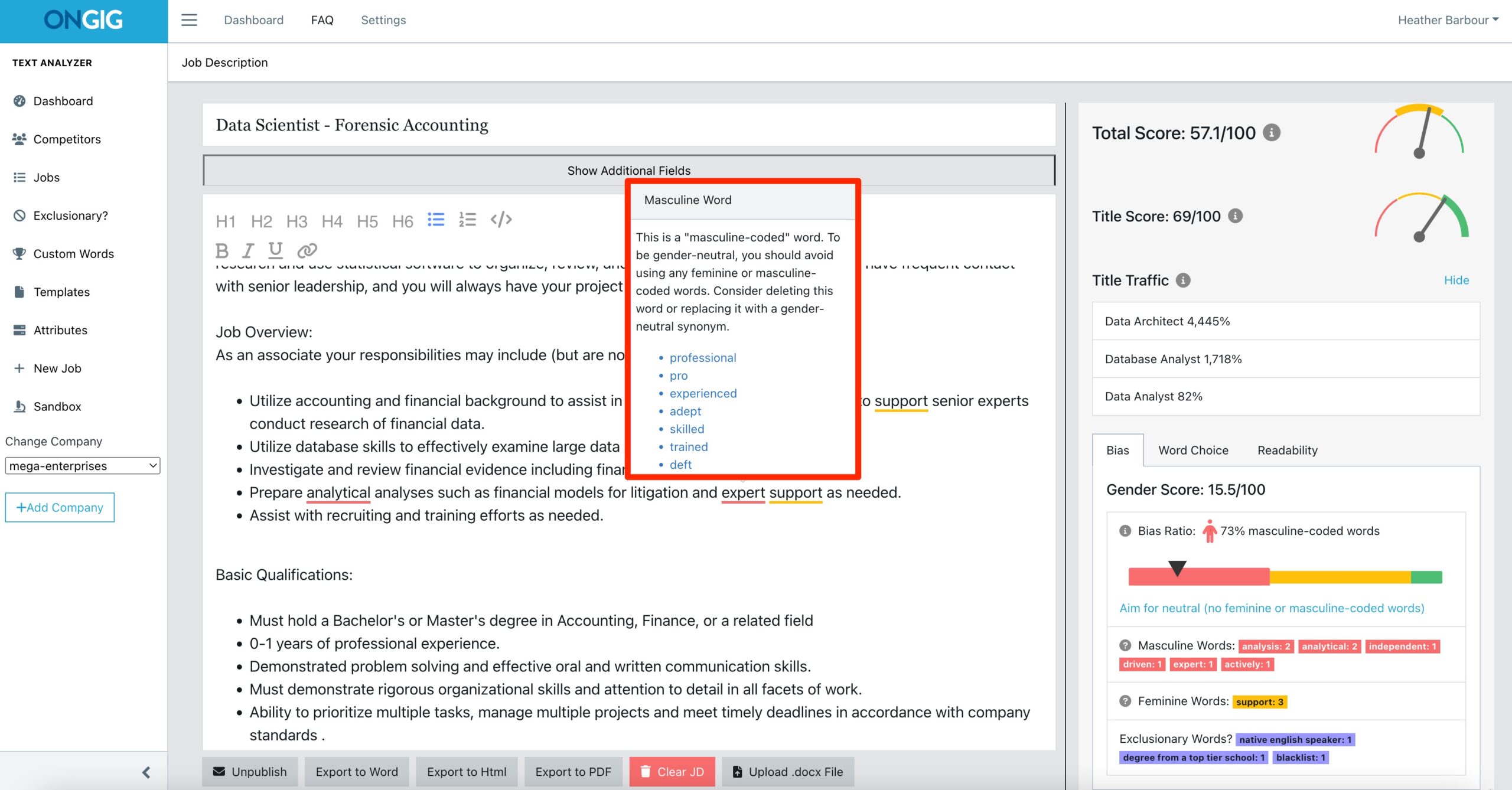
Ongig’s Text Analyzer software is a robust platform engineered to detect and remove various forms of bias from job descriptions and other recruitment ad copy. Developed from extensive experience in rewriting thousands of job descriptions for major global brands since 2011, the tool provides a comprehensive approach to creating inclusive language. Its user-friendly interface acts as a "bias decoder," offering immediate feedback and actionable recommendations.
Initially launched in 2017 with a strong focus on gender bias, flagging "gender-coded" words (terms that implicitly appeal more to one gender), Ongig’s Text Analyzer has since expanded its capabilities significantly. It now identifies and suggests replacements for biases related to race, age, disability, sexual orientation, socio-economic status, and neurodiversity. For instance, it can flag phrases like "Brown Bag sessions," which might carry unintended historical or cultural connotations that could be offensive to people of color, offering neutral alternatives. Beyond bias detection, the Text Analyzer enhances readability by analyzing sentence and paragraph length, providing suggestions for clearer, more concise writing. It also leverages AI to identify missing critical sections in job descriptions that candidates frequently prioritize, such as salary ranges, benefits, company mission statements, and diversity statements, ensuring a holistic and attractive job posting. Ongig positions its Text Analyzer as a deeper bias analysis tool compared to some competitors, offering an extensive list of biased terms with inclusive replacements.
2. Textio
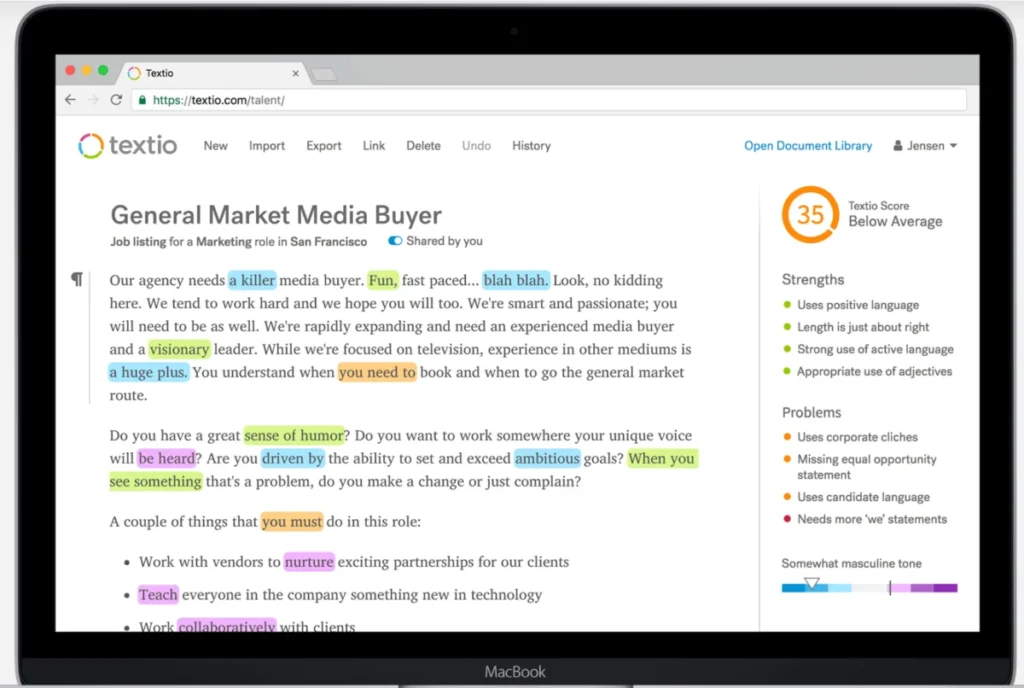
Textio operates as an online augmented writing platform that analyzes job posting language against a vast dataset of job outcome data. It provides real-time feedback on how job descriptions perform in terms of diversity, neutrality, and overall success. The tool uses color-coded suggestions to highlight potentially biased words or phrases and offers alternatives designed to attract a more diverse applicant pool. Textio’s gender writing analysis, for example, identifies "masculine-toned" language and suggests more neutral phrasing, aiming to balance the appeal to different genders. Its data-driven approach helps organizations optimize their language for better hiring outcomes.
3. Gender Decoder
A simple, free online tool, the Gender Decoder for Job Ads focuses exclusively on identifying gender-biased words. Created by Kat Matfield, it’s based on psychological research into how specific words attract or deter male and female applicants. Users paste their job description text, and the tool highlights words categorized as "masculine-coded" or "feminine-coded," offering a quick and accessible way for small businesses or individuals to check for basic gender bias in their job ads. While lacking the comprehensive features of more advanced platforms, it serves as a valuable entry-level resource for gender writing analysis.
4. Clovers (formerly Talvista)
Clovers is an AI-powered platform designed to guide hiring teams through a more efficient and inclusive interview process. Its integrated job description builder allows users to create or paste content into predefined sections, which the tool then reviews for word choice, positive/negative language, and gender bias. Similar to other tools, it flags masculine and feminine-coded words, providing alternative, neutral options. Clovers aims to standardize the hiring process, ensuring consistency and fairness from the initial job posting through to candidate interviews.
5. The Polite Type
While not exclusively a job description tool, The Polite Type is a free, open-source application focused on promoting inclusive language by auto-rewriting hurtful or discriminatory words. It specializes in identifying and replacing terms that are racially, ethnically, or otherwise insensitive (e.g., replacing slurs with respectful identifiers like "Jewish person" or "Black person"). Co-created with high-school students from diverse backgrounds in Finland, this tool emphasizes broader social inclusion and anti-bullying efforts, making it relevant for ensuring that all company communications, including those related to hiring, are respectful and appropriate.
II. Comprehensive DEI Platforms and Analytics
These tools offer broader functionalities, extending beyond job descriptions to address overall DEI strategy, workplace culture, and analytics.
6. Allie
Allie serves as an AI-powered chatbot companion focused on fostering inclusivity and diversity within organizations, primarily through platforms like Slack. Allie facilitates the dissemination of DEI surveys, gathering employee perspectives on inclusion and company culture, including the consideration of diverse viewpoints in organizational decisions. Beyond surveys, Allie delivers curated articles on diversity-related news directly to company D&I channels, keeping teams informed of current trends. Crucially, Allie’s feedback feature allows employees to proactively propose enhancements to DEI efforts, addressing issues like stereotypes or ensuring broader inclusivity. The platform also offers diversity training sessions, equipping team members with essential knowledge and skills for navigating diverse workplace environments effectively.
7. Blendoor
Blendoor is a diversity analytics and hiring software company committed to fostering fair and inclusive recruitment. It champions unbiased hiring through features like blind recruitment and sourcing candidates from diverse backgrounds, directly confronting unconscious bias. Blendoor’s unique value proposition lies in its ability to score organizations based on their diversity, equity, and inclusion performance, using data from government and marketplace benchmarks. This score allows companies to understand their standing relative to industry peers and identify specific areas for improvement. The platform provides tools for tracking diversity metrics over time and offers assessment capabilities to pinpoint weaknesses in hiring processes, acting as a strategic advisor for enhancing inclusivity.
8. DBSquared
DBSquared provides tools aimed at building fairer and more equitable workplaces, focusing on both hiring and compensation. Their job description software, DBDescriptions, assists companies in crafting unbiased and legally compliant job postings, adhering to regulations such as the Americans with Disabilities Act (ADA) and the Fair Labor Standards Act (FLSA). Beyond recruitment, DBSquared offers DBCompensation, a compensation management tool that helps HR identify pay disparities within an organization. By analyzing factors like experience, race, and gender, it generates insights to highlight discrepancies, such as pay gaps between different demographic groups with similar qualifications. A notable feature is CompBldr, which simplifies job description creation, comparative analysis, and the establishment of fair pay structures, ensuring equitable compensation practices across diverse industries.
9. Diversio
Diversio offers a comprehensive suite of DEI tools designed to drive meaningful change in organizational diversity and inclusion efforts. Its Bias Corrector tool integrates with communication platforms like Slack, flagging cultural insensitivity or unconscious bias in real-time, thereby fostering more inclusive internal communication. The Social Media Barometer monitors public perception of a company’s D&I record, alerting organizations to any complaints or discussions online, enabling proactive reputation management. Perhaps most impactful is Diversio’s Recommendation Engine, which uses advanced algorithms to analyze a company’s specific DEI challenges and recommend tailored courses of action, acting as a strategic guide for implementing effective diversity initiatives. This holistic approach empowers companies to measure, track, and improve their DEI performance across multiple fronts.
III. AI-Driven Job Description Generators
These tools leverage AI to automate and optimize the creation of job descriptions, often incorporating best practices for inclusivity.
10. Recruitment SMART
Recruitment SMART features an AI-powered job description generator that automatically crafts optimized advertisements aligned with a company’s specific hiring goals. It focuses on role and company specifics, aiming to produce highly impactful and engaging promotions to attract qualified talent. Users reportedly benefit from an 80% reduction in time spent posting job descriptions and a 70% increase in content consistency, leading to improved candidate matching and higher quality hires. The platform also includes a built-in equitable hiring tool that offers diversity analytics, facilitates anonymous hiring processes by removing identifying information (like name, age, and location), and incorporates a bias checker to objectively score candidate data against job fit criteria.
11. Manatal
Manatal is an advanced recruitment automation system designed to simplify the creation of inclusive job descriptions at scale. Offering a 14-day trial, the platform features a range of intelligent AI tools to automate the generation of high-quality JDs. Its intuitive interface allows recruiters to generate a JD by simply filling in key fields such as company name, vacant role, location, and target recipient. Manatal’s AI assistant then generates JDs based on these provided details, with subscribers receiving up to 200 JD generations per month, currently limited to English ads. The platform also includes a prompt refinement tool, enabling users to fine-tune the generated JDs to best suit their company’s unique hiring process and cultural nuances.
12. Jasper Chat
Jasper Chat is an advanced chatbot leveraging AI and natural language processing (NLP) to generate structured job descriptions in minutes. Users interact with the AI through natural language, inputting vacancy details via chat. Jasper Chat then interprets this information to produce comprehensive job descriptions. Its capabilities include scalable JD creation, ensuring consistent quality across multiple postings, generating a variety of writing tones to match brand voice, and optimizing content for SEO to enhance visibility and attract a broader pool of candidates. This conversational approach simplifies the process, making it accessible even for those without specialized writing expertise.
13. Skima AI
Skima AI is an advanced AI solution that empowers hiring teams to generate high-quality job descriptions by inputting key details such as job titles, required skills, and additional perks or benefits. The platform’s expert algorithm analyzes trending analytics and "winning recipes" from top-performing job descriptions to create similarly impactful descriptions. Users have the flexibility to conveniently edit, remove, or regenerate sections of the JD if they don’t meet expectations, all with a simple click. Skima is designed to improve with practice, continuously learning from an organization’s best practices, ensuring compliance with the latest industry requirements, streamlining candidate matching, and significantly reducing the time taken to draft effective job advertisements.
Beyond Tools: Measuring and Tracking Progress
The mere adoption of diversity tools is insufficient without a robust strategy for measuring and tracking their impact. Data-driven insights are paramount for understanding the effectiveness of DEI initiatives and identifying areas for continuous improvement. Organizations must establish clear benchmarks and set measurable goals for diversity representation, employee engagement, and inclusion efforts.
By leveraging the analytics capabilities often integrated into these tools, companies can track key metrics such as applicant demographics, interview conversion rates across different groups, and retention rates. This data allows HR leaders and business executives to pinpoint where interventions are most needed, whether it’s adjusting recruitment strategies, enhancing training programs, or refining workplace policies. Continuous measurement fosters accountability and ensures that DEI is not a one-time project but an ongoing commitment, adapting to evolving needs and societal shifts.
The Indispensable Role of Leadership
While technology provides invaluable support, the ultimate success of diversity and inclusion initiatives hinges on committed leadership. HR leaders and business executives play a critical role in setting the organizational tone, articulating a clear vision for DEI, and championing its integration into every aspect of the business. This involves creating and implementing inclusive policies that span recruitment, compensation, career development, and performance management.
Effective leaders foster courageous conversations about diversity, creating safe spaces for employees to share experiences and voice concerns without fear of retribution. They lead by example, actively seeking out diverse perspectives, advocating for underrepresented groups, and holding themselves and others accountable for DEI goals. By visibly prioritizing diversity and inclusion, allocating necessary resources, and integrating DEI metrics into strategic objectives, leadership drives meaningful, systemic change that resonates throughout the entire organization, transforming culture from the top down.
Implications for Modern Organizations
The widespread availability and increasing sophistication of diversity tools mark a significant step forward in the quest for equitable workplaces. These technologies empower organizations to move beyond aspirational statements to implement concrete, data-backed strategies for DEI. By automating bias detection, streamlining inclusive communication, and providing robust analytics, they enable companies to cast a wider net for talent, enhance employer brand, and cultivate environments where diverse perspectives can thrive.
However, it is crucial to recognize that technology is a facilitator, not a panacea. The most effective DEI strategies integrate these tools within a broader framework of genuine leadership commitment, ongoing education, and a deeply embedded culture of inclusion. Organizations that strategically deploy these tools, coupled with authentic dedication to their DEI principles, are better positioned to attract top talent, drive innovation, and build resilient, high-performing teams for the future.






