

The landscape of B2B marketing is undergoing a fundamental shift as organizations move away from a singular focus on immediate lead generation toward the more sustainable, long-term value of brand equity. In an era defined by information saturation and fragmented buyer journeys, the traditional reliance on "impressions" as a primary metric of success has proven insufficient. Modern brand awareness campaigns must transcend simple visibility, aiming instead to foster deep-seated recognition, trust, and mental availability within a target audience. This evolution is driven by the realization that in the business-to-business sector, the majority of a company’s potential customers are not currently in a buying cycle, necessitating a strategy that builds familiarity months or even years before a transaction occurs.
The Critical Distinction Between Visibility and Awareness
In the contemporary digital marketplace, brand visibility is relatively easy to purchase through programmatic advertising and social media promotion. However, visibility—defined as the frequency with which a brand appears before an audience—does not equate to awareness. True brand awareness occurs in the mind of the prospect; it is the qualitative result of visibility combined with relevance and clarity.
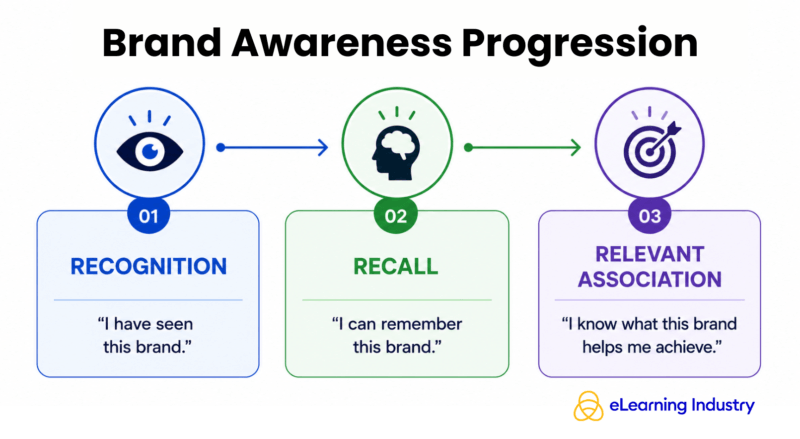
Industry analysts categorize this mental state into three distinct tiers: brand recognition, brand recall, and brand association. Brand recognition is the baseline, where a buyer can identify a company upon seeing its visual assets. Brand recall is a more advanced stage, where a buyer can independently name a company when prompted by a specific category or problem. The most potent stage, however, is brand association. This occurs when a buyer connects a brand with a specific outcome or value proposition, such as "efficiency," "security," or "scalability." For a B2B organization, the goal of a brand awareness campaign is to move prospects through these tiers until the brand becomes a natural part of their "consideration set" long before a formal RFP is ever issued.

The 95:5 Rule and the Chronology of B2B Awareness
To understand the necessity of sustained brand awareness, one must examine the "95:5 Rule," a concept popularized by the B2B Institute. This research suggests that at any given time, only 5% of a target audience is actively "in-market" to purchase a product or service. The remaining 95% are "out-of-market" and will not buy for months or years.
A strategic brand awareness campaign serves as a bridge across this temporal gap. The chronology of a successful initiative typically follows a multi-phase lifecycle:
- The Research and Positioning Phase (Months 1-2): Before any creative assets are deployed, organizations must define their "category entry points." This involves identifying the specific situations or triggers that would cause a buyer to think of their solution.
- The Foundation Phase (Months 3-5): Launching core thought leadership and original research. This phase focuses on establishing authority rather than selling features.
- The Amplification Phase (Months 6-9): Utilizing paid and earned media to ensure the message reaches the defined audience repeatedly. Consistency in visual identity and messaging is paramount during this period to ensure cognitive fluency.
- The Harvesting Phase (Months 10+): Monitoring demand signals such as branded search volume and direct website traffic to see how top-of-funnel awareness is converting into mid-funnel intent.
The REACH Framework for Strategic Deployment
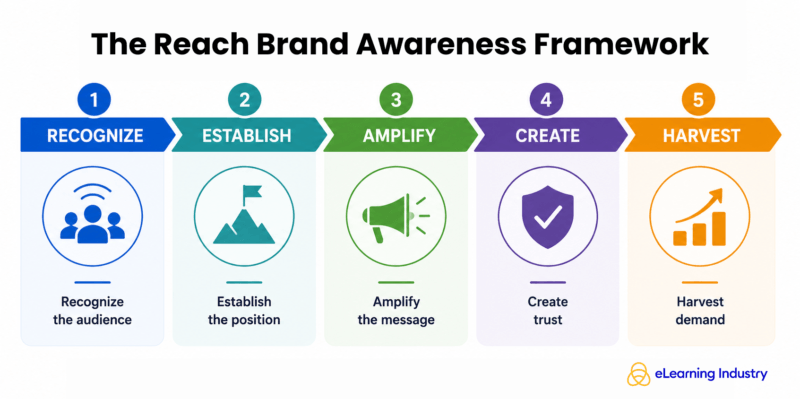
To organize these efforts, marketing leaders often utilize the REACH framework, which provides a structured approach to building market presence.
Recognize the Priority Audience: B2B purchases are rarely made by a single individual. Instead, they involve a "buying group" of six to ten stakeholders, including end-users, financial controllers, and technical evaluators. An effective campaign must recognize the distinct needs of each member while maintaining a unified brand narrative.
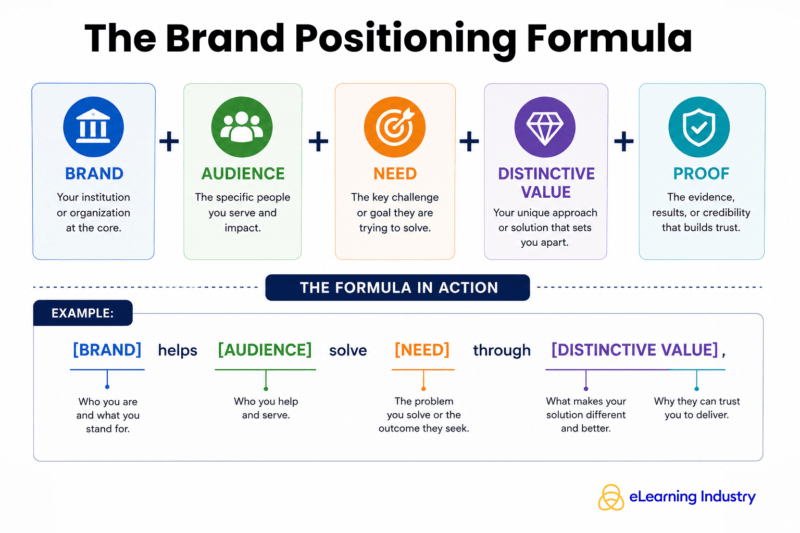
Establish a Memorable Position: A brand cannot be "everything to everyone." Strategic positioning requires choosing a specific problem to own. For example, a cybersecurity firm might focus on "zero-trust architecture for remote workforces" rather than general "IT security."
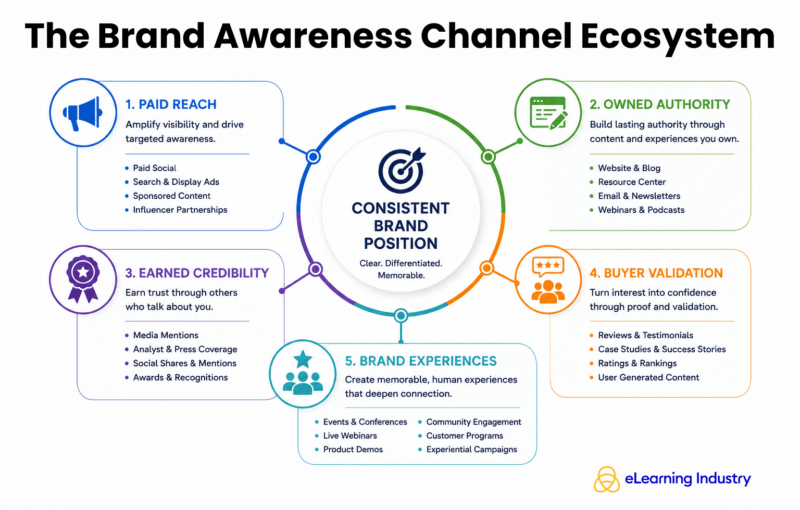
Amplify Through Trusted Touchpoints: In B2B, the environment in which an advertisement appears often matters as much as the advertisement itself. Placing content in high-authority industry publications or hosting expert-led webinars builds "borrowed credibility."
Create Credibility and Consistency: Trust is the bedrock of B2B relationships. Campaigns must be supported by "social proof," such as third-party reviews, case studies with measurable outcomes, and original data that provides genuine value to the industry.
Harvest and Measure Demand Signals: The final stage involves tracking the transition from passive awareness to active interest. This includes monitoring increases in "Share of Voice" (SoV) relative to competitors and analyzing the quality of inbound inquiries.
Supporting Data and Market Sentiment
Recent data from Gartner indicates that B2B buyers spend only 17% of their total purchase journey meeting with potential suppliers. The vast majority of their time is spent on independent online research and internal discussions. This shift underscores the importance of "pre-awareness." If a brand is not already known to the buying group during the research phase, the likelihood of being invited to the negotiation table drops significantly.
Furthermore, a study by Edelman and LinkedIn on B2B Thought Leadership found that 54% of decision-makers spent more than an hour per week reading thought leadership content, and 48% said that such content directly influenced their decision to award business to an organization. This data suggests that "awareness" built through high-value expertise is far more effective than awareness built through disruptive advertising.
Analysis of Implications: Brand in the Age of AI Discovery
The rise of Generative AI and AI-powered search engines (such as Perplexity and Google’s Search Generative Experience) has added a new layer of complexity to brand awareness. AI models act as "gatekeepers" of information, synthesizing vast amounts of data to provide users with recommendations.
For a brand to be "aware" in the eyes of an AI, it must have a strong digital footprint across authoritative sources. This means that traditional SEO is evolving into "Entity Recognition." A brand awareness campaign now serves a dual purpose: it builds memory in human buyers and builds "authority" in the datasets used by AI. Organizations that fail to invest in brand building will find themselves omitted from AI-generated vendor lists, effectively disappearing from the digital consideration set.
Practical Application: A Case Study in Strategic Positioning
Consider the hypothetical example of an enterprise employee onboarding software provider. In a crowded HR Tech market, a generic "we help you hire" message would likely fail. Instead, the company launches a campaign titled "The First 90 Days: The Economic Impact of Onboarding."
The campaign begins with original research showing the correlation between structured onboarding and long-term employee retention. They distribute these findings through a series of guest articles in HR executive journals and sponsor a podcast series featuring Chief People Officers from Fortune 500 companies.
By focusing on a specific business outcome—productivity and retention—rather than software features, the brand establishes an association with "strategic growth." When an HR leader eventually faces a turnover crisis, the brand is recalled not just as a software vendor, but as a solution to a specific financial problem. This is the ultimate goal of the awareness-to-demand pipeline.
Common Pitfalls and Risk Mitigation
Despite the clear benefits, many brand awareness campaigns fail due to several recurring errors:
- The Reach Fallacy: Many companies prioritize reach (how many people saw the ad) over relevance (did the right people see the ad). In B2B, 1,000 impressions among qualified decision-makers are infinitely more valuable than 1,000,000 impressions among the general public.
- Creative Inconsistency: Changing the "look and feel" of a campaign every quarter prevents the audience from forming a stable mental image of the brand.
- Impatience: Brand building is a marathon. Executives who demand immediate ROI from an awareness campaign often pivot back to short-term tactics too early, sacrificing long-term market gains.
Conclusion: The Long-Term ROI of Brand Equity
A successful brand awareness campaign is not an elective expense; it is a strategic investment in a company’s future revenue. By fostering recognition, building credible associations, and maintaining a consistent presence across trusted channels, B2B organizations can ensure they are top-of-mind when the 95% of out-of-market buyers eventually move into a purchasing cycle.
As the digital landscape becomes increasingly dominated by AI and self-guided buyer journeys, the value of a trusted brand name will only grow. In the final analysis, the goal of brand awareness is to reduce the friction of the sales process. When a sales representative finally makes contact, the prospect should not ask "Who are you?" but rather "I’ve heard of you—how can you help us?" This shift in the initial conversation is the hallmark of a brand that has successfully mastered the art and science of awareness.






