Eightfold AI has launched its AI-powered Candidate Agent, a significant development that integrates with its existing AI Interview agent. This announcement is not only a strategic move by Eightfold to capture the high-volume hiring market but also a powerful indicator of the burgeoning trend of Multi-Agent AI solutions within the Human Resources technology landscape, a phenomenon extensively explored within the framework of "HR 2030." This evolution signifies a fundamental shift in how organizations attract, engage, and hire talent, moving beyond single-point solutions to a more integrated, intelligent, and automated approach.
The Rise of Intelligent Candidate Engagement
The newly introduced AI Candidate Agent is engineered to manage a wide spectrum of candidate interactions. Its primary function is to address job seeker inquiries regarding specific roles, company culture, compensation, working hours, necessary qualifications, flexibility options, and benefits. This sophisticated agent operates in a similar vein to offerings from competitors such as Paradox, Maki, Smartrecruiters, and others, aiming to streamline and accelerate the candidate inquiry process. By providing prompt, accurate, and accessible information, these agents are crucial in fostering a positive and robust relationship between employers and prospective employees, particularly in today’s competitive talent market.
While chatbots for job candidates have existed for over a decade, the advent of advanced Artificial Intelligence has propelled their capabilities from basic query responses to dynamic, in-depth interactions. This enhanced intelligence allows agents to engage directly and meaningfully with candidates, significantly simplifying and expediting the job application journey. For job seekers, this translates to a clearer understanding of opportunities and a more efficient application process. For employers, it offers a critical solution to manage the overwhelming influx of applications generated by widespread job posting and apply-to-click tools, a challenge that has intensified with the digital transformation of recruitment.
Addressing High-Volume Hiring Demands
The AI Candidate Agent, as demonstrated by Eightfold, is built to handle a substantial volume of inquiries across a multitude of job openings. Its versatility extends across various communication channels, including mobile devices, web platforms, and instant messaging applications like Slack, ensuring broad accessibility for candidates. This capability is particularly transformative for companies engaged in high-volume hiring, such as those in retail, hospitality, healthcare, and logistics. The agent simplifies the crucial initial stages of recruitment: qualifying candidates, providing essential information, and initiating the sourcing pipeline, thereby optimizing the efficiency and effectiveness of these large-scale hiring initiatives.
This technological advancement is a cornerstone of the broader "HR 2030" vision, which anticipates a future where at least 24 distinct agent workflows will be integral to human resources operations. In Eightfold’s ecosystem, the Candidate Agent seamlessly integrates with other AI-powered tools. For instance, it can direct candidates to an Eightfold-powered career site, guide them through the application process, and subsequently introduce them to the company’s AI interviewer. Crucially, all data collected during these interactions is systematically stored within Eightfold’s Applicant Tracking System (ATS), creating a rich repository of candidate information that can be leveraged for future recruitment cycles and talent management initiatives.
A Competitive Landscape of Intelligent Agents
While Eightfold is recognized as a pioneer in the field of talent intelligence, the development of sophisticated AI agents for recruitment is not exclusive to them. Leading vendors such as Paradox (often integrated with Workday solutions), Maki People, Phenom, SmartRecruiters, and UKG are also offering similar functionalities. This competitive environment underscores the rapid maturation of AI in talent acquisition and highlights the importance for organizations to evaluate how these multi-agent systems collaborate and the depth of industry expertise each vendor brings to the table.
Each vendor brings unique strengths to the market. Paradox, for instance, has established a strong presence in high-volume frontline hiring, serving major clients like Chipotle and McDonald’s. Maki People excels in providing sophisticated assessment systems integrated with their agentic recruiting solutions, catering to companies like H&M and Delta Airlines. UKG, on the other hand, leverages its workforce management platform to automatically trigger job requisitions based on real-time frontline worker demand, creating a dynamic and responsive hiring solution. This specialization means that the choice of an AI agent often depends on an organization’s specific hiring needs and industry context.
The Critical Role of Data Architecture
The efficacy of these AI agents is intrinsically linked to their access to comprehensive data. In a multi-vendor environment, a well-defined HR 2030 data architecture is paramount. Organizations must ensure they possess the infrastructure and expertise to store and manage the policies and candidate data collected by these agents. A candidate interacting with an AI agent might be a former employee, a past applicant, or even an internal candidate seeking a new role. Therefore, a robust data strategy is essential to recognize these connections and leverage historical data effectively, thereby personalizing candidate experiences and optimizing recruitment outcomes.
Empowering Customization and Future Innovation
Recognizing that vendor-provided solutions may not always encompass every specific need, Eightfold has also introduced "Talent Forge." This suite of tools empowers companies to build and customize their own AI agents. This approach acknowledges that while existing agents are powerful, organizations often require extensions and adaptations to suit unique business processes or emerging recruitment challenges. The "HR 2030" framework identifies over 20 distinct agent workflows, with potential applications extending to pre-screening candidates based on language proficiency or educational attainment, or creating specialized agents for internal candidates during organizational restructuring. The potential business use cases for agentic HR are estimated to exceed 200, indicating a vast landscape for future innovation.
The Exploding Frontline Worker Market
The market for frontline worker recruitment is experiencing explosive growth. As businesses increasingly focus on optimizing this critical segment of their workforce, the demand for efficient and scalable hiring solutions is escalating. Research on "The Five Types Of Frontline Workers" highlights the diverse needs and characteristics of this demographic, emphasizing the importance of tailored hiring and management programs. Eightfold’s entry into this space with its AI-powered tools is well-timed and is expected to resonate strongly with both existing and new clients seeking to navigate the complexities of frontline hiring.
Rethinking Talent Acquisition Processes
The widespread adoption of agentic AI solutions necessitates a fundamental re-evaluation of existing talent acquisition processes. Organizations like ISS Facility Services and Fontainebleau Las Vegas, which successfully employ AI for large-scale hiring, have underscored the critical need for close collaboration between HR and IT departments. This integrated approach is essential for effectively implementing and managing these advanced technologies.
The scalability and dynamic nature of these AI tools have a profound impact on workforce planning and role definition. Companies that have implemented agentic recruiting solutions, such as those offered by Eightfold, Paradox, and Maki, have reported significant improvements. Reductions in time-to-hire, from an average of two weeks to as little as three days, are becoming commonplace. Furthermore, the automation of tasks like interview scheduling can eliminate the need for hundreds of call center roles, while simultaneously enhancing the quality of hires. H&M, for instance, observed a 30% improvement in retention rates in many locations by leveraging in-depth candidate assessment at an unprecedented scale through agentic recruiting.
Beyond HR Savings: Strategic Business Impact
The return on investment (ROI) for these AI-powered recruitment tools extends far beyond mere cost savings within the HR department. Chipotle’s public endorsement of its Paradox implementation on CNBC highlights its value as one of the company’s most impactful AI projects. Faster and higher-quality hiring directly contributes to increased sales, accelerated expansion, and enhanced customer service. In the high-volume hiring sector, these systems are not just incremental improvements; they represent a revolutionary shift in operational efficiency and business growth.
Globally, over a million employers manage frontline workforces across sectors such as distribution, hospitality, retail, transportation, and healthcare. Despite the vastness of this market, it is estimated that fewer than 5% currently utilize agentic recruitment tools. This indicates a substantial growth opportunity for vendors and a significant potential for organizations to gain a competitive edge through the adoption of these technologies. The era of multi-agent AI solutions in talent acquisition is still in its nascent stages, promising widespread adoption and innovation in the years to come.
The Future of Talent Acquisition
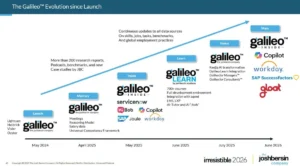
As the Fall conference season approaches, the momentum behind AI in talent acquisition is undeniable. Organizations are encouraged to explore the offerings of vendors like Eightfold and their competitors to understand the diverse capabilities available. For a comprehensive view of how these advancements align with future HR strategies, consulting the "HR 2030" blueprint or leveraging platforms like Galileo provides invaluable insights. The integration of AI into talent acquisition is not merely a technological trend; it is a fundamental transformation that is proving to be the most mature and demonstrably successful application of AI across the business landscape. The continued development and deployment of intelligent agents promise to redefine the future of work, making recruitment more efficient, effective, and ultimately, more human-centric.