
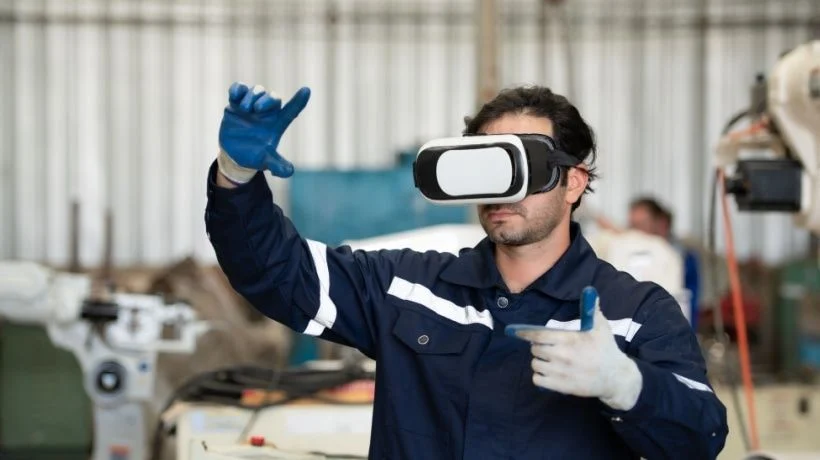
While the business case for Virtual Reality (VR) training has moved beyond the experimental phase into a proven pedagogical tool, a significant gap remains between successful pilot programs and sustainable enterprise-wide scaling. Recent industry data indicates that organizations deploying immersive learning report knowledge retention rates of 75% to 90%, a staggering improvement over the 5% to 10% retention typically associated with traditional lecture-based methods. Despite these metrics, a majority of enterprise VR initiatives stall or fail during the deployment phase. These failures are rarely a result of hardware limitations or software bugs; rather, they stem from systemic organizational oversights and a lack of integration into existing corporate infrastructures.
The landscape of corporate education is currently undergoing a paradigm shift. As the "Industrial Metaverse" gains traction, the global VR in training market is projected to grow at a compound annual growth rate (CAGR) of over 30% through 2030. However, the path to implementation is littered with abandoned headsets and siloed data. To navigate this, organizations must move away from viewing VR as a novelty and begin treating it as a core component of the human capital development strategy.
The Chronology of a Failed VR Deployment
The lifecycle of a failing VR program often follows a predictable, yet avoidable, timeline. It begins with the "Hype Phase," where an innovation team secures a budget to purchase high-end hardware, often the latest standalone headsets. During the first three months, the focus is entirely on the "wow factor," creating or purchasing a visually stunning simulation intended to impress executive leadership.
By the six-month mark, the program enters the "Friction Phase." The initial excitement wears off, and the practical realities of deployment set in. Trainers find the equipment cumbersome to sanitize and charge; the IT department raises concerns about data security and network bandwidth; and the Learning and Development (L&D) team realizes the VR data is not syncing with the company’s Learning Management System (LMS).
By the end of the first year, the program typically reaches the "Obsolescence Phase." Without a clear link to Key Performance Indicators (KPIs) or a plan for content updates, the hardware is relegated to storage rooms. This "pilot purgatory" is the result of five specific strategic errors that prioritize the medium over the methodology.
1. The Technology-First Fallacy
The most pervasive error in the industry is the tendency to lead with hardware. Companies often purchase dozens of headsets before identifying the specific training gap they intend to bridge. This "solution in search of a problem" approach leads to low utilization rates.
In contrast, successful deployments begin with a forensic analysis of operational pain points. Journalistic inquiries into successful corporate adoptions show that the most effective programs target high-consequence, low-frequency events. For example, a major utility provider recently reported a 30% reduction in training-related errors by ignoring the urge to "VR-ify" their entire curriculum. Instead, they focused exclusively on complex field scenarios that were too dangerous or expensive to replicate in real life. By solving a specific performance gap, the technology became an indispensable tool rather than a high-tech distraction.
2. Infrastructure Silos and Ecosystem Integration
A VR program that exists in a vacuum is destined for defundment. In many failed deployments, the data generated within the headset—such as heatmaps, gaze tracking, and procedural accuracy—stays within the headset or a proprietary third-party platform.
For VR to be viable at an enterprise level, it must speak the same language as the rest of the organization’s tech stack. This requires early-stage planning for xAPI or SCORM compatibility, ensuring that when an employee completes a VR module, their certification status is automatically updated in the central LMS. Without this integration, leadership lacks the visibility required to justify ongoing investment. Modern enterprise L&D strategies now demand that immersive data be viewed alongside traditional eLearning metrics to provide a holistic view of workforce readiness.
3. The Human Element: Change Management and Adoption
The technical sophistication of a VR simulation is irrelevant if the frontline staff and middle management are not incentivized to use it. Change management is frequently the most undervalued component of the deployment process.
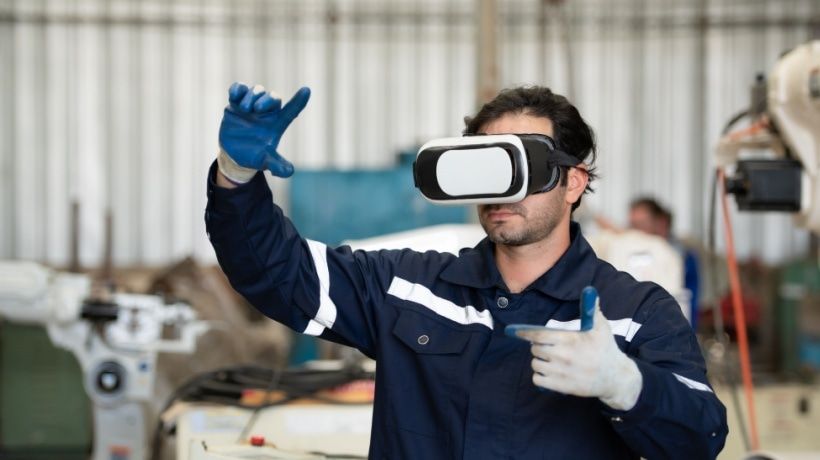
Internal reports from global manufacturing firms suggest that adoption rates often remain below 20% when the "why" is not communicated effectively. A veteran supervisor who has conducted manual safety drills for two decades may view VR as a threat or a toy. Overcoming this requires a "train-the-trainer" framework where local champions are established at each facility. These champions demonstrate that VR-trained employees reach "speed to productivity" significantly faster, thereby reducing the supervisor’s workload and improving the team’s safety record.
4. Building for the Boardroom vs. the Field
"Demo-driven development" is a term used to describe VR content created specifically to look impressive during a ten-minute executive presentation. These builds often feature hyper-realistic textures and complex interactions that require significant computing power and high-speed internet.
While these demos win budget approvals, they often fail in the field. Real-world training environments—such as warehouses, construction sites, or retail backrooms—rarely have the stable high-speed Wi-Fi or technical support required to maintain high-fidelity builds. Successful organizations prioritize "deployment-ready" content: modular simulations that can be updated easily, work offline when necessary, and are intuitive enough for a user with zero technical literacy to operate without assistance.
5. Misalignment of Success Metrics
The final failure point is a reliance on "vanity metrics." Many organizations measure the success of a VR program by completion rates or "smile sheets" (subjective learner satisfaction surveys). While these metrics are easy to collect, they provide no insight into the Return on Investment (ROI).
To sustain a program, L&D leaders must move toward behavioral and business impact metrics. According to a landmark study by PwC, VR learners were 3.75 times more emotionally connected to the content than classroom learners and 4 times faster to train. However, the real value lies in translating these figures into business outcomes:
- Safety: A decrease in Total Recordable Incident Rates (TRIR).
- Efficiency: A reduction in the time it takes for a new hire to reach full proficiency.
- Quality: A measurable drop in manufacturing defects or service errors.
Stakeholder Reactions and Industry Analysis
Industry analysts suggest that the next 24 months will be a period of "rationalization" for enterprise VR. "We are moving away from the era of ‘experimentation’ and into the era of ‘accountability,’" says one senior L&D consultant. "Chief Financial Officers are no longer satisfied with seeing a cool demo; they want to see how the $500,000 spent on VR reduced the $5,000,000 lost to workplace accidents."
From the perspective of Information Technology (IT) departments, the shift is toward device management. The emergence of Mobile Device Management (MDM) solutions specifically for VR headsets has addressed many security concerns, allowing companies to push updates and monitor device health remotely. This technological maturity is making it easier for organizations to avoid the "Obsolescence Phase" mentioned earlier.
The Broader Impact and Future Implications
The implications of successful VR deployment extend far beyond simple cost savings. In an era of remote work and a shrinking skilled labor force, immersive technology offers a way to democratize high-level training. An employee in a rural facility can receive the same quality of instruction from a top-tier expert as an employee at the corporate headquarters.
Furthermore, the integration of Artificial Intelligence (AI) into VR training is beginning to create "adaptive learning" environments. Future simulations will be able to adjust their difficulty in real-time based on the learner’s heart rate or performance, providing a truly personalized education experience at scale.
However, these advancements will only matter if the foundational deployment strategy is sound. Enterprise VR training is fundamentally an organizational change project that happens to use a headset. The technology has reached a point of maturity where the hardware is no longer the bottleneck; the bottleneck is the strategy. Organizations that treat VR as a methodology—integrated, measured, and managed—will find themselves at a significant competitive advantage. Those that treat it as a gadget will likely find their investments collecting dust, regardless of how impressive the initial demo appeared.
The path forward for the enterprise is clear: stop starting with the headset and start with the headache. By identifying the most pressing organizational challenges and building a robust ecosystem around the solution, the promise of virtual reality can finally become a permanent reality in the corporate world.






