The persistent challenge of employee initiative, or rather the perceived lack thereof, is a recurring refrain in managerial circles. Leaders often lament their teams’ unwillingness to fully own projects, processes, and problems, a sentiment that can significantly impede organizational progress and innovation. At its core, accountability is an intrinsic quality, a personal commitment to action and responsibility. However, organizations can cultivate an environment where this quality flourishes, but it requires intentional leadership that understands how to nurture it.
The path to a truly accountable workforce is paved by leaders who actively create the conditions that empower individuals to embrace ownership of their decisions and actions. Research and best practices consistently highlight that fostering accountability is not about enforcing rules from above, but about building a foundation of trust, support, and clarity that allows individuals to step up and take initiative. This requires a strategic and empathetic approach from leadership, moving beyond simply demanding accountability to actively enabling it.
The Five Pillars of an Accountable Culture
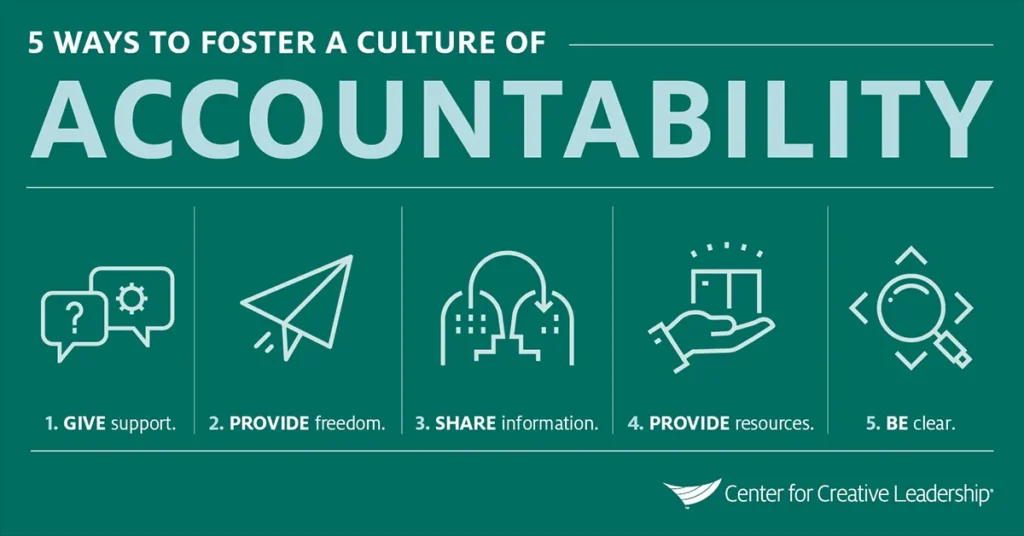
According to insights derived from comprehensive leadership development resources, including specialized guidebooks like "Accountability: Taking Ownership of Your Responsibility," organizational leaders can significantly influence the cultivation of an accountability culture by focusing on five key actions. These pillars form the bedrock upon which a committed and responsible workforce is built.
1. Provide Unwavering Support
A fundamental prerequisite for employees to feel empowered to take ownership is the assurance that they are supported. This support must emanate from multiple levels within the organization, including senior executives, direct supervisors, and even peers within their work teams. Compassionate leadership, characterized by empathy, understanding, and a genuine concern for employee well-being, is paramount. When employees believe their leaders have their back, especially when facing challenges or potential setbacks, they are more likely to take calculated risks and step outside their comfort zones. This psychological safety allows for experimentation and learning, which are crucial components of an accountability-driven environment. Data from organizations that prioritize employee support often shows higher engagement rates and lower turnover, directly correlating with a greater willingness to contribute proactively. For instance, a 2022 study by the Society for Human Resource Management (SHRM) found that 70% of employees who feel supported by their managers are more likely to report high levels of job satisfaction and a commitment to their organization’s success.
2. Grant Meaningful Freedom
Empowerment through autonomy is a powerful driver of accountability. Wherever feasible, managers should delegate not just tasks, but also significant aspects of how those tasks are accomplished and how goals are achieved. Providing teams with the freedom to direct their work, make decisions about processes, and devise solutions allows them to develop a sense of ownership and pride in their outcomes. This freedom, however, must be accompanied by clear objectives and boundaries. When individuals are trusted to manage their own workflows and problem-solving, they become more invested in the success of their endeavors. Conversely, an environment of micromanagement stifles initiative and can lead to a passive approach, where employees wait for explicit instructions rather than proactively seeking solutions. The principle here is that agency fosters responsibility; when people feel they have a say in how work gets done, they are more likely to feel responsible for whether it gets done effectively.
3. Ensure Transparent Information Sharing
For employees to make sound decisions and take ownership of their roles, they require unfettered access to the information necessary to do so. Transparency is not merely about sharing data; it is about building trust. When employees understand the context, the rationale behind decisions, and the broader organizational goals, they are better equipped to align their actions and contribute meaningfully. A lack of information can lead to guesswork, missteps, and a reluctance to commit to actions for fear of making an uninformed choice. Fostering a culture of transparency means leaders are open about challenges, opportunities, and strategic directions. This openness can significantly reduce the "us vs. them" mentality and encourage a collective approach to problem-solving. Organizations that champion open communication often report higher levels of innovation and adaptability, as employees feel confident in their ability to contribute informed perspectives.
4. Provide Adequate Resources
A critical, yet often overlooked, factor in fostering accountability is the provision of sufficient resources. Overly bureaucratic processes, excessive control, and a scarcity of necessary tools or personnel can severely undermine an employee’s sense of ownership. When individuals are tasked with responsibilities but are not given the means to fulfill them, it breeds frustration and a sense of futility. This can lead to a defensive posture, where employees may deflect responsibility or feel justified in not achieving desired outcomes due to perceived limitations. Leaders must advocate for and ensure their teams have access to the necessary budget, technology, training, and human capital to succeed. Investing in resources is not just an operational necessity; it is a strategic investment in the organization’s capacity for accountability and high performance.
5. Establish Unambiguous Clarity
Clarity is the cornerstone of effective accountability. Leaders and executives must clearly articulate the organization’s vision, its overarching goals, and the specific responsibilities of each individual and team. This includes defining the expected outcomes, the consequences of both action and inaction, and the roles of all stakeholders involved in any given initiative. Ambiguity in these areas creates a breeding ground for confusion and can lead to individuals operating under different assumptions, ultimately hindering collective progress. When expectations are clearly communicated, employees understand what is required of them, enabling them to align their efforts and take ownership of their contributions. This clarity also extends to feedback mechanisms and performance evaluations, ensuring that individuals understand how their performance is measured against these clearly defined expectations.
Cultivating Trust and Mitigating Fear

Beyond these five pillars, a fundamental shift in organizational dynamics is necessary to truly embed accountability: reducing fear and increasing trust. When an atmosphere of fear pervades an organization, it erodes psychological safety. Employees become hesitant to voice concerns, share innovative ideas, or admit to mistakes, opting instead to operate within the confines of what is safe and expected. This can manifest in various negative behaviors, including defensiveness, a lack of engagement, and a tendency to engage in blame or victimhood.
Psychological safety, defined as a belief that one will not be punished or humiliated for speaking up with ideas, questions, concerns, or mistakes, is indispensable for an accountability culture. When team members feel unsafe to express themselves, critical feedback is withheld, and nascent ideas fail to be rigorously tested. Managers play a pivotal role in counteracting this fear by actively cultivating an environment of trust.
Trust is not built overnight; it is a cumulative process that requires consistent, deliberate actions from leaders. This includes demonstrating trust through effective delegation, communicating openly and honestly (while respecting confidentiality where appropriate), and, crucially, following through on commitments. The adage "actions speak louder than words" is particularly relevant here. When leaders consistently demonstrate reliability and integrity, they build a reservoir of trust that empowers their teams.
The Interplay of Fear, Trust, and Accountability
The absence of psychological safety and trust creates a ripple effect that directly hinders accountability. Without the assurance that they can take risks and learn from missteps without undue retribution, individuals are likely to adopt a more conservative approach, focusing on avoiding blame rather than driving proactive solutions. This can lead to a cycle where:
- Fear of Failure: Employees become risk-averse, sticking to proven methods and avoiding innovative approaches that might carry an element of uncertainty.
- Hiding Mistakes: Instead of openly addressing errors and learning from them, individuals may conceal them, preventing timely resolution and potentially exacerbating the problem.
- Reduced Initiative: Without the confidence that their efforts will be supported and their contributions valued, employees are less likely to volunteer for challenging tasks or propose new ideas.
- Defensiveness and Blame: When fear is present, individuals may focus on protecting themselves, leading to a tendency to deflect responsibility and blame others for shortcomings.
Conversely, a high-trust environment fosters:
- Open Communication: Employees feel comfortable sharing feedback, raising concerns, and admitting mistakes without fear of reprisal.
- Proactive Problem-Solving: Individuals are empowered to identify issues and propose solutions, taking ownership of challenges before they escalate.
- Innovation and Creativity: The freedom to experiment and the assurance of support encourage the development and testing of new ideas.
- Learning and Growth: Mistakes are viewed as learning opportunities, fostering a culture of continuous improvement and development.
Broader Implications and the Path Forward
The impact of a robust accountability culture extends far beyond individual employee performance. It translates into enhanced organizational agility, improved decision-making, greater innovation, and ultimately, a stronger competitive advantage. Organizations that successfully cultivate accountability are better equipped to navigate complex market dynamics, respond effectively to challenges, and capitalize on emerging opportunities.
For leaders looking to embark on this transformative journey, partnering with specialized development programs can provide structured guidance and research-backed methodologies. These programs often offer "Accountability Training for Leaders," which can be integrated into broader leadership development initiatives. Such training can cover critical topics including effective communication, conflict resolution, delegation, feedback delivery, innovation leadership, active listening, and the foundational elements of psychological safety and trust.
By investing in the development of their leaders and fostering an environment where accountability is not just expected but actively nurtured, organizations can unlock the full potential of their workforce, driving a culture of ownership, innovation, and sustained success. The commitment to building this culture is an ongoing process, requiring consistent effort and a strategic focus on empowering individuals to take pride and responsibility in their work.