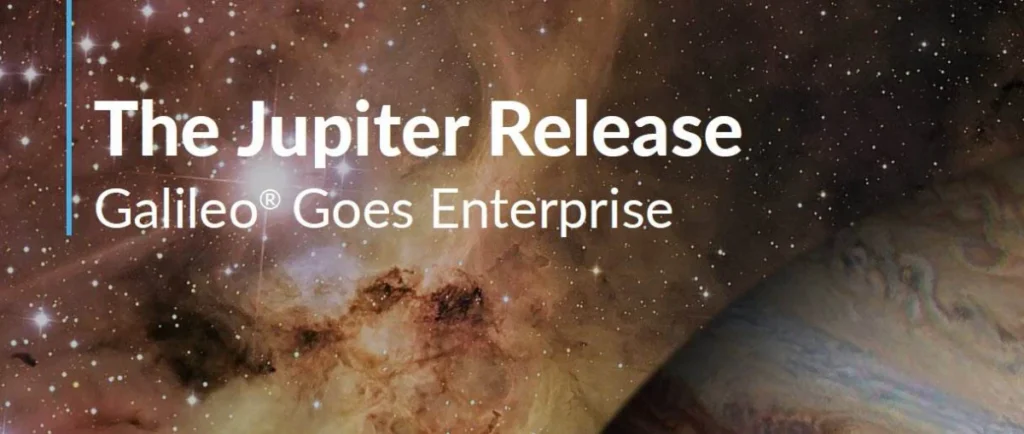
Today marks a significant advancement in the integration of artificial intelligence within human resources with the unveiling of the Jupiter release of Galileo®, the world’s leading AI intelligence for HR. This pivotal update empowers organizations for the first time to seamlessly embed Galileo’s comprehensive intelligence into virtually any AI agent, unlocking its vast reservoir of insights, data, and problem-solving capabilities for every employee across the enterprise. This release is the culmination of two years of intensive engineering efforts, focusing on a revolutionary new architecture, enhanced data integration, expanded intelligence, and broader platform compatibility.
Pervasive Integration: Galileo Now Powers Major AI Platforms
A cornerstone of the Jupiter release is its unprecedented platform reach. Galileo’s HR, leadership, contextual, and benchmarking intelligence can now be injected into a wide array of employee AI systems. This includes deep integration with Microsoft Copilot, as well as prominent platforms like Workday, ServiceNow, HiBob, Gloat, and leading generative AI models such as Claude and Gemini, and enterprise search solutions like Glean. This "everywhere" deployment strategy signifies a paradigm shift, transforming individual employee agents into sophisticated HR, management, and organizational consultants.
The implications are profound: any question an employee or manager poses regarding compensation, skill development, career progression, or other managerial topics will now be answered with the unparalleled backing of over 25 years of dedicated research, more than 1,700 industry case studies, and a global repository of trusted data. This data encompasses job skills, leadership behaviors, salary benchmarks, regulatory compliance, and a wealth of maturity models and best practices.
For instance, an employee inquiring about career advancement, such as "how do I get promoted?", will receive personalized guidance. Galileo, identifying the employee’s role through their AI agent, can initiate a dialogue about their current skills, compensation relative to market rates, leadership attributes, and benchmark pay for their position. If the employee seeks development, Galileo can leverage its extensive skills library and provide concrete examples from its vast case study database to facilitate growth. Crucially, as Galileo’s intelligence becomes integrated within an organization’s AI agent, it learns and adapts to company-specific policies and procedures, thereby enhancing the accuracy and relevance of all interactions.
Deep Data Integration for Enhanced Organizational Insights
Galileo Jupiter has been meticulously trained to understand and process organizational and employee data from leading HR systems, including Workday, SAP, Oracle, and HiBob. This enables managers to query Galileo for team insights, review performance plans, and solicit coaching on hiring strategies, organizational design, and general management best practices. HR analysts can also leverage Galileo as a powerful advisor and benchmarking tool for critical initiatives such as recruitment, restructuring, mergers and acquisitions, and other transformational programs.
To illustrate, managers can now ask Galileo to benchmark their company’s or team’s span of control, average wages, and even revenue per employee by business area. Galileo will then generate comprehensive reports with actionable guidance for improving productivity. Similarly, it can assist in creating tailored interview guides for specific job roles, assess employee competencies against defined skills models, and automatically benchmark performance to generate personalized development plans. An example of this power in action is the collaboration with IATA, the International Air Transport Association, where Galileo was instrumental in constructing the airline industry’s global skills model, which was subsequently localized for various countries.
The robustness of Galileo’s trusted corpus is underpinned by an extensive data foundation. This includes the Lightcast job and skills library, global salary benchmarks from Wagescape (a new integration), executive compensation data from Equilar (also newly integrated), global regulatory practices sourced from Oyster, and management and leadership competencies from SHL, which now includes emerging AI-specific skills. Turnover benchmarks are provided by Visier, complemented by over 25 years of Galileo’s own research across recruiting, training, leadership, and HR technology, including detailed information on more than 300 vendors.
Companies such as Keurig-Dr Pepper, Microsoft, and Seagate, alongside over 1,000 other organizations, are already realizing the benefits of Galileo for a multitude of use cases. The return on investment is immediate, as every inquiry, question, or discussion concerning HR or people-related matters is now grounded in reliable, company-specific intelligence. The core message is clear: Galileo significantly elevates the intelligence of any AI agent.
The ARC Architecture: Foundation for Trust and Scalability
Beyond its expansive integration, the Jupiter release introduces a groundbreaking technical architecture known as ARC (Agent Ready Corpus). This innovation is particularly critical in the current landscape where trust in AI is paramount. The ARC architecture is detailed in a comprehensive whitepaper, underscoring its commitment to speed, efficiency, trust, and extensibility.
The ARC architecture involves meticulously "chunking" millions of words of research, models, graphics, and images into a format specifically designed for AI consumption. This involves eight distinct levels of meta-tagging, encompassing topic, industry, audience, authoritative position, and more. This rigorous organization ensures that AI agents can access and process Galileo’s intelligence in a perfectly structured and rapidly digestible manner. In essence, the corpus is now "written for agents to consume," representing a monumental leap forward in the research, data, and education sectors.
Tangible Benefits for Professionals and Businesses
The impact of Galileo Jupiter extends across various professional roles. For HR and IT leaders, it offers the ability to establish a trusted "single pane of glass" for all employee-related needs. By integrating Jupiter into existing AI agents, every employee, manager, and HR professional gains immediate access to an intelligent HR and management coach. This coach not only provides answers but also transparently cites the source of its information, reinforcing trust and accuracy. Furthermore, Galileo’s intelligence can be seamlessly integrated with and informed by an organization’s unique policies and procedures.
HR consultants, recruiters, and business partners will find Galileo to be an indispensable high-powered consultant, seamlessly integrated into their workflows. When utilized within platforms like Microsoft Copilot or other AI agents, Galileo supercharges existing work processes with robust research and data-driven insights.
For business leaders and vendors, Galileo delivers profound insights and offers accurate, trustworthy guidance. This eliminates the guesswork often associated with AI-generated responses, ensuring that advice is fact-based and informed, rather than speculative or designed to simply please.
A Look at the Genesis and Evolution
The development of Galileo’s Jupiter release builds upon years of dedicated research and market understanding. The initial vision for Galileo was to democratize access to high-level HR expertise, making sophisticated insights available to a broader audience within organizations. The journey began by consolidating extensive research into a proprietary knowledge base, which was then made accessible through various interfaces.
Early iterations focused on providing expert-level analysis for HR professionals. However, as AI technologies evolved and became more integrated into daily workflows, the imperative shifted towards embedding this intelligence directly where users work. The development of the Jupiter release represents the culmination of this strategic evolution, moving from a standalone intelligence platform to an integrated AI enhancer.
The engineering team’s commitment over the past two years has been instrumental in achieving this level of integration and sophistication. The ARC architecture, in particular, is a testament to their innovative approach to data structuring and AI interaction. This foundational work enables the rapid processing and contextualization of information, which is vital for real-time decision-making and employee support.
Industry Reactions and Expert Analysis
The launch of Galileo Jupiter has been met with considerable interest from industry analysts and technology observers. Josh Bersin, a globally recognized industry analyst and founder of Bersin by Deloitte, has been a vocal proponent of this integrated approach. In his analysis, Bersin highlights how Galileo Jupiter addresses a critical gap in the market: making complex HR intelligence actionable and accessible within the flow of work.
"The ability to embed deep HR intelligence into everyday AI tools like Microsoft Copilot is a game-changer," stated Bersin. "This isn’t just about answering questions; it’s about providing employees and managers with expert guidance grounded in decades of research and real-world data, tailored to their specific organizational context. The ARC architecture is a brilliant solution for ensuring that AI agents can effectively leverage this rich information."
Early adopters of the Jupiter release have reported significant improvements in employee engagement and manager effectiveness. One pilot program participant noted, "Our managers now feel more confident in addressing employee development and performance conversations because they have instant access to best practices and data-driven insights. It’s like having a seasoned HR business partner available 24/7."
Broader Implications for the Future of Work
The widespread adoption of AI agents, powered by specialized intelligence like Galileo, signals a fundamental shift in how work is performed. As AI becomes more sophisticated and integrated, the focus will increasingly be on augmenting human capabilities rather than replacing them. Galileo Jupiter exemplifies this trend by empowering individuals with enhanced knowledge and decision-making support, leading to more informed and effective human capital management.
The implications for HR departments are substantial. By automating access to expert knowledge and providing data-driven insights, HR professionals can dedicate more time to strategic initiatives, employee well-being, and organizational development. The continuous updates to Galileo’s corpus, incorporating new insights, industry examples, vendor information, and benchmarks, ensure that organizations remain at the forefront of HR best practices.
As companies navigate the complexities of a rapidly evolving talent landscape, the demand for intelligent, data-backed HR solutions will only grow. Galileo Jupiter’s ability to integrate with existing systems and provide universally accessible expertise positions it as a critical enabler of future organizational success. The company’s commitment to ongoing innovation, as evidenced by the Jupiter release, suggests a continued leadership role in shaping the AI-powered future of human resources.
For those seeking more in-depth information, Galileo offers extensive resources, including a comprehensive overview and Q&A, specific integration guides for platforms like Microsoft Copilot, Workday, ServiceNow, HiBob, and Gloat, the technical whitepaper detailing the ARC architecture, an explainer video, and a podcast discussing the "inside story" of the Jupiter release. These resources are designed to equip HR professionals, IT leaders, and business strategists with the knowledge to leverage this transformative technology.