Haverford College, a prestigious private institution in Pennsylvania, has formally agreed to a significant settlement with a coalition of Jewish students and faculty members who had accused the college of failing to adequately protect them against antisemitic harassment and discrimination. The agreement, disclosed in a court filing last week, marks a pivotal moment in the ongoing national discourse surrounding antisemitism, free speech, and identity on college campuses. Central to the settlement are provisions that explicitly prohibit discrimination against individuals based on their Zionist views, alongside their Jewish or Israeli identity, a stance championed by The Deborah Project, the law firm representing the plaintiffs.
The Genesis of the Legal Challenge
The legal dispute, initiated in 2024, saw the plaintiffs — including "Jews at Haverford," a group comprising students, employees, alumni, and parents committed to Israel’s existence as a Jewish state, along with several individual members — file a lawsuit alleging widespread antisemitic incidents. Their initial complaint invoked Title VI of the Civil Rights Act, which prohibits discrimination based on race, color, or national origin in federally funded institutions, asserting that Haverford had been "deliberately indifferent" to a "severe and pervasive hostile antisemitic environment." They also claimed a breach of contract, arguing that the college failed to uphold its own stated policies regarding student and employee welfare.
U.S. District Judge Gerald McHugh initially dismissed the civil rights claim in early 2025, a decision that underscored the complex interplay between anti-discrimination mandates and First Amendment protections for free speech. While acknowledging a "stressful campus climate for Jewish students," Judge McHugh ruled that many of the incidents cited by the plaintiffs fell under the umbrella of protected expression. However, he permitted the breach of contract claim for nominal damages to proceed, focusing on the college’s alleged failure to respond to complaints in line with its published policies. This partial dismissal led the plaintiffs to refile an amended, more detailed 129-page complaint, which still largely met the same fate regarding the Title VI claims. Nevertheless, the ongoing legal pressure and the specific contractual claim kept the lawsuit alive, eventually leading to the recent settlement facilitated by an out-of-court resolution process agreed upon by both parties.
Key Provisions of the Groundbreaking Settlement
The terms of the settlement, as outlined by The Deborah Project and confirmed by college officials, are far-reaching and set a precedent for how institutions might address similar grievances. Among the most significant stipulations, Haverford College has committed to:
- Explicit Protection for Zionist Views: The college’s anti-discrimination policy will now specifically bar discrimination against students and employees based on their Zionist views, in addition to their Jewish or Israeli identity. This particular clause addresses a contentious issue in the national debate, where criticism of Israel and Zionism is often perceived by some as crossing into antisemitism, while others defend it as legitimate political speech.
- Mandatory Antisemitism Awareness Training: All students and employees will be required to undergo annual antisemitism awareness training. This initiative aims to educate the campus community on the manifestations of antisemitism, including its contemporary forms and historical roots, fostering a more inclusive and understanding environment.
- Establishment of an Antisemitism Committee: An advisory committee dedicated to addressing antisemitism will be formed, reporting directly to the college president. This body is intended to provide ongoing guidance and oversight on issues related to antisemitism, ensuring sustained institutional attention to the matter.
- Identification Requirement for Masked Individuals: A new policy mandates that anyone wearing a mask or face covering on campus must provide identification upon request by campus officials. Refusal to comply will result in disciplinary action. This measure, often sought by institutions to prevent anonymous harassment or to identify participants in unsanctioned demonstrations, reflects a broader trend in campus security policies in response to recent protest movements.
- Prohibition on Discriminatory Letters of Recommendation: Professors will be explicitly barred from refusing to write letters of recommendation for students based on their Jewish, Zionist, and/or Israeli identity. This term directly addresses a specific concern raised in the lawsuit regarding a mathematics professor’s controversial policy.
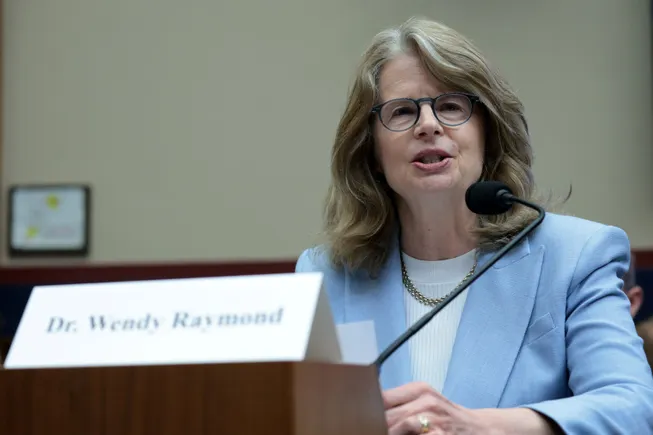
Haverford President Wendy Raymond, in announcing the settlement to the campus community, emphasized the college’s core principles. "Harassing, excluding, or seeking to silence Jewish community members on the basis of their beliefs, their commitment to Jewish observance, or any other element of their Jewish identity, including Zionism, is anathema to the College’s core principles of trust, concern, and respect," Raymond stated. She further underscored the importance of maintaining civil discourse, even amidst "vehement disagreement… about the policies and actions of governments," ensuring such disagreements do not "descend into the realm of discrimination, harassment, or bias."
The Professor’s Policy and Academic Freedom Debate
A notable flashpoint in the lawsuit revolved around Tarik Aougab, a mathematics professor at Haverford, and his publicly stated policy on letters of recommendation. Aougab’s policy stipulated that, "as a matter of moral principle," he would not write recommendations for students pursuing careers in the military, intelligence agencies, policing, private weapons manufacturing, or jobs that would violate the US Campaign for the Academic and Cultural Boycott of Israel (USACBI).
Judge McHugh’s 2025 ruling on the civil rights claims had meticulously distinguished between refusing letters for Jewish students (which would be discriminatory) and refusing them for jobs associated with the state of Israel based on a political boycott (which, absent direct harm to a student, could be considered protected speech). The judge noted that the plaintiffs had not demonstrated that any Jewish student was denied a letter for a non-Israel-related position or that any student felt deterred from seeking a letter from Aougab due to their identity. "Whatever the merits of professorial boycotts, no facts are pled demonstrating that any Plaintiff faced a concrete negative educational impact," McHugh wrote.
In a recent email, Professor Aougab reiterated that he has never refused a letter based on a student’s identity, nor would he ever. He clarified that his refusal would be based on the job’s alignment with the USACBI boycott, irrespective of the student’s background. Aougab characterized the college’s settlement as a "capitulation," suggesting that administrators prioritize "risk aversion" over "moral, ethical, or intellectual considerations." His comments highlight the tension between institutional liability, individual academic freedom, and politically charged boycotts that continue to challenge the boundaries of discourse in higher education.
A Broader Context of Campus Antisemitism and External Pressures
The Haverford case unfolded against a backdrop of escalating concerns about antisemitism on college campuses nationwide, particularly in the wake of the October 7th attacks in Israel and the subsequent conflict in Gaza. Reports from organizations like the Anti-Defamation League (ADL) and Hillel International have documented a significant rise in antisemitic incidents, ranging from verbal harassment and hate speech to physical vandalism and threats.
This heightened climate has drawn intense scrutiny from federal lawmakers and government agencies. Haverford College, like many other institutions, found itself in the crosshairs of this national debate. In May 2025, President Raymond was subjected to intense questioning by House Republicans during a hearing on campus antisemitism, where some lawmakers threatened to revoke federal funding for colleges deemed unresponsive to the issue. Just months later, the U.S. Department of Education’s Office for Civil Rights launched its own investigation into Haverford over allegations of antisemitism, signaling the serious federal oversight now being applied to these matters.
The concept of "Zionism" and its relationship to Jewish identity has become a central point of contention. While many Jews consider Zionism — the belief in Jewish self-determination in their ancestral homeland — an integral part of their identity, others view it as a political ideology distinct from Judaism, and criticism of Israeli policies as legitimate free speech. The inclusion of "Zionist views" in Haverford’s anti-discrimination policy directly addresses this complex nexus, aligning with the perspective that anti-Zionism, when it targets individuals or creates a hostile environment for Jewish students, can constitute antisemitism. This approach mirrors aspects of the International Holocaust Remembrance Alliance (IHRA) working definition of antisemitism, which includes "targeting of the state of Israel, conceived as a Jewish collective," as a potential manifestation of antisemitism.
Reactions and Implications for Higher Education
The settlement has elicited varied reactions. The Deborah Project, representing the plaintiffs, hailed the agreement as a victory for Jewish students and faculty, asserting that it provides necessary protections against discrimination. The Wall Street Journal’s editorial board, a vocal critic of what it perceives as unchecked antisemitism on college campuses, lauded the settlement, albeit with a critical note: "It’s a shame it took a lawsuit for Haverford to admit its antisemitism problem," the board wrote, underscoring its belief that the college was initially derelict in its duties.
Conversely, the Council on American-Islamic Relations (CAIR) Philadelphia chapter criticized the settlement, arguing that it poses a threat to free speech. Ahmet Tekelioglu, CAIR Philadelphia’s executive director, stated that "protecting Jewish people is not the same as protecting Zionism from criticism." He warned that "Haverford’s response creates a troubling precedent for academic freedom," fearing that conflating criticism of Zionism with antisemitism could stifle legitimate political debate and lead to institutional censorship. This viewpoint highlights the concerns of those who believe such policies could be weaponized to silence pro-Palestinian advocacy or critical academic inquiry into Israeli policies.
The Haverford settlement carries significant implications for higher education institutions grappling with similar challenges:
- Defining Antisemitism: The explicit inclusion of "Zionist views" in an anti-discrimination policy will likely prompt other universities to re-evaluate their own definitions of antisemitism and how they address the intersection of Jewish identity and Zionism. This could lead to a broader adoption of definitions that encompass anti-Zionism as a form of antisemitism under certain circumstances.
- Balancing Free Speech and Protection: The case further complicates the delicate balance colleges must strike between upholding First Amendment rights for protest and dissent, and ensuring a learning environment free from discrimination and harassment under Title VI. The new masking policy, for instance, reflects an institutional effort to manage protests while maintaining accountability.
- Increased Scrutiny and Legal Precedent: The settlement, especially following Congressional hearings and a federal investigation, signals that colleges are under immense pressure to act decisively against antisemitism. This case could serve as a blueprint or a cautionary tale, encouraging other institutions to proactively review and strengthen their anti-discrimination policies to avoid costly litigation and reputational damage.
- Impact on Faculty and Academic Freedom: The specific ruling on Professor Aougab’s letter of recommendation policy, even with its judicial nuance, and the subsequent settlement term, will likely lead to greater scrutiny of faculty members’ public statements and policies, particularly when they intersect with politically charged issues.
President Raymond, who announced her retirement in June 2027, leaves Haverford College at a critical juncture. The implementation of this settlement will undoubtedly shape the college’s campus climate, its approach to diversity and inclusion, and its commitment to both free expression and a safe environment for all students. The Haverford case serves as a powerful reminder of the profound challenges facing American higher education in navigating complex issues of identity, politics, and justice in an increasingly polarized world.