

In the increasingly saturated global marketplace, particularly within the Business-to-Business (B2B) and Software-as-a-Service (SaaS) sectors, the traditional view of branding as a mere aesthetic exercise is being replaced by a rigorous, data-driven approach that identifies brand strategy as a primary lever for business growth. Market analysts and executive leadership teams are increasingly recognizing that while product features may achieve parity, the brand remains the final frontier of competitive advantage. The disconnect between brand investment and measurable revenue often stems from a narrow focus on "top-of-funnel" awareness, yet the reality of modern commerce suggests that a robust brand strategy is what ultimately shortens sales cycles, increases conversion efficiency, and secures market dominance.
The Paradigm Shift: From Aesthetics to Economic Engine
Historically, branding was often relegated to marketing departments as a creative function focused on logos, color palettes, and visual identity. However, recent economic shifts and the digital transformation of the buyer’s journey have forced a reevaluation. In contemporary markets, a brand is defined by the sum of buyer perceptions and the trust a company commands within its niche. For high-growth companies, brand strategy is no longer a separate entity from business strategy; it is the infrastructure upon which market share is built.
The economic impact of a strong brand is most visible in the reduction of "friction" within the sales funnel. When a company possesses a clear and authoritative market position, potential buyers enter the sales process with a baseline of trust. This pre-established credibility means that sales teams spend less time justifying the company’s existence and more time tailoring solutions to the client’s needs. According to industry benchmarks, companies with high brand clarity experience significantly lower Customer Acquisition Costs (CAC) because their target audience is already primed for the value proposition before the first direct interaction occurs.
The Psychology of the B2B Buyer and Risk Mitigation
A fundamental truth of B2B purchasing, particularly in the HR technology and Learning Management System (LMS) sectors, is that buyers are not just purchasing a service; they are purchasing confidence. B2B transactions often involve high stakes, significant financial outlays, and potential career risks for the decision-makers involved.

Strategic branding serves as a risk-mitigation tool. A brand that communicates expertise, reliability, and category leadership reduces the perceived risk of the transaction. This is often referred to as the "shortcut" in decision-making. In a crowded field where ten different vendors might offer similar technical specifications, the buyer will almost invariably choose the brand they recognize as the "safe" or "expert" choice. Consequently, brand strategy drives growth by ensuring a company is not just part of the conversation but is the preferred candidate before a formal product comparison even begins.
The Four Pillars of a Growth-Oriented Brand Strategy
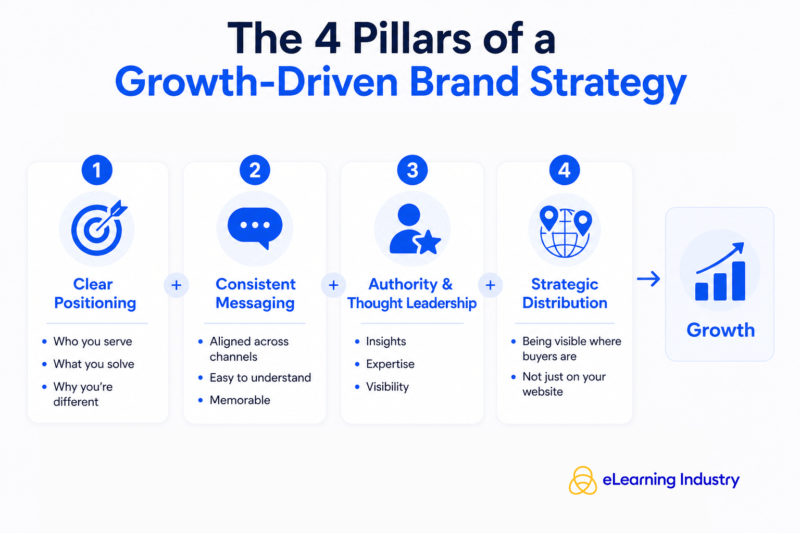
To transform a brand into a growth engine, organizations must move beyond generic messaging and focus on four foundational pillars: clear positioning, consistent messaging, authority through thought leadership, and strategic distribution.
1. Precision in Market Positioning
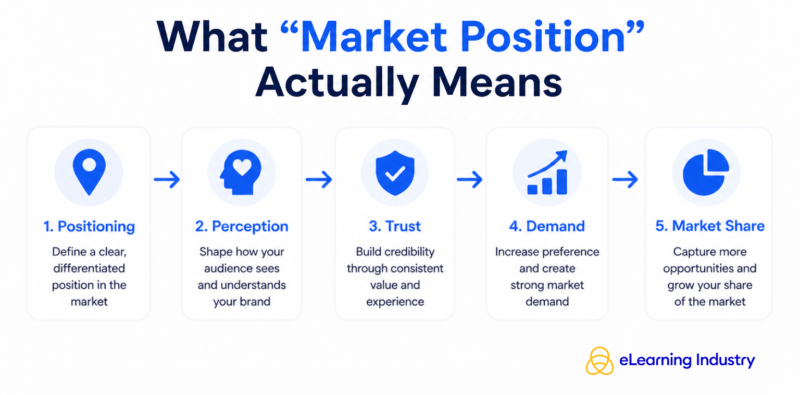
Market position refers to the specific space a company occupies in the mind of the consumer relative to its competitors. High-growth companies avoid the "all things to all people" trap. Instead, they define their category with surgical precision. Whether a company positions itself as the "premium innovator," the "efficiency leader," or the "specialist for mid-market enterprises," that clarity allows the buyer to immediately categorize the value. Without this, a brand becomes commoditized, forcing it to compete solely on price—a strategy that rarely leads to sustainable long-term growth.
2. The Power of Messaging Consistency
Inconsistency is the primary killer of brand trust. If a company’s website emphasizes innovation, while its sales team focuses on cost-cutting and its social media highlights corporate culture, the buyer receives a fragmented and confusing narrative. Confused buyers rarely convert. A growth-driven strategy ensures that every touchpoint—from the initial LinkedIn ad to the final contract negotiation—reinforces the same core value proposition.
3. Establishing Authority and Thought Leadership
Visibility alone does not equate to influence. To drive market share, a brand must establish itself as an authority. This is achieved through thought leadership: the consistent delivery of high-value insights that help decision-makers solve complex problems. For SaaS and technology providers, this might include white papers on industry trends, webinars on regulatory changes, or data-driven research reports. By shaping the industry conversation, a brand transitions from a vendor to a trusted advisor.
4. Strategic Distribution and Attention Management
The most sophisticated positioning is ineffective if it remains invisible. Strategic distribution involves placing brand messaging where the target audience already spends their time. In the B2B world, this means a presence in industry-specific media, search engines, and professional networks like LinkedIn. The goal is to build "mental availability," ensuring that when a buyer identifies a need, the brand is the first one that comes to mind.
Analyzing the Link Between Brand Recall and Market Share
Data suggests a direct correlation between brand recall and market share. According to the "95-5 Rule" popularized by the LinkedIn B2B Institute, at any given time, only about 5% of potential B2B buyers are "in-market" for a solution. The remaining 95% are "out-of-market" but will be looking to buy in the future.
The primary goal of brand strategy is to influence that 95%. By building a strong brand today, a company ensures that it is already on the "shortlist" when those buyers eventually enter the market. This long-term approach creates a compounding effect: as brand recognition grows, the efficiency of demand generation increases, leading to a larger slice of the market over time.
Why Most Brand Strategies Fail to Deliver ROI
Despite heavy investment, many companies fail to see a return on their branding efforts. The most common pitfall is "The Sea of Sameness." Many B2B companies use identical language—terms like "innovative," "customer-centric," and "seamless integration"—which makes them indistinguishable from their competitors.
Furthermore, many organizations treat brand refreshes as one-off projects rather than ongoing strategic commitments. A visual redesign without a corresponding shift in strategic narrative or distribution will rarely impact the bottom line. Failure also occurs when there is a lack of alignment between the brand promise and the actual customer experience. If the marketing promises "unmatched support" but the product delivery is lagging, the brand equity will rapidly erode, leading to high churn rates and negative market perception.
Integrating Brand into the Demand Generation Funnel
Modern marketing leaders no longer view "Brand" and "Demand" as separate silos. Instead, they integrate them into a unified growth system. In this model, brand awareness serves as the foundation for demand generation.
- Improved Ad Performance: Paid campaigns perform significantly better when the audience already recognizes and trusts the brand behind the ad.
- Higher Conversion Rates: Lead magnets and landing pages see higher conversion rates when the source is perceived as an industry authority.
- Sales Velocity: Sales teams report shorter closing times when prospects have been "pre-sold" through consistent brand exposure and thought leadership.
Conclusion: The Future of Growth is Trust-Based
As the global economy continues to navigate volatility and technological disruption, the companies that thrive will be those that have invested in their brand as a strategic asset. In a world of infinite choice and diminishing attention spans, trust is the ultimate currency.
Turning a brand into a growth engine requires a shift in mindset from the executive suite down. It demands a commitment to specificity, a dedication to consistent communication, and a proactive approach to building industry authority. By aligning brand strategy with business objectives, companies can move beyond mere recognition and achieve a level of market influence that drives sustainable revenue, attracts top talent, and secures a dominant market position for years to come. The future of B2B growth does not belong to the company with the most features, but to the company that the market trusts the most.






