
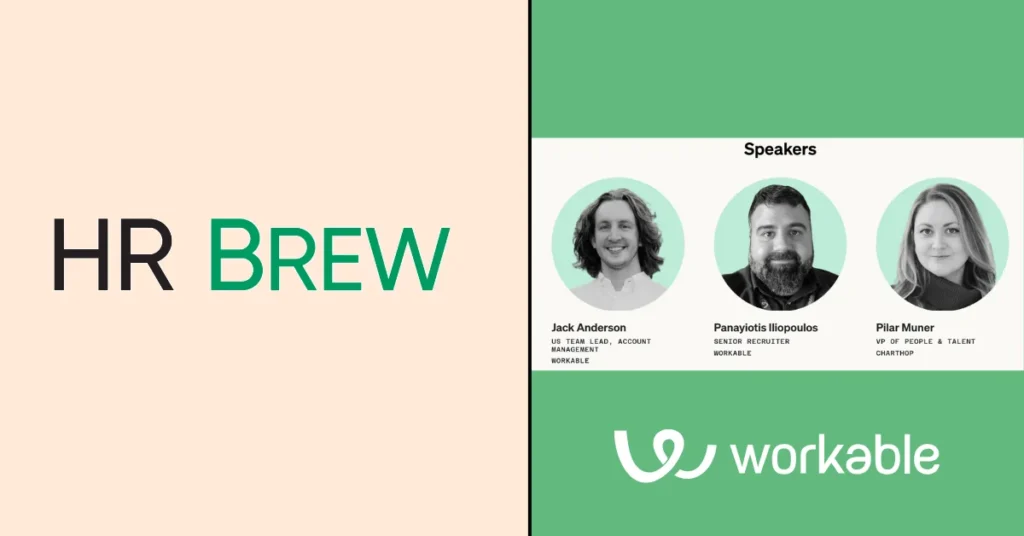
A recent collaboration between HR Brew, a leading voice in human resources discourse, and Workable, an innovator in recruitment software, brought together industry experts to address one of the most pressing questions confronting talent acquisition teams today: How should HR leaders approach artificial intelligence in the hiring process in a way that is ethical, practical, and still human-centered? Panayotis Eliopoulos, Senior Recruiter at Workable, and Jack Anderson, US Team Lead of Account Management at Workable, offered critical insights during a comprehensive discussion that spanned topics from the nuances of transparency and the capabilities of Large Language Models (LLMs) to the fundamental differences between consumer AI tools and specialized recruiter-specific AI embedded within Applicant Tracking Systems (ATS). The dialogue underscored a burgeoning consensus within the industry: while AI offers transformative potential, its successful deployment hinges on thoughtful integration, unwavering ethical commitment, and a steadfast focus on human agency.
The discussion emerges at a pivotal moment for the HR industry, which is grappling with rapid technological advancements and evolving regulatory landscapes. The global HR technology market, valued at approximately $24 billion in 2023, is projected to exceed $40 billion by 2030, driven significantly by the adoption of AI and automation tools. This growth reflects a broader industry imperative to enhance efficiency, reduce costs, and improve the quality of hires in an increasingly competitive talent market. However, alongside the promise of innovation, there are significant concerns regarding algorithmic bias, data privacy, and the potential dehumanization of the recruitment process. The insights shared by Eliopoulos and Anderson provide a timely framework for navigating these complexities, emphasizing a balanced approach where technology augments, rather than replaces, human expertise.
The Unfolding Revolution of AI in Talent Acquisition
The journey of AI in talent acquisition began subtly, evolving from rudimentary keyword matching in early Applicant Tracking Systems (ATS) in the late 1990s and early 2000s to sophisticated machine learning algorithms capable of parsing resumes, predicting candidate success, and automating initial screening processes by the 2010s. The advent of generative AI, particularly Large Language Models (LLMs), in the early 2020s marked another significant leap, offering capabilities such as automated job description generation, personalized candidate outreach, and even conversational AI for applicant queries. This rapid evolution has reshaped expectations for efficiency and candidate experience, yet it has also amplified the need for robust ethical guidelines and practical implementation strategies.
According to a 2023 report by Gartner, 75% of HR leaders plan to increase their investment in HR technology, with AI and automation being top priorities. This trend is driven by persistent challenges such as talent shortages, the need to improve candidate experience, and the demand for more diverse and inclusive hiring practices. However, a separate survey by Deloitte revealed that while 60% of organizations are experimenting with AI in HR, only 17% have fully implemented it, largely due to concerns about data quality, ethical implications, and the complexity of integration. The HR Brew and Workable discussion directly addressed these implementation hurdles, offering actionable strategies for HR professionals to leverage AI effectively and responsibly.
Seamless Integration: The Foundation of Effective AI in Recruiting
A central tenet highlighted by Workable’s experts was that AI delivers its best performance when it is intrinsically built into the existing recruiting process, rather than being retroactively applied as an external add-on. Eliopoulos emphasized that "AI works best when it is built directly into the recruiting process, not added later." This perspective underscores the importance of a holistic approach to technology adoption. When AI functionalities are seamlessly integrated within an Applicant Tracking System (ATS), they can draw upon a richer, more contextualized dataset, leading to more accurate predictions, more relevant candidate matching, and a smoother user experience for recruiters.
Contrast this with the scenario where HR teams attempt to bolt on general-purpose AI tools or use standalone solutions. Such fragmented approaches often lead to data silos, interoperability issues, and a lack of contextual understanding that can undermine the AI’s effectiveness. For instance, an AI tool embedded within an ATS can analyze historical hiring data, success metrics for specific roles, and even feedback from hiring managers, providing a comprehensive view that external tools cannot replicate. This deep integration allows AI to learn from the specific organizational context, refining its algorithms over time to align more closely with the company’s unique culture and hiring needs. Furthermore, integrated AI solutions often come with built-in compliance features and data security protocols, which are crucial considerations for sensitive HR data.
Preserving the Human Touch: The Enduring Role of Recruiter Judgment
Despite the advanced capabilities of AI, the discussion firmly asserted that human judgment remains an indispensable element at the core of the hiring process. Anderson stressed that "human judgment remains central to hiring." AI tools are designed to augment, not replace, the nuanced decision-making, empathy, and interpersonal skills that human recruiters bring to the table. While AI can efficiently sift through thousands of resumes, identify patterns, and flag potential candidates based on predefined criteria, it lacks the capacity for genuine human connection, cultural fit assessment, and intuitive understanding of soft skills that are critical for long-term employee success.
Recruiters play a vital role in interpreting AI-generated insights, engaging in meaningful conversations with candidates, evaluating subjective qualities, and making the ultimate hiring recommendation. For example, an AI might identify a candidate with the perfect technical skills, but a human recruiter will assess their communication style, problem-solving approach in a live interview, and how well they would integrate into the team’s dynamics. This collaborative model – where AI handles repetitive, data-intensive tasks and recruiters focus on high-value interactions and strategic decisions – optimizes efficiency while preserving the essential human element that defines successful talent acquisition. Industry experts, such as those from the Society for Human Resource Management (SHRM), consistently highlight that while automation streamlines initial stages, the final decision-making and relationship-building aspects of hiring will always require human intuition and emotional intelligence.
Transparency and Trust: Pillars of Ethical AI Implementation
Building trust in AI systems is paramount, and transparency is its cornerstone. The Workable representatives underscored that "trust depends on transparency." This principle extends across several dimensions: transparency in how AI is used, what data it processes, and how its algorithms arrive at recommendations. Candidates and recruiters alike need to understand that AI is a tool, not an infallible judge, and that its outputs are subject to review and human oversight.
The ethical implications of AI in hiring are a growing concern. Algorithmic bias, for instance, can inadvertently perpetuate historical inequalities if the training data reflects past discriminatory hiring practices. If an AI is trained predominantly on data from historically homogeneous workforces, it may inadvertently favor candidates who fit that mold, potentially sidelining diverse talent. To counter this, organizations must commit to rigorous auditing of AI algorithms, ensuring they are fair, unbiased, and equitable. This involves regularly evaluating AI outputs for disparate impact and making necessary adjustments to algorithms or data inputs.
Furthermore, transparency also means clearly communicating to candidates when and how AI is being used in their application process. This could involve disclosures on job portals, in application forms, or during initial candidate communications. Such transparency empowers candidates, fosters a sense of fairness, and helps organizations avoid legal and reputational risks. The increasing focus on regulatory compliance, such as New York City’s Local Law 144, which mandates bias audits for automated employment decision tools, underscores the critical importance of transparent and ethically sound AI practices. The EU AI Act, expected to be fully implemented by 2026, also classifies HR systems as "high-risk," imposing strict requirements for risk management, data governance, and human oversight.
The Advantage of Specialized AI for Talent Teams
A crucial distinction made during the discussion was the superior performance of recruiter-focused AI compared to general-purpose tools. Eliopoulos noted that "recruiter-focused AI outperforms general-purpose tools." Generic AI models, while impressive in their broad capabilities, lack the specific domain knowledge, contextual understanding, and compliance features necessary for the intricate world of talent acquisition. Recruitment-specific AI, on the other hand, is built with the unique challenges and requirements of hiring in mind.
These specialized tools are trained on vast datasets of resumes, job descriptions, interview transcripts, and hiring outcomes, allowing them to understand the nuances of skills, experience, and cultural fit within a professional context. They are also designed to integrate seamlessly with ATS platforms, leveraging the structured data within these systems to provide more accurate and actionable insights. For instance, a recruiter-specific AI can identify subtle correlations between past experiences and future job performance within a particular industry or company, a feat that a general-purpose LLM might struggle with without extensive custom prompting and fine-tuning. Moreover, specialized AI solutions are often developed with built-in features to address bias detection and mitigation, data privacy regulations (like GDPR and CCPA), and industry-specific compliance standards, providing a layer of protection and reliability that generic tools typically lack. This focus ensures that the AI serves the recruiter’s specific needs, improving efficiency and effectiveness without compromising ethical standards.
Workable’s Strategic Commitment to Responsible AI
Workable’s approach to AI development and integration exemplifies the principles advocated during the HR Brew discussion. The company’s representatives detailed that "Workable’s approach is compliant, context-driven, and people-first." This philosophy is embedded in their product development, ensuring that AI features are not just technologically advanced but also ethically sound and practically beneficial for users.
Compliance is a cornerstone of Workable’s strategy, particularly given the global nature of hiring and the patchwork of regulations emerging around AI use. This includes adherence to data privacy laws, anti-discrimination statutes, and specific AI governance frameworks. By building compliance directly into their ATS, Workable aims to mitigate legal risks for its clients and foster trust in its AI tools. Furthermore, their context-driven approach means that Workable’s AI understands the specific needs of different roles, industries, and organizational cultures. This allows the AI to offer more tailored recommendations, whether it’s for sourcing candidates, screening applications, or suggesting interview questions. Finally, the people-first principle ensures that all AI development is centered around enhancing the human experience – for both recruiters and candidates. This means designing intuitive interfaces, providing transparent explanations of AI outputs, and ensuring that human oversight remains central to all critical decisions, allowing recruiters to focus on the empathetic and strategic aspects of their roles.
Navigating the Regulatory Landscape for AI in HR
The rapid advancement of AI has prompted a global push for regulatory frameworks to ensure responsible deployment, particularly in sensitive areas like employment. Beyond NYC Local Law 144 and the EU AI Act, several jurisdictions are actively exploring or implementing guidelines. California, for example, is considering legislation that would impose strict transparency and accountability requirements on companies using AI in employment decisions. In Canada, the Artificial Intelligence and Data Act (AIDA) aims to regulate high-impact AI systems, which would likely include those used in HR.
These regulations typically focus on several key areas:
- Bias Audits: Mandating regular assessments of AI tools to identify and mitigate discriminatory outcomes.
- Transparency and Explainability: Requiring companies to inform individuals when AI is being used and to explain how AI decisions are made.
- Human Oversight: Ensuring that AI decisions are not fully autonomous and that human intervention is possible and encouraged.
- Data Governance: Establishing strict rules for how data used to train and operate AI systems is collected, stored, and used.
- Impact Assessments: Requiring organizations to assess the potential risks and benefits of AI systems before deployment.
For HR leaders, navigating this evolving regulatory landscape is a critical challenge. It necessitates proactive engagement with legal counsel, robust internal governance frameworks, and a commitment to continuous monitoring and adaptation of AI tools. The Workable and HR Brew discussion implicitly serves as a guide for organizations to prepare for and thrive within this complex environment, advocating for ethical and compliant AI from the ground up.
The Future Synergy: Human-AI Collaboration in a Dynamic Job Market
The insights shared by Panayotis Eliopoulos and Jack Anderson paint a clear picture of the future of talent acquisition: one where human intelligence and artificial intelligence operate in a symbiotic relationship. AI will continue to evolve, offering increasingly sophisticated tools for efficiency, data analysis, and predictive insights. However, the unique human capacities for empathy, strategic thinking, ethical reasoning, and building genuine relationships will remain irreplaceable.
The implications for the HR profession are profound. Recruiters will increasingly become strategic partners, leveraging AI to free up time from administrative tasks and focus on higher-value activities such such as candidate engagement, employer branding, and talent strategy. Training and upskilling HR professionals in AI literacy, ethical considerations, and data interpretation will be crucial to maximize the benefits of these technologies. For organizations, the judicious adoption of AI in hiring promises not only greater efficiency and cost savings but also the potential for more diverse, equitable, and ultimately more successful hiring outcomes, provided it is implemented with a clear ethical compass and a commitment to human-centered design.
The full discussion, captured in a dedicated video, provides a deeper dive into these critical topics, offering practical guidance and strategic perspectives for HR leaders committed to harnessing the power of AI responsibly. It serves as a vital resource for anyone looking to understand the intricate balance between technological innovation and the enduring importance of human values in the evolving landscape of talent acquisition.






