As the calendar approaches May 20, 2026, the global business community prepares to observe the seventh anniversary of HR Day, an occasion dedicated to celebrating the indispensable role of Human Resources professionals. Far beyond traditional administrative functions, HR today stands as a pivotal force, architecting organizational culture, driving employee engagement, and directly influencing business outcomes. This year’s HR Day offers leaders a critical opportunity not only to acknowledge the contributions of their HR teams but also to recognize the broader strategic imperative of people-centric leadership in fostering resilient and high-performing workplaces.
The evolution of HR from a support function to a strategic partner has been profound, particularly over the past decade. HR professionals have navigated unprecedented shifts, including the widespread adoption of hybrid and remote work models, the critical imperatives of Diversity, Equity, and Inclusion (DEI), and the burgeoning integration of Artificial Intelligence (AI) into workforce management. These challenges, once confined to HR departments, are now recognized as organizational-wide concerns. As such, HR teams have increasingly found themselves at the helm, steering companies through complex transformations rather than merely responding to crises.
The Evolving Strategic Landscape of Human Resources
The strategic value of Human Resources in contemporary organizations cannot be overstated. HR departments are instrumental in shaping the entire employee experience, from initial recruitment and onboarding to ongoing development, performance management, and retention. Their initiatives directly impact crucial business metrics such as productivity, employee retention rates, and ultimately, the bottom line by optimizing the utilization of an organization’s most valuable asset: its people.
Achievers Workforce Institute’s (AWI) 2026 Engagement & Retention Report underscores this growing appreciation for HR. The report reveals that HR professionals consistently rank among the most engaged and positively regarded individuals within the workplace. This finding is not merely anecdotal; it reflects the tangible impact of the positive organizational cultures that HR teams actively cultivate. The data is compelling: when appreciation is deeply embedded into the daily fabric of work, employees demonstrate a significantly higher likelihood of long-term commitment to their organizations—up to 17 times more likely to envision a future with the company—and report heightened levels of connection, motivation, and support.
This sustained impact is a testament to the adaptability, empathy, and purpose-driven approach that modern HR teams bring to their roles. When organizational leadership actively invests in supporting and recognizing their HR departments, the positive ripple effect is amplified. This support empowers HR to foster environments of strong engagement and belonging, thereby driving superior business outcomes across the entire enterprise.
HR Day: A Catalyst for Recognition and Motivation
HR professionals are the architects of initiatives aimed at enhancing overall business performance. They are the unsung heroes within organizations, tirelessly working to ensure a productive and positive work environment. However, their effectiveness is intrinsically linked to feeling supported and valued by leadership. Data from AWI consistently shows that frequent and meaningful employee recognition can be a more potent driver of retention than even enhanced compensation packages. A significant 72% of employees have indicated a greater willingness to remain in a role where they feel genuinely supported, even if it means foregoing a higher salary by as much as 30%.
HR Day provides a dedicated opportunity to acknowledge the often-invisible emotional labor and dedication that HR professionals invest daily. When HR teams feel recognized and appreciated, a powerful positive feedback loop is established. This sentiment is then disseminated throughout the organization, fostering a broader culture of appreciation that directly translates into improved retention, elevated productivity, and enhanced employee engagement. While HR departments are the drivers of these positive outcomes, their capacity to do so is directly proportional to the support and recognition they receive. HR Day serves as a crucial moment to replenish their motivation, re-energize their efforts, and reaffirm their value.
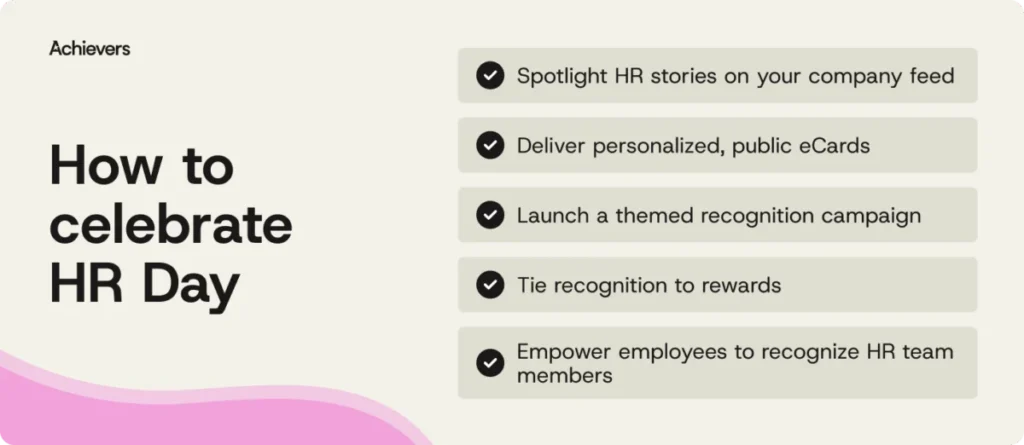
Five Meaningful Strategies to Celebrate HR Day
In a corporate landscape where numerous appreciation days are observed, from Boss’s Day to more niche observances, it is imperative that the celebration of HR Day transcends superficial gestures. To ensure genuine impact and authenticity, leaders can leverage employee engagement platforms like Achievers to implement meaningful recognition strategies.
Spotlight HR Success Stories on Company Feeds
Much of the critical work performed by HR departments operates behind the scenes, becoming invisible when processes run smoothly. When organizational culture is robust and goals are met, it is often due to the diligent efforts of HR in areas such as conflict resolution, the implementation of comprehensive wellness programs, and the refinement of onboarding experiences. Utilizing platforms like Achievers to highlight these behind-the-scenes successes brings visibility to the often-unseen but vital contributions of the HR team. This simple yet powerful gesture demonstrates leadership’s attentiveness to the important work undertaken by HR and serves as a foundational step in cultivating a pervasive culture of recognition.
Empower Employees to Recognize HR Team Members
Recognition from peers and colleagues can often hold as much, if not more, weight than feedback received from senior leadership. Peer-to-peer recognition taps into the intrinsic bonds formed within teams, thereby strengthening a sense of belonging, security, and overall workplace confidence. Platforms like Achievers are adept at facilitating widespread peer-to-peer recognition, transforming it into a consistent daily practice. This empowers all employees to acknowledge and appreciate the exceptional work of their HR colleagues. Given that virtually every employee has, at some point, relied on the support of the HR department, encouraging vocal appreciation for their efforts—not just on HR Day but consistently—is paramount.
Deliver Personalized, Public eCards
Publicly shared eCards serve as a powerful medium to convey to team members that their contributions are both seen and valued. When these eCards are personalized and publicly displayed, they shine a spotlight on each member of the HR department, acknowledging both their individual efforts and their collective impact. Fostering an organizational culture where employees’ work is consistently celebrated uplifts the entire workforce. Combining this recognition with tangible incentives, such as flexible gift options or points-based reward systems redeemable for employee-selected rewards, can further enhance the impact. Platforms like Achievers streamline these recognition efforts, integrating them seamlessly with existing communication tools for maximum efficacy.
Launch a Themed Recognition Campaign
Short-term, themed recognition campaigns can be exceptionally effective for significant appreciation days such as HR Day, particularly within larger organizations. Leadership can actively encourage participation through the use of engaging hashtags, such as #ThanksHR or #PeopleFirst, thereby simplifying the process for other team members to express their gratitude and appreciation for the individuals who enhance the daily work experience for everyone. Effective HR communication strategies often involve supporting and publicizing key initiatives. Ensuring HR Day receives prominent visibility across internal communication channels, including email newsletters and Slack channels, is crucial for its success.

Tie Recognition to Meaningful Rewards
When celebrating HR Day, consider linking recognition initiatives to rewards that offer genuine value, such as experiential rewards or wellness perks. Employee rewards enhance the impact of recognition, and experience-based or wellness-focused rewards are particularly sought-after and effective in mitigating burnout and absenteeism. While comprehensive wellness programs are most impactful when implemented organization-wide, experience-based rewards, such as restaurant gift cards or subscriptions to wellness applications, can offer enduring benefits to employees, fostering sustained engagement and bolstering loyalty.
Sustaining Support Beyond HR Day
While acknowledging HR’s contributions on their designated day is vital, these gestures can feel hollow if not accompanied by consistent year-round support. Cultivating a workplace environment that champions continuous recognition for all employees is essential. When individuals feel genuinely seen and acknowledged, they are more likely to feel supported.
Furthermore, supporting HR involves equipping them with the necessary tools and feedback mechanisms that enable them to adapt and refine their strategies and initiatives effectively. Employee engagement programs, such as those offered by Achievers, are instrumental in translating employee feedback into tangible organizational improvements. These platforms allow HR departments to gather continuous feedback, rapidly assess shifts in employee sentiment, and provide support to employees throughout their tenure. Providing HR teams with the most effective tools for their roles is a clear demonstration of organizational support.
It is also crucial to prioritize the well-being of the HR team itself. While they are dedicated to supporting the rest of the workforce, their own needs for support, including mental health days, robust work-life boundaries, and visible leadership backing, must be addressed.
Conclusion: Amplifying Gratitude for the Engine of Culture
The HR department functions as the silent engine driving employee engagement, fostering connection, and shaping organizational culture. When operations run smoothly, their efforts often go unnoticed. However, to maintain peak performance, HR requires consistent attention and support. HR Day 2026 presents an opportune moment to translate gratitude into visible, vocal, and platform-powered acknowledgments.
With solutions like Achievers, recognition becomes an accessible, authentic, and enduring practice. While Achievers is a favored tool for HR departments seeking to enhance engagement and morale, these very departments deserve to be recognized through the same mechanisms they champion. This HR Day, the imperative is to reciprocate the dedication of those who consistently give their all.
HR Day FAQs
What is the primary purpose of HR Day?
HR Day serves as a global platform for recognizing and celebrating the multifaceted contributions of Human Resources professionals. It highlights their critical role in shaping organizational culture, driving employee engagement, and positively impacting business outcomes.
When is HR Day celebrated?
HR Day is observed annually on May 20th. The 2026 observance marks its seventh anniversary.
How has the role of HR evolved?
The role of HR has transformed significantly from a primarily administrative function to a strategic partner. Modern HR departments are instrumental in navigating complex organizational changes, fostering inclusive work environments, integrating new technologies, and directly influencing employee experience and business performance.
What are the key benefits of recognizing HR professionals?
Recognizing HR professionals reinforces their value, boosts morale, and can lead to increased job satisfaction and retention. It also fosters a positive organizational culture where appreciation is a shared value, benefiting the entire workforce.
How can organizations effectively celebrate HR Day?
Effective celebrations involve more than just superficial gestures. Strategies include spotlighting HR successes, empowering peer-to-peer recognition, utilizing personalized eCards, launching themed campaigns, and tying recognition to meaningful rewards, all often facilitated by employee engagement platforms.
What is the significance of data in understanding HR’s impact?
Data, such as that provided by the Achievers Workforce Institute, quantifies the positive correlation between HR initiatives, employee engagement, retention, and overall business success. This evidence underscores the strategic importance of investing in HR.