
In a significant strategic pivot, human resources leaders across various industries are intensifying their focus on preparing their organizations for the pervasive impact of artificial intelligence. Beyond conventional managerial training programs, a growing trend indicates substantial investments in establishing dedicated "centers of excellence" for AI and cultivating "internal AI champions" to spearhead adoption and integration. This proactive approach by HR executives underscores a recognition of the urgent need to bridge a widening AI leadership gap and foster a workforce equipped to thrive in an increasingly automated landscape, according to insights gathered in mid-2026.
The Urgent Call for AI Preparedness: Bridging the Leadership Gap
The impetus for these strategic investments stems from a palpable lack of confidence among top HR executives regarding their current managerial capabilities in navigating the complexities of AI adoption. A recent Gallup poll of Chief Human Resources Officers (CHROs) revealed that a significant half of respondents harbored doubts about their managers’ readiness and ability to effectively lead the integration of AI tools and strategies within their teams. This finding is not an isolated incident but rather echoes a consistent pattern observed across various industry reports published throughout 2025 and 2026.
For instance, a July 2026 report from ManpowerGroup Talent Solutions painted an even starker picture, indicating that a mere 3% of surveyed leaders – a group that included CHROs – considered themselves "highly prepared" to direct the adoption of AI within their organizations. The sentiment from managers themselves offers little reassurance. A recent survey conducted by Indeed and YouGov found that 43% of managers openly admitted to feeling either "poorly equipped" or "completely unequipped" to lead an AI transformation within their respective departments. This pervasive sense of unpreparedness highlights a critical vulnerability in many organizations as they grapple with the rapid evolution of artificial intelligence. The implications extend beyond mere operational efficiency; they touch upon employee morale, retention, and ultimately, an organization’s competitive edge in a global market increasingly defined by technological prowess.
The rapid advancement of AI technologies, from generative AI to advanced analytics and automation tools, is not merely a technical challenge but fundamentally a human one. Organizations are increasingly realizing that successful AI integration is less about the technology itself and more about the people who will design, implement, use, and manage it. Without adequate leadership and understanding at the managerial level, the promise of AI – enhanced productivity, innovation, and strategic insights – risks being undermined by resistance, misuse, or outright failure to adopt. This leadership deficit creates a bottleneck, preventing organizations from fully realizing the transformative potential of AI.
Strategic Investments: Training, Centers of Excellence, and AI Champions
In response to this pressing need, HR leaders are rolling out multi-pronged strategies designed to cultivate AI literacy and leadership capabilities across all levels of their organizations. These initiatives are designed to move beyond superficial understanding, aiming for deep integration of AI principles and practices into the organizational fabric.
1. Enhanced Managerial Training Programs: The foundational element of this strategy is a renewed focus on comprehensive managerial training. Unlike traditional leadership development programs, these new curricula are specifically tailored to address the unique demands of an AI-driven workplace. Key components often include:
- AI Literacy and Fundamentals: Providing managers with a foundational understanding of what AI is, how it works, its various applications, and its limitations. This moves beyond buzzwords to practical knowledge.
- Ethical AI Use and Governance: Training managers on the ethical implications of AI, including bias, data privacy, transparency, and accountability. This is crucial for responsible deployment and mitigating risks.
- Change Leadership and Communication: Equipping managers with the skills to effectively communicate about AI initiatives, manage employee anxieties, articulate the benefits, and lead their teams through technological transitions.
- Data Interpretation and Decision-Making: Enhancing managers’ ability to understand and utilize AI-generated insights for strategic decision-making, rather than relying solely on intuition.
- Fostering an Experimental Culture: Encouraging managers to embrace a mindset of continuous learning, experimentation, and iterative improvement with AI tools, understanding that initial implementations may require refinement.
- Human-AI Collaboration Strategies: Teaching managers how to optimize workflows by effectively integrating human skills with AI capabilities, focusing on augmentation rather than pure replacement.
2. Establishment of AI Centers of Excellence (CoEs): A more structured and centralized approach involves the creation of AI Centers of Excellence. These CoEs serve as hubs of expertise, best practices, and strategic guidance for AI implementation within the organization. Their functions are multifaceted:
- Standardization and Best Practices: Developing and disseminating standardized AI adoption methodologies, tools, and best practices across departments, ensuring consistency and efficiency.
- Research and Development: Acting as internal R&D units, exploring emerging AI technologies, assessing their potential applications, and piloting new solutions.
- Consultation and Support: Providing expert guidance and support to various business units on AI strategy, project planning, implementation challenges, and ethical considerations.
- Talent Development: Identifying skill gaps related to AI, designing targeted training programs, and fostering a pipeline of AI-savvy talent within the organization.
- Policy and Governance: Collaborating with legal and compliance teams to develop internal policies and guidelines for responsible AI use, data governance, and risk management.
- Cross-functional Collaboration: Facilitating knowledge sharing and collaboration between technical teams, business units, and HR to ensure a holistic approach to AI integration. These CoEs act as catalysts, accelerating the adoption curve and ensuring that AI initiatives are aligned with broader business objectives.
3. Cultivating Internal AI Champions: Complementing formal structures, organizations are also investing in identifying and empowering "internal AI champions." These individuals are not necessarily AI experts by profession but are highly enthusiastic and proficient early adopters who can act as catalysts for grassroots adoption. Their roles include:
- Evangelists and Advocates: Promoting the benefits of AI tools, sharing success stories, and inspiring colleagues to explore and experiment with new technologies.
- Mentors and Peer Trainers: Providing informal guidance, troubleshooting assistance, and peer-to-peer training, making AI adoption more accessible and less intimidating.
- Bridge Builders: Acting as intermediaries between technical AI teams and end-users, translating complex technical concepts into practical applications and user-friendly language.
- Feedback Loops: Collecting user feedback on AI tools and processes, which is then channeled back to CoEs or technical teams for continuous improvement.
- Cultural Integrators: Helping to embed AI thinking into the daily routines and problem-solving approaches of their teams, fostering a culture of innovation and technological adoption.
A Chronology of Concern and Action
The growing urgency around AI preparedness has manifested in a series of reports and strategic discussions over the past two years. In 2025, a pivotal report by Mercer highlighted the critical role of leadership communication. It warned that when leaders fail to effectively communicate about AI tools and their implications, it can create a "vacuum" of information, leading to heightened anxiety among employees about the technology and its potential impact on their jobs. Mercer advised HR teams to proactively address this by investing not only in managerial training and AI literacy but also in fostering psychological safety, encouraging employees to experiment with AI without fear of failure. This focus on the human element, even amidst technological change, set an important tone for subsequent HR strategies.
By early 2026, the discussions at industry events further solidified this perspective. The SHRM26 conference in June 2026, a major gathering for HR professionals, heavily emphasized the need for HR to "lead with empathy" and invest in "human skills" as technological change accelerates. A prominent speaker at the conference outlined a "five-point framework for maintaining humanity" in the age of AI, stressing the irreplaceable value of uniquely human attributes like critical thinking, creativity, emotional intelligence, and complex problem-solving. These discussions underscored that while AI can automate tasks, it cannot replicate the nuanced capabilities that define human contribution.
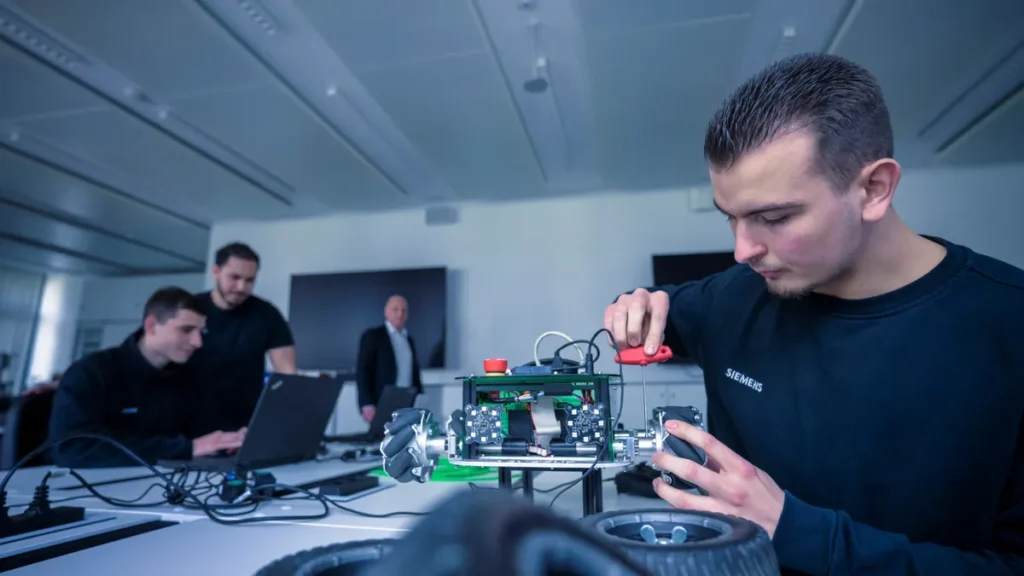
The current findings from Gallup, published in August 2026, suggest that HR executives are indeed internalizing and acting upon this guidance. More than three-quarters of the members on Gallup’s CHRO Roundtable indicated that they are actively encouraging peer learning and experimentation with AI within their organizations. Furthermore, nearly half of the respondents confirmed that they are offering role-specific AI learning or certification programs, demonstrating a tailored approach to skill development. While fewer respondents had yet taken the step of embedding AI skills directly into job expectations or performance goals, the trajectory clearly indicates a shift towards formalizing AI proficiency as a core competency. The image of apprentices working on AI projects at a Siemens technology group training center in Dusseldorf, Germany, on April 20, 2026, visually reinforces this global commitment to practical, hands-on AI education at the ground level.
Addressing Employee Anxiety and Fostering Psychological Safety

One of the most significant challenges in AI adoption is managing employee anxiety. The fear of job displacement, the uncertainty of new workflows, and the perceived complexity of new tools can create resistance and hinder successful implementation. HR’s role in mitigating this anxiety is paramount. By investing in clear communication, comprehensive training, and fostering psychological safety, HR can transform fear into enthusiasm.
Psychological safety, as advocated by Mercer and other consulting firms, means creating an environment where employees feel safe to experiment with AI, ask questions, make mistakes, and offer feedback without fear of negative consequences. This encourages a culture of learning and innovation, where employees see AI as an augmentative tool rather than a threat. Managers, equipped with enhanced communication skills, can acknowledge uncertainties, transparently discuss the purpose of AI initiatives, and articulate how AI can enhance their employees’ roles, making work more efficient and engaging, rather than eliminating jobs. This proactive communication strategy helps to fill the "vacuum" of information that Mercer identified, directly combating misinformation and fear.
The Broader Implications for the Workforce and HR
These strategic investments by HR leaders carry profound implications for the future of the workforce and the evolving role of human resources itself.
Organizational Resilience and Competitive Advantage: By proactively addressing the AI leadership gap, organizations are building greater resilience against future technological disruptions. A workforce that is fluent in AI, from top management to frontline employees, can adapt more quickly to new tools and processes, innovate more effectively, and leverage data-driven insights for strategic advantage. This translates directly into a stronger competitive position in the market. Companies that fail to make these investments risk falling behind, struggling with inefficient operations and a talent drain.
The Future of Work and Human-AI Collaboration: The shift towards AI-enabled workplaces is redefining job roles and skill requirements. HR’s investments are not just about training for current roles but are actively shaping the "future of work." The emphasis is on fostering human-AI collaboration, where AI handles routine, data-intensive tasks, freeing up human employees to focus on higher-value activities requiring creativity, critical thinking, emotional intelligence, and complex problem-solving – precisely the "human skills" highlighted at SHRM26. This requires a re-evaluation of job descriptions, career pathways, and performance metrics.
Ethical Considerations and Responsible AI: As AI becomes more integrated, ethical considerations become increasingly critical. HR, through CoEs and training, plays a vital role in ensuring responsible AI deployment. This includes addressing issues of algorithmic bias, ensuring data privacy, maintaining transparency in AI decision-making, and establishing clear accountability frameworks. HR’s influence in shaping ethical guidelines ensures that AI is used in a way that aligns with organizational values and societal expectations, mitigating reputational and legal risks.
HR’s Evolving Role: These initiatives signify a significant evolution of HR’s role, transforming it from primarily administrative and compliance-focused to a strategic partner driving organizational change and digital transformation. HR leaders are becoming architects of the future workforce, responsible for talent strategy, skill development, cultural change, and ethical governance in the AI era. Their ability to anticipate future skill needs, design effective learning pathways, and foster a supportive and adaptive culture will be central to organizational success.

Expert Perspectives and the Path Forward
Industry analysts largely commend HR’s proactive stance. "The strategic foresight demonstrated by HR leaders in investing in AI Centers of Excellence and internal champions is a game-changer," commented Dr. Evelyn Reed, a leading HR technology analyst. "It acknowledges that AI adoption isn’t just an IT problem; it’s a people problem, a cultural problem, and ultimately, a leadership problem. By taking ownership of this, HR is positioning itself at the forefront of organizational innovation."
Despite the progress, challenges remain. The rapid pace of AI development necessitates continuous learning and adaptive strategies. Budget constraints, resistance to change from entrenched mindsets, and the sheer complexity of integrating diverse AI tools across an organization are significant hurdles. Furthermore, while many organizations are encouraging experimentation, the next step – embedding AI skills into formal job expectations and performance goals – is crucial for solidifying AI proficiency as a core organizational competency. This move would signal a deeper, more systemic commitment to AI readiness.
Looking ahead, HR will need to continue to refine its strategies, perhaps exploring new models for agile learning, developing sophisticated AI ethics committees, and even leveraging AI itself to personalize training and identify skill gaps more efficiently. The journey to a fully AI-fluent workforce is ongoing, but the current investments signal a clear and determined commitment from HR leaders to ensure their organizations are not just prepared for the future, but are actively shaping it.
In conclusion, the strategic investments by HR leaders in advanced managerial training, AI Centers of Excellence, and internal AI champions represent a critical and timely response to the challenges of the AI era. By addressing the confidence deficit in managerial AI leadership, fostering a culture of experimentation and psychological safety, and emphasizing the crucial balance between technological advancement and human skills, HR is playing an indispensable role in preparing organizations for a future where human ingenuity and artificial intelligence work in powerful, synergistic harmony. The path forward will require continued vigilance, adaptability, and a steadfast commitment to the human element at the heart of technological transformation.






