A significant advancement in human resources technology is set to transform the notoriously friction-prone process of interview scheduling, empowering job candidates with greater autonomy and dramatically reducing administrative burdens for hiring teams. A leading HR technology provider has unveiled a suite of new features, headlined by candidate self-rescheduling, designed to address persistent bottlenecks that often lead to promising talent falling out of the recruitment pipeline. This development arrives amidst a competitive global talent market where candidate experience is increasingly recognized as a critical differentiator for employer branding and successful hiring outcomes.
The scenario is acutely familiar to hiring managers and recruiters alike: a meticulously planned interview invitation is extended to a promising candidate, aligning perfectly with the schedules of the interview panel. Yet, just hours before the scheduled time, an email arrives bearing the customary apology – "Something has come up. Can we reschedule?" What typically ensues is a tedious, multi-day administrative dance involving numerous email exchanges, meticulous calendar cross-checks, and complex coordination across multiple interviewers. This protracted process not only consumes valuable recruiter time but also risks eroding a strong candidate’s initial positive perception, potentially causing them to question the company’s commitment to being a modern, people-first organization.
The Hidden Cost of Inefficient Scheduling: A Data-Driven Revelation
The impetus for these innovations stems from compelling data revealing profound inefficiencies in traditional interview scheduling. Industry research indicates a surprising statistic: on average, only 50% of initial interview requests successfully convert into booked meetings. To put this into perspective, if a company receives 200 applications and extends interview invitations to 40 qualified candidates, only approximately 20 of those interviews will ever materialize on the calendar. This means half of all potential interview opportunities are lost before a meaningful conversation can even begin, representing a significant forfeiture of talent and investment.
Analysis of over 10,000 candidate interactions uncovered a critical insight: a substantial number of candidates received multiple scheduling requests while at the same stage of the hiring process. This redundancy was rarely due to recruiter oversight but rather a systemic flaw inherent in rigid scheduling workflows. When a candidate needed to adjust an appointment, the prevailing system often offered no recourse but to generate an entirely new scheduling link, effectively restarting the entire coordination process from scratch. This iterative loop of new links and manual re-coordination creates tangible friction at a critical juncture in the candidate journey, siphons off precious recruiter hours, and ultimately results in a measurable number of interviews never reaching fruition.
This inefficiency translates into tangible costs for businesses. According to a report by the Society for Human Resource Management (SHRM), the average cost-per-hire can range from $4,000 to $5,000, while the average time-to-fill for open positions often exceeds 40 days. Lost interview opportunities directly inflate these figures, extending time-to-fill and potentially leading to higher recruitment agency fees or prolonged productivity gaps. Furthermore, a poor candidate experience can damage employer reputation, making it harder to attract top talent in the future. Studies by companies like LinkedIn consistently show that 75% of job seekers consider the candidate experience important when evaluating job offers, and nearly 80% would share a negative experience with their network.
Evolving Expectations: Defining a Modern Candidate Experience
The landscape of talent acquisition has undergone a fundamental shift, with the modern candidate holding increasing leverage in a competitive job market. Research consistently highlights a singular, overarching theme across industries: the most positive candidate experiences are intrinsically built upon principles of respect and autonomy. When prospective employees are afforded the ability to manage their own interview schedules, mirroring the flexibility they would expect for any other professional meeting, it cultivates a sense of trust and validation. Conversely, being forced into inflexible, one-way communication flows often leads candidates to feel as though they are merely being "processed" rather than engaged with as valued potential partners.
This shift in candidate expectations is not merely a preference but a strategic imperative for companies aiming to attract and retain top talent. In an era where Glassdoor reviews and social media narratives heavily influence employer brand, every interaction, from the initial application to the final offer, contributes to a candidate’s overall perception. Companies that fail to adapt risk not only losing out on individual hires but also suffering broader reputational damage that can impact future recruitment efforts.
A New Paradigm: How Candidate Self-Rescheduling Works
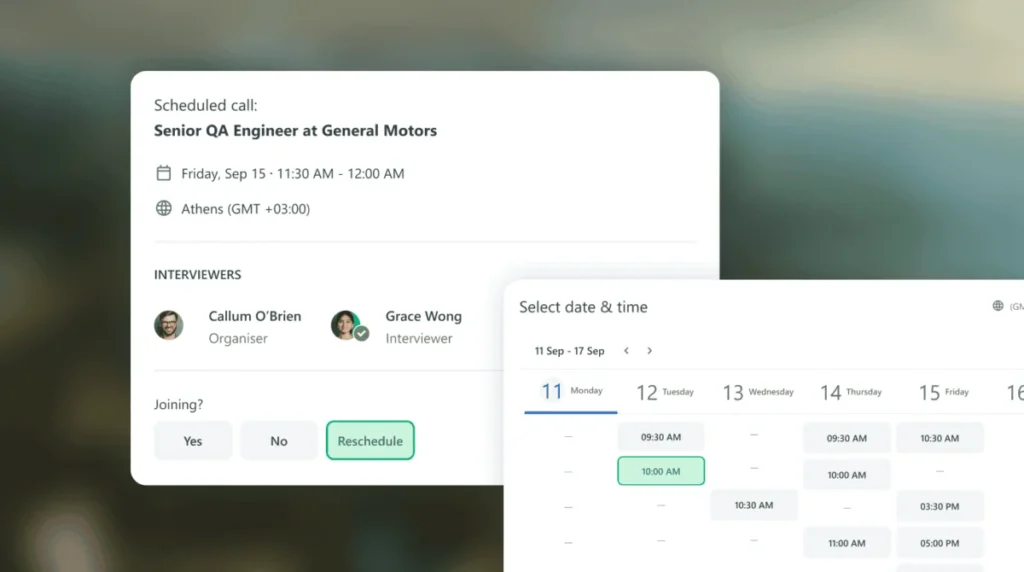
The cornerstone of the new platform enhancements is the introduction of candidate self-rescheduling. This feature empowers candidates to adjust their interview times with a single click, eliminating the cumbersome email threads, prolonged waiting periods for responses, and the anxiety of feeling like an inconvenience. Candidates can now simply select a new time slot directly from the same pool of available options initially provided, streamlining the process and maintaining a positive experience.
Crucially, this advanced functionality is engineered with robust "guardrails" to protect both the candidate experience and the efficiency of the hiring team. These protective measures include:
- Minimum Notice Period: A configurable minimum notice period ensures that candidates cannot reschedule an interview at the last minute, providing interviewers with adequate time to adjust their own schedules. For instance, a common setting might prevent rescheduling within 24 or 48 hours of the original appointment.
- Maximum Reschedules: To prevent abuse and ensure commitment, the system allows hiring teams to set a maximum number of times a candidate can reschedule an interview, typically one or two, before requiring direct recruiter intervention.
- Time Slot Availability Control: The system intelligently presents only those time slots that align with the original interviewer’s availability, preventing conflicts and ensuring all necessary panel members remain accessible.
- Automated Calendar Updates: Upon a successful reschedule, the system automatically updates all relevant calendars (candidate, interviewers, meeting rooms, video conferencing links), removing manual tasks and reducing the risk of human error.
- Recruiter Visibility: Recruiters maintain full visibility into all rescheduling activities, receiving instant notifications and having access to a clear audit trail of changes, ensuring they are always informed.
- Consistent Interview Duration: The system ensures that rescheduled interviews maintain the originally intended duration, preventing accidental shortening or lengthening of critical interview slots.
These guardrails strike a vital balance, providing candidates with unparalleled flexibility while safeguarding the operational integrity and time investment of the hiring team.
Beyond Self-Service: Eight Additional Improvements for Comprehensive Efficiency
While candidate self-rescheduling is the headline feature, the platform’s latest update encompasses a total of eight additional enhancements, all developed in response to direct feedback from hiring teams grappling with various pain points in the interview process. These improvements collectively aim to create a more seamless, efficient, and user-friendly experience for all stakeholders:
- Automated Time Zone Detection and Conversion: The system now automatically detects a candidate’s time zone and displays all available interview slots in their local time, eliminating confusion and missed appointments due to time zone discrepancies.
- Configurable Interviewer Buffer Times: Hiring managers can now set customizable buffer periods between consecutive interviews for each interviewer, preventing back-to-back meetings that lead to burnout and inadequate preparation time.
- Enhanced Panel Interview Coordination: Streamlined workflows for scheduling panel interviews ensure that all required interviewers’ availabilities are accurately cross-referenced, simplifying the coordination of complex multi-person interviews.
- Integrated Video Conferencing Links: The platform now natively integrates with popular video conferencing tools (e.g., Zoom, Microsoft Teams, Google Meet), automatically generating and embedding unique meeting links into calendar invitations.
- Automated Reminder and Confirmation Notifications: Customizable automated email and SMS reminders are sent to both candidates and interviewers at strategic intervals leading up to the interview, significantly reducing no-show rates.
- Advanced Analytics and Reporting on Scheduling Efficiency: New dashboards provide hiring teams with insights into key metrics such as average time-to-schedule, reschedule rates, and interview show-up rates, enabling data-driven process optimization.
- Customizable Scheduling Templates: Recruiters can create and save standardized scheduling templates for different roles or interview stages, ensuring consistency and accelerating the invitation process.
- Improved Internal Communication Tools: Enhanced features allow recruiters to easily communicate scheduling changes or critical information directly with interviewers within the platform, reducing reliance on external email chains.
These comprehensive improvements reflect a holistic approach to tackling the multifaceted challenges of interview scheduling, moving beyond mere convenience to foster genuine operational excellence.
A Fundamental Shift in Recruiting Dynamics: Broader Implications
These technological advancements transcend mere convenience; they represent a fundamental recalibration of the power dynamics within the recruitment ecosystem. For candidates, this means being treated with the professionalism and respect they deserve from their very first interaction. They gain the autonomy to manage their schedules, communicate changes transparently, and perceive prospective employers as flexible, empathetic, and truly people-first organizations. This initial positive experience sets a strong precedent for future engagement and contributes significantly to a positive employer brand.
For hiring teams, the impact is equally transformative. The deluge of administrative overhead associated with manual scheduling, email ping-pong, and calendar updates is dramatically curtailed. Recruiters are freed from logistical minutiae, allowing them to redirect their focus to strategic activities such as candidate engagement, talent pipelining, and building meaningful relationships. The exasperating phenomenon of promising candidates "ghosting" interviews is also expected to diminish, as the ease of rescheduling removes a major barrier to participation.
From a strategic perspective, these improvements translate directly into tangible benefits for key hiring metrics. Businesses can anticipate a faster time-to-fill for open positions, as scheduling delays are minimized. Higher interview show rates will lead to more efficient use of interviewer time and reduced wasted effort. Furthermore, elevated candidate satisfaction scores will contribute to a stronger employer brand, making it easier to attract and secure top talent in the future. These are all measurable improvements that directly contribute to a robust talent acquisition strategy and ultimately, a stronger business.
The traditional recruiting model, often characterized by a unilateral power dynamic, dictated when and how interviews would occur, with candidates expected to conform to rigid company schedules. However, the contemporary talent market operates differently. The most sought-after candidates possess a multitude of options and are actively evaluating companies just as intensely as companies are evaluating them. Every single interaction, from the initial job posting to the final offer, serves to shape their perception of a company’s culture, values, and operational efficiency.
When candidates are granted the autonomy to manage their interview schedules, it communicates a profound message: their time is valued, their professionalism is trusted, and individuals are deserving of respectful treatment from the very outset of their engagement with an organization. This is not merely a practice of "good recruiting"; it is an embodiment of sound business strategy, fostering loyalty, enhancing reputation, and securing a competitive edge in the relentless pursuit of talent.
Seamless Integration and Future Outlook
The new self-rescheduling functionality is now readily available to all customers utilizing Google or Microsoft Calendar integrations, ensuring broad accessibility across common enterprise platforms. The rollout is designed to be non-disruptive, allowing existing scheduling links to remain active and enabling hiring teams to adopt the new features at their own pace, integrating them into current workflows seamlessly. This iterative approach underscores a commitment to continuous improvement, acknowledging that scheduling, despite its seemingly minor nature, remains an area where thoughtful, incremental changes can yield significant positive impacts.
These updates, shaped by extensive feedback from diverse hiring teams, epitomize the philosophy that effective hiring technology should remove obstacles, not create them. By making interview scheduling a smooth, intuitive, and candidate-centric process, organizations can pivot their focus from arduous logistical coordination to the more impactful task of fostering meaningful conversations with the right candidates. This strategic shift promises not only to optimize recruitment processes but also to elevate the entire talent acquisition experience, setting a new standard for modern hiring practices.