The landscape of modern business is in constant flux, and at the heart of navigating this dynamic environment lies a critical, often overlooked, component: employee development. A recent report from Achievers, the "State of Recognition Report," underscores a significant gap between employee aspirations and organizational offerings in this crucial area. The findings reveal that a staggering half of employees feel their companies need to provide more avenues for growth and professional advancement. This deficiency is not merely a matter of employee satisfaction; it represents a tangible business risk, as individuals who perceive a stagnant future within their current organization are increasingly likely to seek opportunities elsewhere. This article delves into the multifaceted importance of employee development, exploring actionable strategies for fostering a culture of continuous learning and highlighting the profound implications for organizational resilience and long-term success.
The data from Achievers’ report serves as a stark reminder that employee development has transitioned from a desirable perk to an essential cornerstone of talent retention and organizational competitiveness. In an era where skills obsolescence is a growing concern and the demand for specialized expertise is at an all-time high, companies that fail to invest in the growth of their workforce are not just falling behind; they are actively eroding their future potential. The report indicates a clear disconnect, with employees actively seeking opportunities to learn and evolve, a desire that is frequently unmet. This unmet need creates fertile ground for disengagement and attrition, as motivated individuals will inevitably gravitate towards employers who demonstrate a commitment to their professional journey.
The implications of this trend are far-reaching. Beyond the immediate cost of employee turnover, organizations that neglect development risk a decline in innovation, productivity, and overall adaptability. A workforce that is continuously learning and upskilling is better equipped to tackle emerging challenges, embrace new technologies, and drive strategic initiatives. Conversely, a static workforce can become a liability, struggling to keep pace with industry advancements and competitive pressures.
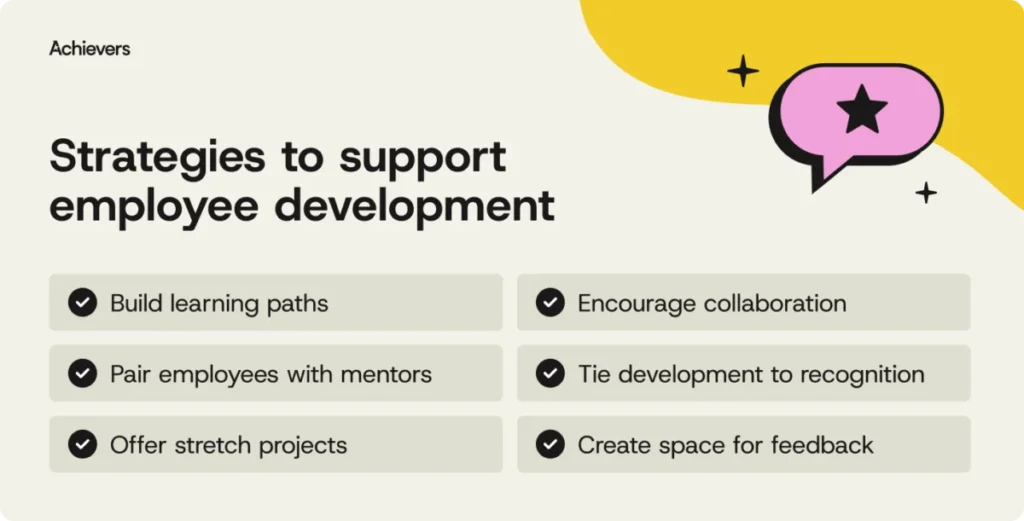
The good news, as highlighted by the report’s authors, is that building a robust employee development framework does not necessitate monumental overhauls or prohibitively expensive training programs. Instead, it can be woven into the fabric of daily operations through a variety of integrated approaches. These include fostering mentorship relationships, assigning challenging "stretch" projects that push employees beyond their current capabilities, implementing real-time feedback mechanisms, and crucially, providing recognition that acknowledges and celebrates progress along the development journey. These strategies, when implemented effectively, create an environment where learning is not an isolated event but an ongoing, integral part of the employee experience.
Six Impactful Strategies for Cultivating Employee Growth

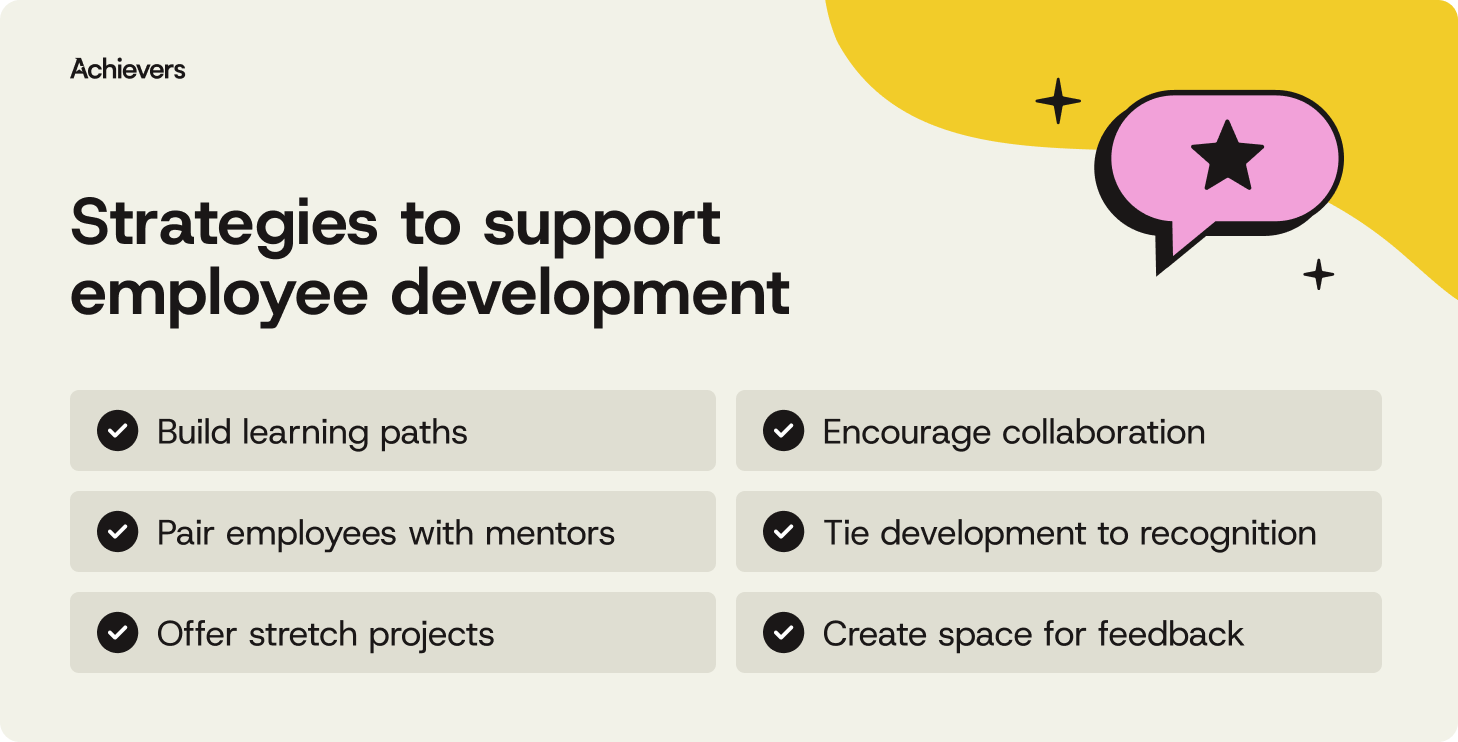
Achievers’ research points towards a strategic approach to employee development, moving beyond generic training modules to embrace methods that are personal, practical, and intrinsically linked to the daily workflow. These six strategies offer a framework for building a development culture that is both effective and sustainable:
1. Architecting Personalized Learning Journeys
The era of one-size-fits-all training is rapidly becoming obsolete. Employees today seek learning experiences that are tailored to their specific roles, career aspirations, and individual learning styles. The creation of personalized learning paths is paramount. This involves understanding individual employee needs through regular dialogue, performance reviews, and skills assessments. Once identified, learning opportunities can be curated, encompassing a blend of internal resources, external courses, workshops, and on-the-job training. The key is to empower employees with agency over their development, fostering a sense of ownership and engagement. This approach not only enhances skill acquisition but also significantly boosts motivation and commitment, as employees feel valued and invested in.
2. Facilitating Meaningful Mentorship and Coaching
Mentorship and coaching stand out as profoundly effective, yet often underutilized, tools for talent development. The simple act of pairing an experienced employee with a less experienced one can unlock a wealth of knowledge, practical insights, and career guidance. Effective mentoring programs go beyond ad-hoc conversations. They involve structured onboarding for both mentors and mentees, clear objectives, and regular check-ins to ensure the relationship is productive. Coaching, on the other hand, can be more focused, with a designated coach helping an employee develop specific skills or overcome particular challenges. The impact of these relationships extends beyond individual growth; they foster a stronger sense of community and knowledge sharing within the organization, creating a more collaborative and supportive work environment.
3. Embracing Role Rotation and Stretch Projects
The most profound learning often occurs when individuals are challenged to step outside their comfort zones. Role rotations and "stretch" projects offer invaluable opportunities for employees to gain exposure to different facets of the business, develop new competencies, and acquire a broader understanding of organizational operations. A role rotation might involve temporarily moving an employee to a different department to learn new processes, while a stretch project could be an assignment that requires the employee to develop skills they don’t yet possess but are critical for future company needs. These initiatives not only build agility and adaptability within the workforce but also help identify emerging leaders and future talent pipelines. The success of these assignments often hinges on providing adequate support and resources, ensuring employees feel equipped to succeed rather than simply overwhelmed.
4. Championing Collaboration and Action Learning
Learning is not confined to formal educational settings; it thrives in collaborative environments where real-world problems are tackled collectively. Action learning initiatives bring together groups of employees to address specific business challenges. This process encourages diverse perspectives, fosters critical thinking, and allows participants to learn from each other’s experiences and expertise in real-time. By engaging in problem-solving, employees develop not only technical skills but also crucial soft skills such as teamwork, communication, and strategic thinking. The outcomes of action learning can be directly beneficial to the organization, leading to innovative solutions and process improvements, thereby demonstrating the tangible value of development efforts.
5. Integrating Development with Recognition and Rewards
The adage "what gets recognized, gets repeated" holds significant weight in the realm of employee development. When progress in learning and skill acquisition is acknowledged and celebrated, it reinforces the value of these efforts and motivates continued engagement. Recognition should not be limited to major achievements but should also encompass smaller milestones and demonstrated efforts in development. This could take the form of public acknowledgment, performance bonuses tied to skill acquisition, or inclusion in special projects. By visibly linking development with tangible rewards and appreciation, organizations signal that growth is a valued and rewarded behavior, thereby embedding it more deeply into the company culture. This also serves to boost employee morale and job satisfaction, creating a positive feedback loop.
6. Cultivating a Culture of Feedback and Employee Input
At the core of any effective development program lies a deep understanding of employee needs and aspirations. Organizations that prioritize continuous feedback and actively solicit input from their workforce are far more likely to design and implement development strategies that resonate. This involves creating safe and open channels for employees to voice their learning goals, challenges, and suggestions for improvement. Regular, constructive feedback, delivered consistently and with the intent to support growth, is far more impactful than infrequent, formal reviews. By co-creating development strategies with employees, organizations ensure that these initiatives are relevant, practical, and address the actual needs of the workforce, leading to higher adoption rates and greater overall effectiveness.
Embedding Employee Development into the Organizational DNA
The ultimate goal is to transcend the notion of employee development as an occasional initiative or an add-on to core responsibilities. It must become an intrinsic part of the organization’s culture, influencing how leadership operates, how teams collaborate, and how individuals approach their roles. This cultural integration is achieved when growth is consistently visible and acknowledged. When development is celebrated not just upon completion but throughout the process, it transforms from a pressure to perform into a tangible sense of progress.
Furthermore, integrating regular, meaningful feedback—distinct from annual performance reviews—is crucial. This continuous dialogue ensures that development remains personalized rather than prescriptive. The power of employee connection cannot be overstated in this context. Peer learning, mentorship, and the sharing of collective successes all contribute to transforming individual growth into a shared organizational asset. These interactions foster a sense of belonging and mutual support, reinforcing the idea that learning and development are collective endeavors, not solitary pursuits.
In essence, genuine growth does not occur in isolation. It is a product of a vibrant organizational culture where recognition, feedback, and connection converge to transform learning into sustained momentum. This momentum propels individuals forward, enhancing their skills and contributions, and ultimately fortifies the organization against the inevitable shifts and challenges of the business world. By prioritizing and actively cultivating employee development, companies are not just investing in their people; they are investing in their own future resilience, innovation, and enduring success. The "State of Recognition Report" by Achievers serves as a critical call to action, emphasizing that a commitment to employee growth is no longer a matter of choice, but a fundamental requirement for thriving in the contemporary marketplace.