
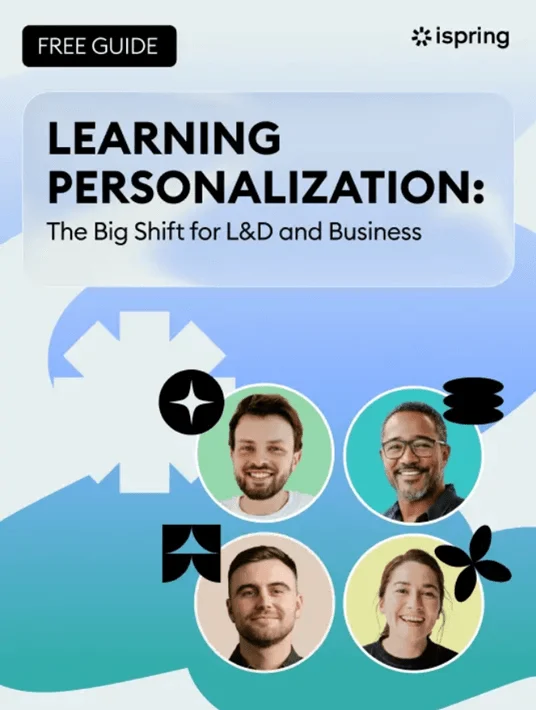
The release of this guide comes at a critical juncture for the L&D industry. For years, organizations have heavily invested in massive content libraries and flexible digital formats, assuming that providing more options would naturally lead to better learning. However, data suggests that "content dumping" often leads to learner fatigue and a lack of practical application. The new framework proposed by iSpring Solutions argues that personalization is no longer just an L&D initiative; it is a fundamental business capability that must be woven into the fabric of organizational operations to drive growth and maintain a competitive edge.
The Evolution of Corporate Training: A Brief Chronology
To understand the significance of the "Big Shift," it is necessary to examine the historical trajectory of corporate education. In the late 20th century, training was primarily instructor-led and classroom-based, offering zero personalization. The advent of the Learning Management System (LMS) in the early 2000s introduced the first wave of digital accessibility, but content remained rigid.
By the mid-2010s, the industry saw the rise of the Learning Experience Platform (LXP), which utilized algorithms—similar to those used by streaming services like Netflix—to suggest content based on user interest. While this was a step forward, it often prioritized "engagement" over "competence." In the current era, the focus has shifted again. Organizations are now demanding "Precision Learning," where training is not just suggested but is strategically aligned with specific business goals, individual performance gaps, and the immediate needs of the work environment.
The iSpring guide identifies this current era as the "Fourth Layer" of personalization, where learning is embedded into the flow of work, making it indistinguishable from the job itself.
The Four-Layer Framework of Modern Personalization
The core of the iSpring Solutions guide is a practical framework designed to help L&D leaders move beyond superficial customization. This framework categorizes personalization into four distinct layers, each serving a specific strategic purpose:
1. The Entry and Onboarding Layer
Personalization begins the moment an employee joins the organization. Rather than a generic orientation, this layer focuses on tailoring the "time-to-productivity" path. By assessing a new hire’s existing skills and prior experience, organizations can bypass redundant training and focus on the specific cultural and technical nuances the individual lacks.
2. Role Alignment and Competency Mapping
The second layer involves aligning learning paths with specific job functions and career trajectories. This ensures that every piece of content consumed by the employee is relevant to their current duties and their future growth within the company. This layer relies heavily on "competency frameworks" to bridge the gap between current abilities and required performance standards.
3. Continuous Development and Performance Support
This layer addresses the ongoing need for upskilling and reskilling. It moves away from scheduled annual training toward a "just-in-time" model. If an employee encounters a challenge while performing a task, the system provides a personalized "micro-learning" nugget to solve that specific problem. This reduces the cognitive load on the employee and ensures that learning is immediately applied.
4. Learning in the Flow of Work
The final and most advanced layer involves the complete integration of learning tools into the software and platforms employees use daily (such as CRM systems, communication tools, or project management software). This eliminates the need for employees to "stop working to go learn," creating a seamless transition between execution and education.
![Learning Personalization: The Big Shift For L&D And Business [eBook Release]](https://cdn.elearningindustry.com/wp-content/uploads/2026/08/shutterstock_2664109645.jpg)
Supporting Data: The Case for Personalized Learning
The shift toward personalization is backed by compelling industry data. According to the 2023 LinkedIn Learning Workplace Learning Report, 83% of organizations want to build a more people-centric culture, and personalization is cited as the top method for achieving this. Furthermore, research from the Association for Talent Development (ATD) indicates that companies with comprehensive training programs have a 218% higher income per employee than those without formalized training.
However, the "Forgetting Curve"—a concept pioneered by Hermann Ebbinghaus—suggests that humans forget approximately 70% of new information within 24 hours if it is not applied. Personalized learning directly combats this by ensuring that the information provided is relevant to the learner’s immediate tasks, thereby increasing retention rates by up to 60%.
Moreover, a recent survey of HR professionals indicated that 77% of employees feel that personalized learning improves their engagement and job satisfaction. In an era defined by "The Great Reshuffle" and talent shortages, the ability to offer a personalized growth path has become a vital retention tool.
Industry Reactions and Expert Perspectives
While iSpring Solutions has provided the roadmap, industry experts emphasize that the transition requires a cultural shift within management. Analysts suggest that for personalization to succeed, there must be a "democratization of data" within the company. Managers need access to real-time performance analytics to understand where their teams are struggling, and L&D teams need the autonomy to pivot content strategies quickly.
"Personalization is the antidote to the ‘check-the-box’ mentality that has plagued corporate training for decades," says one senior L&D consultant. "The iSpring guide highlights that we are moving toward an era where the system knows what the employee needs before the employee even realizes they have a knowledge gap."
From a technological standpoint, the reaction has been focused on the role of Artificial Intelligence (AI). AI is the engine that allows these four layers of personalization to scale. Without AI, manually tailoring a learning path for 5,000 employees across different regions would be an administrative impossibility. The guide emphasizes that technology should be viewed as an enabler of human performance, not just a delivery mechanism.
Broader Implications for the Global Workforce
The implications of "The Big Shift" extend far beyond the L&D department. As organizations successfully implement these personalized systems, several long-term trends are likely to emerge:
- Bridging the Skills Gap: As technology evolves faster than traditional education systems, personalized corporate learning will become the primary vehicle for closing the global skills gap.
- Enhanced Organizational Agility: Companies that can rapidly retrain their workforce through personalized paths will be better equipped to handle market disruptions, such as the rise of generative AI or shifts in global supply chains.
- Data-Driven Promotions: Personalization creates a "digital paper trail" of an employee’s competencies and growth. This data can lead to more objective, merit-based promotion cycles, reducing unconscious bias in the workplace.
- Scalability Across Borders: For multinational corporations, the challenge of delivering consistent training across different languages and cultures is immense. The iSpring framework provides a scalable model that allows for local relevance within a global strategic framework.
Conclusion and Implementation
Learning Personalization: The Big Shift For L&D And Business serves as both a manifesto and a manual for the modern enterprise. It challenges the notion that learning is a secondary function of business, repositioning it as a core driver of operational excellence.
For organizations ready to take the next step, the guide offers a clear path forward: assess current personalization maturity, identify the data streams necessary to power the four layers, and invest in tools that allow for the seamless integration of learning into the daily workflow. iSpring Solutions has made this resource available for free, signaling a commitment to elevating the standards of the entire e-learning industry. As the business world continues to evolve, the ability to learn—and to learn in a way that is tailored to the individual—will undoubtedly become the ultimate competitive advantage.






