
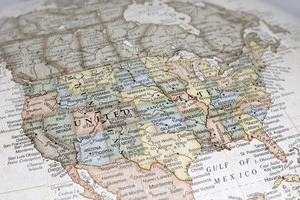
The first quarter of 2026 has witnessed an unprecedented surge in state-level legislative activity, fundamentally altering the landscape of American employment law. As the federal government remains locked in partisan debate over comprehensive labor reform, state legislatures from Washington to Florida have taken the initiative to address modern workplace challenges. These legislative actions primarily focus on three critical pillars: the expansion of youth employment opportunities, the regulation of electronic monitoring and artificial intelligence in the workplace, and the continued erosion of non-compete agreements. This report provides a detailed analysis of the legislative trends, specific state actions, and the broader implications for multi-state employers navigating this increasingly complex regulatory environment.
The Resurgence of Youth Employment Legislation
A defining trend of the 2026 legislative sessions has been the push to relax restrictions on youth labor. Driven by persistent labor shortages in the hospitality, construction, and manufacturing sectors, several states have passed laws aimed at integrating younger workers into the economy more aggressively.
In Florida and Indiana, new statutes have extended the permissible working hours for minors aged 16 and 17. These laws now allow high school students to work more than 30 hours per week during the school term with parental consent, a move proponents argue provides valuable vocational experience and financial independence. Critics, however, have raised concerns regarding the potential impact on educational attainment and workplace safety.
Kentucky and West Virginia followed suit with legislation that simplifies the work permit process. By shifting the burden of verification from school districts to parents and employers, these states aim to reduce the bureaucratic friction that often prevents local businesses from hiring teenagers for seasonal or part-time roles. Data from the Bureau of Labor Statistics suggests that teen labor participation has hit a ten-year high in the first quarter of 2026, a phenomenon directly correlated with these legislative shifts.
The Regulation of Workplace Electronic Monitoring and AI
As remote and hybrid work models become permanent fixtures of the American economy, the first quarter of 2026 has seen a significant focus on employee privacy. Washington and New Jersey have led the nation in enacting comprehensive electronic monitoring transparency acts.
The Washington "Workplace Privacy Act of 2026" requires employers to provide written notice to all employees regarding the types of data being collected through monitoring software. This includes keystroke logging, screen captures, and location tracking. Furthermore, the law mandates that such data cannot be used as the sole basis for termination without a human review process, addressing growing concerns over "management by algorithm."
In New Jersey, the legislature passed a bill specifically targeting the use of Artificial Intelligence in the hiring process. Employers utilizing AI-driven video analysis or automated resume screening must now conduct annual "bias audits" to ensure their tools do not disproportionately exclude protected classes. The New Jersey Department of Labor and Workforce Development reported that over 40% of large-scale employers in the state currently utilize some form of AI in their recruitment pipeline, making this regulation a landmark in civil rights protections for the digital age.
The Continued Decline of Non-Compete Agreements
The movement to abolish or severely restrict non-compete agreements gained significant momentum in Q1 2026. Following the lead of California and Minnesota, Washington and Maine have enacted laws that effectively ban non-compete clauses for all but the highest-earning executives.
Washington’s updated statute sets a high compensation threshold—inflation-adjusted to approximately $125,000 annually—below which any non-compete agreement is considered void and unenforceable. Maine’s legislation goes a step further, prohibiting non-competes for all hourly workers and imposing stiff penalties on employers who attempt to include such clauses in standard employment contracts.
Legal analysts suggest that these moves are a proactive response to the ongoing uncertainty surrounding federal regulations. By codifying these bans at the state level, legislatures are ensuring that their labor markets remain competitive and mobile, regardless of shifts in federal policy or judicial rulings at the Supreme Court level.
State-by-State Legislative Highlights: Q1 2026
Alabama and Mississippi
In the Deep South, the focus remained on workforce development and the removal of barriers to entry. Alabama passed the "Workforce Ready Act," which provides tax credits to companies that invest in apprenticeship programs for specialized trades. Mississippi focused on occupational licensing reform, passing a bill that recognizes out-of-state professional licenses for military spouses and relocating professionals, aiming to bolster the state’s healthcare and education sectors.
Colorado and New York
Continuing their roles as leaders in pay transparency, both Colorado and New York expanded their disclosure requirements. New York’s updated law now requires employers to include not only salary ranges but also a general description of benefits and "total compensation" packages in all job postings. Colorado refined its "Equal Pay for Equal Work Act," requiring employers to notify all employees of promotional opportunities within the same business day the opportunity is posted externally.
Virginia and Maryland
The Mid-Atlantic region saw significant activity regarding "gig economy" protections. Virginia passed a compromise bill that maintains the independent contractor status of app-based drivers while mandating that platforms provide portable benefit accounts for accident insurance and paid leave. This model is being watched closely by other states as a potential middle ground in the long-standing debate over worker classification.
Oregon and Utah
Oregon expanded its paid family and medical leave program to include "safe leave" for victims of domestic violence or stalking, a move that broadens the social safety net for vulnerable workers. Conversely, Utah focused on "religious freedom in the workplace," passing a law that clarifies the rights of employees to express religious beliefs and wear religious attire without fear of retaliation, provided it does not create an "undue hardship" on the employer’s operations.
Chronology of Key Events
- January 5–15, 2026: Legislative sessions open across the majority of the U.S. Governors in 22 states highlight labor and workforce development in their "State of the State" addresses.
- February 10, 2026: Washington State Senate passes the Workplace Privacy Act, setting a national precedent for AI transparency.
- February 28, 2026: A coalition of Midwestern states (including Indiana and Kentucky) signs a regional pact to align youth labor standards to support the manufacturing corridor.
- March 15, 2026: Maine Governor signs the nation’s strictest ban on non-compete agreements for hourly workers.
- March 31, 2026: First quarter concludes with over 150 employment-related bills signed into law across 17 target states.
Supporting Data and Economic Context
The legislative flurry of early 2026 occurs against a backdrop of complex economic indicators. According to the Department of Labor, the national unemployment rate hovered at 3.9% throughout the quarter, while the "quit rate" remained elevated in the service sector.
- Labor Participation: The expansion of youth labor laws contributed to a 2.4% increase in workforce participation among 16–19-year-olds compared to Q1 2025.
- Compliance Costs: A survey by the National Federation of Independent Business (NFIB) indicates that small businesses spent an average of $5,000 in Q1 2026 on legal consultations to update employee handbooks in response to new state mandates.
- Litigation Trends: There has been a 15% year-over-year increase in "failure to disclose" lawsuits in states with pay transparency laws, suggesting that enforcement and private litigation are becoming the primary drivers of compliance.
Official Responses and Stakeholder Reactions
The reaction to these laws has been polarized along industry lines. The U.S. Chamber of Commerce issued a statement in mid-March expressing concern over the "patchwork of conflicting state regulations." The statement noted, "For companies operating in 50 states, the divergence in AI regulation and non-compete bans creates an administrative nightmare that stifles innovation and increases the cost of doing business."
In contrast, labor advocacy groups such as the AFL-CIO have lauded the privacy and non-compete developments. "The era of the ‘invisible boss’ is ending," a spokesperson for the union stated. "By regulating AI and electronic monitoring, states like Washington and New Jersey are ensuring that workers are treated with dignity rather than as data points in a spreadsheet."
In the realm of youth labor, the National Restaurant Association praised Florida and Indiana for their "pragmatic approach to the modern labor crisis," while child advocacy groups warned that the long-term social costs of increased minor labor might outweigh the short-term economic gains.
Broader Impact and Implications
The legislative activity of Q1 2026 signals a permanent shift in the "center of gravity" for employment law. With federal gridlock unlikely to resolve in the near term, the "laboratory of the states" has become the primary theater for policy experimentation.
For HR professionals and legal counsel, the implications are clear: a "one-size-fits-all" approach to employment contracts and workplace policies is no longer viable. Companies must now implement localized compliance strategies that can adapt to rapid changes in state law. Furthermore, the emphasis on AI transparency suggests that the next frontier of labor law will be the intersection of technology and human rights, requiring a multidisciplinary approach to corporate governance.
As the second quarter of 2026 begins, the focus is expected to shift toward the implementation phase of these laws, with state agencies issuing guidance and employers racing to meet new compliance deadlines. The trends established in these first three months will likely dictate the tone of American labor relations for the remainder of the decade.








