The modern recruitment landscape is undergoing a profound transformation, driven by an increasing emphasis on diversity, equity, and inclusion (DEI). Central to this shift is the emergence of sophisticated software and artificial intelligence (AI) tools designed to identify and eliminate biases in job descriptions and broader hiring processes. These innovations are not merely about compliance; they represent a strategic imperative for organizations aiming to attract a wider pool of talent, foster innovation, and build more representative workforces. From scanning job postings for gender-coded language to providing comprehensive DEI analytics and even generating inclusive job descriptions from scratch, these tools are redefining how companies approach talent acquisition.
The Imperative for Inclusive Hiring: A Shifting Paradigm
The demand for diversity tools stems from a growing awareness of unconscious biases that can inadvertently creep into hiring practices. Unconscious bias refers to social stereotypes about certain groups of people that individuals form outside their own conscious awareness. These biases, often deeply ingrained, can influence everything from candidate screening to interview questions and, crucially, the language used in job descriptions. Studies, including those by McKinsey & Company and Harvard Business Review, consistently demonstrate that diverse teams outperform homogenous ones in terms of innovation, problem-solving, and financial returns. For instance, companies in the top quartile for racial and ethnic diversity are 35% more likely to have financial returns above their respective national industry medians. This robust business case, coupled with evolving legal frameworks and societal expectations, has compelled organizations to proactively address bias in their recruitment pipelines.
Historically, efforts to promote diversity in hiring often focused on broad equal opportunity statements. However, the current approach leverages technology to offer granular analysis and actionable insights, moving beyond passive statements to active intervention. The evolution of HR technology has provided the means to tackle these subtle yet pervasive forms of discrimination, making the pursuit of an equitable hiring process more tangible and measurable.
Combatting Bias: The Rise of Language Checkers
One of the most immediate and impactful applications of diversity tools lies in their ability to scrutinize job descriptions for biased language. These "bias and language checkers" analyze text for specific words or phrases that might inadvertently discourage certain demographic groups from applying. The concept of "gender coding," for example, refers to the subtle signals in language that indicate masculinity or femininity, often unconsciously influencing who feels invited or deterred by a job posting. While early tools primarily focused on gender bias, the market has rapidly expanded to address biases related to race, age, disability, and other protected characteristics.
Ongig’s Text Analyzer stands out as a comprehensive solution in this category, evolving significantly since its inception. Launched in 2011 with a focus on improving job description branding and engagement, its Text Analyzer software specifically began targeting bias in 2017. Initially centered on detecting gender bias, the tool has broadened its scope to identify and suggest replacements for language that might convey racial, age, or disability bias. Its interface provides users with a dashboard displaying overall "Total Score" and "Gender Bias Scores," offering comparisons against competitors—a feature valued by recruitment professionals seeking to benchmark their efforts. The tool’s strength lies not just in flagging problematic terms, but in providing hundreds of inclusive alternatives, ensuring immediate corrective action. Beyond bias detection, Text Analyzer also assesses readability, suggesting simpler phrasing for complex sentences and ensuring optimal job description length. Furthermore, its "Section Finder" leverages AI to identify missing crucial information, such as salary, benefits, or diversity statements, which candidates increasingly value. This holistic approach aims to make job descriptions not only unbiased but also highly attractive and informative.
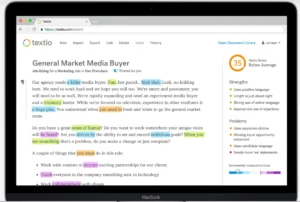
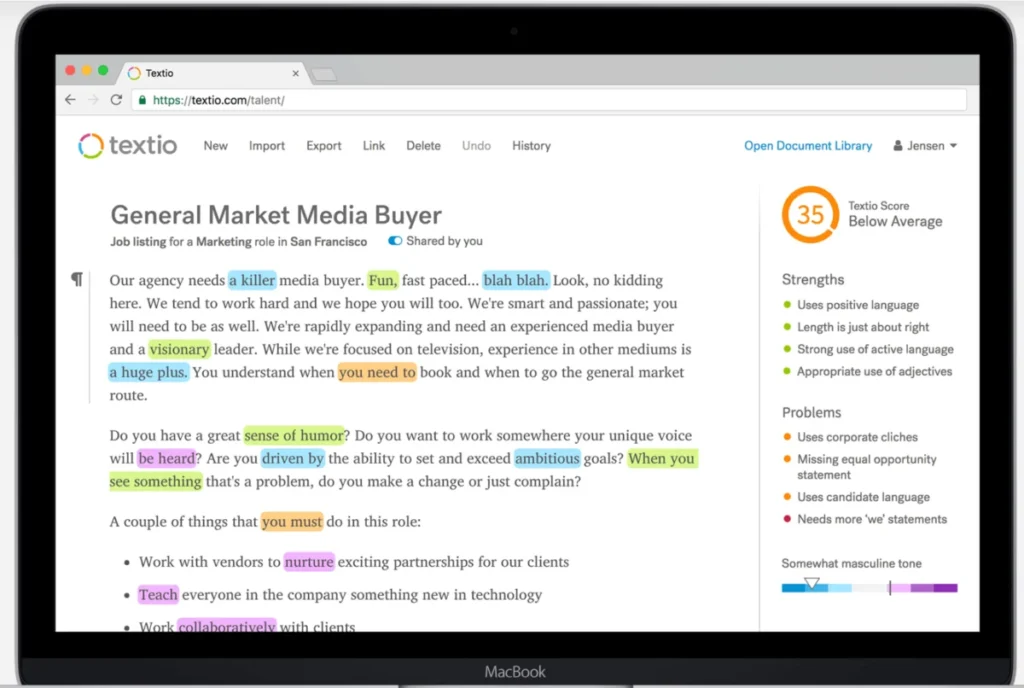
Textio, another prominent player, utilizes predictive analytics derived from the outcomes of job postings. This platform analyzes job description language and assigns a score reflecting its diversity, neutrality, and predicted success rate. Feedback is presented through color-coded words, guiding users towards more inclusive language. Textio’s gender writing analysis, which flags and suggests alternatives for "masculine-toned" terms, is a core feature, reflecting its foundational role in popularizing this aspect of bias detection. Its emphasis on augmented writing aims to optimize job descriptions for both inclusivity and performance.
For smaller organizations or those beginning their journey, Gender Decoder offers a simple, free, and accessible entry point. Developed by Kat Matfield, this tool is based on psychological research identifying words that disproportionately attract or deter certain genders. It provides a straightforward analysis, categorizing words as masculine, feminine, or neutral, and highlighting their potential impact. While less comprehensive than its commercial counterparts, Gender Decoder serves as an effective initial screening tool for gender-coded language.
Clovers (formerly Talvista) integrates a job description builder that reviews text for word choice, positive/negative language, and includes a gender decoder. Similar to other tools, it visually flags feminine and masculine words, offering alternative options to users. This platform aims to guide hiring teams through a more efficient and inclusive hiring process from the outset.
Expanding beyond traditional job description analysis, The Polite Type offers a unique open-source solution. While not exclusively designed for recruitment, it serves as a valuable resource for fostering inclusive communication. This tool automatically rewrites hurtful or discriminatory words (e.g., racial slurs) with more inclusive alternatives. Co-created with diverse teenagers and kids in Finland, it embodies a community-driven approach to language reform, highlighting the broader societal impact of word choice.
Beyond Descriptions: DEI Analytics and Culture Tools
While inclusive job descriptions are a crucial first step, a truly diverse and equitable workplace requires ongoing commitment and systemic interventions. A second category of tools focuses on broader DEI analytics and fostering an inclusive company culture. These platforms move beyond static text analysis to provide dynamic insights and facilitate continuous improvement.
Allie functions as a versatile chatbot companion, primarily integrated with communication platforms like Slack. Its capabilities extend to disseminating DEI surveys, enabling all employees to provide feedback on inclusion and company culture, and specifically probing whether diverse viewpoints are considered in organizational decisions. Allie also acts as a conduit for DEI news, delivering relevant articles to dedicated channels, thereby keeping employees informed of current trends. Crucially, its feedback feature allows employees to propose tangible enhancements to DEI efforts, whether addressing stereotypes or ensuring universal inclusivity. Additionally, Allie offers diversity training sessions, equipping teams with essential skills for navigating diverse work environments.
Blendoor positions itself as a diversity analytics and hiring software company focused on unbiased recruitment. It champions fair hiring practices through blind recruitment techniques, which remove identifiers like names or photographs from initial applications to mitigate unconscious bias. The platform sources candidates from diverse backgrounds and utilizes government and market data to provide organizations with a "Blendscore," benchmarking their DEI performance against competitors. Blendoor’s tools offer insights into areas for improvement and allow for tracking diversity metrics over time, serving as a strategic partner for organizations committed to long-term DEI goals.
Diversio offers a comprehensive suite of DEI tools designed to drive meaningful change. Its "Bias Corrector" integrates with communication platforms like Slack to flag cultural insensitivity or unconscious bias in internal communications. The "Social Media Barometer" monitors public perception, alerting companies to any D&I-related complaints online, enabling proactive reputation management. Perhaps its most powerful feature is the "Recommendation Engine," which uses algorithms to match organizational DEI challenges with data-backed courses of action, acting as a personalized advisor for strategic DEI implementation. These features collectively provide a robust framework for assessing, addressing, and improving an organization’s diversity and inclusion landscape.
The Future is Now: AI Job Description Generators
The latest frontier in DEI tools merges bias detection with generative AI, allowing for the automatic creation of optimized and inclusive job descriptions. These "AI Job Description Generators" represent a leap forward, aiming to embed best practices from the very start of the recruitment process.
Recruitment SMART’s SniperAI offers an equitable hiring platform that automatically generates optimized job ads tailored to specific company goals and roles. It boasts an 80% reduction in job description posting time and a 70% increase in content consistency, leading to improved candidate matching and quality of hire. The platform’s built-in equitable hiring tool provides diversity analytics, facilitates anonymous hiring processes by removing identifying candidate data (name, age, location), and includes a bias checker for objective candidate data scoring.
Manatal provides an advanced recruitment automation system capable of generating inclusive job descriptions at scale. Its intuitive interface guides users through a series of fields (company name, role, location) to create JDs. Manatal’s AI assistant then drafts descriptions based on these details, offering a "prompt refinement tool" to help users achieve the most suitable outcome. The platform currently offers subscribers up to 200 JD generations per month, limited to English ads, positioning itself as a scalable solution for recruitment agencies and larger enterprises.
Jasper Chat leverages advanced AI chatbot technology to generate structured job descriptions in minutes. Users interact with the AI through natural language processing (NLP), inputting vacancy details conversationally. Jasper Chat interprets this information to produce comprehensive JDs, offering a highly accessible and scalable method for creating job postings.
Skima AI employs an expert algorithm that analyzes top-performing job descriptions to derive a "winning recipe" for impact. By inputting job titles, key skills, and details like perks and benefits, hiring teams can generate quality JDs. Skima allows for convenient editing, removal, or regeneration of sections, ensuring the output meets expectations. The platform is designed to learn from user best practices, continuously improving its results and ensuring compliance with the latest industry standards, streamlining candidate matching, and significantly reducing drafting time.
Implications and the Road Ahead
The proliferation of these diversity tools signifies a pivotal moment in human resources and talent acquisition. Their implications are far-reaching:
- Enhanced Talent Pools: By removing biased language, companies can tap into previously overlooked segments of the workforce, leading to a more diverse and skilled applicant base.
- Improved Employer Branding: Organizations that visibly commit to inclusive hiring practices enhance their reputation as fair and progressive employers, attracting top talent.
- Operational Efficiency: AI-powered generators and checkers streamline the job description creation process, freeing up recruiters and hiring managers to focus on more strategic tasks.
- Data-Driven DEI Strategies: Analytics tools provide concrete data to measure DEI progress, enabling organizations to identify specific areas for improvement and tailor their strategies effectively.
- Legal Compliance: Proactive bias detection helps mitigate legal risks associated with discrimination in hiring, ensuring adherence to anti-discrimination laws.
However, the adoption of these tools is not without its challenges. Concerns about the ethics of AI, potential over-reliance on technology without corresponding cultural shifts, and data privacy considerations remain pertinent. The true success of these tools lies in their integration into a broader, holistic DEI strategy that includes training, leadership commitment, and a genuine organizational culture of belonging.
As technology continues to advance, the next generation of diversity tools is likely to feature even more sophisticated AI, deeper predictive analytics, and highly personalized DEI interventions. The ultimate goal is to move beyond simply correcting bias to proactively designing systems and cultures that are inherently equitable and inclusive, ensuring every individual has an equal opportunity to thrive. The journey toward truly diverse and inclusive workplaces is complex, but these technological advancements provide powerful instruments to navigate that path with greater precision and impact.