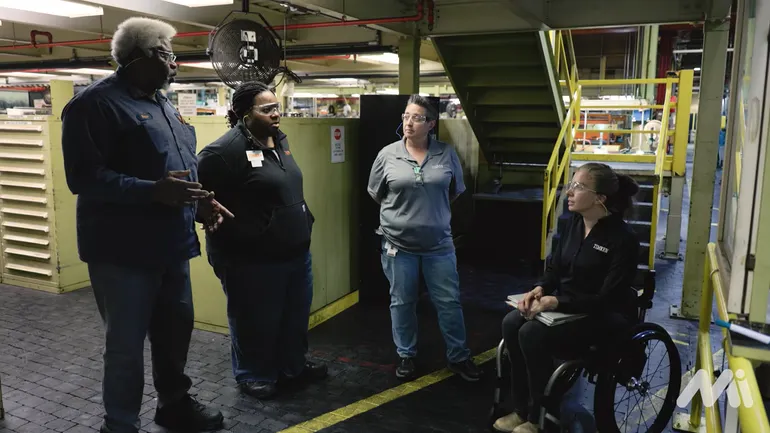
The American manufacturing sector, a cornerstone of the nation’s economy, is confronting an unprecedented workforce crisis, projected to leave millions of jobs unfilled in the coming decade. In response to this critical challenge, industry leaders are increasingly recognizing a powerful, often overlooked, solution: the deliberate and strategic inclusion of workers with disabilities. This pivotal shift in talent strategy was the central theme of a recent Manufacturing Institute (MI) webinar, titled "Building Disability-Friendly Careers in Manufacturing," which convened experts to explore how accommodations and modified hiring practices can empower manufacturers to attract, integrate, and support this vast pool of capable talent. The consensus was clear: disability inclusion is not merely a social good, but a business imperative for the future resilience and competitiveness of U.S. manufacturing.
The Looming Workforce Shortage and a Missed Opportunity
The urgency underpinning this conversation stems from a stark reality facing manufacturers. According to a comprehensive 2024 joint study by the Manufacturing Institute and Deloitte, the industry is bracing for a staggering workforce shortage of 3.8 million employees by 2033, with an estimated 1.9 million jobs expected to remain vacant. This deficit threatens to cripple production, stifle innovation, and undermine economic growth. Sabrina Zarifi, Senior Manager of the Manufacturing Institute’s retention program, Step Ahead, articulated this challenge during the September 24 event: “Manufacturing is competing harder than ever for skilled talent, and there’s an enormous pool of capable, motivated people that too many hiring and advancement processes still leave on the table.”
This "enormous pool" refers to individuals with disabilities, a demographic often marginalized in employment discussions despite representing a significant portion of the population. Data from the Centers for Disease Control and Prevention (CDC) reveals that more than one in four Americans lives with a disability, encompassing a wide spectrum of conditions, both visible and invisible. This translates to tens of millions of potential workers whose skills, dedication, and unique perspectives could be instrumental in closing the manufacturing talent gap. Beth Sirull, CEO of the National Organization on Disability (NOD), an employment nonprofit, underscored the magnitude of this opportunity: “This is an issue that affects really close to half your workforce, and so it isn’t a side issue to talent strategy. It is a core part of talent strategy, and a business imperative, and that’s really what gets me out of bed every morning because the economy needs these workers, and these workers need jobs, so we need to get on it.”
The economic implications of this overlooked talent pool are substantial. The National Council on Disability (NCD) has repeatedly highlighted that the underemployment and unemployment of people with disabilities contribute to a significant loss in economic output and tax revenue. Conversely, studies by organizations like Accenture have demonstrated that companies actively employing individuals with disabilities consistently outperform their peers in profitability, revenue, and shareholder returns. These businesses, often referred to as "disability champions," are twice as likely to have higher economic profits, underscoring that inclusion is a driver of financial success, not merely a cost center.
Dispelling Myths: The True Cost and Value of Accommodations
A persistent misconception hindering disability inclusion is the perceived high cost of workplace accommodations. However, data overwhelmingly refutes this. The Job Accommodation Network (JAN), a leading source of free, expert, and confidential guidance on workplace accommodations, reports that 94% of accommodations cost nothing or involve a low, one-time expense. These often simple adjustments can range from modified work schedules, ergonomic equipment, assistive technology, or even simply relocating a workstation. For example, a flexible schedule might allow an employee to manage medical appointments without impacting productivity, while voice-activated software can enable an individual with limited mobility to operate a computer effectively.
Beyond the minimal financial outlay, the return on investment for accommodations is significant. JAN’s research indicates that employers who provide accommodations experience numerous benefits, including increased retention of valued employees, improved productivity, reduced training costs, and enhanced morale across the entire workforce. The act of providing accommodations signals a company’s commitment to its employees’ well-being and ability to contribute, fostering a more inclusive and supportive work environment for everyone.
A Personal Journey: Michelle Barnhart’s Return to the Factory Floor
The power of thoughtful accommodation and proactive employer engagement is vividly illustrated by the journey of Michelle Barnhart, a dedicated manufacturing professional whose story was a focal point of the MI webinar. Barnhart’s deep connection to manufacturing began early in her career, an industry she credits with twice "saving her life." The first instance was after high school, when she was "a little bit lost in the world," finding direction and purpose through a job at a local ink company, sparking her lifelong passion for the industry.
The second, more profound instance, occurred after a devastating ATV accident in 2013 left her paralyzed and reliant on a wheelchair. At 26, and several years into her manufacturing career as an hourly operative, Barnhart faced an uncertain future. Her desire to return to normalcy, particularly to the dynamic environment of the factory floor she loved, was immense. Initially, her employer transitioned her to an office-based customer service role, a common but often limiting solution. However, Barnhart was determined to resume her hands-on contributions.
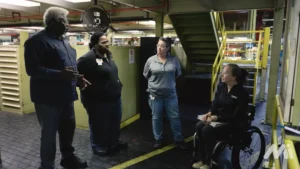
Crucially, her employer listened. Barnhart advocated for herself, and the company’s human resources team engaged in an open, exploratory dialogue. “At no point in my early career of being disabled did someone assume what I could or could not do,” Barnhart recounted. This approach, characterized by a "go-and-see mentality," was fundamental. It involved taking Barnhart to the factory floor in her wheelchair to physically test accessibility – navigating doorways, observing the impact of the shop floor environment on her wheelchair tires, and identifying potential barriers firsthand. This iterative process of assessment and adaptation allowed them to collectively determine what was feasible.
Barnhart’s experience highlights the importance of involving the individual with the disability directly in the accommodation process. They are often the best resource for identifying effective solutions and areas needing modification. This collaborative spirit not only ensures practical accommodations but also fosters a sense of agency and respect, reinforcing the employee’s value. Barnhart passionately articulated the broader significance: “It’s so important for individuals with disabilities to have that kind of contribution to society, but also for themselves, the mental and physical stimulation that has been proven over and over again to improve quality of life for people with disabilities.” Her career trajectory is a testament to this, as she later joined The Timken Co. in 2016 and has since advanced to Manager of Operations Workforce Development, now at her third Timken location.
Cultivating an Inclusive Culture: The Power of Empathetic Curiosity
Beyond reactive accommodations, fostering an inclusive environment requires a proactive cultural shift, starting with managerial practices. Beth Sirull introduced the concept of "empathetic curiosity" as a vital tool for managers. While managers are legally prohibited from asking about an employee’s health conditions, empathetic curiosity offers a framework for constructive engagement. This practice, often employed by therapists to understand clients’ concerns, is underpinned by empathetic listening and a genuinely curious attitude.
In the workplace, it translates to managers approaching potential performance issues or observed struggles with a supportive, rather than accusatory, mindset. Instead of asking, "What’s wrong with you?" or implementing a performance improvement plan immediately, a manager using empathetic curiosity might initiate a conversation with: "Is there anything we can do to help you perform your tasks more effectively?" or "I’ve noticed you’ve been facing some challenges with X; what support could we offer to help you succeed?" This reframes the interaction, putting it in a "very positive framework as opposed to an accusatory one," Sirull explained.
Implementing empathetic curiosity effectively requires comprehensive education and training for managers at all levels, from the shop floor supervisor to the CEO suite. It equips them with the skills to open sensitive conversations, create a safe space for employees to disclose needs, and understand how to navigate the process of exploring accommodations without overstepping legal boundaries. This approach not only addresses immediate performance concerns but also cultivates psychological safety and builds trust within teams. Employees witness that their colleagues are supported, reinforcing the idea that the company values and invests in its people. “Other colleagues will see that that’s the kind of manager you are, and it just engenders trust across entire teams, and that’s an invaluable characteristic of a team,” Sirull added.
Redesigning the Recruitment Pipeline for Inclusivity
The conversation around disability inclusion must extend far beyond retaining existing employees to encompass the entire talent acquisition process. Michelle Barnhart’s experience highlighted the distinct challenges and opportunities in hiring individuals with disabilities compared to accommodating an existing employee who acquires one. At Timken, the conversations about her needs and potential accommodations occurred before she was hired, signaling a proactive and inclusive recruiting strategy.
This pre-hire dialogue involved practical steps such as incorporating questions about accommodation needs during candidate interviews and facilitating tours of the manufacturing floor. These tours allowed Barnhart to assess accessibility firsthand and for the company to understand potential modifications required for her specific role. This approach ensures that the recruitment process itself "brought in people with physical disabilities into manufacturing successfully," Barnhart noted.
To truly build disability-friendly careers, manufacturers must critically examine and modify every stage of their recruitment pipeline. This includes:
- Job Descriptions: Ensuring language is inclusive, focuses on essential job functions rather than specific physical capabilities, and clearly states the company’s commitment to providing reasonable accommodations.
- Application Processes: Utilizing accessible online platforms, offering alternative application formats, and providing clear contact information for accommodation requests.
- Interviewing: Training interviewers to ask disability-inclusive questions, focusing on skills and experience, and being prepared to discuss potential accommodations in a respectful and practical manner. Providing accessible interview locations and formats.
- Onboarding: Creating a welcoming and supportive onboarding experience that includes discussions about available resources and support systems.
- Partnerships: Collaborating with disability employment agencies, vocational rehabilitation services, and community organizations that specialize in connecting skilled individuals with disabilities to employers.
By embedding these practices, manufacturers can dismantle systemic barriers and signal to a vast talent pool that they are genuinely committed to diversity and inclusion from the very first interaction.
Broader Impact and Implications for the Manufacturing Sector
The implications of embracing disability inclusion in manufacturing extend far beyond simply filling job vacancies. This strategic shift contributes to a more robust, resilient, and equitable industrial base. Economically, it unlocks untapped human capital, boosting productivity and innovation. Socially, it champions equal opportunity, reduces poverty, and fosters greater community integration for people with disabilities.
Furthermore, a disability-inclusive workforce can enhance a company’s brand reputation, attracting a broader customer base and a more diverse pool of talent. Companies known for their inclusive practices often experience higher employee engagement and loyalty, leading to reduced turnover and a stronger organizational culture. As the manufacturing sector increasingly relies on advanced technologies and complex problem-solving, diverse teams, including those with varied abilities, are proven to be more innovative and adaptable. The unique problem-solving approaches often developed by individuals with disabilities can lead to creative solutions that benefit the entire enterprise.
This movement aligns with broader national efforts to promote diversity, equity, and inclusion (DEI) across all industries. Government initiatives, such as tax credits for accessible workplaces and federal programs supporting disability employment, underscore the societal value placed on these efforts. For manufacturing, an industry often perceived as traditional or physically demanding, becoming a leader in disability inclusion can transform its public image, making it more attractive to younger generations entering the workforce who prioritize socially responsible employers.
Looking Ahead: Sustaining Progress and Driving Change
The "Building Disability-Friendly Careers in Manufacturing" webinar served as a critical platform for advancing this dialogue, but it represents just one step in a longer journey. Sustaining progress will require ongoing commitment, education, and collaboration. Manufacturers must continue to:
- Invest in Training: Equip all employees, especially managers, with the knowledge and skills to foster an inclusive environment and effectively implement accommodations.
- Leverage Technology: Explore and adopt assistive technologies and smart factory solutions that can enhance accessibility and expand job opportunities for individuals with diverse abilities.
- Build Partnerships: Collaborate with disability advocacy groups, educational institutions, and government agencies to create pipelines for talent and share best practices.
- Measure and Report: Track key metrics related to disability employment, retention, and satisfaction to assess progress and identify areas for improvement.
- Champion Success Stories: Share narratives like Michelle Barnhart’s to inspire other employers and demonstrate the tangible benefits of inclusion.
The manufacturing industry stands at a pivotal juncture. By proactively embracing disability inclusion as a core business strategy, it can not only address its pressing talent shortages but also forge a path towards a more innovative, equitable, and prosperous future for all. The commitment to "get on it," as Sirull urged, is not just about meeting a demand; it is about recognizing the inherent value and potential within every individual, and building an industry that truly reflects the strength of its diverse workforce.