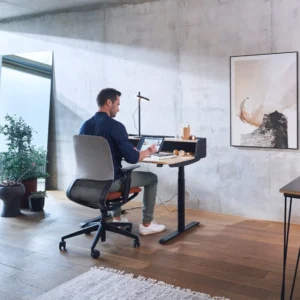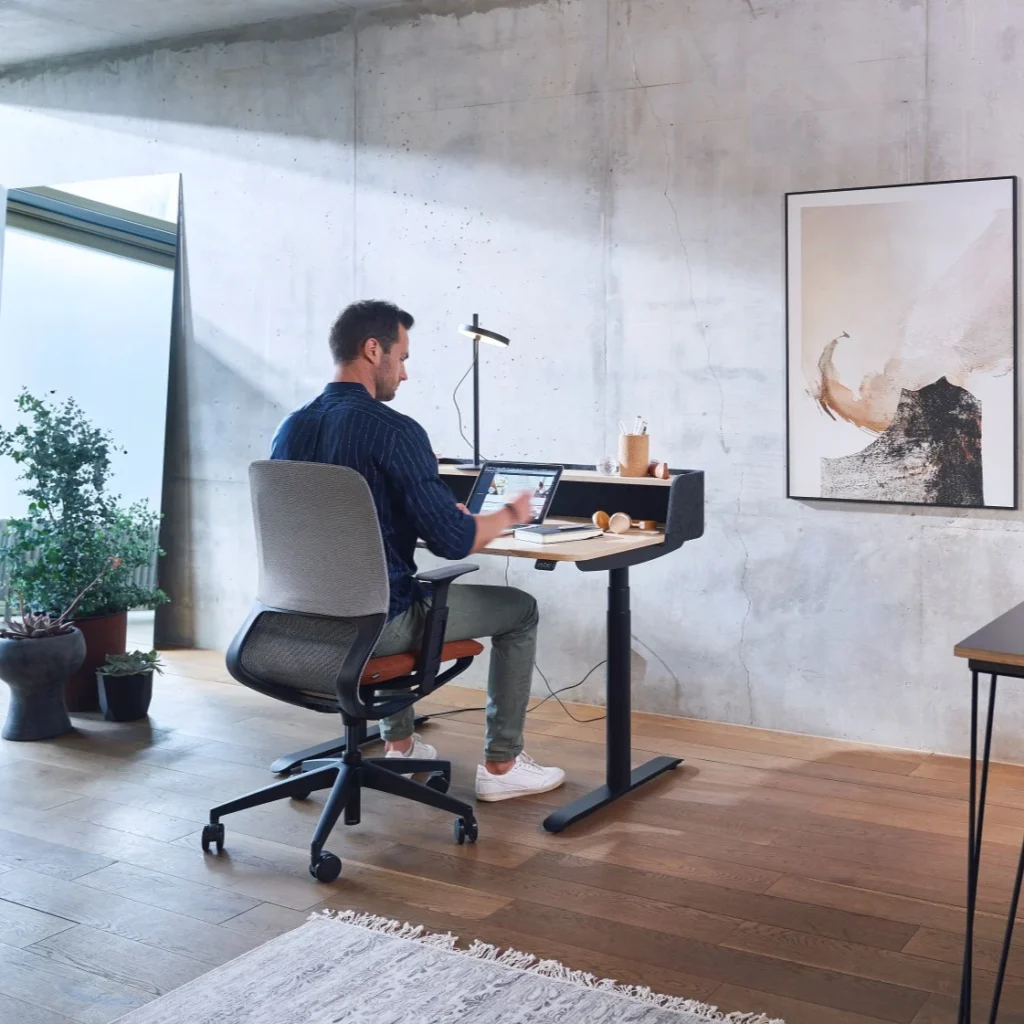
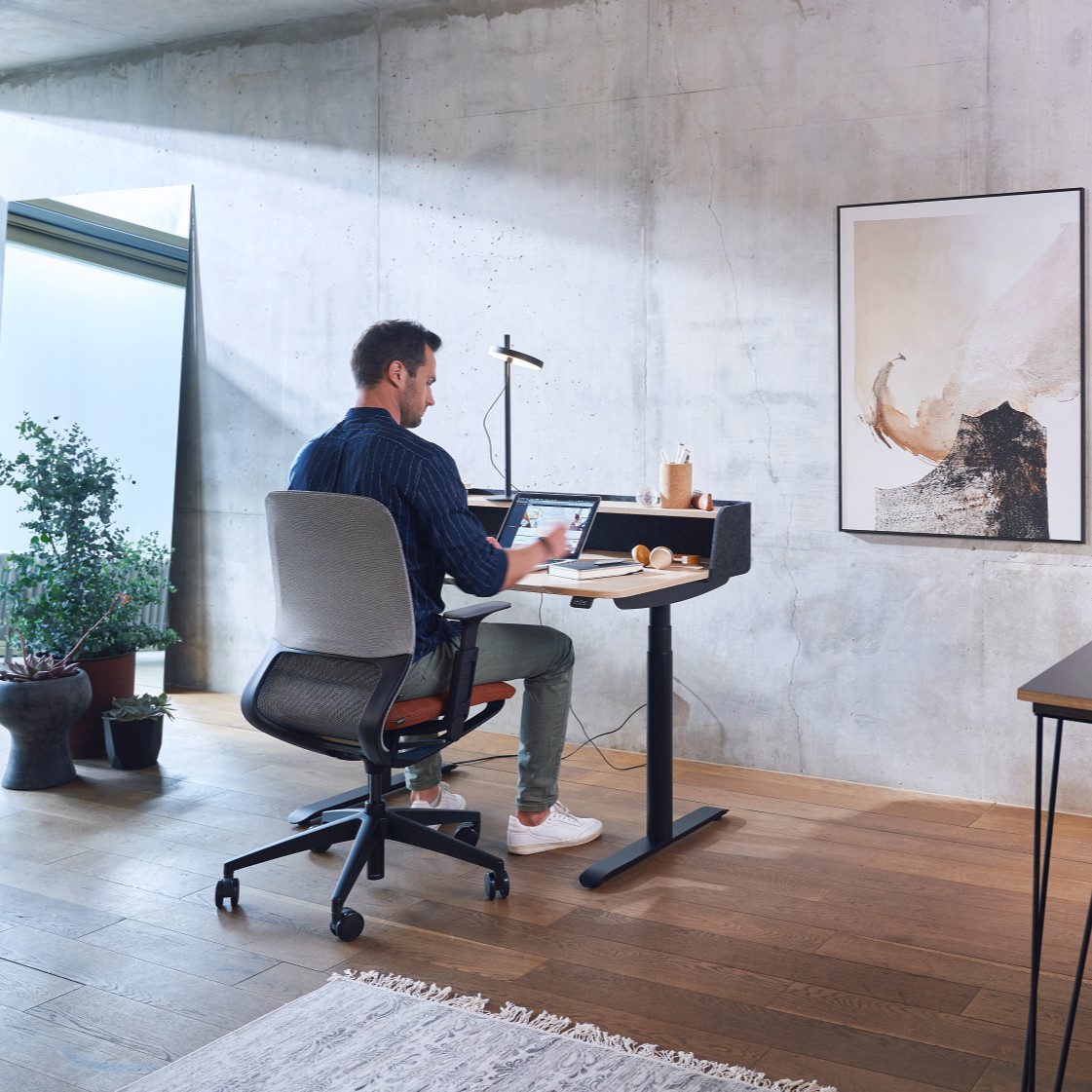
A significant new study delving into the evolving landscape of work in the United Kingdom and Germany has revealed a concerning trend: men who predominantly work from home may encounter a more substantial career penalty than their female counterparts when it comes to job prospects and promotions. The research, conducted by leading academics at King’s Business School at King’s College London, analysed nearly 13,000 assessments of hypothetical candidates and found that remote workers were consistently rated less favourably than those who worked in the office, with the negative impact escalating with the frequency of remote work.
The Growing Stigma of Homeworking
The study, published in the journal Community, Work & Family, highlights that the benefits of flexible working arrangements, long championed for their potential to improve work-life balance, may be undermined by ingrained biases within the workplace. Participants in the study were presented with profiles of individuals and asked to rate them on various professional attributes. A stark pattern emerged: candidates described as working from home, even for just one or two days a week, received lower ratings than their office-based counterparts. This discrepancy widened considerably for those working remotely for three or four days a week, indicating a clear "homeworking penalty."
In the UK, the decline in ratings for those working remotely one or two days a week was 0.56 points on a 10-point scale, compared to office-based workers. This penalty almost doubled to 0.94 points for individuals working remotely three to four days a week. Germany, while exhibiting a similar trend, showed a slightly less pronounced penalty, with ratings falling by 0.24 points for one to two days of remote work and 0.74 points for three to four days. These figures underscore a pervasive negative perception of homeworking that persists despite the widespread adoption of hybrid and remote models in the wake of the COVID-19 pandemic.
Gender and Parental Status: A Complex Interplay
The research also unearthed nuanced differences based on gender and parental status, revealing a complex interplay of societal expectations and workplace biases. While mothers working remotely for one or two days a week did not experience a statistically significant reduction in their ratings in either country, the same was not true for men. Fathers and workers without children generally saw larger declines in their ratings when described as working from home.
This finding, however, comes with a crucial caveat. The researchers caution against interpreting this as an inherent advantage for mothers. In the UK, mothers already started from a position of receiving relatively lower ratings even when described as working entirely in the office, particularly when compared to women without children. Therefore, the smaller additional homeworking penalty experienced by mothers may, at least in part, reflect this lower baseline rather than more favourable treatment when working remotely.
Professor Heejung Chung, a lead author of the study and Professor of Work and Employment at King’s Business School, emphasized this point, stating, "Flexible working has often been seen as a mothers’ issue, but this study shows that fathers also need protection from career penalties when they use it." She further argued that normalizing flexible working for fathers could have broader societal implications, potentially influencing a more equitable division of caring responsibilities and thereby supporting mothers’ employment while simultaneously improving outcomes for fathers and children.
The "Proximity Bias" and its Implications
The study’s findings point towards a phenomenon known as "proximity bias," where individuals who are physically present in the workplace are perceived more favourably, often due to unconscious assumptions about their productivity, commitment, and engagement. This bias can disadvantage remote workers, even if their actual output and contributions are equivalent or superior to their office-based colleagues.
The researchers suggest that organizations need to critically examine their promotion and performance evaluation processes. An overemphasis on an employee’s physical visibility can inadvertently create barriers for those who opt for or require flexible working arrangements. The study’s authors advocate for a shift in focus from "time spent in the workplace" to "outcomes achieved," thereby mitigating the impact of proximity bias and ensuring a more equitable evaluation of all employees, regardless of their work location.
National Differences and the Role of Culture
While the homeworking penalty was evident in both the UK and Germany, the study noted a significant difference in the impact of limited homeworking (one to two days a week). UK workers faced a greater penalty in these scenarios compared to their German counterparts. However, this difference diminished when participants worked remotely for three to four days a week, suggesting that beyond a certain threshold, the negative perceptions become more uniform across both nations.
This disparity could be attributed to varying national institutions and workplace cultures. The research implies that simply offering the option of homeworking is not enough to dismantle existing negative assumptions about employees who utilize it. A cultural shift within organizations is required to foster genuine acceptance and integration of flexible working models.
A Hypothetical Framework: Understanding Perceptions
It is crucial to note that this research, while insightful, measured hypothetical decisions rather than actual recruitment or promotion outcomes. The participants assessed fictional candidates, and the study did not track the real-world career trajectories of individuals. The experiment’s strength lies in its ability to demonstrate that identical candidates can be evaluated differently based solely on their described working arrangements, thus providing strong evidence of a bias at play.
The data for this study was collected in the latter half of 2023, drawing on assessments from approximately 5,300 employed individuals in the UK and Germany. The fictional candidates’ profiles were meticulously varied to isolate the impact of factors such as gender, parental status, and homeworking frequency.
Broader Societal Impact and Future Directions
The implications of this research extend beyond individual career progression. The normalization of flexible working is a critical factor in fostering greater gender equality in the workplace and within households. By challenging the notion that flexible work is solely a "mother’s issue," the study encourages a more balanced approach to work and caregiving responsibilities.
The authors’ recommendation to "make flexibility safe and normal for fathers" is particularly pertinent. This could not only support mothers’ continued participation in the workforce but also foster a more equitable distribution of domestic labour, benefiting families and children alike.
Furthermore, the findings suggest that employers should actively work to dismantle stereotypes associated with flexible working. Presenting flexibility primarily as an arrangement for those with caring responsibilities risks reinforcing these stereotypes and may deter fathers from utilizing these options, even if they would benefit from them.
Expert Commentary and Academic Rigor
The research, spearheaded by Professor Heejung Chung, involved collaboration with Assistant Professor Senhu Wang from the National University of Singapore and Dr. Yvonne Lott from the Institute of Economic and Social Research at the Hans-Böckler Foundation. Their paper, "Flexibility stigma in the UK and Germany post-pandemic: intersectionality of stigma across gender and parental lines," provides a robust academic contribution to the ongoing discourse on the future of work.
The publication in Community, Work & Family, a respected journal in the field, lends significant weight to the study’s findings. The rigorous methodology, involving a large sample size and carefully controlled experimental design, enhances the credibility and impact of the research.
Moving Forward: Towards a Truly Inclusive Workplace
As organizations continue to navigate the post-pandemic world, the insights from this study offer a clear roadmap for fostering more inclusive and equitable workplaces. Addressing proximity bias, emphasizing outcomes over physical presence, and actively working to normalize flexible working for all employees, regardless of gender or parental status, are crucial steps.
The research serves as a timely reminder that the shift towards flexible working is not merely a logistical adjustment but a fundamental cultural transformation that requires conscious effort and a commitment to challenging deeply ingrained biases. Failure to do so risks perpetuating inequalities and hindering the full potential of a diverse and adaptable workforce. The journey towards a truly flexible and equitable future of work demands a proactive approach from employers and a continued dialogue on the evolving dynamics of work and life.