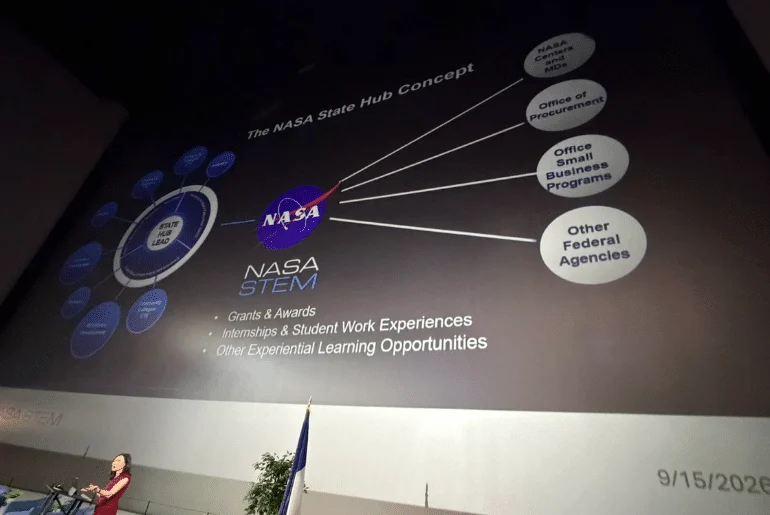
NASA has launched a nationwide initiative to strengthen the pipeline of skilled technical workers for the growing US aerospace sector, with programmes designed to connect students with industry-relevant skills, credentials, and hands-on experience. This ambitious undertaking, formally unveiled on September 15 at Space Centre Houston, brought together a diverse consortium of project leaders, state, federal, and industry partners. The collaborative assembly marked a pivotal moment in coordinating national workforce development efforts, aiming to address critical talent gaps that threaten to impede the nation’s burgeoning space economy and future exploration endeavors.
The Genesis of a National Imperative: Addressing the Skills Gap
The initiative emerges at a crucial juncture for the United States’ aerospace and defense industry. While the sector remains a cornerstone of American innovation, economic strength, and national security, it faces a looming challenge: a significant shortage of skilled technical workers. Projections from various government and industry bodies consistently indicate a widening gap between the demand for specialized technical roles—such as machinists, welders, composite technicians, avionics specialists, robotics operators, and quality control inspectors—and the available supply of qualified personnel. This deficit is exacerbated by an aging workforce, with a substantial portion of experienced technicians nearing retirement, and a perceived lack of interest among younger generations in vocational and technical careers.
The US aerospace sector is a colossus, contributing hundreds of billions of dollars to the nation’s Gross Domestic Product and supporting millions of direct and indirect jobs. Its health is vital not only for commercial aviation and defense but increasingly for the rapidly expanding commercial space industry, satellite broadband networks, in-space manufacturing, and ambitious human exploration programs like Artemis, which aim to return humans to the Moon and eventually send them to Mars. These forward-looking missions and commercial ventures demand a robust, agile, and highly skilled technical workforce capable of operating complex machinery, fabricating advanced components, assembling intricate systems, and maintaining sophisticated infrastructure. Without a steady influx of trained individuals, the nation’s leadership in space and aviation could be jeopardized.
A Decentralized Approach: The "State Hubs" Model
In August, prior to the formal launch event, NASA meticulously selected seven pioneering projects to establish the inaugural State Hubs. These hubs are strategically located across California, Colorado, Florida, Georgia, Minnesota, Texas, and Utah – states with significant existing aerospace footprints, robust educational infrastructures, and demonstrated commitments to workforce development. Each selected State Hub is tasked with the critical mission of developing bespoke programs tailored precisely to the unique aerospace industry demands and workforce requirements prevalent within its respective state. This decentralized yet coordinated approach acknowledges that while the overarching goal is national, the specific needs and resources vary regionally.
The initiative’s core philosophy centers on building clear and accessible pathways into technical jobs across the entire aerospace sector. This involves a multi-pronged strategy: connecting students with comprehensive training programs, providing invaluable practical, hands-on experience, and ensuring they acquire credentials that are directly aligned with employer requirements. The emphasis on industry-recognized credentials is paramount, as it ensures that graduates possess skills that are immediately applicable and valued by aerospace companies, bridging the often-cited gap between academic preparation and real-world job demands.
Unpacking the Challenges: Coordination, Scale, and Perception
During the formal launch event at Space Centre Houston, NASA and its State Hub partners engaged in intensive discussions, dissecting the multifaceted workforce challenges currently afflicting the STEM talent pipeline. Several critical barriers were identified and deliberated upon:
-
Limited Coordination Between Industry, Community Colleges, and State Economic-Development Organizations: A significant impediment has been the historical siloed approach to workforce development. Industry often struggles to communicate its evolving skill needs effectively to educational institutions, while community colleges, vocational schools, and universities may not always have the resources or mechanisms to rapidly adapt curricula. State economic development organizations, while focused on job creation, sometimes lack direct, granular insight into the specific technical proficiencies required by aerospace employers. The State Hubs aim to serve as vital conduits, fostering continuous dialogue and creating integrated ecosystems where these stakeholders can collaborate seamlessly.
-
Difficulties in Scaling Workforce Programmes: Many successful, localized workforce development initiatives exist, but scaling them up to meet national demand has proven challenging. This often stems from inconsistent funding, lack of standardized curricula, and an inability to replicate best practices across different regions. The State Hubs initiative seeks to create a framework that allows for the sharing of resources, methodologies, and successful program models, thereby enabling efficient scaling and broader impact.
-
Misconceptions Surrounding Manufacturing Careers: A persistent challenge is the outdated perception of manufacturing jobs. Many still associate manufacturing with repetitive, dirty, and low-skill labor, failing to recognize the profound transformation the sector has undergone. Modern aerospace manufacturing is characterized by advanced robotics, automated systems, precision engineering, additive manufacturing (3D printing), sophisticated data analytics, and clean-room environments. These roles demand highly skilled individuals who are adept at technology, problem-solving, and continuous learning. Part of the Hubs’ mission will be to actively dispel these misconceptions, showcasing the high-tech, innovative, and rewarding nature of contemporary aerospace technical careers to students, parents, and educators.
Timeline and Forward Momentum
Following the September 15 launch, the State Hubs are expected to move swiftly. Over the coming months, they will be actively engaged in developing and initiating the delivery of their tailored programs, tools, and resources. This includes establishing curricula, recruiting students, forging partnerships with local aerospace companies for internships and apprenticeships, and setting up career guidance and placement services. The immediate goal is to equip students with the necessary technical capabilities for entry-level and mid-level careers in the aerospace workforce, creating a direct pipeline from education to employment.
This initiative is not merely a short-term fix but a long-term strategic investment. It brings together NASA’s unparalleled expertise, the educational capacity of institutions, the practical demands of industry partners, and the regional support of state agencies. This convergence is critical for aligning training methodologies with the rapidly changing workforce requirements and evolving hiring trends within the dynamic aerospace landscape. As technologies like artificial intelligence, quantum computing, and advanced propulsion systems mature, the skills demanded of technical workers will also evolve, necessitating a flexible and adaptive educational framework.
Supporting Data and Economic Context: The Aerospace Boom
The urgency behind NASA’s initiative is underpinned by robust economic data and industry forecasts. The global space economy, currently valued at over $400 billion, is projected to exceed $1 trillion within the next decade, with the US playing a dominant role. This exponential growth translates directly into a heightened demand for a specialized workforce.
- Job Growth Projections: The Bureau of Labor Statistics (BLS) projects steady growth in many technical occupations relevant to aerospace. For instance, machinists and tool and die makers, while experiencing technological shifts, remain critical, requiring advanced digital manufacturing skills. Aircraft and avionics equipment mechanics and technicians are projected to see continued demand as air travel recovers and the commercial space sector expands.
- Skills Gap Metrics: Industry surveys frequently cite that over 60% of manufacturing companies struggle to find qualified workers, with technical skills topping the list of deficits. This "skills gap" is particularly acute in areas requiring precision fabrication, advanced welding, composite materials expertise, and sophisticated electronics assembly.
- Economic Multiplier Effect: Every job created in the aerospace sector often supports several additional jobs in related industries (supply chain, services, research). Investing in this workforce pipeline therefore has a significant multiplier effect on local and national economies.
- Investment in STEM Education: The initiative complements broader national efforts to promote Science, Technology, Engineering, and Mathematics (STEM) education. By providing clear career paths and demonstrating tangible job opportunities, it aims to inspire more students to pursue technical fields.
Broader Implications for US Space Leadership and Innovation
NASA explicitly states that this program is intended to help build a career-ready technical workforce capable of supporting the expansion of the US space economy and future aerospace programs. The implications of this initiative extend far beyond mere job creation:
- Sustaining Exploration and Scientific Discovery: A robust technical workforce is indispensable for executing NASA’s ambitious missions, from constructing the Gateway lunar orbiting outpost to developing next-generation telescopes and deep-space probes.
- Bolstering Commercial Space Competitiveness: The commercial space sector thrives on innovation and efficiency. A readily available pool of skilled technicians reduces operational costs, accelerates development timelines, and fosters a competitive environment for US companies on the global stage.
- National Security: A strong aerospace workforce is foundational to the nation’s defense capabilities, ensuring the development, production, and maintenance of advanced military aircraft, satellites, and missile systems.
- Technological Innovation: When skilled workers are readily available, companies are more likely to invest in cutting-edge technologies and manufacturing processes, driving further innovation across the industry.
- Diversity and Inclusion: By creating accessible pathways to rewarding technical careers, the initiative has the potential to attract a more diverse talent pool, including women and underrepresented minorities, thereby enriching the workforce with varied perspectives and talents.
Potential Obstacles and Future Outlook
While the State Hubs initiative represents a significant step forward, its success will depend on overcoming several potential obstacles. Sustained funding, particularly from diverse sources including federal, state, and private industry, will be crucial. The ability of the hubs to rapidly adapt their programs to evolving technological advancements and industry needs will also be paramount. Furthermore, effectively changing public perception about technical careers requires a concerted and ongoing communication strategy.
Despite these challenges, the collaborative framework established by NASA holds immense promise. By fostering unprecedented coordination among key stakeholders, leveraging regional strengths, and directly addressing the root causes of the skills gap, the State Hubs for Skilled Technical Workforce initiative is poised to be a transformative force. It is not merely about filling jobs; it is about investing in the human capital that will drive the next generation of American aerospace leadership, ensuring the nation’s continued preeminence in the vast expanse of space and the skies above. The coming months will be critical as these hubs begin to materialize their ambitious plans, laying the groundwork for a future where American ingenuity and craftsmanship continue to define the frontiers of aerospace.