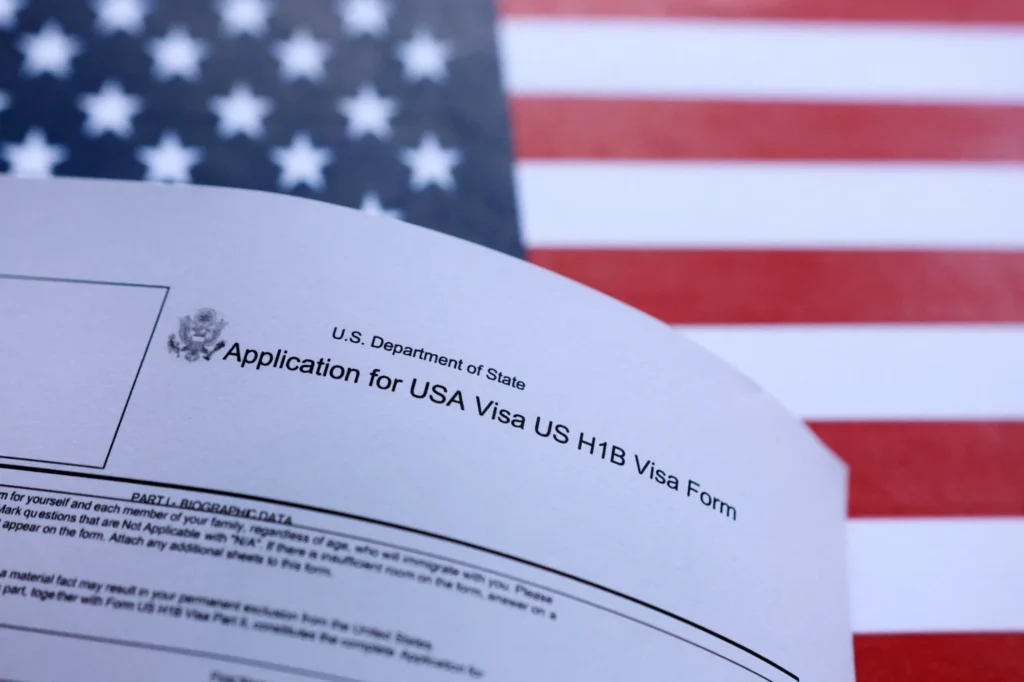
The proposed imposition of a substantial fee exceeding $100,000 on new H-1B visas for highly skilled foreign workers has prompted a strong response from India’s tech industry body, Nasscom. In a statement released on Tuesday, Nasscom urged the United States government to carefully evaluate the H-1B program’s critical role in addressing the nation’s persistent skill shortages before enacting the new fee structure. This call comes in the wake of the Trump administration’s recent proposal, which seeks to codify an unprecedented fee of $103,265 for these crucial visas.
Nasscom’s plea highlights a broader trend within the Indian IT sector: a significant decline in the number of H-1B workers employed by Indian IT companies over the past five years. This reduction is attributed to a strategic shift by these firms to bolster their local workforce within the U.S., a move driven in part by previous policy changes and a desire for greater operational flexibility.
The industry body stated that it is "actively engaged" with all pertinent stakeholders following the U.S. Department of Homeland Security’s release of the proposed regulation on Monday. This proposed rule aims to establish a new fee structure for H-1B visas, a program designed to allow U.S. employers to temporarily employ foreign workers in specialty occupations requiring theoretical or technical expertise.
Background: The H-1B Visa and its Controversies
The H-1B visa program has been a cornerstone of the U.S. technology talent landscape for decades, facilitating the entry of skilled foreign professionals to fill critical roles that American workers may not be readily available to fill. However, the program has also been a subject of intense debate, with critics arguing that it is susceptible to abuse by some companies. These critics contend that certain employers utilize the H-1B visa to replace American workers with cheaper foreign labor, thereby suppressing domestic wages and hindering opportunities for U.S. citizens.
This criticism gained particular traction during the Trump administration, which often voiced concerns about the program’s impact on American jobs. The proposed substantial fee increase can be seen as an attempt to either deter companies from utilizing the H-1B visa or to generate revenue that could potentially be used to support American workers.
Nasscom’s Position: Addressing Skill Gaps and U.S. Investment

Nasscom, representing India’s massive $315 billion IT sector, maintains that the H-1B visa program has historically served an "important purpose in addressing short-term skill gaps in the U.S." The organization argues that imposing prohibitive fees could undermine this fundamental objective.
The Indian IT industry has already had to adapt its strategies significantly in response to previous policy shifts. When President Donald Trump first introduced a fee for H-1B visas last year, Indian IT firms had to overhaul their long-standing practice of rotating skilled talent into U.S. projects. This earlier fee increase was met with legal challenges, and in June, a U.S. District Court in Boston ruled against the move, deeming it an "unlawful tax" that Congress had not authorized.
Nasscom emphasizes the substantial investments made by the Indian IT industry to strengthen the U.S. STEM (Science, Technology, Engineering, and Mathematics) talent pipeline. According to the organization, these investments have surpassed $1.1 billion and have been channeled through various initiatives, including university partnerships and programs aimed at upskilling the American workforce. This proactive approach, Nasscom argues, demonstrates the industry’s commitment to fostering domestic talent while also leveraging global expertise.
"A proposed increase in visa fees must therefore be viewed in the context of the program’s original purpose of enabling access to temporary skills where there is a shortage in the U.S.," Nasscom stated. This sentiment underscores their belief that the H-1B visa remains a vital tool for businesses to maintain their competitiveness and drive innovation when faced with specific talent deficits.

Timeline of Policy Shifts and Industry Responses
The current debate surrounding the H-1B visa fee is the latest chapter in an ongoing narrative of policy adjustments and industry adaptation. A brief chronology illustrates this evolution:
- Early 2017 Onwards: The Trump administration begins to signal a more restrictive approach to immigration, including the H-1B visa program.
- 2018-2019: Discussions and proposals emerge regarding changes to the H-1B program, including increased scrutiny and potential fee adjustments.
- April 2019: The U.S. Citizenship and Immigration Services (USCIS) announced an increase in certain H-1B fees, primarily for the H-1B registration fee, to help fund the H-1B lottery system.
- October 2019: Reports emerge of the Trump administration considering a significant increase in H-1B visa fees, potentially reaching tens of thousands of dollars per visa.
- February 2020: The U.S. District Court in Boston strikes down a previous fee hike imposed by the Trump administration, ruling it unlawful.
- June 2020: The Trump administration proposes new rules to reform the H-1B program, including changes to the selection process and wage requirements.
- Early 2021: The Biden administration signals a review of the H-1B program and other immigration policies.
- November 2023: The U.S. Department of Homeland Security announces a proposed rule that includes a significant fee increase for new H-1B visas, reportedly around $103,265.
- November 2023: Nasscom issues its statement urging reconsideration of the proposed fee hike.
This timeline reveals a pattern of policy proposals and counter-responses, highlighting the dynamic and often contentious nature of immigration and labor policies in the United States.
Supporting Data and Industry Trends

The argument presented by Nasscom is bolstered by several key data points and industry trends:
- Declining H-1B Workforce: The assertion that the number of H-1B workers employed by Indian IT companies has fallen sharply over the past five years is significant. While specific figures were not provided in the initial report, this trend suggests a strategic pivot by these companies. This pivot likely involves increased hiring of local U.S. talent, a move that aligns with policy pressures and the desire to build a more integrated U.S.-based workforce.
- U.S. STEM Talent Shortage: Numerous reports and studies have consistently pointed to a shortage of skilled professionals in STEM fields within the United States. A 2021 report by the National Science Foundation, for instance, highlighted that while the U.S. produces a large number of STEM graduates, the demand for specialized skills, particularly in areas like artificial intelligence, cybersecurity, and data science, often outstrips the available supply. The H-1B program, when functioning as intended, aims to bridge these gaps.
- Industry Investment in U.S. Workforce Development: Nasscom’s claim of over $1.1 billion invested in strengthening the U.S. STEM talent pipeline through university partnerships and upskilling programs is a crucial counterpoint to criticisms of the Indian IT sector. These investments suggest a commitment to contributing to the U.S. economy and its workforce development initiatives, rather than solely relying on foreign labor. Such investments can include funding for research, scholarships, curriculum development, and training programs for American workers.
- Economic Impact of IT Sector: India’s IT sector is a significant global player, contributing substantially to the U.S. economy through services, investments, and job creation. The revenue generated by Indian IT companies operating in the U.S. is in the billions of dollars annually, and they employ hundreds of thousands of individuals, both U.S. citizens and foreign nationals. Policies that disrupt the operational efficiency of these companies can have ripple effects on innovation, service delivery, and economic growth.
Potential Implications of the Proposed Fee Hike
The proposed fee increase, if implemented, could have several far-reaching implications:
- Reduced Competitiveness for U.S. Businesses: Companies that rely on specialized foreign talent to fill critical roles may find it prohibitively expensive to do so. This could stifle innovation, slow down product development, and ultimately make U.S. businesses less competitive on the global stage.
- Impact on Startups and Smaller Companies: While larger IT firms might absorb the increased costs, startups and smaller businesses, which often have tighter budgets, could be disproportionately affected. This could limit their ability to access the specialized skills needed to scale and grow.
- Shift in Talent Acquisition Strategies: Companies might be forced to further intensify their efforts to recruit and train U.S. workers, potentially leading to longer hiring cycles and higher labor costs in the long run. Alternatively, some companies might consider relocating certain operations or outsourcing to countries with more favorable visa policies.
- Deterrent Effect on High-Skilled Immigration: A substantial fee increase could act as a deterrent for highly skilled professionals considering coming to the U.S., potentially leading to a "brain drain" effect where top talent seeks opportunities elsewhere.
- Geopolitical Ramifications: Changes to visa policies can also have diplomatic implications. India, as a major source of H-1B visa recipients, will likely continue to monitor and engage with U.S. policy decisions closely.
Broader Context and Future Outlook

The debate over the H-1B visa program is emblematic of a larger discussion about immigration, globalization, and the future of work in the United States. While concerns about protecting American jobs are valid, the need for skilled labor to drive technological advancement and economic growth is also undeniable.
Nasscom’s call for a balanced approach, emphasizing the program’s role in addressing skill shortages and highlighting the industry’s investments in the U.S. workforce, suggests a path forward that acknowledges both domestic needs and global realities. The industry body’s engagement with stakeholders indicates a willingness to collaborate on solutions that benefit all parties.
The ultimate impact of the proposed fee hike will depend on the final regulations and how they are implemented. However, the current discourse underscores the critical need for pragmatic and data-driven policies that support both the U.S. economy and the global talent ecosystem. The U.S. administration faces the challenge of striking a delicate balance between safeguarding domestic interests and fostering an environment that attracts and retains the world’s brightest minds, crucial for maintaining its technological leadership. The coming months will reveal how this complex issue is resolved and what the future holds for the H-1B visa program.