National Inclusion Week, observed annually from September 14th to 20th, 2026, presents a critical opportunity for organizations to move beyond platitudes and cultivate genuine diversity, equity, and inclusion (DEI) within their workplaces. This dedicated week serves as a powerful call to action, urging a shift from abstract values to tangible, daily practices that foster a sense of belonging, enhance employee engagement, and unlock innovation. By prioritizing connection and learning throughout this period, companies can significantly strengthen their organizational fabric and operational effectiveness. This article delves into the essence of National Inclusion Week, its profound importance, and offers a practical five-day agenda designed to guide teams in a purposeful and impactful celebration.
The Genesis and Significance of National Inclusion Week
National Inclusion Week was initiated by Inclusive Employers, a prominent organization committed to embedding diversity into the very culture of workplaces. This annual observance is designed to ignite meaningful dialogues surrounding intersectionality, acknowledging the complex interplay of race, gender, religion, sexual orientation, and other identity facets. Each year, a distinct theme is introduced to direct actionable strategies. For 2025, the chosen theme, "Now is the Time," underscored the urgent need to establish sustainable, everyday inclusion practices.
At its core, inclusion is a fundamental recognition that every individual matters and deserves to belong. Observing National Inclusion Week amplifies this sentiment, triggering a cascade of positive outcomes. It demonstrably boosts employee well-being, fortifies engagement levels, improves staff retention rates, and ultimately drives superior performance. The business advantages are equally compelling. Research consistently highlights the link between diverse workforces and enhanced innovation. A survey conducted by Forbes in 2026 revealed that 75% of Americans believe businesses with diverse workforces are more innovative in their product development. This statistic underscores the strategic imperative for companies to actively foster inclusive environments.
A Five-Day Framework for National Inclusion Week
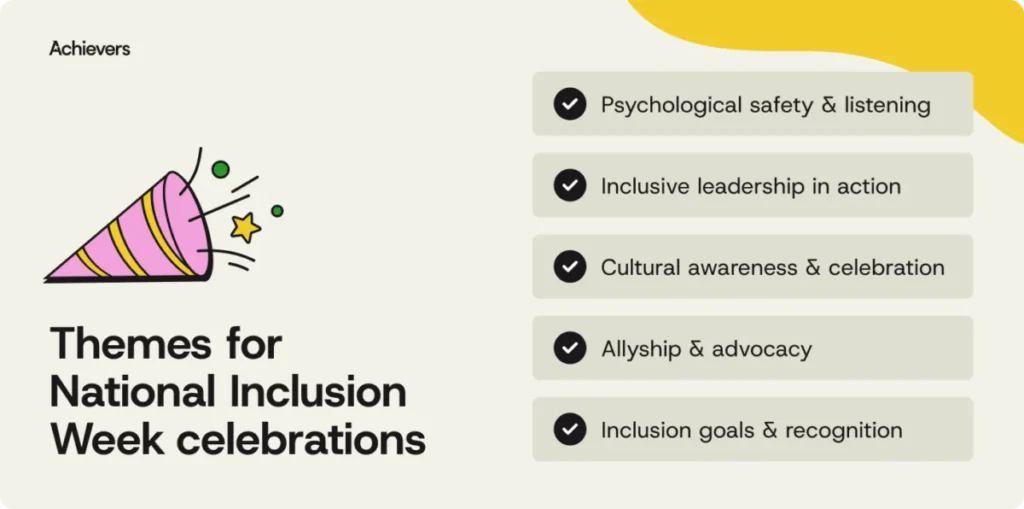
To effectively translate the principles of inclusion into daily organizational life during National Inclusion Week, a structured and intentional approach is essential. Each day of the week can be anchored by a specific theme, encouraging introspection, open dialogue, and concrete action related to workplace inclusion. The following five-day agenda serves as a foundational blueprint for sparking conversations, cultivating empathy, and reinforcing allyship across all levels of an organization.
Day 1: Cultivating Psychological Safety and Active Listening
The cornerstone of continuous improvement and positive change lies in the ability to solicit feedback, encourage questions, and facilitate open dialogue. Establishing an environment of "psychological safety" empowers individuals to voice ideas, concerns, questions, or acknowledge mistakes without fear of detrimental social or professional repercussions.
To foster psychological safety within the workplace, organizations can implement several key strategies:
- Leadership Commitment: Leaders must visibly champion the importance of psychological safety, setting the tone from the top.
- Open Communication Channels: Establish clear and accessible avenues for employees to share feedback, concerns, and suggestions without fear of reprisal. This could include anonymous feedback platforms, regular town hall meetings, or dedicated "ask me anything" sessions with leadership.
- Active Listening Training: Equip managers and employees with the skills to actively listen, understand different perspectives, and respond empathetically. This involves paying full attention, asking clarifying questions, and avoiding interruptions.
- Error as a Learning Opportunity: Frame mistakes not as failures, but as valuable opportunities for learning and growth. Encourage transparency around challenges and develop collaborative problem-solving approaches.
- Encouraging Diverse Voices: Proactively solicit input from individuals across all departments, roles, and backgrounds. Ensure that quieter voices are heard and valued.
- Regular Feedback Mechanisms: Implement continuous feedback loops, such as pulse surveys and one-on-one check-ins, to gauge employee sentiment and identify areas for improvement.
Day 2: Championing Inclusive Leadership in Practice
Demonstrating a powerful commitment to inclusion often requires engaging experts and leaders who are at the forefront of championing these principles. Facilitating open conversations and ensuring they are conducted effectively can be significantly enhanced by involving individuals who actively advocate for inclusion. Their presence can build trust, establish a positive atmosphere conducive to employee well-being, and catalyze lasting transformations towards a truly healthy work environment.
Strategies to promote inclusive leadership include:
- Leadership Workshops and Training: Conduct targeted training sessions for leaders at all levels, focusing on unconscious bias, inclusive communication, and fostering equitable team dynamics.
- Mentorship and Sponsorship Programs: Establish programs that pair emerging leaders from underrepresented groups with senior leaders who can provide guidance, support, and advocacy.
- Accountability Metrics: Integrate DEI goals into leadership performance reviews and compensation structures to ensure accountability and drive meaningful progress.
- Showcasing Inclusive Leaders: Feature leaders who exemplify inclusive behaviors through internal communications, case studies, or speaking engagements, providing tangible role models for others.
- Employee Resource Groups (ERGs): Support and empower ERGs as valuable partners in developing and implementing inclusive leadership strategies, drawing on the lived experiences of their members.
- Data-Driven Leadership: Encourage leaders to use data on employee sentiment, engagement, and retention to identify disparities and implement targeted interventions to foster a more inclusive environment.
Day 3: Fostering Cultural Awareness and Celebration
The workplace is a vibrant tapestry woven from the diverse cultures, experiences, and perspectives of its employees. Creating dedicated spaces for cultural sharing not only cultivates a profound sense of belonging, inclusion, and mutual respect but also provides teams with authentic opportunities for deeper connection and learning.
Effective approaches to celebrating cultural awareness include:

- Cultural Exchange Events: Organize events where employees can share aspects of their cultural heritage, such as traditional food, music, art, or stories.
- Multicultural Awareness Training: Offer workshops that educate employees about different cultural norms, communication styles, and potential areas of misunderstanding.
- Holiday and Observance Recognition: Acknowledge and respectfully observe a wide range of cultural and religious holidays and observances relevant to the workforce.
- Storytelling Initiatives: Encourage employees to share personal stories that highlight their cultural background and how it shapes their perspective, fostering empathy and understanding.
- Diversity Book Clubs or Film Series: Curate reading lists or film selections that explore diverse cultural themes and experiences, sparking conversation and learning.
- Cross-Cultural Collaboration Projects: Design projects that require collaboration among individuals from different cultural backgrounds, encouraging them to learn from each other’s unique approaches and perspectives.
Day 4: Embracing Allyship and Advocacy
Modeling inclusive behaviors through active allyship and advocacy is paramount in the workplace. When leaders and peers demonstrably practice inclusivity, it sends an unequivocal message: everyone is valued and belongs. This also provides employees with invaluable opportunities to learn by example and internalize practical methods for embedding inclusion into their daily interactions.
Key initiatives to promote allyship and advocacy include:
- Allyship Training Programs: Develop comprehensive training modules that define allyship, outline its importance, and provide practical strategies for individuals to become effective allies.
- Advocacy Campaigns: Launch internal campaigns that highlight the importance of speaking up against bias, discrimination, and exclusion, empowering employees to become advocates for a more inclusive environment.
- Mentorship for Underrepresented Groups: Encourage employees from dominant groups to mentor and sponsor colleagues from underrepresented backgrounds, actively supporting their professional development and advancement.
- Inclusive Meeting Practices: Train employees on how to ensure all voices are heard in meetings, including interrupting effectively to redirect conversations, ensuring equal speaking time, and actively inviting contributions from quieter participants.
- Bystander Intervention Training: Equip employees with the skills and confidence to intervene when they witness non-inclusive behavior, creating a culture of accountability.
- Creating Safe Spaces for Dialogue: Facilitate structured discussions where employees can share their experiences with allyship and advocacy, learning from one another and refining their approaches.
Day 5: Setting Inclusion Goals and Fostering Recognition
The concluding day of National Inclusion Week offers a vital opportunity for reflection, celebration, and strategic planning for the future of work. This period is invaluable for consolidating learning, gathering feedback, and aligning on future inclusion goals. Reflective practices reinforce learned behaviors, while dedicated recognition and clear next steps help to sustain the momentum generated throughout the week.
To effectively synthesize the week’s learnings and plan for the future:
- Post-Week Reflection Sessions: Conduct facilitated discussions or surveys to gather feedback on the week’s activities, identify successes, and pinpoint areas for improvement.
- Goal Setting Workshops: Engage teams in setting specific, measurable, achievable, relevant, and time-bound (SMART) inclusion goals for the coming year.
- Recognition and Appreciation: Publicly acknowledge and celebrate individuals and teams who demonstrated exceptional commitment to inclusion throughout the week and beyond.
- Action Planning: Develop concrete action plans based on the identified goals, assigning responsibilities and timelines for implementation.
- Commitment to Ongoing Dialogue: Schedule regular follow-up meetings and check-ins to ensure accountability and maintain the focus on inclusion throughout the year.
- Integration into Performance Management: Incorporate inclusion-related behaviors and contributions into performance review processes to underscore its ongoing importance.
Strategic Planning and Promotion for Launch Success
Effective planning and deliberate promotion are critical for ensuring National Inclusion Week is both smooth and impactful. Key considerations for a successful launch include:
- Cross-Functional Planning Committee: Assemble a diverse committee representing various departments and levels to ensure a comprehensive and inclusive planning process.
- Clear Communication Strategy: Develop a robust communication plan to inform all employees about the week’s objectives, schedule, and how they can participate. Utilize multiple channels, including email, intranet, and team meetings.
- Leadership Endorsement: Secure visible support and active participation from senior leadership to signal the organization’s commitment.
- Resource Allocation: Ensure adequate resources, including budget, time, and personnel, are allocated to support the planned activities.
- Flexibility and Accessibility: Design activities that are accessible to all employees, considering different work arrangements, time zones, and accessibility needs.
- Pilot Testing: Where feasible, pilot certain activities or initiatives with smaller groups to gather feedback and refine them before a wider rollout.
- Partnerships: Collaborate with external DEI experts, community organizations, or employee resource groups to enhance the depth and breadth of programming.
By investing time in meticulous planning and thoughtful promotion, organizations can lay the groundwork for a National Inclusion Week experience that is both profoundly meaningful and demonstrably impactful.
Sustaining Inclusion Beyond National Inclusion Week
Inclusion is not a one-week endeavor; it is a continuous, year-round commitment. To achieve lasting impact and foster genuine change, embedding inclusion into everyday practices is essential. This includes integrating DEI principles into onboarding processes, performance reviews, and employee recognition systems. Such consistent integration signals that inclusion is a fundamental aspect of the company’s core values, rather than a fleeting campaign.
Sustaining inclusion for the long term can be achieved through several key strategies:
- Embedding DEI in Policies and Procedures: Review and revise all organizational policies, from recruitment and hiring to promotions and compensation, to ensure they are equitable and inclusive.
- Continuous Learning and Development: Offer ongoing training and development opportunities for all employees on topics such as unconscious bias, cultural competence, and inclusive leadership.
- Measuring and Tracking Progress: Establish key performance indicators (KPIs) related to DEI and regularly track progress towards inclusion goals, using data to inform strategies and interventions.
- Inclusive Talent Management: Implement strategies to attract, develop, and retain a diverse talent pipeline, ensuring equitable opportunities for career advancement for all employees.
- Employee Feedback Loops: Maintain consistent channels for employee feedback on inclusion and actively use this feedback to drive improvements and address concerns.
- Promoting a Culture of Accountability: Foster an environment where all employees feel empowered to speak up about non-inclusive behaviors and where there are clear processes for addressing and rectifying such issues.
Sustaining inclusion requires dedication and consistency. However, when executed effectively, it cultivates a company culture where every individual can thrive, contribute their unique talents, and feel a genuine sense of belonging.
Maintaining Momentum and Driving Cultural Transformation
National Inclusion Week serves as a potent catalyst for change. The five-day framework provided herein should be viewed as a starting point, adaptable to reflect an organization’s unique values, the distinct voices within its workforce, and its specific goals.
Recognition, candid conversations, and clear commitments must extend far beyond the confines of this designated week. It is through this sustained effort that inclusion becomes an intrinsic component of everyday organizational culture. With the strategic support of tools and platforms designed to reinforce inclusive behaviors, amplify employee voices, and translate feedback into tangible actions, organizations can effectively cultivate environments where everyone feels valued, respected, and empowered to contribute their best.