
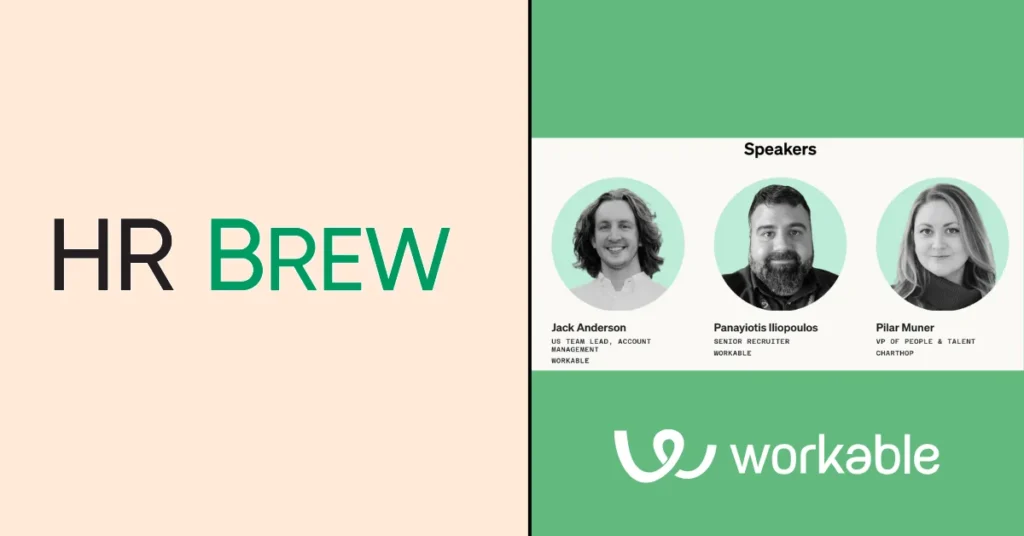
A recent collaborative discussion hosted by HR Brew, featuring Workable’s Senior Recruiter Panayotis Eliopoulos and US Team Lead of Account Management Jack Anderson, delved into one of the most pressing questions confronting modern talent acquisition teams: how can HR leaders ethically, practically, and human-centrically integrate artificial intelligence into the hiring process? The dialogue underscored the critical importance of transparency, the nuanced application of large language models (LLMs), and the distinct advantages of recruiter-specific AI tools embedded within Applicant Tracking Systems (ATS) over generic consumer AI. The consensus emerging from the discussion highlighted a strategic roadmap for leveraging AI not merely as a technological enhancement, but as a pivotal instrument for fostering fair, efficient, and deeply human-centered hiring ecosystems.
The Ascent of AI in Human Resources: A Background Context
The integration of artificial intelligence into human resources has been an evolving narrative, accelerating significantly in the past decade. Initially, AI’s role was largely confined to automating repetitive tasks such as resume parsing, scheduling interviews, and managing applicant data, aimed primarily at boosting operational efficiency. This foundational phase paved the way for more sophisticated applications, driven by advancements in machine learning, natural language processing (NLP), and more recently, generative AI through large language models. The HR technology market, valued at over $24 billion globally in 2023 and projected to grow substantially, reflects this burgeoning interest and investment. Companies faced with vast applicant pools, the need for diversified talent, and increasingly competitive hiring landscapes began to look towards AI as a solution to streamline processes, identify best-fit candidates, and potentially mitigate human biases.
However, this rapid adoption has not been without its challenges. Early iterations of AI in recruiting often sparked concerns regarding algorithmic bias, lack of transparency in decision-making, and the potential dehumanization of the candidate experience. These concerns prompted a necessary introspection within the industry, leading to a greater emphasis on ethical AI development and deployment. The discussion between HR Brew and Workable experts thus arrives at a crucial juncture, offering practical insights into how organizations can navigate this complex landscape effectively and responsibly.
Key Insights from the HR Brew x Workable Discussion
The experts from Workable, a leading ATS provider, articulated several foundational principles for integrating AI into the recruitment lifecycle, moving beyond superficial applications to strategic, impactful deployment.
1. AI Works Best When Built Directly into the Recruiting Process, Not Added Later
A central tenet emphasized by Eliopoulos and Anderson was the superior efficacy of AI solutions natively integrated into the core recruiting workflow. Rather than treating AI as an external add-on or a separate tool to be bolted onto existing systems, true value is unlocked when AI capabilities are intrinsically woven into the fabric of an Applicant Tracking System (ATS) or other recruitment platforms. This native integration ensures seamless data flow, consistent application of AI models, and a holistic understanding of the candidate journey. When AI is an inherent part of the ATS, it can leverage comprehensive candidate data, historical hiring patterns, and job requirements to provide more accurate recommendations, automate relevant tasks, and offer predictive insights without requiring manual data transfers or workarounds. This approach not only optimizes efficiency by eliminating redundant steps but also enhances data integrity and reduces the potential for errors that often arise when disparate systems are forced to communicate. For instance, an AI-powered resume parser built into an ATS can immediately enrich candidate profiles, highlight relevant skills, and flag potential matches against specific job descriptions in real-time, providing immediate value to the recruiter within their primary workspace.
2. Human Judgment Remains Central to Hiring
Despite the advancements in AI, the Workable experts firmly asserted that human judgment remains irreplaceable in the hiring process. AI should be viewed as an augmentative tool, designed to assist and enhance human decision-making, not to replace it entirely. While AI excels at sifting through vast amounts of data, identifying patterns, and automating routine tasks, it lacks the capacity for nuanced interpretation, emotional intelligence, cultural fit assessment, and strategic foresight—qualities that are paramount in evaluating a candidate’s long-term potential and alignment with an organization’s values. Recruiters and hiring managers bring empathy, critical thinking, and the ability to gauge soft skills, assess cultural alignment, and understand the intricate dynamics of team fit. AI can effectively narrow down a pool of thousands of applicants to a qualified shortlist, but the final decision, particularly concerning subjective attributes and future growth potential, necessitates human intuition and expertise. This human-AI collaboration paradigm empowers recruiters to focus on high-value activities, such as engaging with promising candidates, conducting insightful interviews, and building relationships, rather than being bogged down by administrative tasks.
3. Trust Depends on Transparency
The issue of trust, particularly in the context of AI-driven decisions, was highlighted as non-negotiable. Building trust among candidates, hiring managers, and regulatory bodies hinges critically on transparency. This means clearly communicating how AI tools are being used in the hiring process, what data they are utilizing, and the parameters guiding their recommendations. Candidates, for instance, should be informed if an AI is used for initial screening or skill assessment, and ideally, have a clear understanding of the criteria being evaluated. For recruiters, transparency involves understanding the "why" behind an AI’s suggestion—not just "who" to consider, but "why" they were selected by the algorithm. This demystification of AI processes is vital for mitigating concerns about algorithmic bias and ensuring fairness. When the mechanisms of AI are opaque, it breeds suspicion and can lead to a negative candidate experience, potentially deterring top talent. Conversely, a transparent approach fosters confidence, demonstrates a commitment to fairness, and facilitates informed human oversight, allowing recruiters to challenge or validate AI recommendations effectively.
4. Recruiter-Focused AI Outperforms General-Purpose Tools
The discussion drew a crucial distinction between generic AI tools, such as widely available large language models (LLMs), and specialized AI built specifically for recruiting within an ATS. While general-purpose LLMs can generate text, summarize information, or even draft basic job descriptions, their utility in the complex, regulated, and domain-specific world of talent acquisition is limited. Recruiter-focused AI, developed within an ATS, is trained on vast datasets of recruitment-specific information, including resumes, job descriptions, interview feedback, and hiring outcomes. This specialized training allows it to understand the nuances of job roles, industry jargon, and legal compliance requirements in a way that a general LLM cannot. For example, an ATS-embedded AI can intelligently match candidate skills to job requirements with higher precision, identify potential biases in job postings, or even predict candidate success based on historical data points within the system. This domain expertise ensures that the AI’s recommendations are not only accurate but also relevant, compliant, and directly applicable to the unique challenges of talent acquisition, leading to significantly better outcomes than a broad-stroke AI solution.
5. Workable’s Approach: Compliant, Context-Driven, and People-First
Workable’s commitment to responsible AI deployment was presented as a model for the industry. Their approach is fundamentally anchored in three pillars: compliance, context-driven design, and a people-first philosophy. Compliance involves rigorous adherence to evolving regulatory frameworks, such as New York City’s Local Law 144 on automated employment decision tools, and global data privacy regulations like GDPR. This ensures that their AI tools are legally sound and ethically robust. Context-driven design means that Workable’s AI is developed with a deep understanding of the specific challenges and requirements of recruitment, ensuring that its features are practical, relevant, and genuinely helpful to recruiters. It’s not AI for AI’s sake, but AI designed to solve specific problems within the hiring process. Finally, the people-first philosophy underscores the belief that technology should serve human needs and enhance human capabilities, not diminish them. This translates into designing AI that prioritizes fairness, reduces bias, improves the candidate experience, and empowers recruiters to make better, more informed decisions, ultimately fostering a more equitable and efficient hiring landscape.
Supporting Data and Industry Trends
The insights from the Workable discussion are reinforced by broader industry trends and data. Reports indicate that over 70% of large organizations are now experimenting with or actively deploying AI in HR, with recruitment being a primary area of focus. Studies by firms like Gartner and Deloitte consistently highlight that companies leveraging AI in recruitment report significant improvements in efficiency metrics, including a reduction in time-to-hire by up to 30% and a decrease in cost-per-hire by 15-20%. Furthermore, AI-powered screening tools can process applications up to 10 times faster than human recruiters, allowing organizations to manage larger candidate volumes without compromising quality.
However, the ethical imperative remains strong. A 2023 survey revealed that while 65% of candidates are open to AI being used in the hiring process, 80% demand transparency about its usage. Concerns about algorithmic bias are also prevalent, with some studies indicating that poorly designed AI can inadvertently perpetuate or even amplify existing human biases, particularly against underrepresented groups. This dichotomy underscores the critical need for the ethical frameworks advocated by Workable.
Regulatory Landscape and Ethical Considerations
The increasing deployment of AI in hiring has spurred a global movement towards regulatory oversight. Landmark legislations such as New York City’s Local Law 144, which mandates bias audits for automated employment decision tools, and the European Union’s proposed AI Act, which categorizes AI systems in hiring as "high-risk," signal a clear intent to govern the ethical use of AI. These regulations aim to ensure fairness, accountability, and transparency, compelling companies to move beyond mere technological adoption to responsible innovation. The concept of "Fairness, Accountability, and Transparency in AI" (F.A.T.E.) has become a guiding principle for developers and users of AI systems in sensitive areas like employment. The ongoing dialogue around these ethical frameworks is crucial for fostering public trust and ensuring that AI serves as a tool for progress, not discrimination.
Statements and Reactions from Related Parties
The sentiments expressed by Workable’s experts resonate widely across the talent acquisition community. HR analysts and thought leaders generally echo a cautious optimism, acknowledging AI’s transformative potential while stressing the need for stringent ethical guidelines. Talent acquisition leaders frequently articulate a desire for practical, actionable advice on integrating AI responsibly, navigating the complexities of bias mitigation, and upholding a positive candidate experience. From the candidate’s perspective, while the promise of a faster, more efficient application process is appealing, there is an overarching demand for fairness, a desire to be evaluated on merit, and a clear understanding that human interaction remains a vital component of the job search. Industry bodies, such as the Society for Human Resource Management (SHRM), actively publish guidelines and host discussions promoting the ethical and effective use of AI in HR, reinforcing the collective commitment to responsible technological advancement.
Broader Impact and Implications
The implications of ethically deployed, human-centric AI in talent acquisition extend far beyond mere efficiency gains. For the HR profession, it signals a shift towards a more strategic, data-driven role, requiring HR professionals to develop new competencies in data literacy, AI ethics, and human-machine collaboration. It frees up recruiters from mundane tasks, allowing them to engage in deeper candidate relationships and more strategic talent planning.
For organizations, a responsible AI strategy can significantly enhance their employer brand, attracting top talent who value fairness and innovation. It can also lead to more diverse and inclusive workforces by potentially mitigating unconscious human biases during the initial screening phases, provided the AI itself is trained on unbiased data and regularly audited. This contributes to stronger organizational performance and a more resilient corporate culture.
Ultimately, the careful and ethical integration of AI into hiring processes holds the promise of a more equitable and efficient job market for all. It can democratize access to opportunities, reduce systemic barriers, and ensure that individuals are evaluated on their potential and skills, rather than arbitrary or biased criteria. The journey towards fully realizing this potential is ongoing, demanding continuous vigilance, iterative improvement, and an unwavering commitment to placing the human element at the core of technological innovation.
The full discussion between HR Brew and Workable provides an invaluable resource for organizations grappling with these critical questions, offering a blueprint for navigating the future of talent acquisition with intelligence and integrity.






