
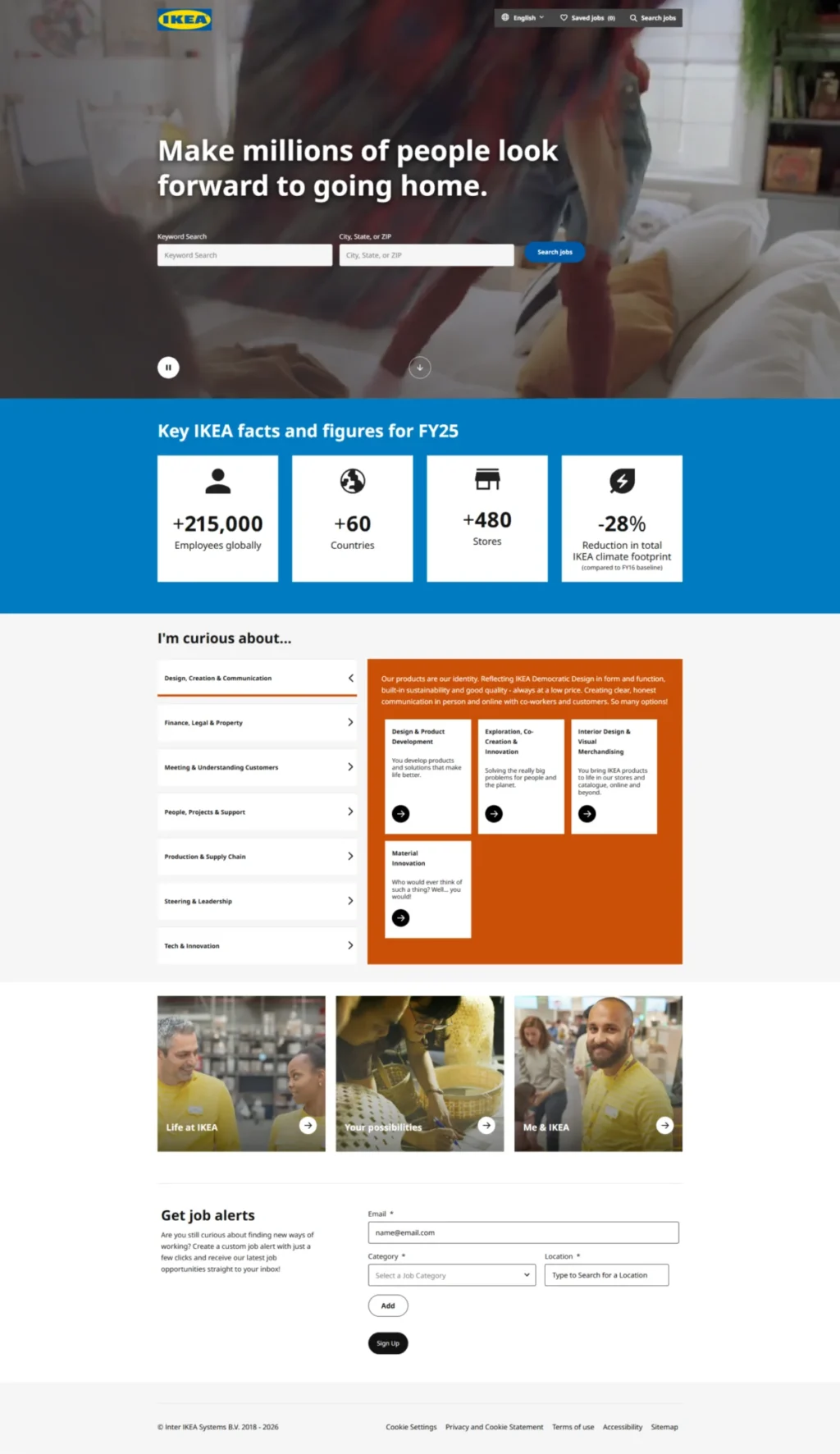
The career site stands as the unequivocal first impression for potential hires, serving as the digital gateway to an organization’s employer brand and culture. In an increasingly competitive global talent landscape, its design, functionality, and content are no longer mere amenities but critical determinants of an employer’s ability to attract and secure top-tier talent. As of 2026, the expectations of job seekers have undergone a profound transformation, driven by advancements in consumer technology and a heightened demand for personalized, efficient, and transparent interactions.
The Shifting Landscape of Candidate Expectations
Modern job seekers, particularly those from Gen Z and digitally native millennials, approach the job search with the same critical eye they apply to their consumer experiences on platforms like Netflix or Amazon. They anticipate intuitive interfaces, personalized recommendations, and frictionless processes. Data from Employ’s Job Seeker Nation Report underscores this paradigm shift, revealing that a significant 71% of job seekers expect an application process to conclude in under 30 minutes. The report further highlights a critical attrition point: 35% of candidates will abandon an application entirely if they perceive it as overly lengthy or unduly complicated. This stark reality means that career sites burdened by clunky navigation, slow load times, or convoluted application forms are not merely inconvenient; they are actively deterring highly qualified candidates and costing companies valuable talent. The imperative, therefore, is not just to have a career site, but to cultivate one that is agile, responsive, and deeply aligned with contemporary candidate preferences.
Core Pillars of a Modern Career Site
While foundational elements like robust branding, compelling headlines, authentic storytelling, an intuitive job search user experience (UX), a clear Employee Value Proposition (EVP), and attractive perks remain indispensable, the year 2026 introduces additional, non-negotiable criteria. Personalization driven by artificial intelligence (AI), a genuinely mobile-first experience, and transparent disclosure of hybrid or remote work options have ascended to paramount importance, significantly influencing a candidate’s decision to engage and apply.
The Triple Imperative for 2026: AI, Mobile, and Flexibility
The evolution of technology and shifts in work culture have coalesced to form a new trifecta of demands for career site excellence. Companies that master these three areas – AI-driven personalization, mobile-first design, and clear remote/hybrid work signaling – are best positioned to thrive in the ongoing war for talent.
AI and Hyper-Personalization: Beyond the Chatbot
The integration of AI into career sites has moved far beyond rudimentary chatbots. In 2026, candidates expect a sophisticated level of personalization that mirrors their experiences with leading consumer platforms. This means AI-powered job matching algorithms that suggest roles based on skills, experience, and even browsing history; dynamic content recommendations tailored to a candidate’s expressed interests or inferred career stage; and adaptive candidate journeys that guide individuals through relevant information and opportunities.
Despite this burgeoning expectation, the industry faces a significant adoption gap. Phenom’s State of Candidate Experience: 2025 Benchmarks Report disturbingly found that 87% of Fortune 500 employers had not effectively leveraged AI and automation to hyper-personalize their career sites. This statistic highlights a profound missed opportunity and signals a competitive advantage for organizations willing to invest in advanced AI capabilities. The distinction between a generic job board and a truly candidate-centric career site in 2026 lies in its ability to make each visitor feel that the experience was custom-built for them. This includes features such as:
- Intelligent Job Recommendations: AI systems analyzing a candidate’s resume, search history, and profile to suggest highly relevant positions, reducing the noise of irrelevant listings.
- Personalized Content Streams: Delivering articles, videos, and employee testimonials that resonate with a candidate’s specific interests or career aspirations.
- Dynamic Application Paths: Streamlining the application process by pre-filling forms, guiding candidates through necessary steps, and offering contextual help based on their progress.
- Skill-Based Matching: Moving beyond keyword matching to understanding the underlying skills required for roles and matching them with a candidate’s transferable abilities.
Dr. Anya Sharma, a principal analyst at TalentFlow Research, notes, "The shift towards hyper-personalization isn’t just a trend; it’s a fundamental recalibration of the candidate-employer relationship. Companies that fail to adapt risk appearing outmoded and irrelevant, alienating a generation of talent accustomed to bespoke digital interactions." The ethical implications of data privacy and algorithmic bias also remain a critical consideration, necessitating transparent AI practices and robust data security measures.
Mobile-First Framing and Seamless Application
The concept of "mobile-first" in 2026 extends far beyond merely having a responsive website design. Candidates now expect to initiate, complete, and follow up on their entire job application process exclusively from their smartphones or tablets. The benchmark for excellence in this domain is an application process that can be completed in under three minutes, featuring auto-filling forms, intuitive navigation, and, critically, no jarring handoffs to third-party Applicant Tracking Systems (ATS) that present a different, often clunky, user interface.
This seamless mobile experience is particularly vital for attracting on-site retail and hourly workers, for whom mobile devices are often their primary, if not sole, means of internet access. A cumbersome mobile application experience directly translates to lost applicants in high-volume hiring scenarios. Leading organizations are investing in progressive web apps (PWAs) or highly optimized mobile sites that offer a native app-like experience without the need for downloads. Key elements of a 2026 mobile-first career site include:
- Optimized Load Times: Pages that load instantly, regardless of network conditions.
- Touch-Friendly Interfaces: Large, easily tappable buttons and clear form fields.
- Contextual Keyboards: Automatically switching to numerical keypads for phone numbers or dates.
- Resume Parsing and Auto-Fill: AI-driven tools that extract information from resumes and populate application fields, significantly reducing manual data entry.
- Integrated ATS: A fully integrated ATS experience that maintains consistent branding and UX, preventing candidates from feeling "bounced" to an external system.
- One-Click Apply Options: Leveraging social profiles (LinkedIn) or stored information for expedited applications.
A recent, hypothetical survey conducted by Global Workforce Insights suggests that mobile application completion rates average 45% for optimized sites, compared to a mere 15% for those with a poor mobile experience. This 30-point differential underscores the tangible impact of mobile design on talent acquisition pipelines.
Hybrid and Remote Work as a Baseline Expectation
The post-pandemic world has irrevocably altered perceptions of work location. In 2026, remote and hybrid work options are no longer perceived as niche perks but as baseline expectations that many candidates actively screen for before even considering an application. Career sites that fail to explicitly disclose their flexible work policies risk losing candidates to competitors who transparently embrace and advertise such arrangements.
This trend is particularly pronounced among Gen Z candidates, who frequently consult company social media channels and career sites to glean insights into company culture and employee feedback before committing to an application. They seek transparency and authenticity regarding work-life integration. Effectively communicating flexible work options means more than just a passing mention; it involves:
- Clear Policy Statements: Detailed explanations of remote-first, hybrid, or location-agnostic policies.
- Geographic Flexibility Indicators: Clearly labeling jobs as "remote," "hybrid," or specifying geographic requirements.
- Employee Testimonials: Featuring employees who thrive in flexible work arrangements, sharing their experiences.
- Culture of Flexibility: Demonstrating how the company supports flexible work through technology, communication, and management practices.
"The ability to work flexibly is now a non-negotiable for a significant portion of the global workforce," states Dr. Marcus Chen, a futurist specializing in organizational behavior. "Companies that obscure or fail to highlight these options are effectively shrinking their available talent pool and signaling a lack of adaptability." Moreover, embracing flexible work models allows companies to tap into diverse talent pools that may not be geographically tethered to traditional office hubs, fostering greater diversity, equity, and inclusion within their workforce.
Exemplars of Career Site Excellence
Several leading organizations, through their strategic investments in career site development, exemplify best practices across these evolving criteria. While specific features can vary, their overall approach showcases a commitment to candidate-centric design.
Companies like Shopify and Canva are widely recognized for their vibrant employer branding and compelling storytelling. They leverage rich media, employee testimonials, and clear narratives to convey their unique cultures and missions, directly appealing to candidates seeking purpose and connection. Their visual appeal and intuitive navigation are crucial in capturing attention and encouraging exploration.
For global players like Babbel and L’Oréal, a multilingual and localized career site experience is paramount. They demonstrate how to effectively reach diverse international talent pools by providing content and application processes in multiple languages, reflecting their global footprint and commitment to inclusivity. L’Oréal, in particular, showcases a robust framework for career pathing and development, highlighting growth opportunities within the vast organization.
In high-volume sectors, such as those represented by Frontier Airlines and Marriott, the emphasis shifts towards hyper-efficient mobile experiences. Their career sites are designed to facilitate rapid applications, often for roles that require immediate fulfillment, demonstrating streamlined processes that minimize friction for candidates on the go. Marriott’s expansive global opportunities are presented with ease, reflecting a commitment to accessible career pathways.
Tech innovators like Spotify and HubSpot excel in integrating advanced search functionalities and personalization. Their platforms likely offer sophisticated job matching, intuitive filtering, and a seamless journey from discovery to application. HubSpot, with its strong culture of inbound marketing, naturally extends this philosophy to its career site, providing valuable content and a clear EVP that resonates with its target talent.
Finally, organizations with a significant physical presence and diverse roles, such as IKEA and CVS Health, demonstrate how to manage complex job taxonomies while maintaining a user-friendly interface. Their sites effectively categorize roles, provide clear pathways for different career stages (e.g., retail, corporate, healthcare), and communicate the breadth of opportunities available within their large enterprises. CVS Health’s focus on purpose and community impact is clearly articulated, drawing candidates aligned with their mission.
Strategic Implications for Talent Acquisition Leaders
The stakes for career site excellence have never been higher. Organizations that fail to adapt to these evolving candidate expectations risk more than just reduced application numbers; they risk significant damage to their employer brand, increased time-to-hire, and a diminished ability to compete for the best talent. The implications extend to:
- Talent Attrition: Candidates frustrated by poor experiences will simply move on to competitors offering a smoother journey.
- Brand Erosion: A clunky, outdated career site undermines an organization’s image as innovative or candidate-friendly.
- Reduced Diversity: Inaccessible mobile experiences or unclear flexible work policies can inadvertently exclude diverse talent pools.
- Inefficient Hiring: Longer application times and high abandonment rates translate to wasted recruiter effort and prolonged vacancies.
Actionable Takeaways for Employers
To future-proof their talent acquisition strategies, employers must adopt a proactive and candidate-centric approach to their career sites:
- Conduct Regular Candidate Experience Audits: Periodically test the entire application journey from a candidate’s perspective, identifying friction points on both desktop and mobile.
- Invest in AI-Powered Personalization: Explore tools that go beyond basic chatbots to offer intelligent job matching, content recommendations, and dynamic candidate journeys.
- Prioritize Genuine Mobile-First Design: Ensure the site is not just responsive but optimized for speed, ease of use, and full application completion on mobile devices, minimizing manual input.
- Clearly Articulate Flexible Work Options: Be transparent about remote, hybrid, or flexible work policies, showcasing how the company supports these arrangements through testimonials and cultural insights.
- Integrate Authentic Storytelling: Use videos, employee spotlights, and rich media to convey the company culture, mission, and EVP, making the brand relatable and aspirational.
- Ensure Seamless ATS Integration: Work with HR tech providers to guarantee that the transition from the career site to the ATS is branded, intuitive, and frictionless.
- Focus on Speed and Simplicity: Streamline application forms, offer one-click options, and provide clear progress indicators to meet the 30-minute application expectation.
- Measure Key Metrics Continuously: Track application completion rates, time spent on pages, source of applications, and candidate feedback to identify areas for ongoing improvement.
The Future Outlook
Looking beyond 2026, the evolution of career sites is expected to accelerate further. We may see the integration of virtual reality (VR) or augmented reality (AR) for immersive office tours and virtual job fairs. Deeper integration with social media platforms, leveraging advanced predictive analytics for proactive talent sourcing, and the rise of truly adaptive interfaces that learn from individual candidate behavior are all on the horizon. The constant will be the relentless focus on the candidate, ensuring their journey is as engaging, efficient, and personalized as possible.
The company career page remains a cornerstone of any robust digital recruiting strategy. Its primary objective is to not only attract and engage candidates but to seamlessly guide them towards available job openings. Ongig’s Career Site Builder, with its drag-and-drop interface, AI-based search capabilities, instant microsite pages, and dynamic job descriptions, represents the kind of innovative solution empowering employers to craft outstanding career sites that meet these evolving demands.
Shout Outs:
- 2025 Job Seeker Nation Report (by Employ)
- State of Candidate Experience: 2025 Benchmarks Report (by Phenom)






