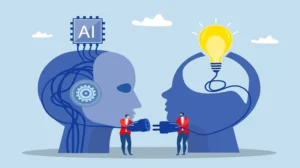
The rapid integration of generative artificial intelligence into professional workflows has fundamentally altered the cadence of modern labor, creating a psychological and procedural gap between the generation of content and the assumption of professional responsibility. As organizations across the globe adopt Large Language Models (LLMs) to streamline operations, a critical tension has emerged: the speed of AI output often outpaces the human capacity for critical reflection. This phenomenon is particularly acute in fields like Learning and Development (L&D) and Instructional Design, where the accuracy and ethical alignment of content directly impact human capital and organizational safety. The transition from AI-assisted drafting to human-led finalization is no longer a mere administrative step; it has become a vital ethical checkpoint known as the "pause before ownership."
The Evolution of AI Integration in Professional Workflows
Since the public release of advanced generative tools in late 2022, the corporate world has moved through several distinct phases of AI adoption. Initially characterized by experimentation and novelty, the current phase—often referred to as the "integration era"—sees AI embedded into core business processes. In the L&D sector, this has meant moving beyond simple text generation to complex multimodal applications, including voice synthesis for practice-based learning and image generation for storyboarding.
Chronologically, the shift began with "Task-Specific Automation," where AI was used for discrete, low-stakes activities like summarizing meetings. By mid-2023, this evolved into "Co-Creative Drafting," where Instructional Designers began using AI to build entire course frameworks. Today, the industry is grappling with "Autonomous Output Risks," where the sheer volume of AI-generated material threatens to overwhelm the traditional review cycles that ensure quality and pedagogical integrity.
Industry data highlights the scale of this shift. According to a 2023 McKinsey Global Survey on AI, nearly 40% of organizations reported that their companies were increasing investment in AI specifically for content creation and professional services. However, a parallel study by Gartner suggests that by 2025, 30% of outbound marketing and educational messages from large organizations will be synthetically generated, raising urgent questions about who is ultimately responsible for the veracity of this information.
The Psychological Momentum of Generative AI
The primary challenge in modern AI-assisted work is the "momentum of generation." When a user prompts an AI, the response is nearly instantaneous and often delivered in a polished, authoritative tone. This creates a psychological effect known as "automation bias," where humans tend to favor suggestions from automated systems even when they are incorrect.
In the context of Instructional Design, this speed can be misleading. When a professional uses AI to generate learning objectives or organize resources, the immediate gratification of seeing a completed list can trick the brain into believing the intellectual work is finished. In reality, the "work" has simply shifted from creation to curation. Experts argue that while AI reduces the "blank page" syndrome, it increases the cognitive load required for verification. The emotional satisfaction of rapid completion can lead to a "submission reflex," where users move directly from output to publication without a cooling-off period.
Strategic Integration in L&D Frameworks
Instructional Design has long relied on structured frameworks such as ADDIE (Analysis, Design, Development, Implementation, and Evaluation) or SAM (Successive Approximation Model). The introduction of AI does not replace these frameworks but rather accelerates certain phases while demanding more rigor in others.
- Analysis and Design: AI can process vast amounts of organizational data to identify skills gaps and generate initial learning objectives. However, human designers must verify that these objectives align with the specific cultural and strategic nuances of the organization.
- Development: This is where AI’s impact is most visible. It can generate storyboards, draft scripts for video training, and create interactive scenarios. As multimodal AI develops, the use of visual artifacts—such as workplace photographs analyzed by AI to create safety training—has become more common.
- Implementation and Evaluation: AI-driven dialogue and personalized support can facilitate real-time questioning during a course. Yet, as educational psychologists point out, the AI acts as a facilitator, not a substitute for the educator’s professional judgment.
A 2024 report on educational technology trends noted that while AI can improve the efficiency of content development by up to 50%, the time required for "Human-in-the-Loop" (HITL) review has increased by 20% as professionals struggle to catch subtle "hallucinations" or biased patterns in the AI’s logic.
The Critical Distinction: Review vs. Ownership
To navigate this new landscape, industry leaders are increasingly distinguishing between "review" and "ownership." While the terms are often used interchangeably, they represent different levels of professional commitment.
The Review Phase is technical and analytical. It involves verifying facts, checking for hallucinations (where the AI confidently asserts false information), and ensuring the tone is appropriate. Practical strategies for this phase include "Adversarial Prompting," where the user asks the AI to find flaws in its own previous response or to provide counterarguments to its conclusions. Reviewers are tasked with asking: Is this accurate? Is it biased? Does it meet the technical requirements of the brief?
The Ownership Phase is ethical and legal. It is the moment a professional decides to attach their name or their company’s brand to the output. Ownership implies a readiness to accept the consequences of the work. If an AI-generated safety manual contains a flaw that leads to an accident, the AI cannot be held liable; the person who approved the manual is. This phase requires a "moral pause"—a deliberate slowing down to consider the broader implications of the work.
Data and Market Impact of AI Errors
The risks of bypassing the ownership phase are not theoretical. In 2023, several high-profile legal and academic cases highlighted the dangers of unreviewed AI content. A notable instance involved a legal filing where an AI-generated list of non-existent court cases was submitted, leading to sanctions against the attorneys involved. In the L&D space, there have been reports of AI-generated training materials inadvertently including biased stereotypes or outdated medical information.
Market analysis suggests that "Brand Integrity" is becoming a primary concern for CEOs. A survey by Deloitte found that 73% of leaders are "highly concerned" about the reputational risks associated with AI-generated content. Consequently, many firms are now implementing "AI Transparency Policies," which require employees to disclose when and how AI was used in the creation of a deliverable.
Official Responses and Ethical Standards
Regulatory bodies and professional organizations are beginning to codify the "pause before ownership." The UNESCO Recommendation on the Ethics of Artificial Intelligence emphasizes that "ultimate responsibility and accountability must always lie with humans." Similarly, the European Union’s AI Act seeks to establish clear guidelines on human oversight, particularly for high-stakes applications like education and vocational training.
Inferred reactions from L&D professional bodies suggest a move toward new certification standards. "We are moving toward a world where ‘Prompt Engineering’ is less important than ‘Verification Engineering,’" notes a hypothetical consensus among industry analysts. The consensus is that the value of a professional will increasingly be measured not by how fast they can produce content, but by the rigor with which they vet it.
Broader Implications: The Future of Accountability
The "pause before ownership" represents a broader shift in the philosophy of work. As AI takes over the "heavy lifting" of drafting and data processing, the human role is being elevated to that of an arbiter of quality and ethics. This transition requires a new set of skills, including critical thinking, ethical reasoning, and a deep understanding of bias.
The long-term impact on the workforce may include a revaluation of "slow work." In an era of instant generation, the ability to pause, reflect, and take deliberate responsibility becomes a premium service. Organizations that prioritize this pause are likely to see higher levels of trust from their employees and clients, whereas those that prioritize speed above all else risk systemic errors and reputational damage.
Ultimately, the finish line of any professional task is not the generation of a response or the completion of a draft. It is the moment of human ownership. By recognizing that AI produces outputs while humans take responsibility, the professional world can harness the power of technology without sacrificing the integrity and accountability that define high-quality work. The pause is not a delay in the process; it is the most essential part of the process itself.