
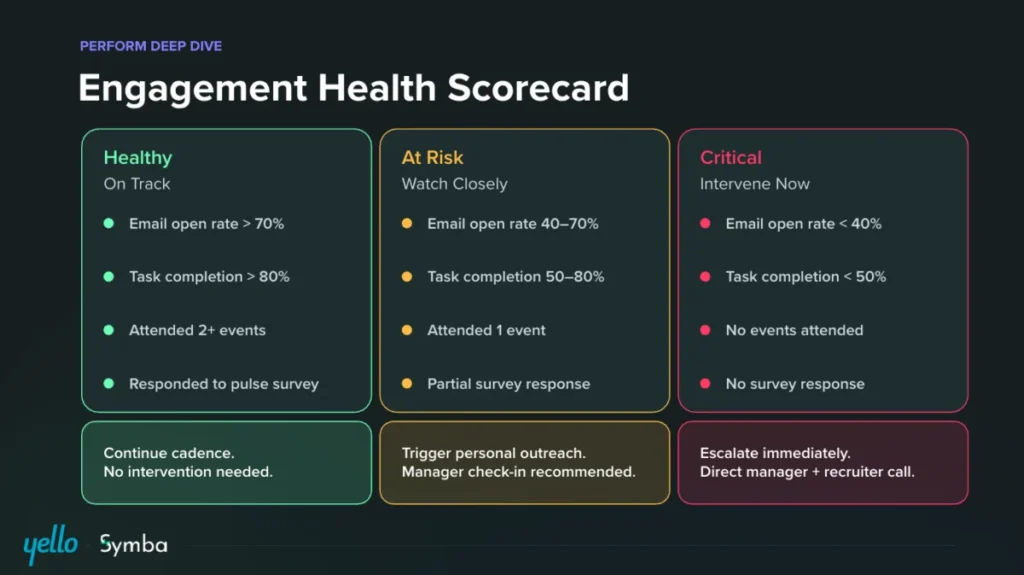
In an increasingly competitive global talent landscape, the phenomenon of candidate reneges – where an individual accepts an offer but subsequently withdraws before their start date – has become a significant challenge for organizations worldwide. This issue, often overlooked until it manifests as an immediate staffing crisis, represents a critical failure in the candidate journey, leading to substantial financial losses, operational disruptions, and damage to employer brand. Traditional talent acquisition programs frequently operate reactively, discovering a renege only after the candidate has gone silent or explicitly rescinded their acceptance. By this point, the opportunity for intervention has largely passed, as candidates often make their definitive decision long before formal notification. A paradigm shift towards proactive engagement, utilizing tools like the Engagement Health Scorecard, is now emerging as a strategic imperative for organizations aiming to secure their talent pipeline and mitigate the costly repercussions of last-minute withdrawals.
The Rising Tide of Candidate Reneges: A Growing Industry Challenge
The modern job market, characterized by rapid technological advancements, evolving workforce expectations, and persistent talent shortages in key sectors, has exacerbated the problem of candidate reneges. Industry reports consistently indicate that a notable percentage of accepted offers do not translate into actual hires. For instance, data from various HR analytics firms suggests that renege rates can range from 10% to as high as 25% in highly competitive fields such as technology, healthcare, and specialized engineering roles. This trend is fueled by several factors, including candidates often applying for and receiving multiple offers simultaneously, the ease of remote interviewing, and a heightened sense of candidate empowerment in a talent-scarce environment. Furthermore, the rise of "ghosting" – where candidates simply cease communication without explanation – adds another layer of complexity to the pre-start period.
Financial and Operational Costs of Recruitment Failure
The financial implications of a candidate renege are far-reaching. The immediate cost includes the wasted investment in recruitment efforts: advertising, sourcing, screening, interviewing, background checks, and offer negotiation. Estimates vary, but replacing a single reneged candidate can cost an organization anywhere from 50% to 150% of that position’s annual salary, accounting for both direct recruitment expenses and indirect costs like lost productivity during the extended vacancy. Beyond direct financial outlays, reneges introduce significant operational disruptions. Project timelines can be delayed, existing teams may become overstretched, and strategic initiatives can be hampered, directly impacting business objectives and competitive advantage. The ripple effect can also extend to team morale, as repeated backfilling efforts can lead to burnout among hiring managers and recruitment teams.
From Reactive Measures to Proactive Engagement: A Paradigm Shift
Historically, many organizations have approached the period between offer acceptance and start date with a "set it and forget it" mentality. Communication might be limited to administrative onboarding tasks, with little emphasis on maintaining active engagement or monitoring candidate sentiment. This reactive stance inevitably leads to scrambling when a candidate withdraws, initiating a frantic backfill process that is both costly and time-consuming. The fix, as increasingly recognized by leading talent acquisition strategists, lies in treating engagement signals not as post-event analyses but as critical leading indicators of future behavior. By actively monitoring and interpreting these signals, organizations can transition from a reactive posture to a proactive, data-driven strategy designed to predict and prevent reneges.
Introducing the Engagement Health Scorecard: A Data-Driven Solution
At the heart of this proactive approach is the Engagement Health Scorecard. This sophisticated tool categorizes candidates into distinct groups based on their behavior and interactions during the crucial pre-start period. This period, which can span from a few weeks to several months, is a critical window during which candidates are most susceptible to external influences, including competing offers, personal uncertainties, or simply a perceived lack of connection with their future employer. The scorecard transforms abstract notions of candidate interest into actionable data, providing a structured framework for intervention.
Defining Engagement Metrics and Leading Indicators
The effectiveness of the Engagement Health Scorecard hinges on identifying and tracking specific, measurable engagement metrics. These are not merely indicators of administrative compliance but rather reflections of a candidate’s sustained interest and emotional connection to the organization. Key leading indicators include:
- Email Open Rates: A fundamental metric indicating whether a candidate is actively consuming communications.
- Task Completion: The timely completion of pre-boarding tasks, such as filling out HR forms, setting up IT accounts, or reviewing company policies.
- Event Attendance: Participation in pre-start events like virtual meet-and-greets, departmental introductions, or informational webinars.
- Survey Responses: Engagement with pulse surveys designed to gauge sentiment, answer questions, or gather feedback.
- Communication Responsiveness: The promptness and nature of responses to direct messages, calls, or queries from recruiters or hiring managers.
- Platform Activity: For organizations using dedicated pre-boarding platforms, this includes login frequency, content consumption, and interaction with internal forums.
By continuously aggregating and analyzing these data points, the scorecard assigns an engagement status to each candidate, moving beyond anecdotal assessments to provide an objective, real-time health check of the talent pipeline.
Categorizing Candidate Engagement: Healthy, At-Risk, and Critical
The Engagement Health Scorecard typically categorizes candidates into three distinct groups, each requiring a tailored approach:
-
Healthy Candidates: Maintaining Momentum
Healthy candidates exhibit robust engagement across all monitored metrics. They consistently open emails at a rate above 70%, promptly complete assigned pre-boarding tasks, actively attend multiple pre-start events, and provide thoughtful responses to surveys. Their communication is generally prompt and positive, indicating sustained enthusiasm and a strong likelihood of following through on their offer. For these candidates, the correct action is to continue the established cadence of communication and engagement activities. This involves maintaining a steady flow of informative content, invitations to relevant events, and periodic check-ins that reinforce their decision and excitement. The goal is not to disengage but to nurture their commitment, making them feel valued and integrated even before their first day. Over-communicating or introducing unnecessary interventions could paradoxically lead to disengagement, so staying the course with a well-designed pre-boarding journey is crucial. -
At-Risk Candidates: Timely Intervention
At-Risk candidates display a noticeable decline in engagement signals. Their email open rates may hover between 40% and 70%, event attendance might be limited or sporadic, and survey responses could be incomplete or delayed. This category signifies a potential weakening of commitment, often due to emerging uncertainties, internal deliberations, or the slow burn of a competing offer. This is a critical juncture where timely, personalized outreach can often turn the tide. Within 48 hours of identifying a candidate as At-Risk, a targeted intervention is recommended. This could involve a direct, personalized message from the program manager, offering to answer specific questions or address concerns. An invitation to an upcoming event, specifically tailored to their interests rather than a mass distribution, can make them feel individually valued. Crucially, a proactive check-in from the hiring manager can provide reassurance and reinforce the value of their future role within the team. The aim is to re-establish a personal connection, address nascent doubts, and reaffirm the organization’s commitment to them. -
Critical Candidates: Immediate Escalation and Root Cause Analysis
Critical candidates exhibit almost no engagement. Their email open rates are consistently below 40%, they have attended no pre-start events, provided no survey responses, and shown no activity on pre-boarding platforms for three or more weeks. This level of disengagement signals a high probability of a renege. Immediate, high-level escalation is required. The intervention strategy for critical candidates demands a direct call from the hiring manager – a personal, high-touch point that conveys the urgency and importance of their potential contribution. This should be followed by a personal touchpoint from the recruiter, not just a generic follow-up, but a sincere attempt to open a real conversation about what might be happening. The objective is to understand the root cause of their disengagement. Often, the underlying issues are a competing offer, unforeseen personal circumstances, or simple uncertainty that can be addressed if caught in time. A candid conversation can uncover these issues, allowing the organization to potentially counter an offer, provide necessary support, or alleviate anxieties with direct, empathetic communication. Ignoring these signals at this stage is almost guaranteed to result in a renege.
The Anatomy of Intervention: A Step-by-Step Playbook
Implementing the Engagement Health Scorecard requires a clear, step-by-step intervention playbook. For each category, specific actions are prescribed, ensuring consistency and effectiveness across all hires.
- Continuous Monitoring: Leverage CRM or pre-boarding platforms to continuously track engagement metrics in real-time. Automated alerts can flag candidates whose scores decline.
- Scorecard Review: Regular, ideally weekly, review meetings involving recruiters, hiring managers, and program managers to discuss candidate health scores.
- Tiered Response:
- Healthy: Maintain standard pre-boarding cadence. Share company news, team updates, and useful resources. Ensure administrative tasks are progressing smoothly.
- At-Risk: Initiate personalized outreach within 48 hours. This could be a personalized email from the hiring manager expressing excitement and offering a brief call, or a targeted invitation to a small-group virtual coffee chat with future teammates. The message must convey genuine care and an openness to address concerns.
- Critical: Immediate direct call from the hiring manager to understand the situation. This is not a sales call but a discovery call, focused on empathy and problem-solving. The recruiter should follow up to reinforce the conversation and explore potential solutions (e.g., salary adjustments, revised start dates, clarification of role expectations).
- Root Cause Analysis and Adjustment: For critical candidates, if a reason for disengagement is identified (e.g., competing offer, relocation issues, role clarity), the team must be prepared to act swiftly with a counter-offer, additional support, or further clarification.
The Role of Technology in Proactive Engagement
Modern HR technology plays a pivotal role in enabling the Engagement Health Scorecard. Applicant Tracking Systems (ATS) and Candidate Relationship Management (CRM) platforms, especially those integrated with dedicated pre-boarding or onboarding modules, can automate the tracking of engagement metrics. These platforms can send automated reminders, facilitate personalized communications, host virtual events, and provide dashboards that visualize candidate health scores. Such technological infrastructure not only streamlines the process but also provides the data analytics necessary to refine the scorecard and intervention strategies over time. Predictive analytics, increasingly integrated into these systems, can further enhance the ability to identify at-risk candidates even earlier, based on patterns observed in historical data.
Broader Implications: Enhancing Employer Brand and Talent Retention
The proactive approach fostered by the Engagement Health Scorecard extends its benefits far beyond merely preventing reneges. It fundamentally transforms the candidate experience, cultivating a strong employer brand that resonates throughout the talent market. Candidates who feel valued, supported, and continuously engaged from offer acceptance to their first day are more likely to become advocates for the organization. This positive experience enhances reputation, making future recruitment efforts easier and more effective. Moreover, a robust pre-boarding strategy that emphasizes engagement often correlates with higher initial employee satisfaction and retention rates. Employees who feel connected and prepared from the outset are more likely to integrate successfully, perform better, and remain with the company for longer, reducing costly early attrition.
The Competitive Edge of a Robust Pre-Boarding Strategy
In an era where talent is a strategic asset, organizations that prioritize a sophisticated pre-boarding experience gain a significant competitive edge. While many companies still grapple with reactive backfilling, those employing data-driven scorecards are actively building stronger, more resilient talent pipelines. This proactive stance demonstrates a commitment to candidate well-being and a sophisticated understanding of human capital management, positioning these organizations as employers of choice. The difference between teams that successfully retain candidates and those that consistently scramble to backfill positions almost always boils down to one factor: the former continuously analyzes engagement data and intervenes strategically, rather than waiting for the definitive, often irreversible, renege email.
Expert Perspectives on Proactive Talent Management
According to Dr. Elena Petrova, a leading expert in organizational psychology and talent management, "The pre-start phase is a critical, often underestimated, period for talent acquisition. It’s not just about paperwork; it’s about solidifying commitment and mitigating ‘buyer’s remorse’ from the candidate’s perspective. Organizations that invest in sophisticated engagement monitoring systems like health scorecards are essentially future-proofing their workforce planning." Similarly, Marcus Thorne, a veteran HR consultant, notes, "In today’s candidate-driven market, treating an accepted offer as a done deal is naive. The Engagement Health Scorecard provides the necessary vigilance, allowing companies to respond to subtle shifts in candidate sentiment before they escalate. It’s about building relationships, not just processing transactions."
Looking Ahead: The Future of Candidate Experience
As the war for talent intensifies, the principles embedded in the Engagement Health Scorecard will become standard practice for high-performing talent acquisition teams. The focus will shift even further towards personalized, empathetic, and data-informed candidate journeys. Organizations will continue to refine their engagement metrics, leverage AI for predictive insights, and integrate feedback loops to continuously improve their pre-boarding programs. A post-cycle review template, for instance, is an invaluable tool for analyzing the success of interventions, identifying common reasons for reneges, and iterating on the program with every new cohort. This commitment to continuous improvement ensures that the talent acquisition function remains agile, responsive, and ultimately, highly effective in securing the human capital essential for organizational success.
For organizations seeking to implement or enhance such a system, resources like "The KEEP Playbook" offer comprehensive guidance. This guide includes a full engagement health scorecard with predefined thresholds and recommended actions for each tier, alongside a step-by-step intervention playbook and a post-cycle review template. Such frameworks provide the necessary structure for talent acquisition teams to move beyond reactive crisis management and embrace a proactive, data-driven strategy that ensures candidates not only accept offers but also enthusiastically arrive on their first day, ready to contribute.






