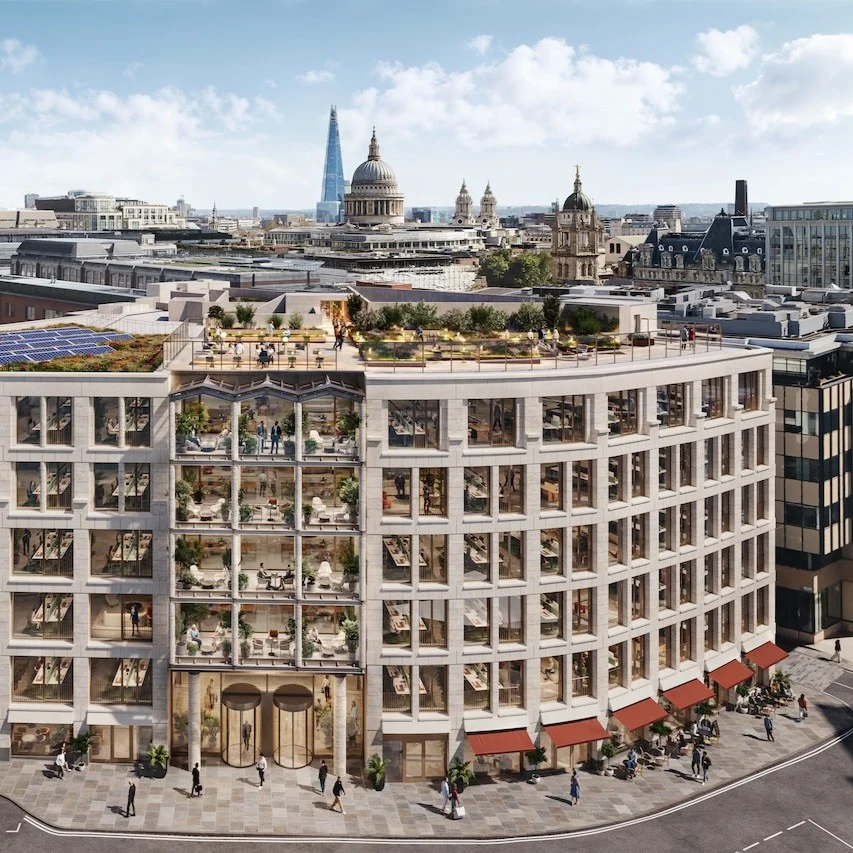
Railpen has announced a significant milestone in its London property development portfolio, securing full planning permission for the comprehensive redevelopment of 12 Smithfield. This pivotal approval greenlights a substantial new office scheme in the heart of the City of London, poised to invigorate the rapidly transforming Smithfield district. The ambitious project, managed by the £34 billion Railways Pension Scheme, is set to deliver a modern, sustainable, and amenity-rich workspace, anticipated to be completed by the fourth quarter of 2028. The development will not only offer prime office accommodation but will also integrate vibrant retail, café, and other essential amenity spaces, all with commanding views overlooking the historic Smithfield Market. This initiative is a cornerstone of a broader regeneration effort in the Smithfield area, which is currently experiencing an estimated £400 million investment surge in anticipation of the highly-anticipated opening of the new London Museum in 2028. The museum, set to occupy a significant portion of the former market complex, is projected to become the linchpin of a burgeoning new cultural quarter, further enhancing the appeal and economic vitality of the locality.
A Vision for Modern Workspace and Urban Revitalisation
The redevelopment of 12 Smithfield, masterminded by acclaimed architects Henley Halebrown, represents a thoughtful approach to urban renewal. While preserving a substantial portion of the existing building’s structural integrity, the design will introduce a striking new façade, significantly expand public realm areas, and implement substantial upgrades to the building’s environmental performance. Railpen has articulated a strong commitment to sustainability, with the development targeting an impressive array of certifications, including BREEAM Outstanding, EPC A, WELL Core Platinum, NABERS UK 5-star, and Net Zero Carbon in operation. This dedication underscores a forward-thinking strategy to meet the evolving demands for environmentally responsible and human-centric workspaces.
The office component of the scheme is designed to be highly flexible and attractive to a diverse range of occupiers. It will feature expansive floorplates, each capable of accommodating up to 20,000 sq ft, spread across five floors. Complementing the internal workspace will be over 9,400 sq ft of strategically placed terraces and a rooftop garden, offering valuable outdoor amenity and potential for enhanced employee well-being. An additional 11,400 sq ft has been allocated for retail, café, and other ancillary uses, ensuring the building contributes to the vibrancy of the streetscape and provides essential services for occupants and the wider community. The site’s strategic location is further enhanced by its proximity to Farringdon station, a major transport hub, and the Elizabeth line, making it easily accessible from across London and beyond. This connectivity is a critical factor for businesses seeking to attract and retain top talent in a competitive market.
Strategic Investment Amidst a Flourishing District
Emily Atkinson, UK offices sector lead at Railpen, expressed her enthusiasm for the planning approval, describing it as "a significant milestone" for both the company and the ongoing transformation of the Smithfield area. She highlighted the development’s strategic intent to provide high-quality headquarters space, specifically tailored to attract leading occupiers from sectors such as finance, technology, and the creative industries. These sectors are increasingly seeking dynamic and well-connected environments that foster collaboration and innovation.
Matthew Howard, Railpen’s head of property, elaborated on the scheme’s alignment with the organisation’s overarching investment philosophy. He stated that the project embodies Railpen’s strategy of focusing on high-quality office buildings in locations where the supply of new Grade A space is demonstrably limited. The prime position opposite the future London Museum, he noted, is set to establish 12 Smithfield as a flagship asset within Railpen’s extensive office portfolio. To facilitate the successful leasing of the building, Railpen has appointed leading real estate advisory firms JLL and Newmark to spearhead the marketing efforts and engage with prospective tenants.
A Broader Context of Growth and Development
The 12 Smithfield project is not an isolated endeavour but rather a key component of Railpen’s wider strategic programme of office developments across London. This includes other notable projects such as The Fenner in Holborn, 125 Wood Street, and 4 Coleman Street, all situated within the City of London. Beyond the capital, Railpen’s expansive property interests extend to Birmingham, where it is developing a significant 295,000 sq ft multistorey scheme, and Cambridge, with a portfolio of 11 office assets totalling over 1.9 million sq ft, including projects currently under construction such as Botanic Place and Mill Yard. This diversified approach reflects a robust and strategic investment strategy aimed at capitalising on growth opportunities across key UK markets.
The regeneration of Smithfield is poised to create a dynamic new hub for business, culture, and leisure. The influx of investment, driven by the development of the London Museum and projects like 12 Smithfield, signifies a renewed confidence in the area’s potential. The museum, expected to attract millions of visitors annually, will undoubtedly drive footfall and create a vibrant ecosystem that benefits surrounding businesses and amenities. The combination of enhanced cultural offerings and modern, sustainable workspaces creates a compelling proposition for occupiers and investors alike.
Economic and Urban Planning Implications
The approval of 12 Smithfield carries significant implications for the local economy and urban planning landscape of the City of London. By delivering a substantial volume of high-quality office space, Railpen is contributing to the city’s ongoing role as a global financial and business centre. The emphasis on sustainability and employee well-being through certifications like BREEAM Outstanding and WELL Platinum aligns with the growing demand from corporations for ESG-compliant and people-centric workplaces. This focus is crucial for attracting and retaining businesses that are increasingly prioritising environmental and social governance in their real estate decisions.
Furthermore, the integration of retail and café spaces will enhance the public realm and contribute to the area’s vibrancy, creating a more mixed-use environment that benefits both workers and residents. The development’s proximity to the Elizabeth line is a strategic advantage, reinforcing London’s position as a well-connected global city and facilitating ease of access for a diverse workforce. The £400 million investment in the wider Smithfield district underscores a commitment to long-term growth and regeneration, transforming a historic area into a modern, dynamic urban centre. This level of coordinated investment is essential for creating a resilient and thriving urban environment capable of adapting to future economic and social shifts.
A Timeline of Development and Anticipated Impact
The journey to this planning approval has been a strategic process, reflecting Railpen’s meticulous approach to development. While specific timelines for the initial planning stages are not detailed, the securing of full permission marks the commencement of the next critical phase.
- Present Day (July 20, 2026): Railpen secures full planning permission for the redevelopment of 12 Smithfield.
- Construction Phase (Anticipated Start 2026/2027): Following planning approval, detailed design finalisation and contractor selection will pave the way for the commencement of construction works. This phase is expected to create numerous jobs and stimulate local economic activity.
- Completion (Q4 2028): The 122,000 sq ft office development, alongside its integrated retail and amenity spaces, is scheduled for completion.
- Museum Opening (2028): The new London Museum opens its doors within the former Smithfield Market, becoming a significant cultural anchor for the revitalised district.
- Post-Completion (2028 onwards): The fully operational 12 Smithfield scheme begins to welcome its occupiers, contributing to the economic and social fabric of the Smithfield area and solidifying its reputation as a prime destination for businesses and visitors alike.
The impact of this development, alongside the broader regeneration efforts, is expected to be substantial. It will not only provide much-needed modern office space but will also enhance the cultural and retail landscape of the City. The successful leasing of the building to businesses in key growth sectors will further bolster London’s economic standing. The commitment to high sustainability standards sets a benchmark for future developments, contributing to the city’s environmental goals.
The strategic positioning of 12 Smithfield opposite the new London Museum is a calculated move, leveraging the anticipated footfall and cultural draw of the museum to enhance the desirability of the office space. This synergistic approach to development is a hallmark of successful urban regeneration projects, creating a mutually beneficial environment for businesses, cultural institutions, and the public. Railpen’s investment in Smithfield represents a long-term vision for a thriving, sustainable, and culturally rich district that will continue to evolve and attract investment for years to come. The appointment of JLL and Newmark signals a robust marketing strategy aimed at securing high-calibre tenants, further underscoring the confidence in the project’s potential.