
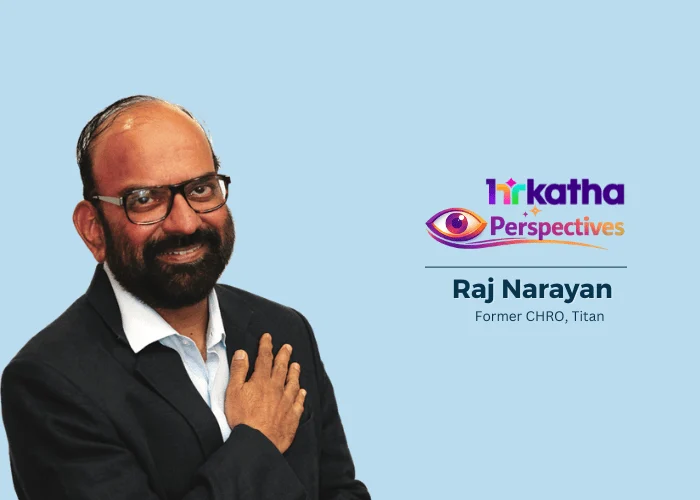
The extensive and transformative journey at Titan Company Ltd. profoundly shaped Raj Narayan’s philosophy on leadership and organizational dynamics. Spanning decades as a seasoned people leader across diverse industries and corporate structures, Narayan gained invaluable firsthand insights into the critical distinctions between organizations that genuinely embody their espoused values and those that merely pay lip service to them. In a recent insightful conversation with HRKatha, a prominent platform for human resources discourse, Narayan meticulously dissected the consistent triumphs and recurring pitfalls observed in contemporary organizations. His reflections underscored several leadership behaviors he posits are far more crucial than many executives are prepared to acknowledge. Among these pivotal distinctions are the nuanced difference between genuine kindness and debilitating softness, the significant organizational costs inherent in cultures that actively discourage dissent, and the persistent undervaluation of active listening as a fundamental managerial capability.
Cultivating Cultures of Genuine Openness and Psychological Safety
A central theme in Narayan’s observations revolves around the rhetoric versus reality of organizational openness and dissent. Many corporations outwardly champion an environment where diverse viewpoints are encouraged, yet, in practice, very few truly foster such a culture. The distinction, Narayan asserts, manifests itself with remarkable speed and clarity. In organizations where differing perspectives are genuinely welcomed, employees exhibit a natural propensity to speak openly. This behavior is cultivated through repeated, tangible experiences demonstrating that voicing disagreement does not incur punitive consequences. These employees feel empowered to challenge underlying assumptions, secure in the knowledge that their insights will be heard, considered, and respected.
The tangible benefits of such psychologically safe environments are profound and far-reaching. These organizations consistently emerge as more innovative, demonstrating enhanced agility in responding to market shifts and becoming significantly more engaging workplaces. Employees in these settings develop a heightened sense of ownership, understanding that their contributions are not just tolerated but genuinely valued and instrumental to the organization’s success. Consequently, overall performance metrics invariably improve. This aligns with extensive research, such as Google’s Project Aristotle (2015), which identified psychological safety as the single most important factor distinguishing high-performing teams. Studies by organizational psychologist Amy Edmondson further reinforce that psychological safety, defined as a shared belief that the team is safe for interpersonal risk-taking, is crucial for learning, innovation, and adaptability in complex environments. A 2023 survey by Gartner indicated that organizations with high psychological safety report 27% higher employee engagement and 30% higher discretionary effort, directly correlating to improved innovation pipelines and market responsiveness.
Conversely, organizations that merely articulate openness rhetorically, while their behavioral cues signal a starkly different reality, create a climate of apprehension. These signals can be subtle yet potent, manifesting in the dynamics of meetings, the criteria for promotions, the visibility afforded to certain individuals, and, critically, the reactions of leadership to challenges or alternative proposals. Employees quickly internalize that dissent carries a tangible cost, be it a stalled career trajectory, reduced visibility, or even subtle professional ostracization. When this happens, the flow of alternative perspectives ceases, not because employees have stopped engaging critically or thinking independently, but because they have pragmatically learned that vocalizing their thoughts carries an unacceptable risk. This suppression of thought leads to groupthink, missed opportunities, and a significant lag in innovation, often costing companies millions in untapped potential and market competitiveness. The performance gap between organizations that truly embrace openness and those that merely feign it is, according to Narayan, often far wider than senior leaders are willing or able to recognize. Beyond internal dynamics, psychologically safe cultures also bolster customer focus, as employees feel more empowered to take ownership across the entire value chain rather than strictly adhering to narrowly defined role descriptions, leading to enhanced service quality and customer satisfaction.
The Strategic Imperative of Kindness Versus Softness
Addressing the complex interplay of meritocracy and inclusion, Narayan emphasizes that these are not competing priorities but rather mutually reinforcing pillars of a robust organization. The bedrock of balancing these two vital aspects is an unwavering leadership commitment to both simultaneously. This commitment must transcend mere verbal declarations and manifest visibly through comprehensive organizational systems, including performance management frameworks, reward structures, recognition programs, and equitable development opportunities. Employees must perceive that merit genuinely underpins advancement and that access to opportunities is both fair and transparent.
A critical distinction that leaders frequently misunderstand, Narayan highlights, is the difference between genuine kindness and detrimental softness. True kindness, in a leadership context, necessitates having difficult conversations with honesty and integrity. It involves directly addressing underperformance, holding individuals accountable for their responsibilities, and communicating clearly and constructively where an employee stands in terms of their performance and development. Avoiding these challenging but necessary conversations, Narayan argues, is not an act of kindness; it is an act of softness. This softness is profoundly corrosive, eroding both the principles of meritocracy and the overall morale of the team. When underperformance is left unaddressed, high performers become demotivated, perceiving an unfair system where effort and results are not adequately differentiated. This can lead to a significant talent drain, as top performers seek environments where their contributions are truly valued and distinguished.
The role modeling exhibited by leaders is equally, if not more, impactful than their verbal pronouncements. Employees are astute observers, paying far more attention to the actions and behaviors of their leaders than to their stated intentions. If leaders advocate for inclusion and meritocracy while making decisions that are inconsistent with these values – perhaps through biased promotions or preferential treatment – their credibility rapidly evaporates. To foster a truly meritocratic and inclusive environment, exceptional performance must be recognized visibly and consistently, and high-potential talent must be developed systematically. When a steadfast leadership commitment, fair and transparent processes, and genuinely inclusive behaviors operate in concert, organizations transcend the false dichotomy of viewing performance and inclusion as opposing goals, instead strengthening both simultaneously. Research by Deloitte has consistently shown that inclusive companies are 1.7 times more innovative and 1.4 times more profitable, demonstrating that meritocracy thrives best within an inclusive framework, fostering both fairness and high achievement.
Active Listening: The Most Overlooked Leadership Capability
In an era defined by constant transformation and accelerating change, Narayan identifies active listening as the single most undervalued leadership capability within contemporary organizations. While the concept might appear deceptively simple, organizations consistently underestimate its profound importance and, consequently, bear significant costs that they often fail to recognize. Leaders, Narayan stresses, must cultivate the ability to listen deeply, extending this practice beyond their immediate teams to include colleagues across functional silos, critical customers, key vendors, and other crucial stakeholders. Listening, in this context, transcends merely hearing concerns; it is about genuinely understanding the lived experiences of individuals and ensuring that meaningful, actionable responses follow.
In periods of rapid organizational flux and widespread transformation, numerous voices inevitably risk being marginalized or entirely drowned out. It becomes imperative for organizations to establish robust mechanisms that guarantee stakeholders feel genuinely heard and, crucially, believe that their feedback actively influences strategic decisions. All too frequently, leaders prioritize directing, driving, and delivering outcomes, inadvertently underinvesting in the foundational practice of listening. However, leaders who fail to listen effectively are, in essence, operating with incomplete information, making decisions based on fragmented data and potentially missing critical insights that could inform better strategies. A 2022 survey by the National Business Research Institute highlighted that 69% of employees believe their managers don’t listen effectively, leading to increased disengagement and reduced productivity, costing businesses an estimated $37 billion annually due to poor communication.
Organizations that consciously cultivate strong listening cultures reap substantial benefits. They forge stronger relationships, both internally and externally, make more informed and robust decisions, and respond far more effectively and proactively to change. Despite these undeniable advantages, active listening remains one of the least consciously developed leadership capabilities in leadership training programs and daily managerial practices. This deficit in listening capability represents a significant untapped potential for organizational improvement and competitive advantage, enabling leaders to foster empathy, build trust, and drive collaborative problem-solving.
Strategic HR Career Trajectories: Lessons from Titan
Drawing from his extensive experience at Titan Company Ltd., an Indian conglomerate founded in 1984, known for its watches, jewelry, and eyewear, Narayan offered invaluable insights into how HR professionals can strategically build careers that cultivate both expansive strategic breadth and genuine functional depth. At Titan, a pioneering practice involved systematically rotating HR professionals every three to five years across various centers of excellence (COEs), HR business partnering (HRBP) roles, and specialized functions. This structured mobility, implemented over years, encouraged individuals to develop both strong partnering capabilities and deep expertise in areas aligned with their natural inclinations, whether that be talent acquisition, compensation and benefits, leadership development, or other specialized domains.
The long-term impact of these rotations became strikingly evident. Professionals who had experienced these diverse assignments were demonstrably better equipped to navigate ambiguity, connect effectively with a broader spectrum of stakeholders, and approach complex problems from multiple, integrated perspectives. This structured exposure fostered greater strategic range and enhanced resilience, preparing them for increasingly complex leadership roles. This approach aligns with modern talent development strategies that advocate for experiential learning and cross-functional exposure to build holistic leaders, often referred to as "T-shaped" professionals with deep expertise in one area and broad knowledge across others. HR professionals who underwent such rotations often reported enhanced adaptability and a more holistic understanding of business operations.
Narayan’s advice to contemporary HR professionals is clear and actionable: consciously strive to build deep expertise in at least one specialized area while actively and proactively seeking breadth early in one’s career. He cautions against passively awaiting the organization to meticulously design this career journey, instead advocating for individuals to take proactive ownership of their professional development. A common impediment, Narayan observes, is that too many professionals resist role changes, mistakenly equating comfort with competence. Yet, it is often precisely within the discomfort inherent in transitioning roles that genuine and accelerated development truly occurs, pushing individuals beyond their comfort zones to acquire new skills and perspectives.
Beyond structured rotations, continuous learning remains paramount. Engaging in formal learning programs, leveraging digital learning platforms, participating actively in industry forums, and taking on cross-functional projects all contribute significantly to broadening one’s perspective and enhancing capabilities. HR professionals who strategically combine career mobility, continuous learning, and direct business exposure cultivate a range of capabilities that becomes genuinely difficult for competitors to replicate, positioning them as invaluable strategic assets within their organizations, capable of navigating the dynamic demands of global talent management.
The Unresolved Challenge: Building and Sustaining Trust in HR
Reflecting on the transformative shifts within the HR landscape over the past two decades, Narayan acknowledges one of the most significant evolutions: HR’s transition from a predominantly administrative and transactional function to a genuine strategic partner. This modern HR function now actively contributes to organizational direction, bringing deep expertise in people dynamics to critical leadership discussions. This evolution, which gained significant momentum in the early 2000s with the rise of HR business partnering models, has seen HR move beyond traditional payroll and compliance to encompass talent management, organizational development, and cultural stewardship. In many mature Indian organizations, contemporary HR practices are remarkably sophisticated, in some instances rivaling or even surpassing those found in larger, globally established enterprises. This progress, Narayan affirms, is undeniably real and substantial.
However, a persistent and significant unresolved gap remains: trust. Narayan has witnessed organizations where the HR function is perceived as fair, balanced, and genuinely supportive – a department employees instinctively turn to during challenging moments, trusting its impartiality and commitment to their well-being. Conversely, he has also observed organizations where HR is widely perceived as political, overly procedural, and largely disconnected from the lived realities of employees. This trust gap, he asserts, still exists more widely and profoundly than the HR profession is often willing to acknowledge. A 2021 study by the Society for Human Resource Management (SHRM) found that while 70% of HR professionals believe employees trust them, only 55% of employees actually report trusting HR, highlighting a significant perceptual disparity.
Looking ahead, Narayan highlights the inevitable impact of artificial intelligence (AI) on the HR function. As AI technologies increasingly automate and streamline transactional HR tasks – from payroll processing to benefits administration and routine query handling – the credibility and, indeed, the very relevance of HR will depend even more heavily on its ability to build and sustain trust. Employees will increasingly look to HR leaders not just for procedural guidance but as fair, approachable, and genuinely invested advocates for their growth, development, and overall well-being. If the HR function fails to cultivate and sustain this fundamental trust, Narayan warns, no amount of technological sophistication or digital transformation will ultimately preserve its enduring relevance in the evolving organizational landscape. The human element, ethical stewardship, and empathetic leadership will become the ultimate differentiators for HR in the age of AI, solidifying its role as a strategic human capital advisor rather than a mere administrative overhead.
Broader Implications for Modern Leadership
Raj Narayan’s comprehensive insights offer a vital roadmap for contemporary leaders navigating the complexities of the 21st-century workplace. His reflections underscore that true organizational success stems not merely from strategic acumen or technological adoption, but fundamentally from the quality of human interaction, the authenticity of leadership, and the cultivation of an environment where every voice matters. The emphasis on psychological safety, the nuanced understanding of kindness, the power of active listening, the strategic approach to HR career development, and the critical importance of trust in HR, collectively paint a picture of a human-centric leadership paradigm.
In a global economy characterized by rapid change, unprecedented uncertainty, and a growing demand for ethical governance, leaders who champion these principles are better positioned to build resilient, innovative, and highly engaged organizations. These insights are particularly pertinent for organizations in emerging economies like India, where rapid growth often outpaces the development of mature organizational cultures. By internalizing and implementing Narayan’s wisdom, leaders can move beyond superficial adherence to corporate values, fostering workplaces where employees thrive, innovation flourishes, and sustainable success becomes an inherent outcome. The future of work demands not just efficient operations, but profoundly human leadership, capable of inspiring confidence and navigating complex interpersonal dynamics with integrity and foresight.








