
The landscape of corporate governance is undergoing a fundamental shift as global organizations move away from the traditional "one-size-fits-all" approach to compliance training in favor of adaptive, context-driven methodologies. For decades, the prevailing logic in human resources and legal departments suggested that if every employee must adhere to the same set of rules, every employee must consume the exact same training content. However, recent developments in instructional design and learning science suggest that this rigid standardization may actually be counterproductive to the ultimate goal of risk mitigation. The emerging consensus among Learning and Development (L&D) professionals is that while learning outcomes—such as the understanding of a company’s Code of Conduct—must remain consistent, the path taken to reach those outcomes should vary based on an individual’s role, location, and seniority.
The Shift Toward Selective Adaptation
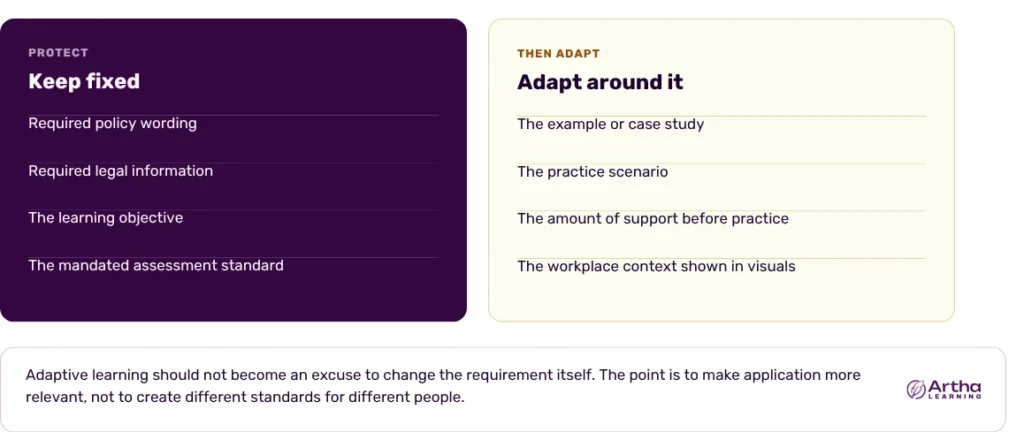
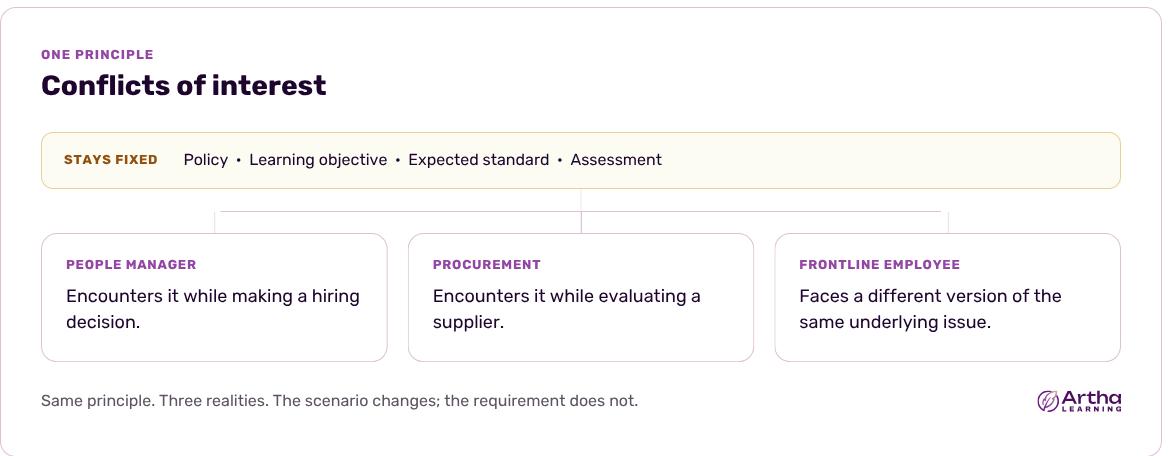
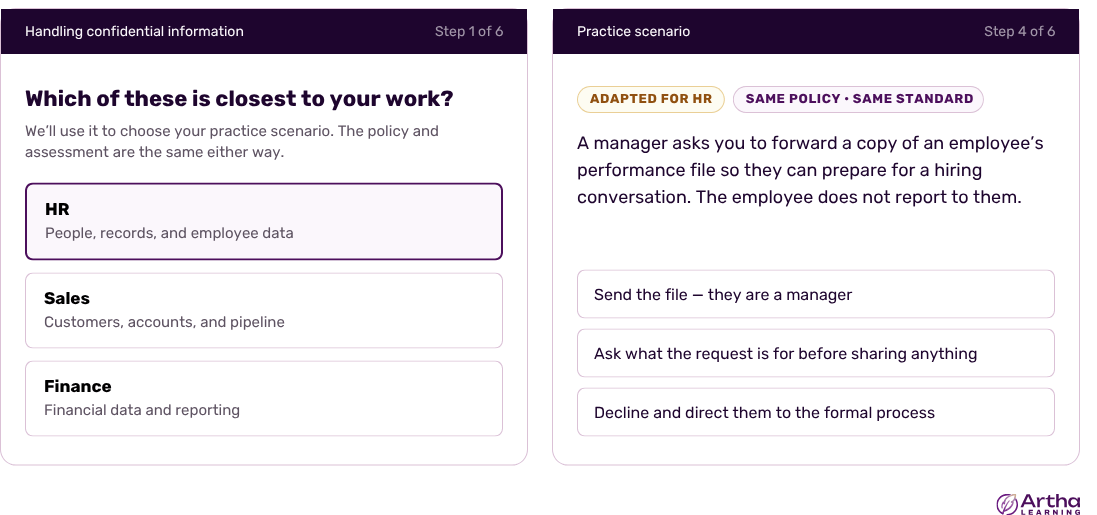
The core of this modern strategy is the "common spine" model. In this framework, the foundational elements of training—the core policies, legal requirements, and organizational expectations—remain fixed and universal across the entire enterprise. This ensures that the organization meets its regulatory obligations to provide a standardized baseline of knowledge. However, the surrounding layers of the training, including scenarios, case studies, and practice activities, are adapted to reflect the specific realities of different departments.
Industry experts argue that this approach addresses the "translation friction" often found in generic training. When a procurement officer is presented with a conflict-of-interest scenario involving a retail customer, they must perform mental labor to translate that situation into their own context of supplier relations. By providing role-specific scenarios from the outset, organizations allow employees to focus their cognitive energy on decision-making rather than contextual translation.
Historical Context and the Evolution of Compliance Training
The evolution of corporate training can be viewed through three distinct eras. In the late 20th century, compliance was largely a paper-based or classroom-led affair, often characterized by "death by PowerPoint" sessions where local managers interpreted policies for their specific teams. While this was naturally adaptive, it lacked the centralized oversight and auditability required by modern regulators.
The second era, beginning in the early 2000s with the rise of the Learning Management System (LMS), prioritized "sameness." To prove to regulators that every employee had been trained, companies deployed identical, static e-learning modules to tens of thousands of workers simultaneously. While this solved the problem of documentation and administrative ease, it led to a significant decline in learner engagement and, arguably, the practical application of the rules.
We have now entered the third era: the era of "Adaptive Compliance." This period is defined by the recognition that standardization of the message does not require the flattening of the experience. Technological advancements now allow for "selective adaptation," where a single course can branch into different paths based on a learner’s initial input—such as their job function or geographic region—without requiring the creation of dozens of separate, unmanageable course files.
Supporting Data and Market Trends
The drive toward adaptive learning is supported by significant industry data. According to the 2023 LinkedIn Learning Report, "relevance" is cited as the number one motivator for employee engagement in corporate training. Furthermore, research by the Brandon Hall Group indicates that personalized and adaptive learning journeys can reduce the time spent in training by up to 40% while simultaneously improving the retention of critical information.
In the specific realm of compliance, the cost of ineffective training is high. A 2022 report on the "Cost of Compliance" by Thomson Reuters highlighted that regulatory changes are occurring at a rate of over 200 per day globally. For a multinational corporation, expecting every employee to master a generic version of these complex rules is increasingly viewed as a high-risk strategy. By tailoring the "how" and "where" of policy application, companies are reporting higher "readiness scores" in internal audits.
Perspectives from Stakeholders and Industry Leaders
The move toward adaptive models has drawn praise from various corporate sectors, though it is not without its critics. Chief Compliance Officers (CCOs) have traditionally been the strongest advocates for identical training, fearing that any variation might be interpreted by regulators as a lack of uniform standards. However, modern legal perspectives are shifting. Many legal experts now suggest that providing role-relevant training demonstrates a more "robust and effective" compliance program under guidelines such as those provided by the U.S. Department of Justice (DOJ).
L&D directors, meanwhile, view adaptation as a solution to "training fatigue." "When you ask a senior executive to sit through a foundational module designed for an entry-level clerk, you lose their buy-in immediately," says one industry analyst. "Adaptation allows the system to respect the learner’s existing expertise while still ensuring they are briefed on the latest policy updates."
On the employee level, the feedback is even more pronounced. Internal surveys at Fortune 500 companies implementing role-based branching show a 30% increase in "perceived value" of the training. Employees are more likely to report that they feel "better equipped to handle real-world ethical dilemmas" when the practice scenarios mirror their daily tasks.
Implementing the Common Spine: A Strategic Chronology
For organizations looking to transition to an adaptive model, the process typically follows a structured chronology:
- Audit of the Fixed Core: Legal and HR teams identify the "non-negotiables"—the exact wording of policies, the specific laws (such as GDPR or the FCPA), and the mandatory assessment questions that every employee must answer.
- Mapping the Variation Points: Designers identify where the "sameness" causes the most friction. This usually involves identifying high-risk roles (e.g., sales, finance, HR) that require specific types of judgment.
- Contextual Layering: Subject matter experts from different departments are interviewed to provide "real-world" scenarios that test the core principles.
- Technological Integration: The L&D team utilizes "if-then" logic within their authoring tools. For example: If the user is in the Asia-Pacific region, then show the scenario regarding local gift-giving customs.
- Validation and Feedback: The course is tested to ensure that despite the different paths, the final assessment and learning objectives remain identical across all versions.
Broader Impact and Future Implications
The implications of adaptive compliance training extend beyond mere corporate efficiency. As artificial intelligence (AI) becomes more integrated into workplace systems, the potential for "hyper-personalization" grows. Future systems may not just ask for a user’s role, but may analyze a user’s previous performance data to provide more support in areas where they have struggled, while allowing them to test out of areas where they have already demonstrated mastery.
However, the "common spine" philosophy remains a vital safeguard against the risks of over-personalization. Experts warn that if training becomes too fragmented, the organization risks losing its shared culture and common language. The goal of adaptation is not to create a different set of rules for different people, but to ensure that the same rules are understood with the same level of clarity by everyone.
Ultimately, the shift toward adaptive compliance training represents a maturing of the corporate education sector. It is a move away from "box-ticking" and toward genuine behavioral change. By acknowledging that a manager in London faces different pressures than a technician in Singapore, organizations are creating more resilient ethical cultures. The modern mantra for compliance is becoming clear: standardize the principle, but localize the practice. In doing so, companies are finding that they don’t have to choose between consistency and relevance—they can, and must, achieve both.






