Businesses frequently encounter operational hurdles such as delayed projects, escalating workloads, or persistent missed deadlines, often prompting an immediate consideration of expanding their workforce. This conventional response, however, frequently overlooks a critical underlying truth: many of these bottlenecks are not indicative of a sheer lack of personnel but rather symptoms of systemic inefficiencies, including antiquated processes, fragmented communication channels, disparate technological systems, or a heavy reliance on time-consuming manual tasks. Merely increasing headcount in such environments risks exacerbating existing problems by introducing more individuals into a flawed operational framework, effectively multiplying inefficiency rather than resolving it.
The strategic imperative, therefore, shifts from simply adding talent to fundamentally re-engineering the processes and workflows that impede progress. This paradigm shift increasingly necessitates individuals equipped with artificial intelligence (AI) capabilities, adept at leveraging advanced technologies to navigate and manage projects of escalating complexity. A recent global survey by ManpowerGroup underscored this evolving landscape, revealing that a staggering 72% of employers are struggling to fill roles with appropriately skilled talent. This challenge is further compounded by a significant shift in demand, where AI capabilities are now eclipsing traditional skill sets in importance. In an environment where businesses already contend with a pronounced skills gap, the notion that simply augmenting staff numbers will resolve entrenched bottlenecks becomes increasingly untenable. For Human Resources (HR) departments, this presents a formidable challenge: distinguishing between a genuine shortage of critical skills and operational issues stemming from poorly designed processes. This article delves into four pivotal reasons why an increase in workforce size alone will not remedy every inefficiency within an organization.
The Evolving Landscape of Work and Talent Shortages
The global workforce has undergone significant transformations in recent years, driven by rapid technological advancements, evolving employee expectations, and the lingering effects of global events. The "Great Resignation" or "Great Reshuffle" phenomenon, which saw millions of workers voluntarily leaving their jobs, highlighted a fundamental shift in labor market dynamics. Simultaneously, the accelerating pace of digital transformation, spurred by the necessity of remote work and increased automation, has reshaped the skills required for success in almost every industry. Against this backdrop, the global talent shortage has reached unprecedented levels. According to a 2023 report from a leading HR consultancy, an estimated 85 million jobs could go unfilled globally by 2030 if companies cannot find people with the right skills, leading to potential revenue losses of trillions of dollars. This context is crucial; it means that when a business faces a bottleneck, the solution cannot be a blunt instrument like mass hiring. It must be a surgical intervention, addressing the root cause with precision, often through technological integration and process optimization.
1. Over-reliance on Manual Tasks: The Productivity Drain
One of the most pervasive and often underestimated project bottlenecks is the excessive volume of administrative and repetitive manual work. If employees are dedicating a substantial portion of their workday to tasks that could be automated, HR teams might mistakenly perceive this as a need for additional personnel to manage the sheer workload. While hiring another employee might temporarily distribute the burden, it critically fails to address the underlying structural problem. The newly hired individual will inevitably become entangled in the same time-consuming, repetitive tasks, perpetuating the cycle of inefficiency.
Consider a scenario where project managers spend hours each week updating spreadsheets, drafting routine status reports, sending follow-up emails for approvals, or manually generating project documentation. Industry analyses suggest that knowledge workers typically spend up to 40% of their time on administrative tasks, a figure that represents a significant drain on organizational productivity. Modern businesses are increasingly mitigating this drain by adopting AI-powered project management software. These sophisticated platforms can automate a wide array of time-consuming administrative tasks, from real-time spreadsheet updates and automated status notifications to intelligent routing of approval requests and document generation. By offloading these repetitive duties, automation liberates employees to focus on activities that genuinely require their cognitive skills, creative problem-solving, and specialized expertise. This strategic reallocation of human capital allows for a more effective utilization of the existing talent pool, significantly reducing the urgent imperative to bring new people on board and ensuring that when new hires are made, they contribute to strategic growth rather than administrative upkeep. According to Dr. Anya Sharma, a lead analyst at Global Tech Insights, "The age of simply adding headcount to absorb manual work is over. Businesses must leverage AI to free human capital for strategic endeavors, fostering innovation rather than perpetuating drudgery."
2. Fragmented Information Across Disconnected Systems: The Collaboration Killer
Project delays frequently stem from a fundamental inability of employees to access crucial information from a single, centralized system. This common issue arises from a myriad of factors: restrictive access protocols, critical updates buried deep within lengthy email chains, outdated or conflicting data residing in disparate spreadsheets, or important documents haphazardly stored in obscure, hard-to-find network folders. The consequence is a substantial waste of valuable employee time, as individuals embark on tedious searches for information or repeatedly interrupt colleagues for updates.
Introducing more employees into an already fractured technological ecosystem does not resolve this issue; in fact, it often compounds the problem. A larger workforce navigating disconnected systems can lead to even greater communication breakdowns, increased data inconsistencies, and more challenging collaboration. From an HR perspective, this fragmentation renders it virtually impossible to accurately assess where additional talent is genuinely required. When critical operational data is spread across numerous unintegrated systems, hiring decisions are likely to be based on incomplete or skewed information, leading to misallocations of resources.
The lack of consistency regarding roles, responsibilities, and access to necessary data creates a challenging environment for both employees and HR. This is where a robust definition and centralization become paramount. Utilizing advanced job description management software, for instance, can help standardize role definitions across the enterprise, eliminating ambiguity and "grey areas" that contribute to operational friction. More broadly, the strategic implementation of integrated project management platforms creates a centralized repository for all project-related information. This unified view provides both business decision-makers and HR teams with unprecedented visibility into the capacity of the existing team, highlighting genuine gaps that may be hindering project progression. A 2023 Enterprise Integration Survey indicated that over 65% of companies reported significant productivity losses due to data silos and disconnected systems. Maria Rodriguez, a veteran HR strategist, notes, "HR teams are flying blind when information is siloed. Accurate workforce planning and targeted talent acquisition hinge on integrated data systems that provide a holistic view of operations and capabilities."
3. Approval Workflows: The Unseen Bottleneck
A significant number of projects experience delays not due to a lack of effort or talent, but because employees are caught in a waiting game, dependent on others to review or approve their work. These often-unseen approval bottlenecks effectively halt project momentum, preventing tasks from progressing to the next stage. Hiring more people will not inherently accelerate these processes. Instead, the solution lies in optimizing and automating the approval workflows themselves.
Automated workflow systems can intelligently route approval requests to the appropriate managers or stakeholders based on predefined criteria such as project type, departmental affiliation, associated cost, or the nature of the request. Furthermore, these systems can incorporate automated reminders, proactively notifying managers when an approval has been pending for an extended period, thereby preventing tasks from falling through the cracks. Studies by the Process Optimization Institute indicate that organizations implementing automated approval systems can reduce cycle times by an average of 30-50%, significantly impacting project velocity.
Once internal processes have been streamlined and made more efficient through automation, HR teams gain a much clearer understanding of where new talent is genuinely needed. This clarity enables strategic investment in areas facing authentic skill shortages, rather than inadvertently hiring new employees primarily to help manage administrative backlogs. This shift towards data-driven recruitment, informed by optimized processes, profoundly improves the quality and strategic alignment of talent acquisition within the business. "From an operational standpoint, bottlenecks in approvals can cripple progress," states David Chen, CEO of InnovateCorp. "Automating these processes isn’t just about speed; it’s about establishing predictable progress and fostering accountability."
4. Ambiguous Responsibilities: The Efficiency Erosion
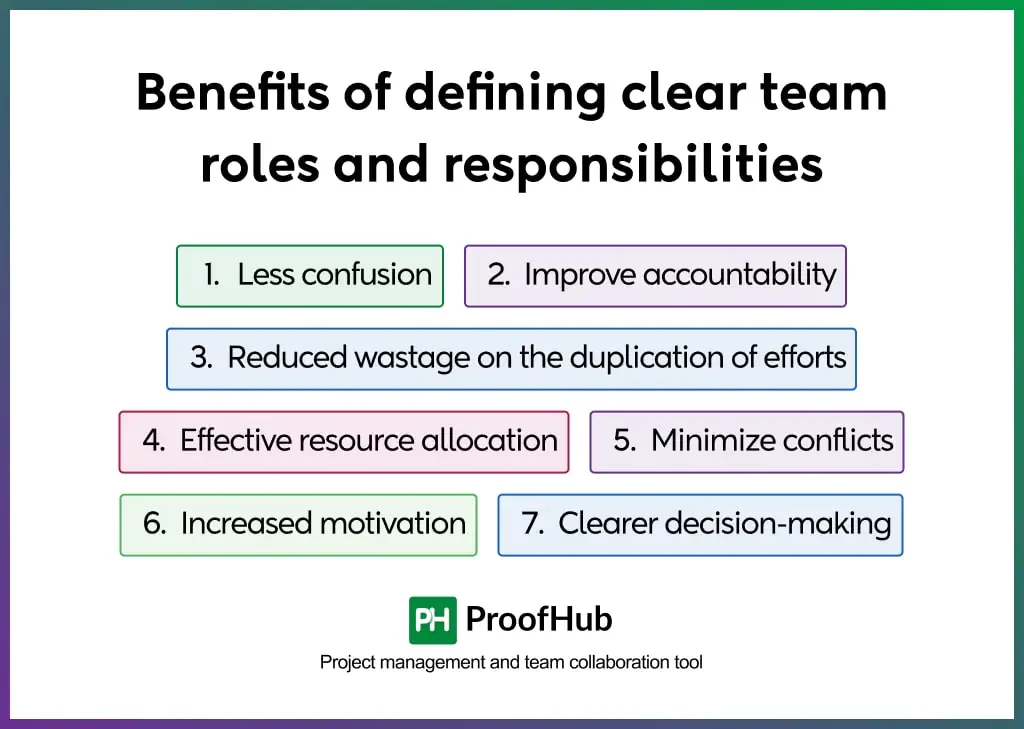
Projects, particularly in complex organizations, often involve cross-functional teams spanning multiple departments, and sometimes even diverse geographical locations. This inherent complexity can breed significant confusion when individual roles and team responsibilities are not explicitly defined and communicated. This pervasive lack of clarity can severely impair HR’s ability to accurately gauge workforce capacity and needs. Without clear job roles and task ownership, it becomes exceedingly difficult to ascertain whether additional personnel are required or if existing responsibilities merely need to be reallocated and clarified.
Consider the common pitfalls: an employee might mistakenly assume a colleague is responsible for a critical task, leading to its neglect, or multiple teams might unknowingly duplicate efforts because they are unaware that another department is already handling the same work. In such scenarios, simply hiring more people will not resolve the underlying bottleneck if teams remain uncertain about who is accountable for each task, decision, and desired outcome.
When responsibilities are transparently defined and visibly assigned, team members are less likely to waste time chasing updates, seeking clarification, or passively waiting for someone else to initiate action. Modern project management software plays a pivotal role in addressing this challenge by enabling explicit task assignment, tracking ownership in real-time, and automatically routing work to the designated individuals. This technological support fosters a culture of accountability and reduces ambiguity. From an HR perspective, this enhanced visibility provides a much more precise picture of where time is being lost and whether existing capacity can be optimized through better role definition and process flow, thereby potentially deferring or even eliminating the immediate need for recruitment. Dr. Emily Stone, a prominent management consultant, emphasizes, "Clarity is the bedrock of efficient teamwork. Without it, even the most talented teams will falter, leading to the perception of a talent gap where none truly exists." Studies on organizational clarity have consistently shown a positive correlation with increased employee engagement and productivity, with some reports indicating up to a 20% improvement in team performance.
The Transformative Power of AI and Integrated Platforms
The recurring theme across these four common bottlenecks is the critical role of technology, specifically AI and integrated platforms, in moving beyond superficial solutions. AI-powered tools are not merely automating mundane tasks; they are fundamentally reshaping how projects are planned, executed, and managed. Predictive analytics, driven by AI, can anticipate potential bottlenecks before they materialize, allowing teams to proactively address issues rather than reactively scramble. Resource optimization algorithms can intelligently assign tasks based on skill sets, availability, and project priorities, ensuring that human capital is deployed most effectively. Intelligent task assignment, real-time progress monitoring, and automated risk assessments contribute to a more agile, resilient, and efficient project ecosystem.
This shift represents a move from managing projects through intuition and manual oversight to leveraging data-driven insights and automated intelligence. Businesses that embrace this transformation gain a significant competitive edge, characterized by faster time-to-market, reduced operational costs, and higher quality deliverables. The synergy between human expertise and AI capabilities creates a powerful force for productivity and innovation.
HR’s Strategic Pivot: From Recruiter to Process Architect
The implications for Human Resources are profound. The traditional role of HR, often focused primarily on recruitment, onboarding, and compliance, must evolve to encompass a more strategic function. HR teams are increasingly becoming internal consultants and process architects, collaborating closely with IT, operations, and leadership to diagnose systemic inefficiencies. This involves:
- Upskilling and Reskilling: Identifying critical AI and digital literacy skills gaps within the existing workforce and developing robust training programs to equip employees for the future of work.
- Internal Mobility: Facilitating the movement of talent within the organization to roles where their skills can be best utilized, rather than automatically looking externally.
- Data-Driven Workforce Planning: Leveraging integrated data from HRIS, project management software, and other systems to gain a holistic view of workforce capacity, utilization, and skill inventory, informing more accurate hiring and development decisions.
- Championing Process Improvement: Advocating for and participating in initiatives to optimize workflows, automate repetitive tasks, and streamline approval processes across all departments.
By shifting focus from merely filling vacancies to strategically enhancing internal capabilities and optimizing operational frameworks, HR can drive sustainable organizational growth and foster a more engaged and productive workforce.
Broader Economic and Organizational Implications
The decision to fix processes before hiring more people carries significant broader implications for organizations. Firstly, it directly impacts business competitiveness. In a rapidly evolving global marketplace, agility and efficiency are paramount. Companies that can deliver projects faster, with fewer errors, and at a lower cost gain a distinct advantage. Secondly, it plays a crucial role in employee satisfaction and retention. A significant contributor to employee burnout and dissatisfaction is the frustration caused by inefficient processes, endless administrative tasks, and a lack of clarity in roles. By alleviating these pain points, businesses can create a more positive and empowering work environment, leading to higher morale and reduced turnover. Thirdly, it fosters a culture of innovation. When employees are freed from manual drudgery, they have more time and mental space to dedicate to creative problem-solving, strategic thinking, and innovation. Finally, there are clear cost savings and return on investment (ROI). Investing in process optimization and AI-driven tools, while requiring an initial outlay, typically yields substantial long-term benefits in terms of reduced operational costs, increased productivity, and improved project success rates.
Fix the Process Before Hiring More People
Organizations sometimes remain unaware of the existence of a bottleneck until it has already exerted a negative impact on project schedules or budgets. Without a comprehensive and clear overview of work across various projects, employers might instinctively conclude that they need to hire more people, when the actual issues are excessive manual tasks, fragmented and disconnected systems, protracted approval processes, or ambiguous responsibilities. For HR teams, the paramount priority must be the identification and diagnosis of these internal operational issues before rushing into recruitment strategies. Understanding whether the core problem lies in a genuine talent gap or in the quality of existing processes will unequivocally establish the most effective course of action.
By meticulously addressing the underlying causes of project bottlenecks, businesses can unlock the full potential of their existing talent pool. Centralized, AI-powered project management software serves as an invaluable tool in this endeavor, helping teams to pinpoint bottlenecks, automate repetitive manual tasks, and significantly enhance overall visibility into project progress and resource utilization.
This assertion is not to suggest that hiring more people is never the appropriate solution. Indeed, if a business genuinely faces a workload that demonstrably exceeds the capacity of its current team, or if there is a critical and specific skills deficit that cannot be addressed through upskilling or process optimization, then strategic hiring becomes essential. However, the optimal scenario for expanding the workforce is when new hires can integrate into an environment characterized by clear, efficient processes and minimal operational obstacles. This approach ensures that new talent contributes maximally to growth and innovation, rather than merely becoming another cog in an inefficient machine. The timeline for effective organizational evolution increasingly demands this thoughtful, process-first approach.