SAP recently launched what is being hailed as one of its most significant announcements in years: a comprehensive enterprise AI architecture designed to embed artificial intelligence at the core of its operations. Dubbed "The Autonomous Enterprise," this initiative, spearheaded by CEO Christian Klein, marks a strategic pivot for the German software giant, aiming to transform how businesses leverage their core systems. The announcement, made at a major industry event, signifies SAP’s commitment to becoming a leader in the AI-driven enterprise landscape.
The Pillars of The Autonomous Enterprise
At its heart, "The Autonomous Enterprise" encompasses three key components:
- A Unified AI Platform: This platform serves as the foundation for building, contextualizing, and governing AI agents. It provides the necessary tools and infrastructure for developers and businesses to create intelligent applications that can interact with and manage enterprise data.
- An Autonomous Suite: This suite comprises a collection of AI agents and capabilities designed to execute core business operations with increased efficiency and reduced human intervention. The goal is to automate routine tasks, identify anomalies, and proactively suggest or implement solutions.
- A Redefined User Experience: SAP aims to revolutionize how individuals interact with enterprise software. This involves developing intuitive interfaces and intelligent assistants that simplify complex processes and empower users to derive greater value from their data.
"The Autonomous Enterprise includes a unified AI platform for building, contextualizing and governing agents, an autonomous suite that executes core business operations and a new user experience that redefines how people work with enterprise software," stated Christian Klein, CEO of SAP SE, in a prepared statement.
Background and Strategic Context
The unveiling of "The Autonomous Enterprise" comes after several years of focused development by SAP in the AI and automation space. Initiatives like Joule, their intelligent copilot, and the development of various data layers and agent frameworks have paved the way for this more integrated and ambitious vision. This announcement represents a significant evolution from SAP’s previous efforts, consolidating these advancements into a cohesive architectural strategy.
SAP’s position as a provider of true Enterprise Resource Planning (ERP) systems places it in a unique context for this AI push. Unlike more specialized software providers, SAP’s systems manage a vast array of business resources, including financial data, human capital, supply chain logistics, manufacturing processes, procurement, and vendor relationships. With over 25 industry-specific editions, SAP’s software is designed to track complex value chains from end to end. This means a pharmaceutical company, an automotive manufacturer, or an airline can utilize SAP to manage intricate business processes, revenue streams, costs, and profitability across their entire operations.
The power of this integrated approach, when combined with advanced AI, is the ability to answer highly complex business questions with unprecedented speed and accuracy. For instance, a business leader could query their SAP system about a decline in profit margins for a specific product in a particular region. Traditionally, this would trigger a time-consuming analysis by multiple teams. However, with SAP’s AI-powered "Autonomous Enterprise," a query to Joule could initiate an immediate analysis, identifying root causes that might range from increased supplier prices to elevated shipping costs or fluctuations in raw material commodities. The AI can then pinpoint the primary contributing factors, such as specific supplier price increases impacting the profit and loss statement in that geography. This capability, if fully realized, promises to be transformative for business decision-making.
Focus on Human Capital Management (HCM)
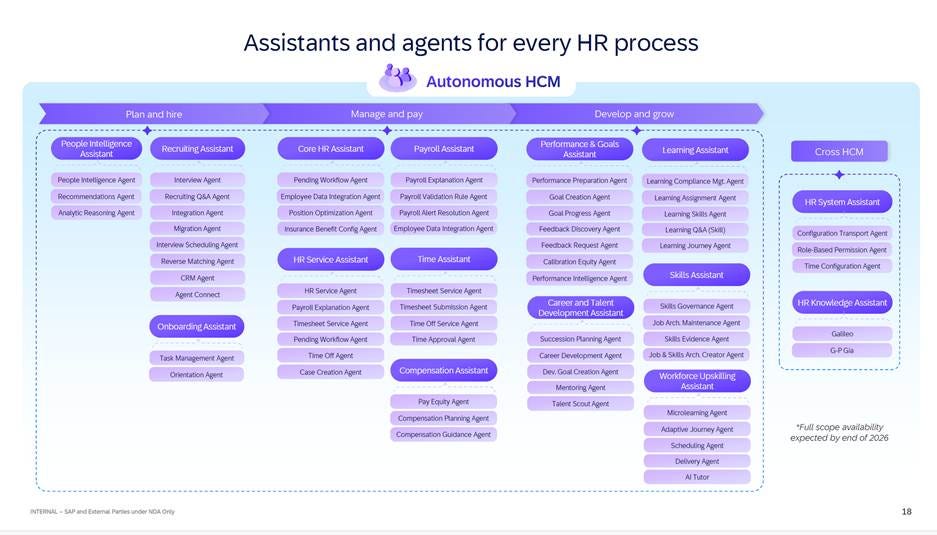
Within the Human Capital Management (HCM) domain, the implications of "The Autonomous Enterprise" are equally profound. Complex questions regarding team performance—whether it stems from leadership, training deficiencies, team tenure, management experience, or external market factors—can now be addressed more systematically. While "skills" are often seen as a universal solution, the reality is that underlying issues like weak leadership, misaligned teams, or inefficient business processes can hinder performance. SAP’s AI strategy aims to tackle these optimization challenges across HR operations.
The announcement detailed numerous AI agents, with a particular focus on automation. In HCM alone, SAP has introduced a range of agents designed to streamline various processes. These agents, while varying in scope and complexity, are designed to be specific to particular HR functions. The core question remains whether these agents will primarily automate existing tasks or fundamentally redesign how HR operates.
Industry research indicates a distinction between different types of AI agents: monitoring agents, action agents, rules agents, and data/information agents. While SAP’s initial rollout appears heavily focused on automation, the potential for agents to drive deeper process redesign and innovation is significant. For example, in SuccessFactors demos, SAP showcased agents that automate payroll processes—a notoriously error-prone and complex area—and enhance employee development. These agents identify and rectify payroll glitches, generate personalized development materials, and target employees for upskilling initiatives.
"Autonomous" Driving: Automating Processes vs. Redesigning Them
The term "autonomous" itself has sparked discussion. SAP’s vision appears to lean towards systems that can operate with less direct human intervention, automatically identifying and rectifying suboptimal conditions. This aligns with the development of numerous agents focused on automation.
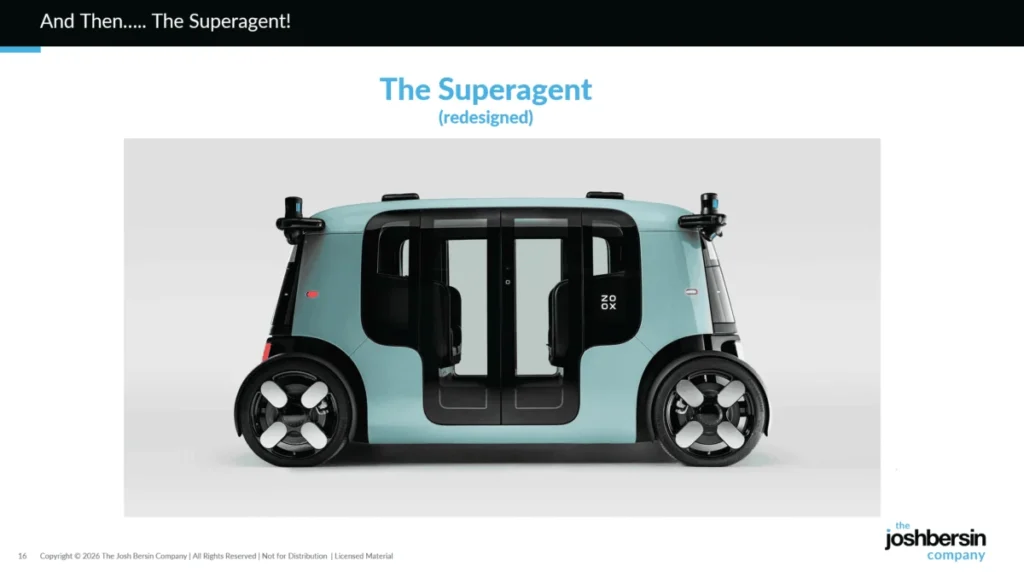
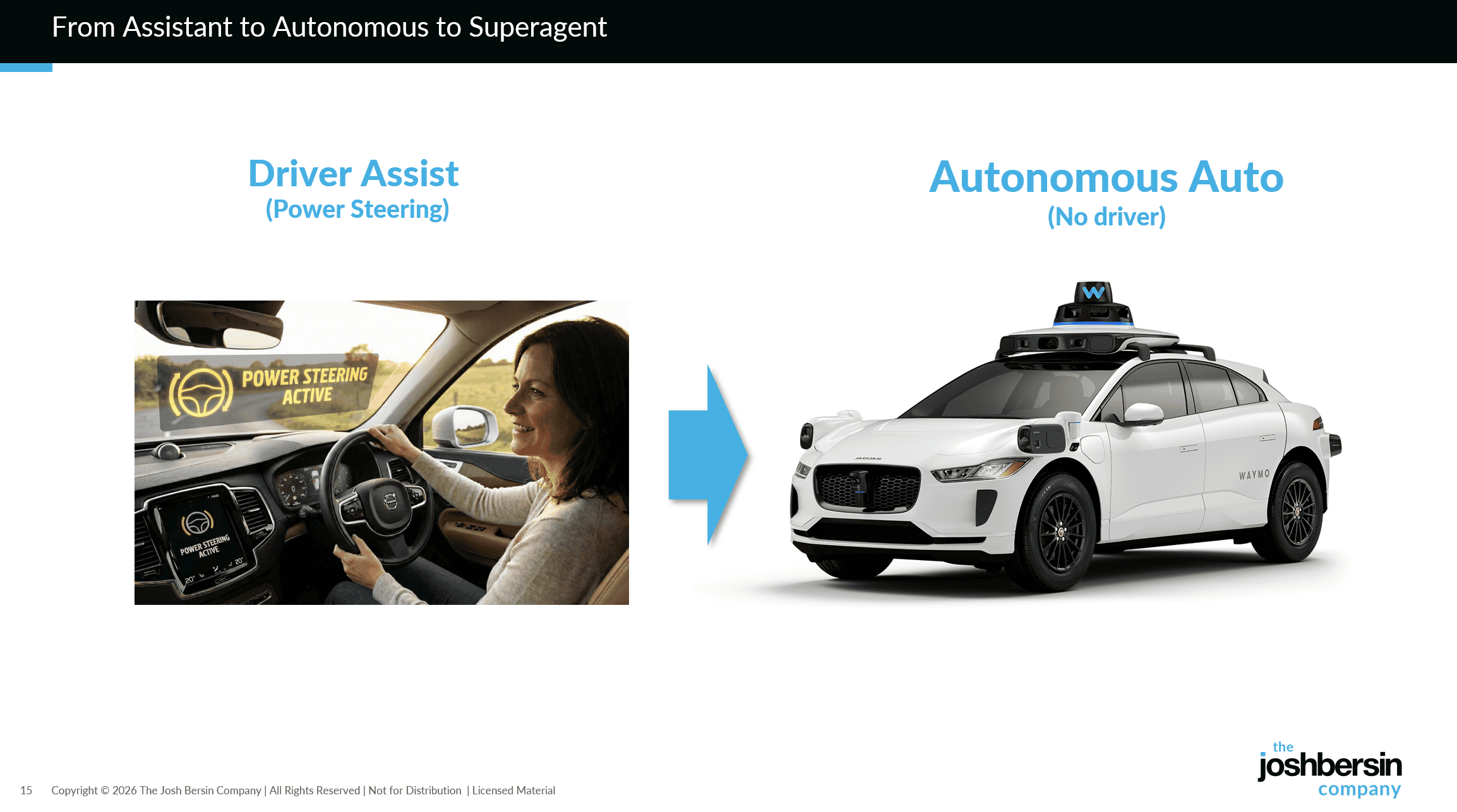
However, the author of the original piece draws a compelling analogy to the evolution of autonomous vehicles. SAP’s current approach is likened to Waymo, a self-driving car that operates on existing road infrastructure, automating the driving experience. This is contrasted with Zoox, which reimagines the entire automobile to optimize the passenger experience. In this analogy, SAP’s "Autonomous Enterprise" is currently a Waymo—automating existing processes within the SAP ecosystem to make them run more autonomously and effectively. The critical distinction is that this does not necessarily equate to a fundamental "change in how things are done."
This focus on automation, while valuable for complex SAP systems, may not fully capture the transformative potential of AI. The true power of AI, as highlighted in research models, lies in higher stages of agent use cases that go beyond mere automation, potentially offering 5-10 times greater ROI. The potential for SAP lies in evolving from an "autonomous" state, where old processes are automated, to a "superagent" state, where processes are fundamentally redesigned.
Technological Underpinnings: The AI Architecture
Beneath the surface of "The Autonomous Enterprise" lies a sophisticated AI architecture:
- AI Layer and Data Fabric: A central AI layer, augmented by a data fabric, integrates numerous AI models. A key innovation is SAP’s proprietary tabular data model, SAP-RPT-1.5. Unlike traditional Large Language Models (LLMs) that can struggle with structured data, this model is optimized for analyzing, evaluating, and modeling massive tables—the backbone of business software. It allows for finding, analyzing, modeling, and performing "what-if" analyses on complex, real-time business data. A public playground for this technology is available, offering a hands-on experience for data professionals.
- SAP Knowledge Graph: Positioned as a critical component, the SAP Knowledge Graph acts as the "brains" of the system. Similar to contextualization layers in other enterprise platforms like Workday’s Sana or ServiceNow’s Context Engine, it maps SAP’s thousands of business entities, structures, and rules into a semantic layer that AI agents can understand and interact with. This enables the system to translate natural language queries, such as "what is family leave for my new baby?" or the earlier profit margin example, into functional context-specific queries for accurate data retrieval and policy understanding. The integration of Galileo, an intelligence layer, further enhances the Knowledge Graph and Joule into a comprehensive HR, human capital, and leadership advisor.
- Joule: The Copilot and Development Tool: Joule, SAP’s intelligent copilot, has evolved significantly. Originally a chatbot for transactional tasks, it is now also the primary development tool for creating AI agents. The new Joule Studio is presented as an enterprise-grade development environment, facilitating the design, build, testing, integration, and management of both simple and complex agents. This robust platform allows IT teams and SAP developers to build sophisticated agents, potentially enabling them to "redesign SAP" from within Joule. This could lead to highly personalized onboarding systems or other tailored applications built on top of the existing SAP infrastructure.
Comparison with Competitors: ServiceNow and Workday
SAP’s strategy places it in direct competition with other major enterprise software providers like ServiceNow and Workday, who are also investing heavily in AI.
- ServiceNow is focusing on its "agent platform that lives beyond SAP," emphasizing its ability to manage a broad range of enterprise functions.
- Workday is positioning itself with the "platform for agents," with its recent Sana AI initiative aiming to provide a similar development environment.
SAP’s approach aims to do both—offering a powerful agent development platform (Joule Studio) while also providing a front-end interface (Joule) for end-users to interact with these agents. This comprehensive offering, coupled with SAP’s deep integration of its own data objects and modules, positions Joule as a potentially advanced development tool in the enterprise AI landscape.
The "Big Memory" Concept and Company Models
A significant, though perhaps less emphasized, aspect of SAP’s announcement is the concept of building "massive context windows" to store an entire "company memory." This refers to the AI models’ ability to retain a comprehensive dataset of operational knowledge—including customers, products, processes, rules, and even documents and emails. This "company corpus" can then be used for continuous analysis, modeling, and improvement.
This "company model" approach, detailed in research like HR 2030, could revolutionize how businesses identify performance gaps and their direct contributing factors. By capturing tribal knowledge and operational best practices, businesses could uncover insights currently hidden within siloed information. For example, identifying that some sales teams consistently engage senior executives for support while others do not could highlight an operational best practice. This capability, when coupled with the vast datasets held within ERP systems, offers immense potential for business process optimization. It is anticipated that competitors like Workday could also achieve similar capabilities with their platforms.

AI Governance: Ensuring Responsible AI Deployment
In parallel with the development of AI capabilities, SAP is addressing the critical need for AI governance. Recognizing the potential risks associated with autonomous agents, such as accidental data deletion or unauthorized information release, SAP has introduced the AI Agent Hub. This management system, akin to offerings from Workday and ServiceNow, provides tools for creating rules, data policies, security measures, and operating limits for AI agents. It supports both SAP and non-SAP agents, offering features to throttle consumption, verify agents, connect them to data, and coordinate their activities.
The coordination of agent-to-agent communication is identified as a significant challenge. In HR, for instance, an agent delivering personalized training should ideally be aware of and interact with agents managing development planning, performance management, and employee work monitoring. This intricate web of dependencies underscores the importance of robust governance frameworks.
Is SAP Now an AI Company?
SAP CEO Christian Klein’s assertion that SAP is now an AI company at its core is a bold claim, signaling a strategic reorientation. This move is in direct response to evolving market dynamics, where emerging startups leveraging AI technologies are posing a challenge to established enterprise software vendors. However, SAP, like its counterparts Workday and Oracle, is not starting from scratch. Instead, it is leveraging its decades of research and development, and its deeply entrenched position in enterprise systems, to transform its core ERP and HCM offerings into AI-powered applications.
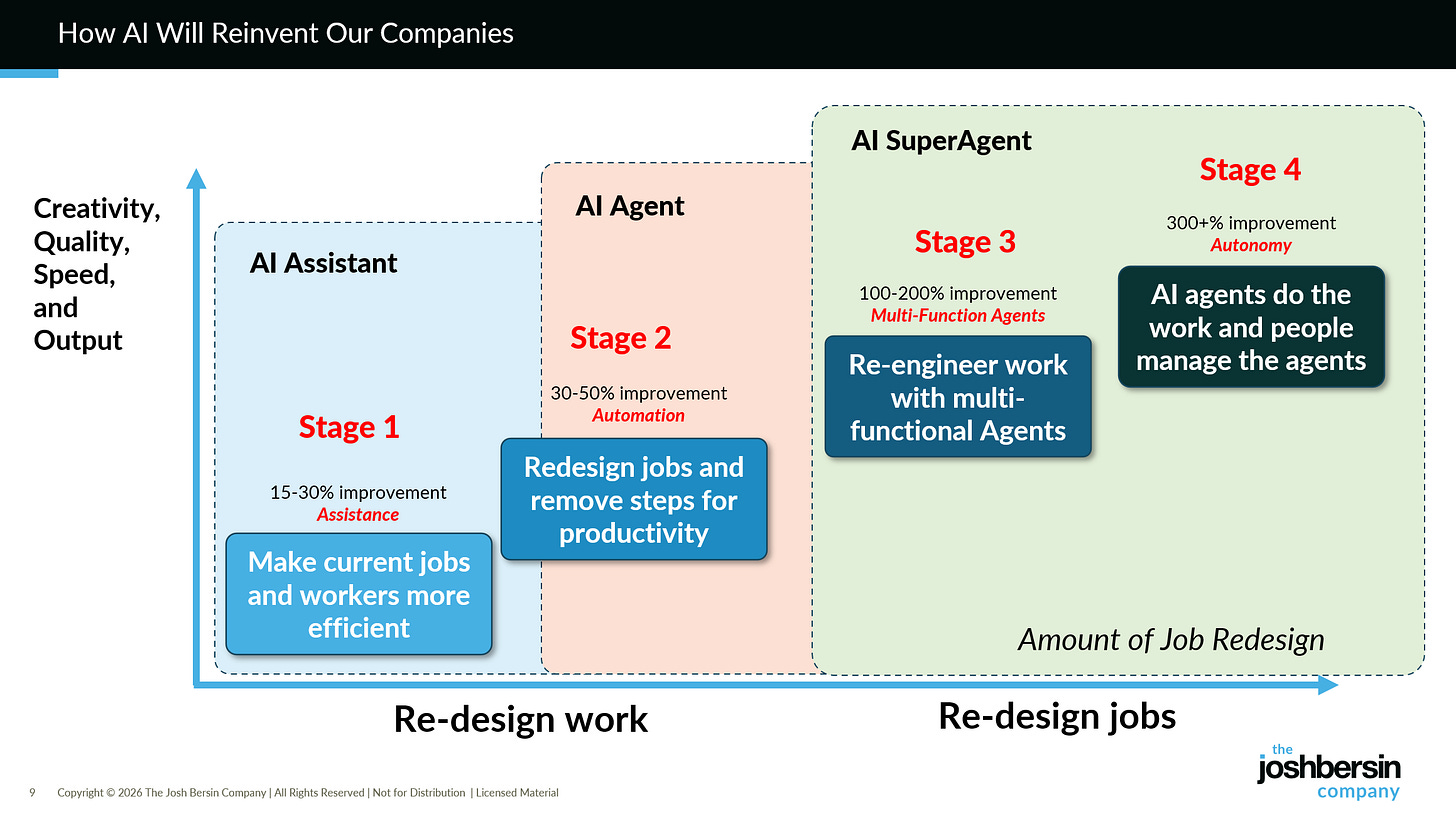
The objective is not to abandon existing robust systems but to infuse them with AI to drive cross-domain process innovation, enhance customer and employee experiences, and create smarter, more responsive business operations. This vision extends across various business functions, with assistants being developed for finance (closing, controlling), spend (sourcing, buying), supply chain (delivery), HR (recruiting, career development), and customer-facing operations (sales, service, marketing).
This strategy aims to make software less visible by embedding its execution within intelligent agents that operate across the entire suite. If successful, this will shift customer interaction away from static workflows and towards dynamic, AI-driven decision-making, recommendation, escalation, and action. Furthermore, SAP’s financial model is expected to evolve, moving towards consumption-based and outcome-driven pricing, rather than solely relying on traditional seat licenses.
Implications and Future Outlook
SAP’s "The Autonomous Enterprise" strategy is poised to reinvent and reinvigorate the company’s growth. While competitors may attempt to build entirely new AI-native solutions, SAP’s deep industry knowledge, vast customer base, and significant customer investment in its existing systems provide a formidable foundation. The company’s ability to seamlessly integrate AI capabilities into its established ecosystem offers a pragmatic and potentially highly effective path to realizing the benefits of artificial intelligence in enterprise operations. The long-term success will depend on the seamless execution of this ambitious vision and the tangible value it delivers to its global customer base. SAP’s journey to becoming a true AI company is underway, and its impact on the future of enterprise software is likely to be substantial.